
International
US Imposes 50% Tariffs on India Over Russian Oil Imports

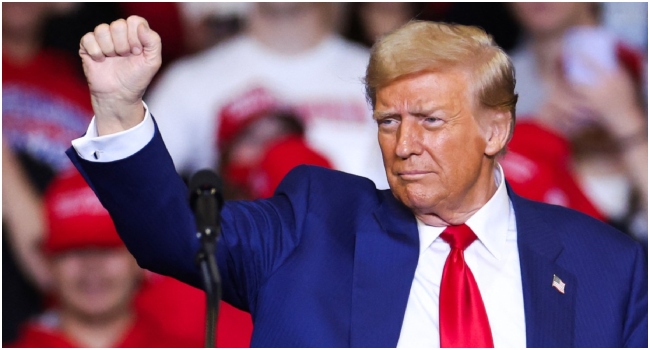
US tariffs of 50 per cent took effect on Wednesday on many Indian products, doubling an existing duty as President Donald Trump sought to punish New Delhi for buying Russian oil.
India has criticised the levies as “unfair, unjustified and unreasonable”, with its export body calling on Wednesday for government intervention to assuage fears of heavy job cuts.
Trump has raised pressure on India over the energy transactions, a key source of revenue for Moscow’s war in Ukraine, as part of a campaign to end the conflict.
The latest salvo strains US-India ties, giving New Delhi fresh incentive to improve relations with Beijing.
While Trump has slapped fresh duties on allies and competitors alike since returning to the presidency in January, this 50-per cent level is among the highest that US trading partners face.
Crucially, however, exemptions remain for sectors that could be hit with separate levies — such as pharmaceuticals, computer chips and smartphones.
Industries that have already been singled out, such as steel, aluminium and automobiles, are similarly spared these countrywide levies.
The United States was India’s top export destination in 2024, with shipments worth $87.3 billion.
But analysts have cautioned that a 50-per cent duty is akin to a trade embargo and is likely to harm smaller firms.
Exporters of textiles, seafood and jewellery were already reporting cancelled US orders and losses to rivals such as Bangladesh and Vietnam, raising fears of heavy job cuts.
Ajay Sahai, director general of the Federation of Indian Export Organisations, called for “liquidity support from the government”.
“We want to ensure that even if business stops, we are able to keep workers on the payroll”, he told AFP, saying they were “still optimistic” for trade negotiations.
– ‘Eroded trust’ –
The world’s fifth-largest economy is looking to cushion the blow, with Prime Minister Narendra Modi promising to lower the tax burden on citizens during an annual speech to mark India’s independence.
Modi earlier vowed self-reliance, pledging to defend his country’s interests.
The foreign ministry previously said India had begun importing oil from Russia as traditional supplies were diverted to Europe over Russia’s invasion of Ukraine.
It noted that Washington actively encouraged such imports at the time to strengthen stability in the global energy market.
Russia accounted for nearly 36 percent of India’s total crude oil imports in 2024. Buying Russian oil saved India billions of dollars on import costs, keeping domestic fuel prices relatively stable.
But the Trump administration held firm on its tariff plans in the lead-up to Wednesday’s deadline.
Trump’s trade adviser Peter Navarro told reporters last week that “India doesn’t appear to want to recognise its role in the bloodshed.”
“It’s cozying up to Xi Jinping,” Navarro added, referring to the Chinese president.
Wendy Cutler, from the Asia Society Policy Institute, said India had moved from being “a promising candidate for an early trade deal to a nation facing among the highest tariffs”
Cutler, a former US trade official, said the “high tariffs have quickly eroded trust between the two countries, which could take years to rebuild.
Trump has used tariffs as a tool for addressing everything from what Washington deems as unfair trade practices to trade imbalances.
US trade deficits were a key justification behind his higher duties on dozens of economies taking effect in early August — hitting partners from the European Union to Indonesia.
But the 79-year-old Republican has also taken aim at specific countries such as Brazil over the trial of its former president Jair Bolsonaro, who is accused of plotting a coup.
US tariffs on many Brazilian goods surged to 50 per cent this month, but with broad exemptions.
AFP









Teachers trained in Nigeria and Ghana are no longer eligible to apply for Qualified Teacher Status (QTS) in England through the UK’s dedicated overseas-trained teacher application route.
The change, confirmed by the Department for Education (DfE), took effect on 9 September 2026. India was also removed from the list of eligible countries.
Under the updated rules, a country must have a national regulator that can confirm a teacher’s professional standing and must be able to provide references that meet the DfE’s verification standards.
For Nigeria and Ghana, the DfE cited problems with employment references. Official data showed that more than 70% of applications from teachers trained in the two countries included work history references sent from public email addresses such as Gmail or Hotmail, rather than official school email domains. The department said this made verification more difficult and resource-intensive.
India was removed because it does not have a national regulator capable of confirming teachers’ professional standing.
South Africa is now the only African country whose teachers remain eligible to use the direct “Apply for QTS in England” service.
The DfE stated that the stricter requirements are intended to ensure overseas teachers awarded QTS have the skills and experience needed to teach in English schools, and that the information they provide can be properly verified.
Teachers trained in Nigeria, Ghana or India who are no longer eligible for the direct application route can still explore alternative paths into teaching in England. These include assessment-only QTS routes offered by some schools or completing initial teacher training in the UK.
International
Trump launches ‘Trump TV’ as US networks halt White House coverage
The development followed the decision by ABC, CBS, Fox News and NBC to suspend their participation in the White House television pool after CNN was prevented from carrying out its scheduled pool duties.

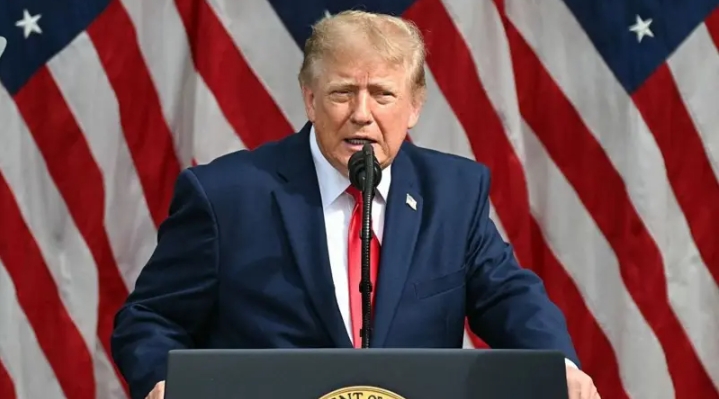
US President Donald Trump’s administration has launched a 24-hour streaming channel, “Trump TV”, after major American television networks suspended their shared coverage of presidential events amid a growing dispute over access to the White House.
The White House announced the launch on Monday, describing the platform as “TRUMP TV: The Essentials Station” and saying it would provide viewers with past presidential moments, major announcements and the latest content from the administration.
The stream is available through the White House website and its official YouTube channel.
The development followed the decision by ABC, CBS, Fox News and NBC to suspend their participation in the White House television pool after CNN was prevented from carrying out its scheduled pool duties.
CNN, MS NOW and Politico had earlier sued the Trump administration after being barred from the White House grounds, arguing that the restrictions violated their constitutional rights.
The administration has defended the ban, with Trump accusing the affected outlets of publishing what he calls “fake news”.
The television pool normally allows participating networks to rotate responsibility for recording and distributing footage of the President to broadcasters across the United States and other parts of the world.
CNN was scheduled to handle the pool coverage on Monday but was prevented from doing so.
The other networks subsequently declined to provide a replacement, creating an unusual gap in shared television coverage of Trump’s official activities. The decision also affected coverage of the President’s inauguration of a new helipad at the White House on Monday.
Reaffirming Nigeria-France Ties
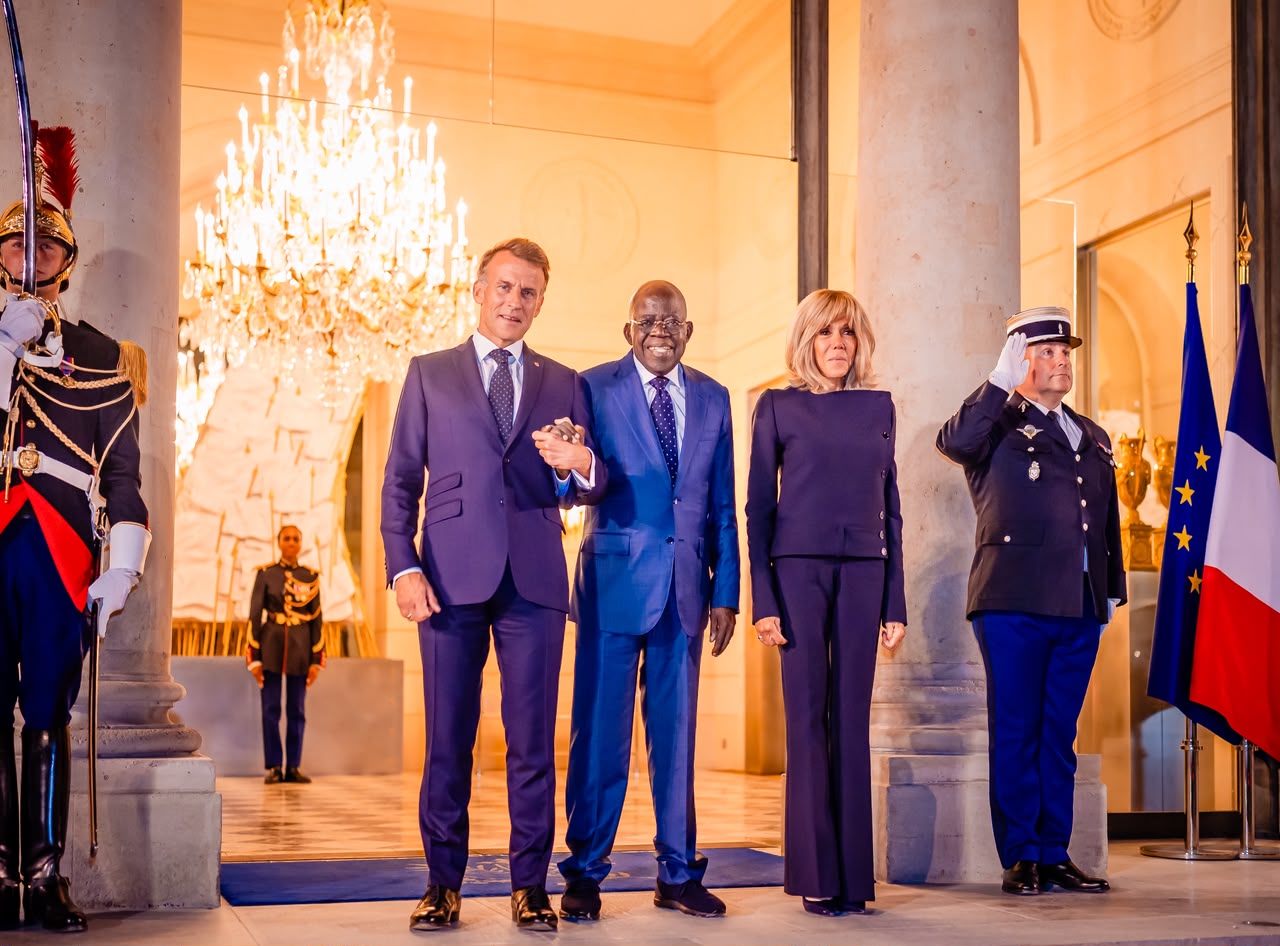
French President Emmanuel Macron received Nigerian President Bola Ahmed Tinubu for a private dinner at the Élysée Palace in Paris on Thursday night, in a high-level engagement underscoring the enduring bilateral relationship between the two countries.
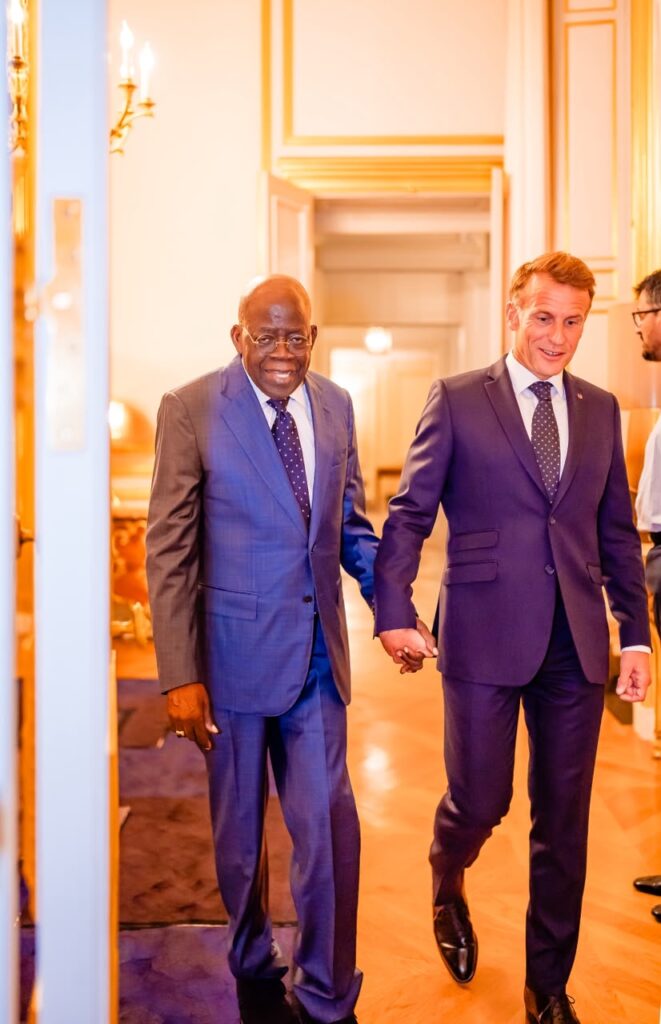
The dinner, held on September 17, 2026, was disclosed on Friday by Bayo Onanuga, Special Adviser to the President on Information and Strategy. In a post on X, Onanuga stated that the meeting reflected “the enduring relationship between Nigeria and France and their shared commitment to strengthening bilateral cooperation.” Photographs released from the evening showed Tinubu with Macron and France’s First Lady, Brigitte Macron, in a cordial setting at the presidential palace.
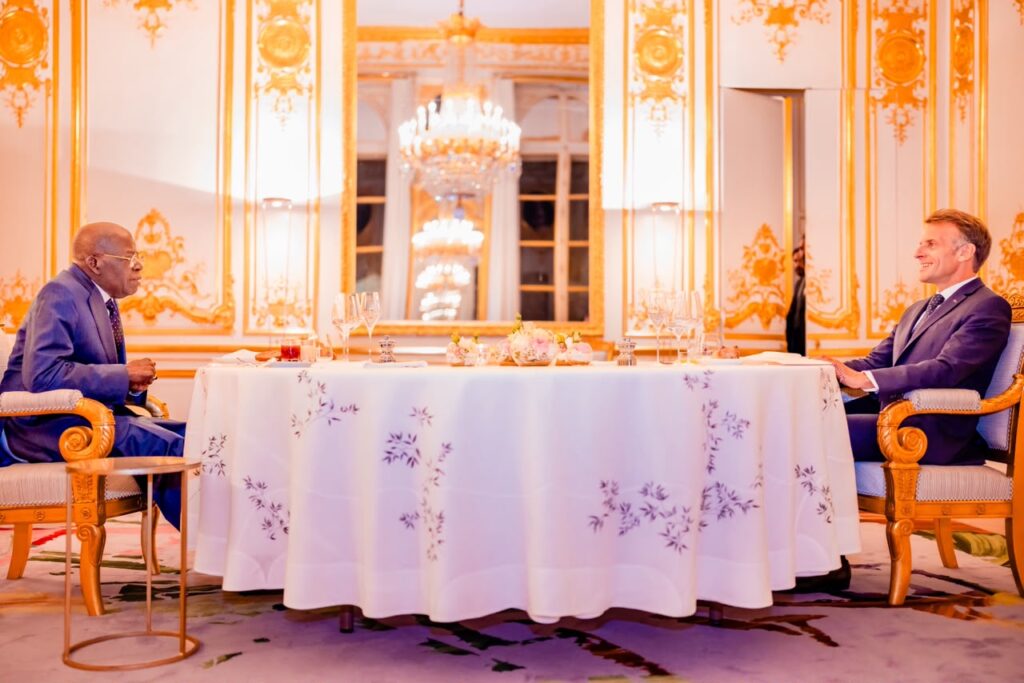
President Tinubu is currently in Europe on a three-week annual leave. He departed Abuja on August 30, 2026, first spending time in London before proceeding to Paris. The private dinner took place during the Paris leg of his vacation and marks another personal interaction between the two leaders.
In related comments, Tinubu described the evening as a pleasure and said the conversation reaffirmed the strong friendship between Nigeria and France as well as their shared commitment to deepening cooperation and building a mutually beneficial partnership. He thanked Macron for his warm hospitality and friendship.
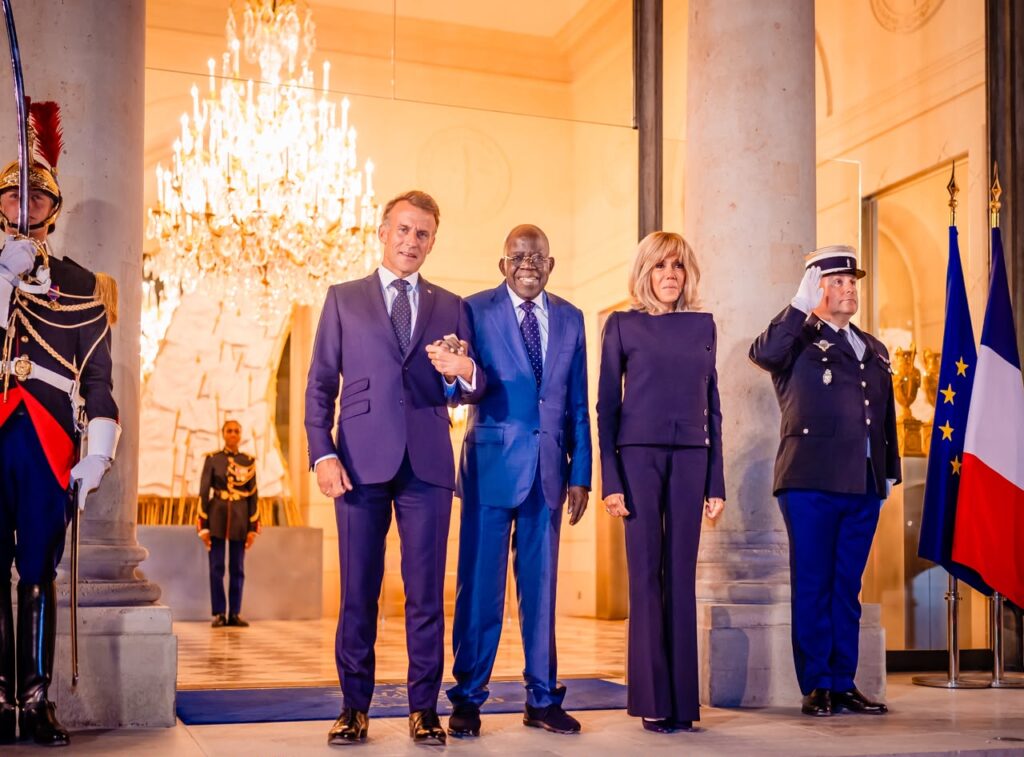
Nigeria and France have maintained active diplomatic and economic engagement in recent years, covering areas such as trade, investment, energy, security cooperation, infrastructure, and critical minerals. The private dinner continues a pattern of direct leader-level contacts that both sides have used to advance practical cooperation beyond formal state visits.
No detailed official readout of specific discussion topics or new agreements was immediately released by either the Élysée Palace or the Nigerian presidency. Such informal encounters have previously helped lay groundwork for subsequent formal engagements between Abuja and Paris.


Gov Mbah Appoints Nollywood’s Eucharia Anunobi, Rachael Okonkwo aides

CBN reduces interest rate to 23% on market stability

BREAKING: Lassa fever kills 259, infects 1,086 in 24 Nigerian states — NCDC

Tech Expert, Zuckerberg trains with UFC champions, Adesanya, Alexander

Organ Trafficking: Ekweremadu bags 10 years in UK prison

SAINT OBI: Between his marriage and his death
-
 Business1 day ago
CBN, MOF sign pact to align monetary, fiscal policies
-
 Business17 hours ago
Dangote Whets Investors Appetite Ahead 2028 Fertiliser IPO
-

 Sports13 hours ago
Mbappé Leaves Nike To Promote Swiss Sportswear Brand On
-
 International14 hours ago
Trump launches ‘Trump TV’ as US networks halt White House coverage
-
 News14 hours ago
Independent Panel Begins Probe into 37 Deaths in Civil Defence Custody
-
 Health16 hours ago
Nigerian hospital successfully performs kidney cancer surgery via tele-robotic
-
 Business16 hours ago
Naira To Dollar, Pound, Euro…Rate Today, September 22
-

 Business16 hours ago
Gambia Orders Nigerian Banks To Replace Foreign Staff by December 2026