
Business
UPDATE: NUPENG Accuses Dangote Refinery of Fuel Sector Monopoly, Warns of Massive Job Losses

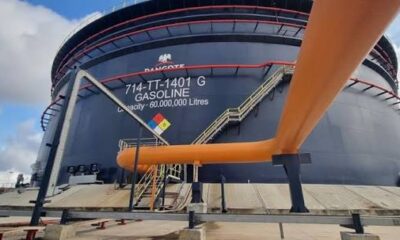
The Nigerian Union of Petroleum and Natural Gas Workers (NUPENG), representing Petroleum and Tanker Drivers (PTD), has condemned Dangote Refinery’s decision to deploy 10,000 Compressed Natural Gas (CNG) tankers for petroleum product distribution, calling it a monopoly that threatens the livelihood of thousands of workers in the sector.
NUPENG described the move as anti-labour and harmful to PTD members, highlighting that drivers recruited by Dangote for these operations are reportedly barred from joining any trade union. The union warned this action violates both the 1999 Nigerian Constitution and international labour laws.
Speaking anonymously, some tanker drivers expressed concerns to journalists that unless the Nigerian Midstream and Downstream Petroleum Regulatory Authority intervenes swiftly, the situation could escalate and seriously damage the Nigerian economy, affecting millions of livelihoods.
The tanker drivers outlined several looming risks including:
- Loss of income for tanker owners and their families
- Unemployment for drivers, motor boys, and support staff
- Job losses for truck mechanics, painters, welders, and fabricators
- Decline in business for spare parts dealers, tyre and battery sellers
- Negative impact on depot representatives, artisans, and food vendors
- Financial ruin for transporters who have invested heavily in the sector
They warned that the move could result in millions of job losses, sparking social insecurity, increased poverty, and a surge in unemployment nationwide.






Business
I sold heavy weapons internationally – Orji Kalu
“Yes, so I stopped because my parents, my mother, my father came and said I must stop, and I stopped,” he said.


The Senator representing Abia North, Orji Kalu, has disclosed that he previously engaged in the international trade of heavy weapons, selling arms to buyers in different countries before quitting the business at the insistence of his parents.
Kalu made the revelation during an interview on Arise Television on Monday, while discussing his business background and relationships with former and current South African leaders.
Asked whether he was an arms dealer, the former Abia State governor answered in the affirmative, saying he stopped after his parents intervened.
“Yes, so I stopped because my parents, my mother, my father came and said I must stop, and I stopped,” he said.
Asked whether he sold weapons to people who intended to use them to kill others, Kalu dismissed the suggestion, saying his motivation was to make money.
“No, no, no, no, no, no. I was selling guns to make money, whether they blow up it’s not my business,” he said
Business
Dividends: Airtel Africa To Pay Nigerian Shareholders USD N1,347.44 / Share
For London investors, the sterling equivalent was fixed at $1 to £0.7464

Airtel Africa Plc says it will pay its 3.1 US cents interim dividend at a dollar-to-naira conversion rate of N1,347.44.
That translates to about N41.77 per qualifying share for Nigerian investors.
The company disclosed the rate in a notice filed with the Nigerian Exchange (NGX).
The interim dividend is 3.1 US cents per ordinary share, a 9.2% increase from the previous year’s payment.
The approved naira rate is about 7.5% lower than the N1,456 per dollar that applied to the corresponding 2025 interim dividend.
Both the naira and sterling conversion rates were derived from dollar exchange rates available on October 30, 2026.
For London investors, the sterling equivalent was fixed at $1 to £0.7464. That puts the payment at approximately 2.31 pence per share.
Business
Domestic Flights Fare Surges Ahead of Christmas, New Year
United Nigeria and ValueJetUnited Nigeria Airlines recorded one of the highest fares. A Lagos to Anambra return ticket between December 22 and January 2 costs ₦822,000.

Local airlines operators the like of Air Peace, United Nigeria Airlines and ValueJet have reviewed their fares upward for December 2026 and early January 2027, with return tickets on some routes climbing to ₦822,000.
Quoted fares seen by Ohibaba.com shows that Air Peace listed a Lagos to Anambra return ticket between December 24, 2026 and January 2, 2027 at ₦676,000.
The outbound flight costs ₦341,500, while the return is priced at ₦335,500. Abuja to Anambra will cost about ₦677,000 for a return ticket, while Lagos to Owerri costs ₦671,000.
The fares reflect prices available during checks and may change with seat availability and booking dates.
United Nigeria and ValueJetUnited Nigeria Airlines recorded one of the highest fares. A Lagos to Anambra return ticket between December 22 and January 2 costs ₦822,000.
The outbound journey costs ₦511,000, while the return flight is priced at ₦311,000. Other United Nigeria return fares are Abuja to Anambra at ₦757,000, Lagos to Enugu at ₦656,000 and Lagos to Owerri at ₦682,000.
ValueJet’s Lagos to Owerri return fare stands at about ₦658,094.
This comprises ₦326,666 for the outbound flight and ₦331,428 for the return journey.
Quoted return fares on other routes include ₦622,000 for Lagos to Port Harcourt and Abuja to Port Harcourt, and ₦679,000 for Lagos to Asaba.
Aviation experts attributed the increases to surging festive demand, limited aircraft capacity and growing concerns over insecurity on major highways.
Aviation analyst Dr James Odaudu said airlines frequently struggle to accommodate the influx of passengers travelling to the South-East and South-South during Christmas.
According to him, insufficient flight capacity allows operators to increase fares, sometimes substantially.
He warned that although seasonal pricing is understandable in a deregulated market, excessive increases could raise legitimate concerns about passenger exploitation.


Senate Approves N100m For World Cup Winning Flamingos

Senate Fails to Meet Quorum Again as Akpabio Warns on 2027 Campaigns

Just In: Police Confirms Two Convicts Escape From Okene Correctional Centre.

BREAKING: Lagos Govt Declares Today, Thursday Work-Free to Mark 2026 Ìṣẹ̀ṣe Day

Tech Expert, Zuckerberg trains with UFC champions, Adesanya, Alexander

Organ Trafficking: Ekweremadu bags 10 years in UK prison
-
 Business3 days ago
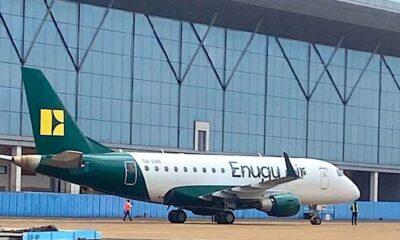
Enugu Air Begins London Gatwick flights From December 10, 2026
-
 Politics3 days ago
Tinubu Woos Nigerian Youths At Rivers Rally
-

 Politics2 days ago
Governorship candidates Speak On Next Chapter For Lagos
-
 Business1 day ago
Dangote Says Refinery’s IPO Misses 10 Million Investors Target
-
 News3 days ago
NNPCL Faults NISO’s Claim of No Gas To Power Generating Plants
-

 Business2 days ago
Naira Exchange Rates Monday, 9 Nov 2026
-

 Sports3 days ago
Nigeria Wins First U-17 Women’s World Cup By 2:1 Against Japan
-

 Sports3 days ago
Manchester City lose ground in EPL title race