
International
Trump hints at softening China tariffs and says no plan to sack Fed boss


US President Donald Trump has appeared to soften his recent comments on China and the head of the US Federal Reserve after recent clashes as he pursues his economic agenda.
He said he has “no intention of firing” Jerome Powell after repeatedly criticising the head of the central bank, but he added that he would like Powell to be “a little more active” on cutting interest rates.
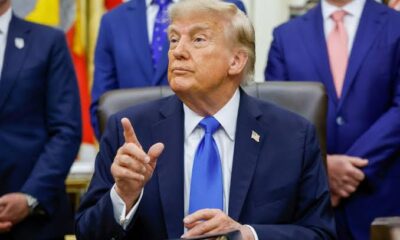
Speaking in the Oval Office on Tuesday, Trump also said he was optimistic about improving trade relations with China.
He said the level of tariffs – or import taxes – that he had imposed on Chinese imports would “come down substantially, but it won’t be zero”.
The president’s tariffs are an effort to encourage factories and jobs to return to the US. This is a pillar of his economic agenda – as is a cut in interest rates, aimed at reducing the cost of borrowing for Americans.
Trump has ratcheted the rate on Chinese goods up to 145% – sparking reciprocal measures from Beijing and warnings from economists about the global impact of a trade war.
In his comments to reporters on Tuesday, Trump said he would be “very nice” in negotiations with Beijing – in the hope of securing a trade deal.
Earlier, US Treasury Secretary Scott Bessent reportedly said he expected a de-escalation of the trade war, which he said was unsustainable. Responding to comments from China, he said the current situation was “not a joke”.
The trade war has led to turbulence in financial markets around the world – to which Trump’s comments on Powell have also contributed.
The Fed has not cut rates so far this year, after lowering them by a percentage point late last year, a stance Trump has heavily criticised.
Last week, the president intensified his attacks on the Fed chief, calling him “a major loser”.
The comments sparked a selloff of stocks, bonds and the US dollar – though markets have since been recovering from those losses.
National Economic Council Director Kevin Hassett said on Friday that Trump was looking into whether it would be possible to sack Powell – who he first nominated to lead the central bank in 2017.
Powell was then renewed in 2021 by Joe Biden.It is unclear whether Trump has the authority to fire the Fed chair. No other US president has tried to do so.
Most major Asian stock markets were higher on Wednesday as investors appeared to welcome the latest remarks.
Japan’s Nikkei 225 index rose about 1.9%, the Hang Seng in Hong Kong climbed by around 2.2%, while mainland China’s Shanghai Composite was down less than 0.1%.
That came after US shares made gains on Tuesday, with the S&P 500 ending Tuesday’s session up 2.5% and the Nasdaq rose 2.7%.
US futures were also trading higher overnight. Futures markets give an indication of how financial markets will perform when they open for trading.
Investors feared that pressure on Powell to lower interest rates could cause prices to rise at a time when trade tariffs are already seen boosting inflation.
Trade tensions between the world’s biggest economies, as well as US tariffs on other countries around the world, have triggered uncertainty about the global economy. Those concerns triggered turmoil in financial markets in recent weeks.
On Tuesday, the forecast for US economic growth for this year was given the biggest downgrade among advanced economies by the International Monetary Fund (IMF) due to uncertainty caused by tariffs.
The sharp increase in tariffs and uncertainty will lead to a “significant slowdown” in global growth, the Fund predicted.
Trump has imposed taxes of up to 145% on imports from China. Other countries are now facing a blanket US tariff of 10% until July.
His administration said last week that when the new tariffs are added on to existing ones, the levies on some Chinese goods could reach 245%.
China has hit back with a 125% tax on products from the US and vowed to “fight to the end”.
The Chinese government has not yet officially responded to the latest statements from the Trump administration.
However, an article in the state-controlled Global Times on Wednesday quoted commentators who said the remarks showed that the US is beginning to realise the tariffs do more harm than good to America’s economy.
BBC








International
‘Up to our people’ to pick leader, Zelenskyy responds to Trump’s pledge for new elections in Ukraine
Russia and Ukraine are locked in a long-range aerial war while their armies remain largely deadlocked on the front line, more than four and a half years after Moscow’s full-scale invasion.


• Ukrainian President Volodymyr Zelenskyy
Ukrainian President Volodymyr Zelenskyy said Sunday his country could hold elections if Russia agreed to a 60-day total ceasefire, pushing back against US counterpart Donald Trump’s call for Ukraine to pick a new leader.
“First of all, with all respect to President Trump, it’s up to our society, up to our people to choose one or another leader”, Zelenskyy told ABC News in a televised interview, a day after Trump said Ukraine needed a new president who would agree to end the war.
Zelenskyy said he told Trump’s team that if they really wanted Ukraine to hold elections, “please tell Putin to give us two months, 60 days of total ceasefire, 60 days, and we will organise elections”.
“We want peace, we are ready for a ceasefire, we are ready to begin with any kind of steps of de-escalation”, Zelenskyy told ABC in a TV interview.
“And if the Russians want us not to attack their diesel, their refineries, etc., we are asking President Trump to give them a signal not to attack the energy infrastructure of Ukraine”.
Russia and Ukraine are locked in a long-range aerial war while their armies remain largely deadlocked on the front line, more than four and a half years after Moscow’s full-scale invasion.
Euro News
International
Time for Ukraine to get a new president’, says Trump
“It’s time for Ukraine to get a new president” he told reporters.
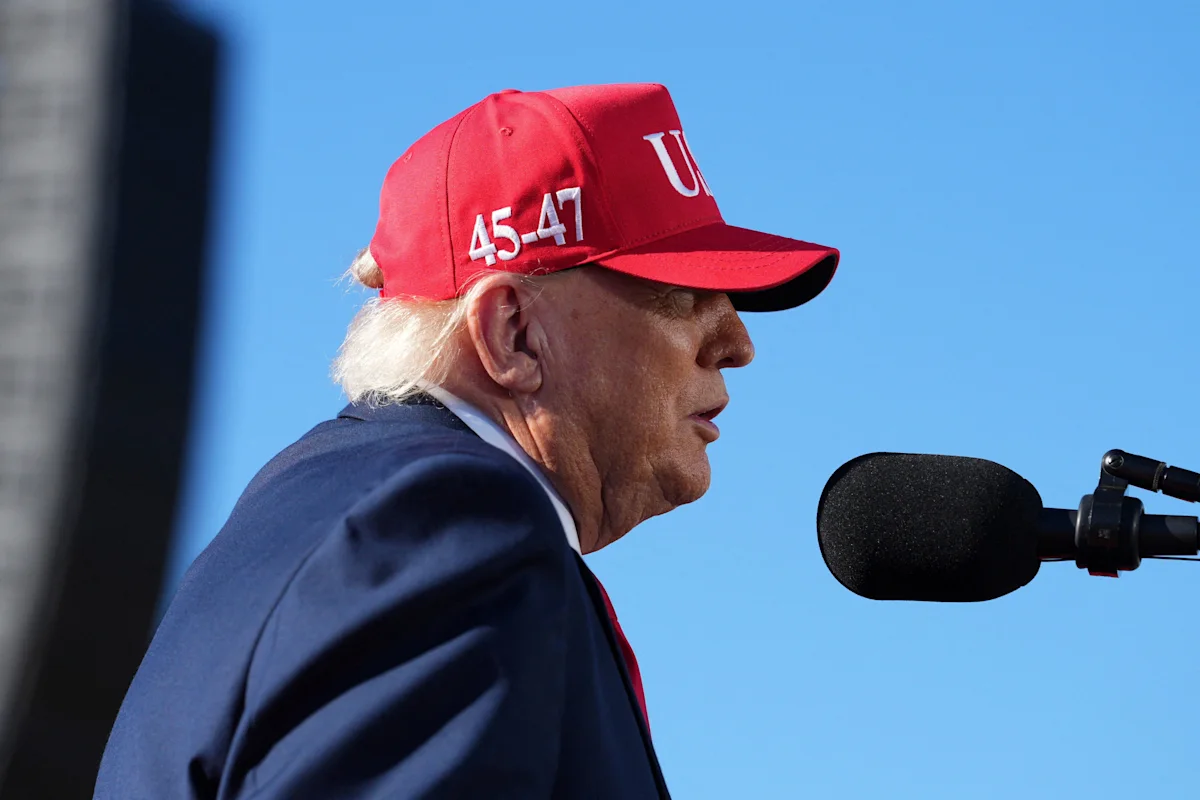
US President Donald Trump has called for new leadership in Ukraine, criticising President Volodymyr Zelensky for striking Russian oil refineries.
“It’s time for Ukraine to get a new president” he told reporters.
On Friday Trump announced a deal with Moscow to import Russian diesel, a deal Zelensky described as “a gift” to President Putin.
BBC.
International
Japan beer giants raided over alleged price-fixing cartel
Asahi, Kirin and Sapporo all saw their share price fall after news of the investigation broke on Wednesday. Suntory’s beer business is not publicly-listed.

Image credit: BBC| GETTY Images
Japanese officials have raided the country’s biggest beer makers over allegations they worked together to raise the price of their beverages.
Asahi, Sapporo, Kirin and Suntory Spirits confirmed to the BBC that their premises had been searched by the Japan Fair Trade Commission (JFTC), adding that they would fully cooperate with the regulator.
The four firms dominate Japan’s beer market, with their drinks a common sight in supermarkets and convenience stores across the country.
Asahi, Kirin and Sapporo all saw their share price fall after news of the investigation broke on Wednesday. Suntory’s beer business is not publicly-listed.
“I do not deny that an investigation is being conducted today, but I’d like to refrain from commenting on the details as a preliminary review is underway,” JFTC Secretary General Iwanari Hiroo said, according to local media.


Human Capital Africa Statement For International Day of the Girl Child 2026

Kenyan Presidential hopeful threatens to stop Dangote refinery’s project if he wins 2027 election

‘Up to our people’ to pick leader, Zelenskyy responds to Trump’s pledge for new elections in Ukraine

Tech Expert, Zuckerberg trains with UFC champions, Adesanya, Alexander

Organ Trafficking: Ekweremadu bags 10 years in UK prison

SAINT OBI: Between his marriage and his death
-
 News3 days ago
Tears, Embraces as Rescued NYSC Members Reunite with Families in Ibadan
-

 Business3 days ago
Manufacturers sitting on N40trn untapped opportunities, says report
-
 News3 days ago
Ahmadu Bello University Hikes Fees Across Programme
-
 Business3 days ago
Naira Exchange Rates Friday, October 9
-
 Politics3 days ago
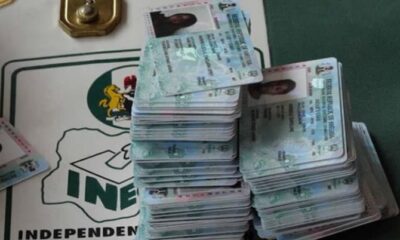
2027: INEC Displays Voter Register, Begins PVC Distribution Today
-

 Sports3 days ago
National Sports Commission Changes Secretaries
-

 News3 days ago
JUST IN: Omi Eko Project Debunks Claims of Zero Progress
-
 News3 days ago
South African Human Rights Lawyer, Navi Pillay, Wins 2026 Nobel Peace Prize •”It must be a joke,”she reacts