
International
Trump pledges to maintain federal forces in Washington amid mounting criticism.


President Donald Trump on Thursday visited police and troops he has deployed in the US capital in what he calls a crackdown on crime, saying they were going to “stay here for a while.”
Trump ordered hundreds of members of the Guard, a reserve force, to deploy in Washington last week vowing to “take our capital back,” despite protests by some residents and statistics showing violent offenses falling.
“We’re going to make it safe, and we’re going to then go on to other places, but we’re going to stay here for a while. We want to make this absolutely perfect,” he said outside a US Park Police facility in Washington.
The 79-year-old Republican was surrounded by law enforcement from various local and federal agencies as well as National Guard troops.
Earlier Thursday he suggested he would go on patrol with police and the military, but instead he made a short speech and gave out pizzas and hamburgers.
“Everybody feels safe,” Trump said, adding that he plans to get the capital “fixed up physically.”
“One of the things we’re going to be redoing is your parks. I’m very good at grass, because I have a lot of golf courses all over the place. I know more about grass than any human being,” he added.
Trump wrote on social media early Friday that “there were no murders this week for the first time in memory” in Washington.
He said Mayor Muriel Bowser “must immediately stop giving false and highly inaccurate crime figures, or bad things will happen, including a complete and total Federal takeover of the City!”
Bowser has said that violent crime in the capital has been its lowest level in three decades.
Trump’s visit came a day after his vice president, JD Vance, was greeted by boos and shouts of “Free DC” — referring to Washington’s formal name, the District of Columbia — on his own meet-and-greet with troops.
Vance dismissed the hecklers as “a bunch of crazy protesters.”
The DC National Guard has mobilized 800 troops, while Republican states Ohio, Louisiana, Mississippi, South Carolina, Tennessee and West Virginia are sending a total of around 1,200.
They have been spotted in tourist areas such as the National Mall and its monuments, the Nationals Park baseball stadium and others.
The overwhelmingly Democratic US capital faces allegations from Republican politicians that it is overrun by crime, plagued by homelessness and financially mismanaged.
But data from Washington police showed significant drops in violent crime between 2023 and 2024, though that was coming off the back of a post-pandemic surge.
Some residents have welcomed the crackdown, pointing to crime in their areas — but others have complained the show of force is unnecessary, or has not been seen in parts of Washington where violence is concentrated.
– Sandwich guy –
Several incidents involving the surge of law enforcement have gone viral as residents voice their discontent, including the arrest of one man who was caught on camera throwing a sandwich at an agent.
Banksy-style posters honoring the so-called “sandwich guy” have popped up around the city.
The National Guard troops have provided “critical support such as crowd management, presence patrols and perimeter control in support of law enforcement,” according to social media statements.
In addition to sending troops into the streets, Trump has also sought to take full control of the Washington police department, attempting at one point to sideline its leadership.
The deployment of troops in Washington comes after Trump dispatched the National Guard and Marines to quell unrest in Los Angeles, California, that was sparked by immigration enforcement raids
AFP












International
Japan beer giants raided over alleged price-fixing cartel
Asahi, Kirin and Sapporo all saw their share price fall after news of the investigation broke on Wednesday. Suntory’s beer business is not publicly-listed.


Image credit: BBC| GETTY Images
Japanese officials have raided the country’s biggest beer makers over allegations they worked together to raise the price of their beverages.
Asahi, Sapporo, Kirin and Suntory Spirits confirmed to the BBC that their premises had been searched by the Japan Fair Trade Commission (JFTC), adding that they would fully cooperate with the regulator.
The four firms dominate Japan’s beer market, with their drinks a common sight in supermarkets and convenience stores across the country.
Asahi, Kirin and Sapporo all saw their share price fall after news of the investigation broke on Wednesday. Suntory’s beer business is not publicly-listed.
“I do not deny that an investigation is being conducted today, but I’d like to refrain from commenting on the details as a preliminary review is underway,” JFTC Secretary General Iwanari Hiroo said, according to local media.
International
Belgian Students Protest Over Rising Education Costs
Tuition fees for most students in Belgium’s French-speaking Community, was increased from €835 to €1,194.
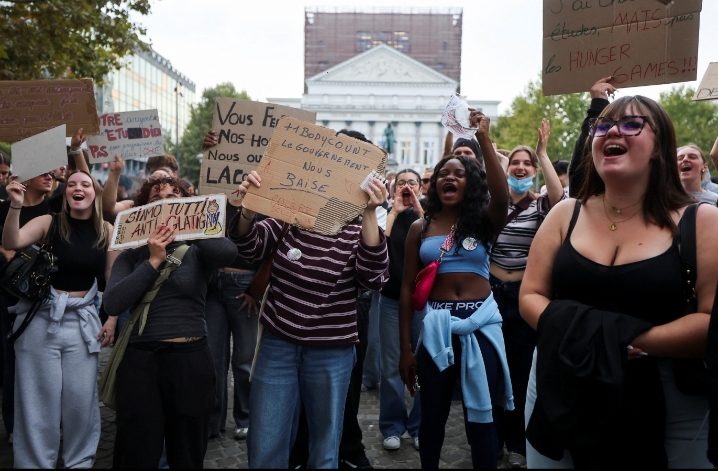
Hundreds of students in the Belgian city of Liège took to the streets protesting rising education costs, according to Belga news agency.
Tuition fees for most students in Belgium’s French-speaking Community, was increased from €835 to €1,194.
Local media reported that 107 people had been arrested in recent days, for offences linked to property damage and arson.
The protesters are challenging conditions in Belgium’s French-language education system, citing rising costs, overcrowded classrooms and difficulties accessing study materials.
Students carried placards expressing their frustration, including messages calling for education to be treated as a right rather than a privilege.
International
Ethiopian woman says she hasn’t eaten or drunk water since age 10
Despite claiming not to eat, Ambaw said she enjoys preparing meals for her family and visitors.

•Muluwork Ambaw
An Ethiopian woman, Muluwork Ambaw, has claimed that she has not eaten food or drunk water since she was 10 years old, saying she suddenly lost her appetite as a child.
Ambaw, who is now 26 and lives in Jimma, Ethiopia, said her last meal was lentil stew before she stopped eating and drinking.
Her extraordinary claim gained international attention after travel content creator Drew Binsky visited her in Ethiopia and documented her story and daily life.
According to Ambaw, the change began when her family would ask her to have breakfast before going to school.
Her extraordinary claim gained international attention after travel content creator Drew Binsky visited her in Ethiopia and documented her story and daily life.
According to Ambaw, the change began when her family would ask her to have breakfast before going to school.
“I used to live with my family, and they asked me to eat breakfast and go to school. I said I had eaten, but I was pretending,” she said, according to an account shared by Binsky.
Ambaw said she simply stopped feeling hungry or thirsty and has continued living without consuming food or water.
Despite claiming not to eat, Ambaw said she enjoys preparing meals for her family and visitors.
She reportedly grows vegetables in her garden so she can cook fresh food when her sister or guests visit.
“I cook as much as I want, but I have no appetite,” she said.


Investors Rush For Airtel Money IPO on LSE

JUST IN: NNPC Clarifies Petrol Discount: Relief Initiative, Not Subsidy Restoration

JUST IN: A’Court Stalls SERAP, Oluwadare Defamation Appeals Over Late Briefs

Tech Expert, Zuckerberg trains with UFC champions, Adesanya, Alexander

Organ Trafficking: Ekweremadu bags 10 years in UK prison

SAINT OBI: Between his marriage and his death
-

 News3 days ago
NAF Helicopter Makes Precautionary Landing In Makurdi
-

 Business3 days ago
Naira Today Exchange Rates, Thursday October 8
-

 News2 days ago
Tears, Embraces as Rescued NYSC Members Reunite with Families in Ibadan
-

 Business2 days ago
Naira Exchange Rates Friday, October 9
-

 Business3 days ago
Obi advocates policy support for manufacturers
-

 Business2 days ago
Manufacturers sitting on N40trn untapped opportunities, says report
-

 News2 days ago
Ahmadu Bello University Hikes Fees Across Programme
-

 International3 days ago
Belgian Students Protest Over Rising Education Costs