
Business
The Role of Infrastructure in Lagos Real Estate Value by Dennis Isong
Let’s break down why infrastructure is the ultimate game-changer in Lagos real estate.

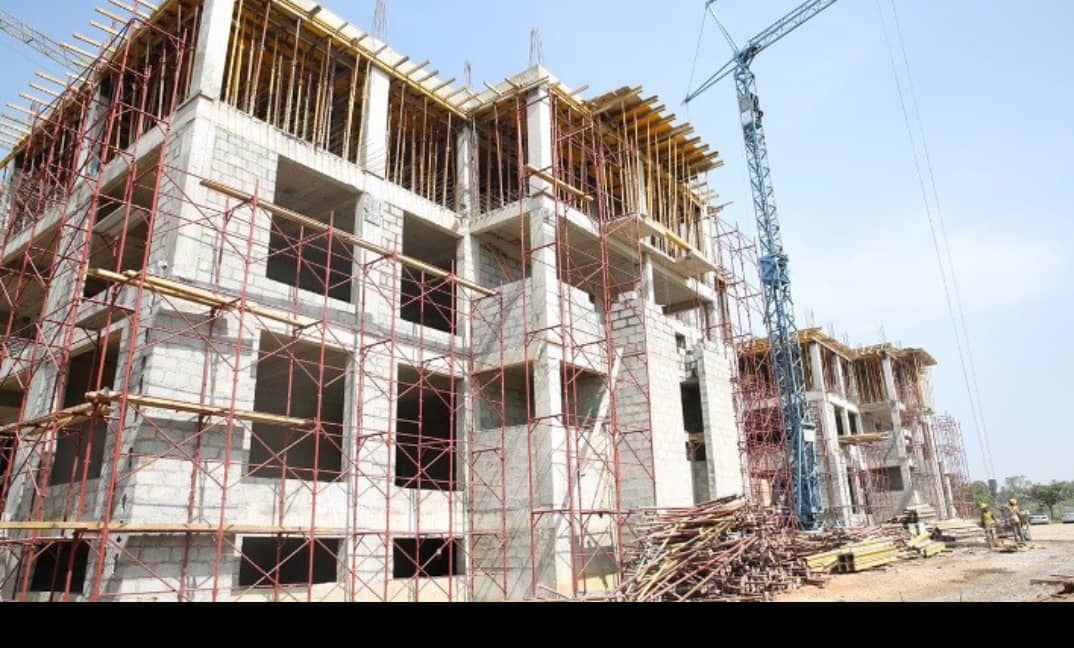
If you want to understand the Lagos real estate market, forget all the fancy jargon for a minute.
Just think of infrastructure as the soul of property value. A house without good roads, electricity, water, or even security is like a designer shoe with no sole—fine but useless.
In Lagos, infrastructure plays a big role in shaping real estate prices.
The same plot of land in two different locations can have an N50 million difference just because one has better roads, drainage, or proximity to a major highway.
Let’s break down why infrastructure is the ultimate game-changer in Lagos real estate.
1. Good Roads = Good Money
Let’s say you have two plots of land—one along a well-paved road and the other inside a swampy, pothole-infested area. Which one would you buy? The answer is obvious.
Lagos traffic is already enough stress; nobody wants to add bad roads to their suffering. That’s why areas with smooth, wide roads see property prices skyrocketing. Look at Lekki Phase 1, for instance.
When the Lekki-Epe Expressway was a narrow, chaotic mess, properties were still relatively affordable. But once the road was expanded and better maintained, land prices shot up like fuel prices after a subsidy removal.
Now, compare that to some areas on the mainland with roads that look like they survived a bomb blast. Properties there remain cheap, not because they aren’t valuable, but because buyers calculate the stress of bad roads into their final decision.
2. Drainage and Flood Control
Nobody Likes Swimming in Their Living Room Every Lagosian knows the pain of flooding.
When rain falls, some streets turn into rivers, and landlords start offering “canoe-inclusive” rent deals. But in places with proper drainage, real estate value remains stable, rain or shine. Victoria Island, for example, had serious flooding issues in the past.
But as drainage systems improved, property values remained strong.
Meanwhile, areas with poor drainage, like some parts of Ajah and Ikorodu, see land values drop during rainy seasons because buyers fear their future homes could become water parks.
Investors and homebuyers are now paying more attention to drainage systems before putting their money into properties.
A house is not cheap, so nobody wants to spend millions only to start living like Aquaman.
3. Power Supply—Because Generators Are Not Luxury
Electricity is one of Lagos’ biggest real estate influencers. Areas with steady power supply command higher rent and property prices. Why? Because the alternative—buying fuel for a generator—is both expensive and frustrating.
Places like Ikeja GRA, Victoria Island, and parts of Lekki have relatively stable power, and landlords use that as a selling point.
On the other hand, areas with epileptic power supply lose value over time. People are now considering solar-powered estates and communities where electricity is stable before making buying decisions.
4. Transportation—BRT, Rail, and Your Property’s Worth
One of the smartest real estate moves in Lagos is to buy property near upcoming transport projects. Why? Because the moment a major road, rail, or even a bridge is announced, land prices start rising like agege bread in hot weather.
When the Lekki-Epe Expressway toll gate was introduced, property prices in Ajah and beyond started climbing.
The same thing is happening with the Lagos Blue and Red Rail Lines. Areas close to the rail stations, like Alagbado and Agbado, are experiencing a surge in demand because people are preparing for easier movement.
Nobody likes spending four hours in Lagos traffic. If your property is near a transport hub that reduces stress, its value automatically goes up.
5. Security—Safe Neighborhoods, High Returns
No matter how fine a house is, if the area is a crime hotspot, buyers and tenants will run. Security infrastructure—streetlights, CCTV, police presence, gated communities—adds serious value to properties.
Banana Island, Ikoyi, and some parts of Lekki Phase 1 are expensive partly because of their tight security.
Compare that to some areas where robberies are common, and you’ll see why people are willing to pay a premium for peace of mind.
6. Social Amenities—Schools, Hospitals, Malls, and Fun Spots
A house in an isolated bush with no schools, hospitals, or supermarkets nearby is just a fancy prison. That’s why areas with top schools, healthcare centers, and entertainment hubs always see higher real estate demand.
Look at places like Ikeja, Lekki, and Surulere.
The presence of good schools, hospitals, and malls means families are willing to pay more to live there. Investors know this, so they buy early before development fully sets in.
The Government’s Role—When Infrastructure Meets Policy Infrastructure development is not magic; it takes government planning, funding, and execution.
The Lagos State Government has been actively pushing major projects to boost real estate value across different areas.
For example:
• The Lekki Free Trade Zone:
This project is turning Ibeju-Lekki into a goldmine. With the Dangote Refinery, Deep Seaport, and Free Trade Zone in full swing, land prices in this area have jumped significantly in the past few years.
• The Fourth Mainland Bridge:
Once this long-awaited bridge becomes a reality, expect a massive real estate boom in areas like Ikorodu, Ajah, and Epe. People are already securing land there in anticipation.
• The Lagos Rail Mass Transit (Blue and Red Lines):
These train lines will reduce commuting stress, meaning properties near stations will become more attractive and valuable.
When the government invests in infrastructure, real estate investors should pay attention. It means they are indirectly boosting property values in those locations.
How to Invest Wisely—Spot the Next Big Infrastructure
Move If you’re planning to buy property in Lagos, don’t just focus on “popular” locations. Instead, look at upcoming infrastructure projects. These areas are where you’ll get the best long-term returns. Here’s how to spot a good investment:
• Follow Government Announcements: Any major road, bridge, or transport project will affect real estate prices in that area. Stay informed.
• Check for Early Development Signs: When big businesses start moving into an area, it’s a sign that value will rise soon.
• Look Beyond the Present Condition: Some places may look like “bush” now, but with infrastructure, they will turn into prime locations.
Epe is a perfect example—five years ago, it was just a quiet town. Today, it’s one of the fastest-growing real estate hubs in Lagos.
• Buy Before the Boom: Once the infrastructure is completed, land prices jump dramatically. The best time to buy is when development is just starting, not when it’s fully established.
Infrastructure is the Key to Lagos Real Estate Wealth
In Lagos, infrastructure determines whether a property is worth millions or remains stagnant. Roads, electricity, drainage, security, transportation, and social amenities all play a crucial role in increasing property value.
Smart investors don’t wait for areas to become “hot” before they buy; they anticipate where the next big infrastructure project will be and invest early. Whether you’re a first-time buyer or a seasoned investor, one thing is clear: if you follow infrastructure, you’ll always find money in Lagos real estate.
Dennis Isong and team.
+2348164741041 +234802866756
Business
Investors Rush For Airtel Money IPO on LSE
Airtel Money is proving popular among retail investors ahead of full admission next week.
Airtel Money began conditional trading on the London Stock Exchange this morning in a £5.3 billion market debut, dubbed Africa’s Revolut.
Shares, which were open only to investors allocated stock in the offer, were trading flat at around 194p.
But armchair investors are rushing to sign up to the City’s largest IPO in five years ahead of full admission on October 14.
It is the ninth most popular initial public offering on AJ Bell’s investment platform based on the number of customers applying to take part in the offer, it said.
Airtel Money is proving popular among retail investors ahead of full admission next week
Airtel Money, a subsidiary of Airtel Africa, which offers mobile payment services in 13 countries across Africa, is a subsidiary of FTSE 100 telecoms group Airtel Africa, whose shares have trebled in less than two years.

The Nigerian National Petroleum Company Limited (NNPC Ltd) has clarified that its ongoing petrol discount is a temporary customer relief measure and does not amount to a restoration of the petroleum subsidy abolished in 2023.
In a statement issued on Friday by Chief Corporate Communications Officer Andy Odeh, the company said the N66-per-litre sales discount, first introduced on 1 October 2026 to mark Nigeria’s 66th Independence Anniversary, will continue until 31 October 2026 at NNPC Retail stations nationwide.
NNPC stressed that the initiative is designed to ease the burden of rising fuel prices linked to elevated global crude oil costs and the Middle East conflict. It applies only to NNPC Retail outlets and does not set a uniform national pump price or change the market-based pricing framework for petroleum products.
“This discount is a customer relief initiative and does not represent the reintroduction of petroleum subsidy,” the statement said. The company urged the public to disregard any interpretation of the measure as a return to the subsidy regime.
The clarification followed comments by Finance Minister and Coordinating Minister of the Economy Taiwo Oyedele, who explained that the discount is funded solely from NNPC Retail’s own profit margin and involves no public funds from the federal budget or Federation Account.
Business
Manufacturers sitting on N40trn untapped opportunities, says report
The Nigerian Manufacturing Opportunity Report 2026 provides decision-makers with the insights on opportunities that are most immediate, where Nigeria is already making progress and what needs to be done better to unlock greater value.
SEID, a marketing communications and market intelligence firm in Lagos, has estimated that the Manufacturing industries in Nigeria is sitting on more than N40 trillion in untapped manufacturing opportunities.
The Managing Partner at SEID, Tubosun Akeju, disclosed this in a report -The Nigerian Manufacturing Opportunity Report 2026 launched by the during the 54th Annual General Meeting of the Manufacturers Association of Nigeria, held at the Oriental Hotel.
Akeju emphasised that the report provides decision-makers with the insights on opportunities that are most immediate, where Nigeria is already making progress and what needs to be done better to unlock greater value.
“The opportunity is to understand where those strengths exist, deepen them, and build the competitiveness required to capture more value locally and compete beyond our borders,” he said .
The report examines manufacturing opportunities across Nigeria’s subsectors, states, value chains and industrial clusters, while identifying areas where existing strengths can be deepened and competitiveness improved.
It said that Nigeria’s manufacturing landscape was shaped by distinct areas of industrial strength, with different states, regions and value chains demonstrating varying levels of scale, specialisation and competitiveness.
The report noted that this created an opportunity to build on existing capabilities rather than adopt a one-size-fits-all approach to industrial development.
Manufacturing activity is spread across states with different levels of scale, specialisation and growth.
The South-West remains the country’s largest manufacturing zone, while other regions are developing strengths in areas ranging from food and agro-processing to textiles, chemicals, pharmaceuticals, cement, steel and light manufacturing.
The report maps these differences to show where investment and industrial development can build on existing capabilities.


Investors Rush For Airtel Money IPO on LSE

JUST IN: NNPC Clarifies Petrol Discount: Relief Initiative, Not Subsidy Restoration

JUST IN: A’Court Stalls SERAP, Oluwadare Defamation Appeals Over Late Briefs

Tech Expert, Zuckerberg trains with UFC champions, Adesanya, Alexander

Organ Trafficking: Ekweremadu bags 10 years in UK prison

SAINT OBI: Between his marriage and his death
-

 News2 days ago
NAF Helicopter Makes Precautionary Landing In Makurdi
-

 News3 days ago
Military Chiefs Visit Ondo Crash Site As Underwater Search Intensifies
-

 Business2 days ago
Naira Today Exchange Rates, Thursday October 8
-

 News1 day ago
Tears, Embraces as Rescued NYSC Members Reunite with Families in Ibadan
-
 Business3 days ago
African Union launch continent’s first credit rating agency
-

 Business1 day ago
Naira Exchange Rates Friday, October 9
-

 Business2 days ago
Obi advocates policy support for manufacturers
-
 Business1 day ago
Manufacturers sitting on N40trn untapped opportunities, says report