
Business
The rich country with the worst mobile-phone service
5G networks are fast. Their roll-out is not

(The Economist)
BRITAIN HAS long been a pioneer in telecoms. In 1837 it built the world’s first commercial telegraph; the first transatlantic call was placed from London in 1927; in 1992 a British programmer sent the first text message to a mobile phone.
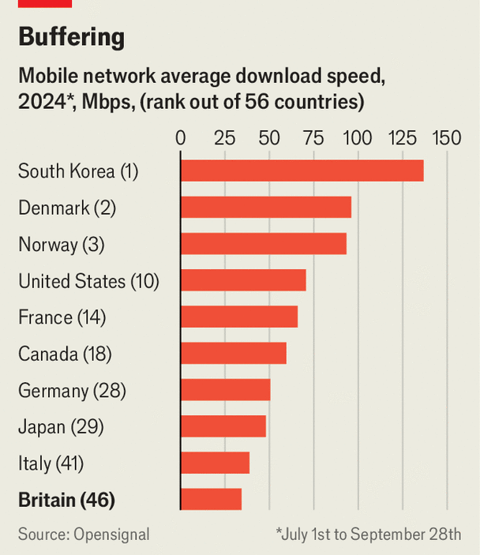
Today it lags rather than leads. According to figures provided to The Economist by Opensignal, a research firm, Britain ranks 46th for download speeds out of the 56 developed and developing countries for which there are data (see chart).
That gives it the worst mobile service in the rich world. Some of this is due to demand. Over the past three years data usage on mobile devices has doubled as people stream films and play games.
The busiest parts of cities often lack mobile reception because the system is at capacity. But mainly it is an issue of supply.
British users of 5G—the fifth generation of networks, which offers speeds up to ten times faster than 4G—are only on it 11% of the time. That puts Britain 43rd out of the 56 countries.
This lacklustre performance is caused by a combination of government U-turns, insufficient investment and sclerotic planning.
First, the U-turns. Until 2020 Britain’s four mobile operators were enthusiastic buyers of 5G equipment manufactured by Huawei, a Chinese firm.
But after intense lobbying from America, Britain’s politicians reversed course: telecoms operators must now remove all their 5G Huawei equipment by 2027.
This has delayed 5G’s roll-out. The country’s four mobile providers—BT/EE, O2, Three and Vodafone—have spent about £2bn ($2.6bn) over the past four years ripping out and replacing Huawei equipment. Second, the need for more investment.
About 90% of Britain’s 5G signals are broadcast from bolt-ons to the existing 4G network.
This “non-stand-alone” version of 5G does not allow “network slicing”, a way to get greater capacity in congested areas, or the quick response times needed to communicate with new technologies such as self-driving cars.
A new “core network” using stand-alone technology must be installed to get the full benefits of 5G. But, according to Frontier Economics, a consultancy, the four mobile operators are likely to invest only about £9bn of the £22bn-32bn required.
A marriage might help. Vodafone and Three, the country’s third- and fourth-largest mobile operators, say they are too small to justify the high capital expenditure of stand-alone 5G, and that they would invest £11bn over a decade if they could merge.
Karen Egan of Enders Analysis, a consultancy, estimates that synergies would result in a 30% increase in network capacity.
The Competition and Markets Authority (CMA), a watchdog, is due to decide on the merger on December 7th; it has suggested that 5G investment would be a legally binding condition for a deal. Even if the CMA allows the merger, improving 5G network capacity means erecting more masts.
In 2022 the rules were loosened to permit masts less than 30 metres high to be built without having to seek planning permission. But operators still complain.
Shorter masts cover a smaller area, so more must be built. O2 says it takes at least six months to get a decision on a mast over 30 metres high; applications are often stymied by local opposition.
Overcoming these obstacles is vital for achieving the goal of universal 5G by 2030.
It will also be needed for the eventual roll-out of 6G. In laboratory environments the next generation of mobile networks has reportedly notched up speeds 100 times faster than 5G. Britain is anything but that.■
Business
History of Naira Revaluation and Devaluation (1973–2026) (Part 2)
A distinction must be made between a temporary appreciation in the exchange rate and a sustained recovery in the currency’s purchasing power.
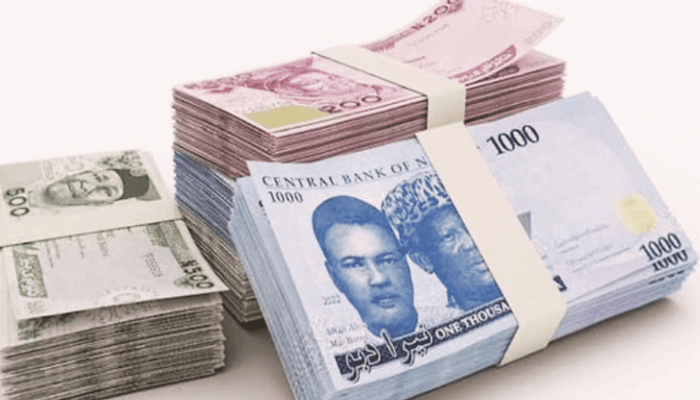
Timeline: 1989-2015
This week, we commenced a focus on the history of the Nigerian currency -the Naira, and why it rises and crashes. Continue reading:
- 1989–1992: Exchange-Rate Liberalisation
- The government continued experimenting with foreign-exchange arrangements.
- In 1989, bureaux de change were introduced to expand access to foreign currency.
- On March 5, 1992, Nigeria unified the official exchange rate with the parallel-market rate, moving the official rate from approximately ₦10.56 to ₦18 per dollar.
- The authorities subsequently moved towards a more fully market-determined exchange rate.
- These changes represented attempts to establish a more realistic exchange rate and narrow the gap between official and parallel-market prices.
- 1993–1995: Exchange-Rate Revaluation and Policy Reversals
- This period illustrates why an official strengthening of the naira does not necessarily mean the currency has recovered its underlying economic strength.
- In 1993, the government returned to a more controlled exchange-rate system.
- An IMF account records that the official rate was pegged at approximately ₦24.90 per dollar before being adjusted to around ₦22 per dollar.
- The naira was subsequently maintained at approximately ₦21.90 per dollar under the administered system.
- Although these changes strengthened the official rate relative to the immediately preceding auction rate, access to foreign currency remained constrained and exchange-rate distortions persisted.
- In 1994, the government further tightened control over foreign exchange and fixed the rate at approximately ₦22 per dollar.
- In 1995, the authorities introduced the Autonomous Foreign Exchange Market (AFEM), returning to a system in which market forces played a greater role in determining the exchange rate.
- Important distinction: An official revaluation can strengthen a published exchange rate without guaranteeing that individuals and businesses can obtain foreign currency at that rate.
1999–2009: Continued Depreciation, With a Temporary Recovery
Nigeria returned to civilian rule in 1999, but the naira continued to face pressure.
According to the CBN’s historical exchange-rate data, the average official exchange rate moved approximately as follows:

Chart: Naira To Dollar Exchange Rate 1999-2009
The naira experienced sustained depreciation during much of this period, although there were episodes of relative stability.
Nigeria’s dependence on crude oil, foreign-exchange demand and the management of external reserves remained important influences on the currency.
A distinction must be made between a temporary appreciation in the exchange rate and a sustained recovery in the currency’s purchasing power.
(Part 1): 1973-1986
The history of the Nigerian naira is marked by two major developments: periods when the currency gained value or was officially strengthened, and prolonged periods when it lost value against major international currencies, particularly the US dollar.
Since its introduction in 1973, the naira has undergone several exchange-rate policy changes, including fixed exchange rates, currency devaluations, foreign-exchange market liberalisation, attempts to unify exchange rates and market-driven depreciation.
The Central Bank of Nigeria (CBN) has played a central role in managing these changes.
- Introduction of the Naira in 1973
Nigeria introduced the naira on January 1, 1973, replacing the Nigerian pound.
The conversion rate was:
£1 Nigerian pound = ₦2.
₦1 = 10 shillings under the old currency system.
₦1 = 100 kobo.
The new currency was introduced during a period of expanding oil revenues and economic growth.
Nigeria initially maintained a relatively strong, managed exchange rate, supported by foreign-exchange controls and the country’s oil earnings.
The introduction of the naira was a currency change, not a devaluation.- The 1970s: A Relatively Strong Naira
During the 1970s, rising oil revenues strengthened Nigeria’s foreign-exchange position.
The government maintained a controlled exchange-rate system, initially linking the naira to the US dollar before moving to a basket of currencies representing major trading partners in 1978.
The oil boom provided foreign exchange for imports, infrastructure and public expenditure.
However, Nigeria’s dependence on crude oil revenues left the economy vulnerable to fluctuations in international oil prices.
Key development: The naira benefited from a relatively strong external position, although its exchange rate was managed by the authorities rather than determined by an unrestricted market.- The Early 1980s: Mounting Pressure on the Naira
The economic situation deteriorated in the early 1980s as oil revenues weakened and foreign-exchange shortages intensified.
Nigeria faced several economic challenges:
• Declining oil receipts.
• Rising import bills.
• Pressure on foreign reserves.
• Growing external debt and trade arrears.
• Increasing demand for foreign currency.
The government maintained controls on foreign exchange, but the official rate became increasingly disconnected from the rate at which foreign currency could be obtained in the parallel market.
This created pressure for exchange-rate reform.
The crisis set the stage for the introduction of the Structural Adjustment Programme (SAP) in 1986.- 1986: Major Naira Devaluation Under SAP
September 26, 1986, marked a turning point in the history of the naira.
Under the military government of General Ibrahim Babangida, Nigeria introduced the Second-Tier Foreign Exchange Market (SFEM) as part of the Structural Adjustment Programme.
The objective was to allow market forces to play a greater role in determining the naira’s exchange rate.
According to an International Monetary Fund account, the naira’s value was discounted by approximately 66 per cent at the inaugural SFEM auction.
The exchange rate moved from about ₦1.60 per US dollar under the previous administered rate to approximately ₦4.60 per dollar at the initial auction.
Why was the naira devalued?
The policy was intended to:
•Reduce the overvaluation of the naira.
•Improve the allocation of scarce foreign exchange.
•Encourage non-oil exports.
•Improve the competitiveness of Nigerian products.
•Reduce distortions in the foreign-exchange market.
However, the weaker currency also increased the naira cost of imported goods and production inputs.
The 1986 reform began a prolonged period of exchange-rate adjustments.- …To be continued
Business
Obasanjo Accuses Tinubu : “You Made Every Nigerian Poor By 300% Naira Devaluation”
The former President also rejected the argument that Tinubu needed more time to complete his reforms, saying he did not see the economy improving.
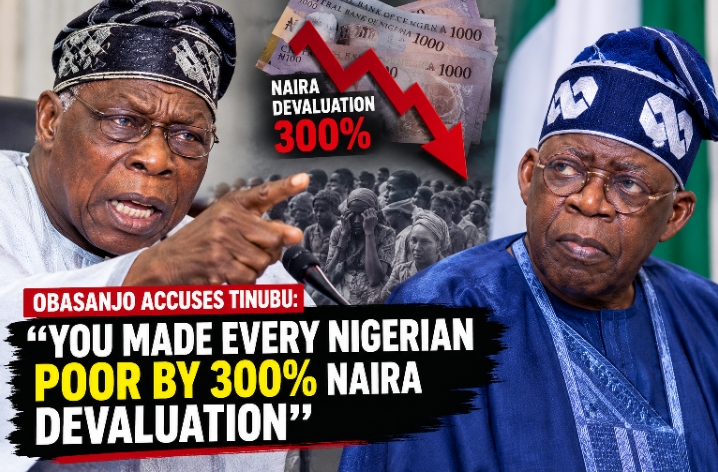
Image: AI generated
Former President Olusegun Obasanjo has accused President Bola Tinubu of making every Nigerian poor by 300 per cent through the devaluation of the naira.
Obasanjo spoke on Wednesday during the Financial Times Africa Summit 2026 in London, United Kingdom.
He said that the naira lost its value overnight due to economic reforms undertaken by the Tinubu administration in 2023.
“We do not live in isolation as a country. We interact with the rest of the world. And overnight, you devalue the currency by 300 per cent. The naira went from N500 to a dollar to N1,500 to a dollar. What that meant was that every Nigerian is made poor by 300 per cent.”
Obasanjo said that had made Nigeria “the poverty capital of the world,” which he said meant the country had the largest number of poor people in the world.
“You cannot say to me that that is good for Nigeria. You cannot say to me that that is good for us in any sense,” he noted.
The former President also rejected the argument that Tinubu needed more time to complete his reforms, saying he did not see the economy improving.


History of Naira Revaluation and Devaluation (1973–2026) (Part 2)

EBOLA: Lagos Heightens Watch at Airports After Abuja Case

JUST IN: Four Pilots Die After Mid-Air Collision of Military Planes in Philippine

BREAKING: Lagos Govt Declares Today, Thursday Work-Free to Mark 2026 Ìṣẹ̀ṣe Day

Tech Expert, Zuckerberg trains with UFC champions, Adesanya, Alexander

Organ Trafficking: Ekweremadu bags 10 years in UK prison
-

 Business3 days ago
Naira To Dollar, Pound, Euro… Today October 23
-

 Business3 days ago
Obasanjo Accuses Tinubu : “You Made Every Nigerian Poor By 300% Naira Devaluation”
-

 Entertainment3 days ago
JUST IN: Nollywood Veteran Francis Duru Dies at 57 After Brief Illness
-

 News3 days ago
JUST IN: 1 Dead, 3 Rescued in Fadeyi Building Collapse, Lagos
-
 Business3 days ago
History of Naira Revaluation and Devaluation (1973–2026)
-

 Business3 days ago
CBN Licences Abbey Bank to Start Full Commercial Banking in November 2026
-
 Politics2 days ago
2027 presidential election: Tinubu’s Northern test begins today
-
 Health7 hours ago
EBOLA: Lagos Heightens Watch at Airports After Abuja Case