
News
Requirements for Building Approval in Lagos State by Dennis Isong

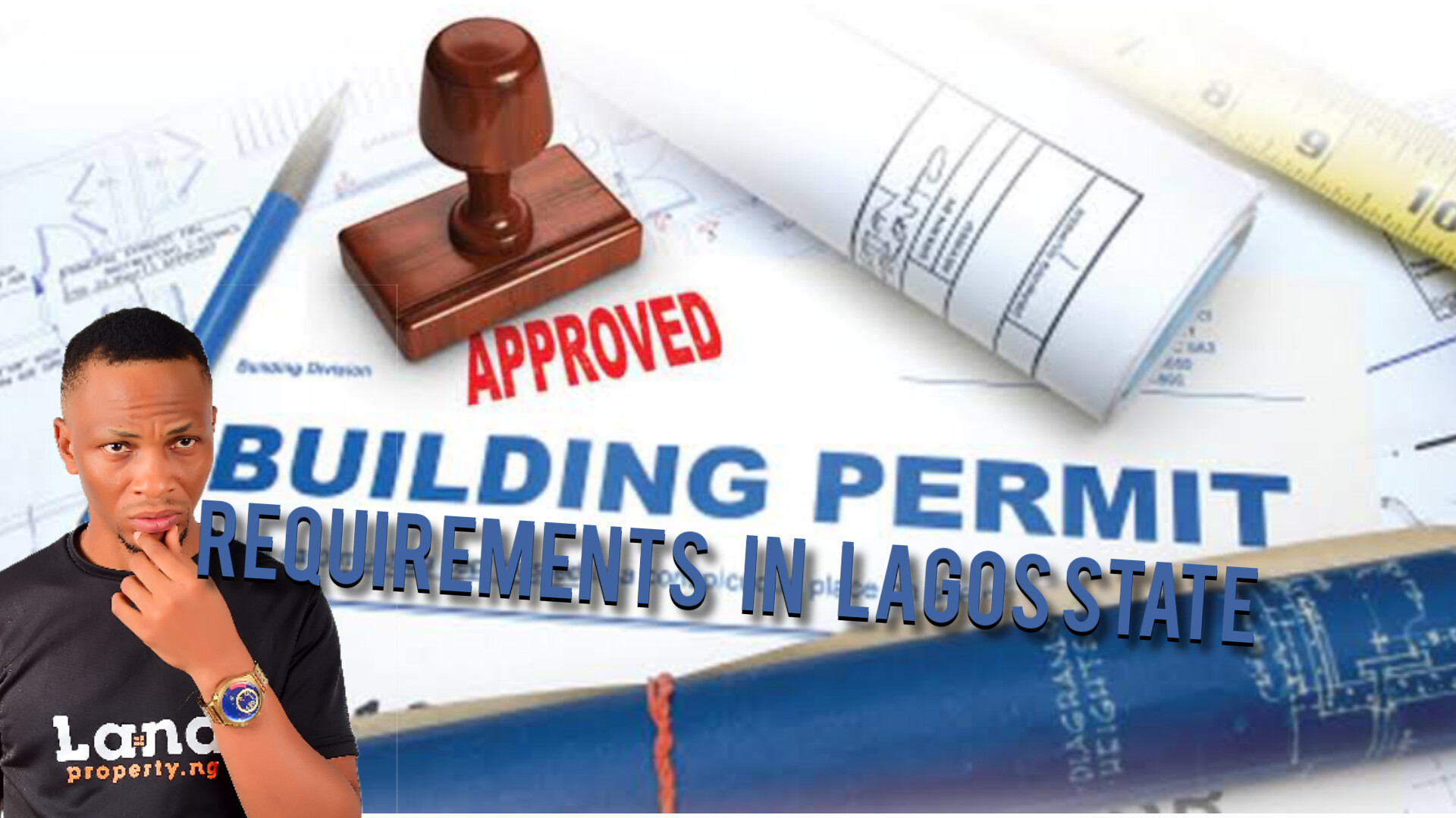
Lagos State, Nigeria, is a bustling metropolis known for its vibrant culture and economic opportunities. As the population continues to grow, so does the need for housing and infrastructure development.
However, before embarking on any construction project in Lagos, it is crucial to understand and adhere to the building approval requirements set forth by the Lagos State government. This article will outline the key prerequisites and steps to obtain building approval in Lagos State.
- Land Ownership and Title Documentation
The first step in obtaining building approval in Lagos is to establish clear ownership of the land on which you intend to construct.
With your architectural and engineering designs in hand, you can proceed to submit your building plan approval application to the Lagos State Physical Planning Permit Authority (LASPPPA) or the local government planning authority
You must possess a genuine land title document such as a Certificate of Occupancy (C of O), Deed of Assignment, or Governor’s Consent. Without proper land ownership documentation, you cannot proceed with the approval process.
- Architectural and Engineering Designs
Once land ownership is confirmed, the next step is to engage the services of a registered architect and structural engineer.
They will be responsible for creating detailed architectural and engineering designs that adhere to the Lagos State Urban and Regional Planning Law. These designs must also comply with zoning regulations, building codes, and other relevant standards.
- Environmental Impact Assessment (EIA)
For certain projects, an Environmental Impact Assessment may be required. This assessment is necessary for developments that have the potential to affect the environment significantly. An EIA report must be submitted to the Lagos State Ministry of Environment for evaluation and approval.
- Submission of Building Plan Approval Application
With your architectural and engineering designs in hand, you can proceed to submit your building plan approval application to the Lagos State Physical Planning Permit Authority (LASPPPA) or the local government planning authority, depending on the location of your project. This application should include the following:
- Completed application forms
- Architectural and engineering drawings
- Environmental Impact Assessment report (if applicable)
- Evidence of land ownership
- Tax clearance certificates
- Site photographs
- Other relevant documents as requested
- Assessment and Approval Process
The Lagos State authorities will review your application to ensure compliance with building codes, safety standards, and land use regulations. The assessment process may involve site inspections, interviews with the project team, and a thorough evaluation of the submitted documents. Once your application is approved, you will receive a Building Plan Approval Permit.
- Payment of Statutory Fees
Before commencing construction, you are required to pay the necessary fees and levies to the Lagos State government. These fees include development and planning permit fees, foundation fees, and other applicable charges.
- Commencement of Construction
Once you have obtained your Building Plan Approval Permit and paid the required fees, you can start construction. It is crucial to adhere strictly to the approved plans and timelines to avoid any legal issues in the future.
- Regular Inspection and Compliance
Throughout the construction process, the Lagos State authorities may conduct periodic inspections to ensure that the project complies with approved plans and safety standards. Any deviations or violations can lead to project stoppage or penalties.
▪︎ Dennis Isong is a TOP REALTOR IN LAGOS.He Helps Nigerians in Diaspora to Own Property In Lagos Nigeria STRESS-FREE. For Questions WhatsApp/Call 2348164741041


News
Ayo Fayose Gets Presidential Portfolio As REA Board Chairman
Fayose will head the board of REA, with Alhaji Ahmadu Abubakar and Engineer Ilyasu Ibrahim Makinta appointed as members and non-executive directors,” said Onanuga.
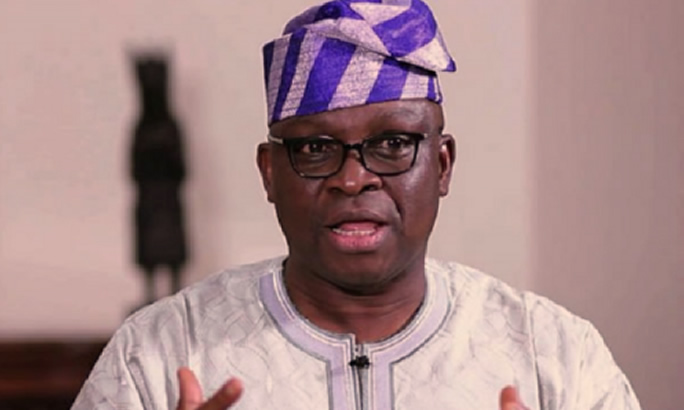
President Bola Tinubu has appointed the former governor of Ekiti State, Ayo Fayose, as chairman of the Rural Electrification Agency (REA) Board.
The President also appointed Major General Junaid Bindawa as chairman of the National Salaries, Incomes and Wages Commission.
24 others were also appointed to 10 federal government agencies and commissions.
The appointments were contained in a statement issued by the presidential spokesman, Bayo Onanuga, in Abuja.
According to the statement, “All the appointments take immediate effect.”
“Fayose will head the board of REA, with Alhaji Ahmadu Abubakar and Engineer Ilyasu Ibrahim Makinta appointed as members and non-executive directors,” said Onanuga.
News
BREAKING: ICPC grills Gbajabiamila over PFIPC scandal
According to Jiti Ogunye, Gbajabiamila’s counsel, the president’s chief of staff appeared at the ICPC headquarters on Monday, where he was questioned over the PFIPC controversy.
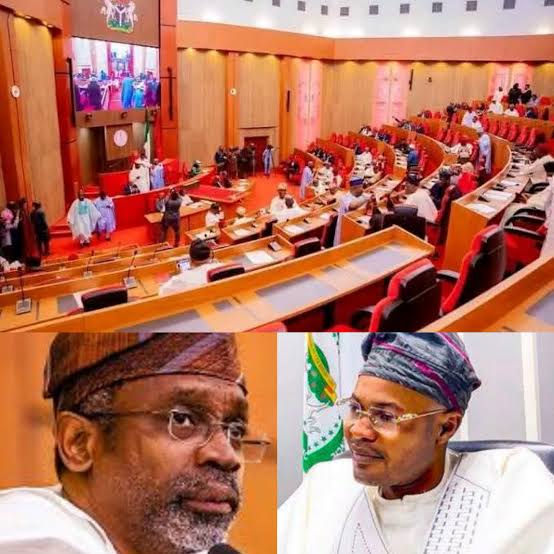
The Independent Corrupt Practices and Other Related Offences Commission (ICPC) has interrogated Femi Gbajabiamila, chief of staff to President Bola Tinubu, over his role in the emergence of the controversial Presidential Foreign Investment Promotion Council (PFIPC).
According to Jiti Ogunye, Gbajabiamila’s counsel, the president’s chief of staff appeared at the ICPC headquarters on Monday, where he was questioned over the PFIPC controversy.
Details soon
(The Cable)
News
NBC Begins Training of Free -To- Air TV Installers
” We are doing it to ensure that they can properly track the NigComsat signal. We found out that installers are very critical to the success of the DSO project because we recently launched the DTH project. We are going DTT. We are going DTH. We are doing mobile App.”
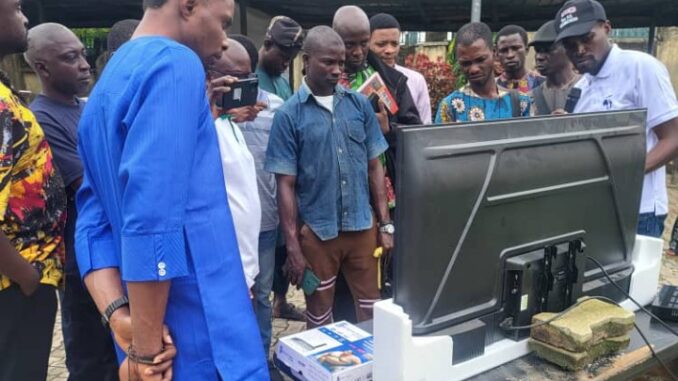
•50 set-top box installers and technicians in Ibadan
The National Broadcasting Commission (NBC) has commenced nationwide capacity-building exercise to prepare installers for the rollout of the country’s renewed Digital Switchover (DSO) programme.
The Head of the DSO Unit and Deputy Director of Public Affairs at the Commission, Mrs. Clementine Usman-Wamba, announced the development during training of more than 50 set-top box installers and technicians in Ibadan, the Oyo State capital.
According to her, broadcasters would be shut out of analogue broadcasting transmission by 2028, hence the need for the training of installers that are professionals to assist in the process.
She said, “We are actually here in Ibadan to train installers specifically to be part of the Digital Switch Over process.We are doing it in conjunction with Nigeria Communication Satellite Limited, (NigComSat). It is a joint outreach that we are doing here today.”
” We are doing it to ensure that they can properly track the NigComsat signal. We found out that installers are very critical to the success of the DSO project because we recently launched the DTH project. We are going DTT. We are going DTH. We are doing mobile App.”
She said that the installation of Free TV is to enable Nigerians to have access to many channels without subscription, noting that the NBC has embarked on the training of the installers of decoders and dishes nationwide for effective take off of the project.


CBN admits it opened domiciliary accounts for PFIPC agency

Naira Exchange Rates At The Parallel/ Official Market Tuesday, 21 July

Ayo Fayose Gets Presidential Portfolio As REA Board Chairman

Tech Expert, Zuckerberg trains with UFC champions, Adesanya, Alexander

Organ Trafficking: Ekweremadu bags 10 years in UK prison

SAINT OBI: Between his marriage and his death
-
 News1 day ago
BIJAMIC College Charges Class of 2026 Graduates to Embrace Resilience, Learn from Thomas Edison
-
 Sports2 days ago
Who made the FIFA World Cup trophy?
-
 News2 days ago
Senegal President, Faye elected new ECOWAS chairman
-

 Sports2 days ago
FIFA To Review Hydration Breaks After World Cup Final – Wenger
-
 Crime2 days ago
Students Killed as Troops Foil ISWAP Abduction Bid in Borno
-
 News2 days ago
Badejo-Okusanya Emerges NBA National President (2026-2028)
-
 News1 day ago
Abbas inaugurating today committee to investigate illegal PFIPC agency
-
 Sports2 days ago
Burna Boy shines in first-ever World Cup Halftime Show