
International
Putin announces May 8-10 ceasefire, Ukraine wants truce now
The White House said President Donald Trump wanted a permanent ceasefire between Russia and Ukraine.

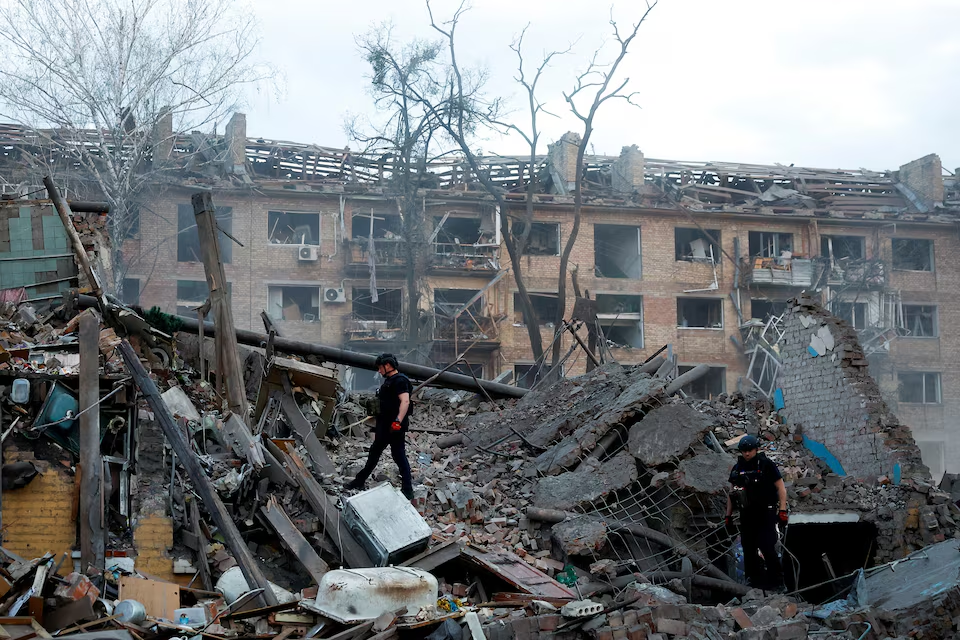
Image:Police officers inspect the site of a building hit by a Russian ballistic missile strike, amid Russia’s attack on Ukraine, in Kyiv, Ukraine April 24, 2025. REUTERS/Valentyn Ogirenko.
(Reuters) – Russian President Vladimir Putin on Monday declared a three-day ceasefire in May in the war with Ukraine to mark the 80th anniversary of the victory of the Soviet Union and its allies in World War Two.
The Kremlin said the 72-hour ceasefire would run on May 8, May 9 – when Putin will host international leaders including Chinese President Xi Jinping for lavish celebrations to commemorate victory over Nazi Germany – and May 10.
Ukrainian Foreign Minister Andrii Sybiha, in response, said: “If Russia truly wants peace, it must cease fire immediately. Why wait until May 8th?”A ceasefire should be “real, not just for a parade,” he posted on X.
The White House said President Donald Trump wanted a permanent ceasefire between Russia and Ukraine.

International
Zimbabwe Wins UN Security Council Seat for 2027-2028
The five countries were elected by the 193-member General Assembly to serve as non-permanent members of the Security Council for two-year terms beginning on January 1, 2027.

Zimbabwe has been elected to a non-permanent, two-year term on the United Nations Security Council, the third time the country will be represented on the body mandated to maintain international peace and security.
Voice of Nigeria reports that the other countries that secured seats around the iconic horseshoe table are Austria, Portugal, Trinidad and Tobago, and Kyrgyzstan.
The five countries were elected by the 193-member General Assembly to serve as non-permanent members of the Security Council for two-year terms beginning on January 1, 2027.
Austria and Portugal won the two seats allocated to the Western European and other States (WEOG) Group, while Trinidad and Tobago and Zimbabwe were elected from the Latin American and Caribbean Group and the African Group, respectively.
Kyrgyzstan secured the Asia-Pacific seat after defeating the Philippines in four rounds of voting.
International
Finland’s president says EU should expand to 40 states — including Canada
His comments come as the Trump administration’s actions, alongside Russia’s war with Ukraine, prompt some countries to reconsider the benefits of EU membership.
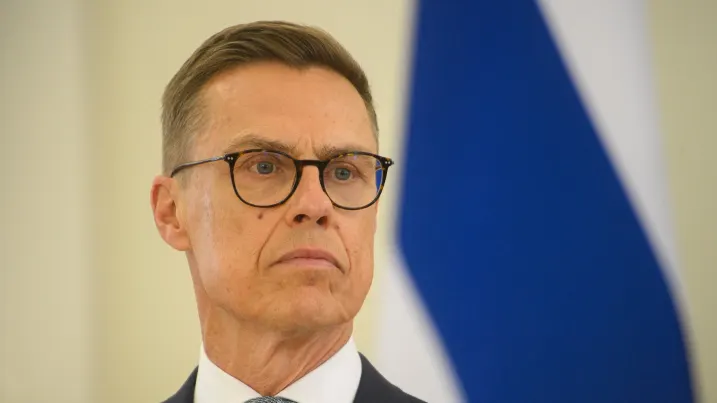
• Finland’s president Alexander Stubb
Finnish President Alexander Stubb has stressed the need for a much larger European Union, saying the 27-nation bloc should increase its membership to 40 states and named the U.K., Canada, Turkey, Norway and Iceland as potential candidates to join.
Stubb made the call at an energy conference in the Finnish capital on Wednesday.
His comments come as the Trump administration’s actions, alongside Russia’s war with Ukraine, prompt some countries to reconsider the benefits of EU membership.
Stubb told the Eurelectric Power Summit that “the window of opportunity” for EU enlargement “is quite short because when the war in Ukraine ends and perhaps when the U.S. administration changes, I don’t know, then people are going to take their foot off the gas pedal and start heckling about unnecessary stuff again.”
Stubb added that “European strategic autonomy or European geopolitical power” is “often based on size and scale and I think the best European policy ever has been European enlargement.”
“In this moment, we need to think big and geographically, we need to enlarge or at least create memberships which are flexible enough to bring in a sum total of 40 European states — or even non-European,” Stubb said.
Finland’s president said the EU should look to its western flank and bring the U.K., which left the bloc in 2020, back into the fold, or at least “as close as possible
.”Canada should be considered as another option, Stubb said. “Wouldn’t it be lovely if Canada was the 28th state of the European Union rather than the 51st state of the United States?”
International
Iran Kuwait’s airport attack injures 63
Health ministry spokesman Abdullah al-Sanad said 25 ambulances were dispatched at Kuwait International Airport, adding that “63 injured individuals were received and distributed among hospitals.
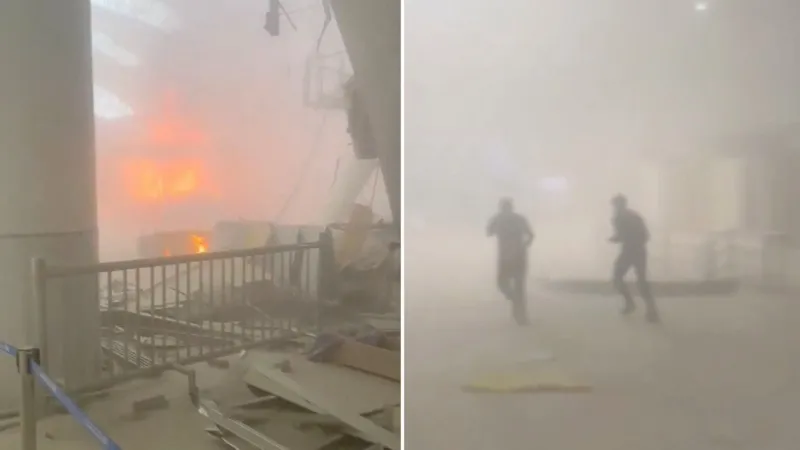
Today Wednesday June 3: Kuwait International Airport was hit by Iranian drones.
An Iranian attack on Kuwait’s airport wounded at least 63 people on Wednesday, the health ministry said, with authorities earlier reporting one person killed.
Health ministry spokesman Abdullah al-Sanad said 25 ambulances were dispatched at Kuwait International Airport, adding that “63 injured individuals were received and distributed among hospitals.
This includes serious injuries… including head wounds, cerebral hemorrhages, amputations and injuries resulting from explosions.”
An airport source told AFP that the death in Kuwait was an Indian national at the airport.


FIFA World Cup Day 2: Canada holds 1-1 Bosnia-Herzegovina

Democracy Still Struggling 33 Years After June 12, PDP Laments by Comrade Ini Ememobong

JUNE 12: President Bola Ahmed Tinubu’s Democracy Day Address (Full Speech)

Tech Expert, Zuckerberg trains with UFC champions, Adesanya, Alexander

Organ Trafficking: Ekweremadu bags 10 years in UK prison

SAINT OBI: Between his marriage and his death
-

 Business3 days ago
UBA wins 2026 ‘Banker Technology’ award for AI innovation
-
 Business2 days ago
Exchange Rates Thursday,11June 2026
-
 Sports3 days ago
Olympic qualifier: Comoros to face Super Falcons following 30-0 victory over Sudan
-
 News2 days ago
JUST IN: Nigerians evacuated from South Africa arrives Lagos
-
 Business3 days ago
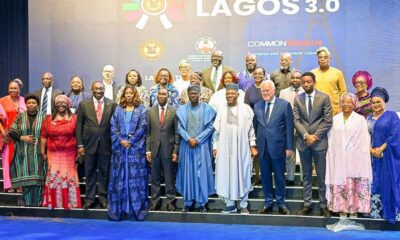
Invest in Lagos 3.0 Summit Attracts more than 600 delegates
-
 Politics3 days ago
Bamidele tasks 11th Senate to consider single term for President, govs
-
 Health3 days ago
Ebola: President Tinubu approves N10bn to strengthen NCDC preparedness
-
 Business2 days ago
Kingsley Moghalu chairs Bluecode Africa subsidiary in Nigeria