
News
Nigeria: There’s Fire on the Mountain, and no one is a runnin’
It is sad that foreign armed groups are able to overrun the nations’ security apparatus not minding the mind bugling amount of funds voted every year in the nation’s budget on security.

By John Segun Odeyemi
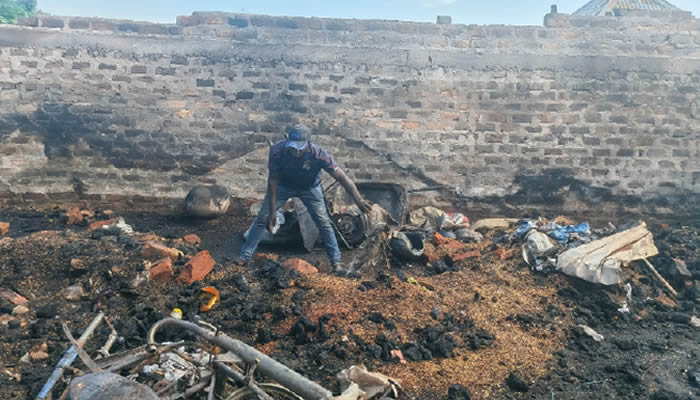
Image credit: Burnt Community in Benue
Until now, I have refrained from writing commentaries about the political landscape of our country, Nigeria.
I have become disenchanted with the downward spiral of the absurdities that have become common place within the political space.
Within the last few days, I have read several articles on the killings in Plateau, Nasarawa and Benue States, and I am convinced to add my voice to the outcry of government’s inability to act proactively in securing the safety of Nigerians from marauding and murdering Fulani insurgents, Boko Haram terrorists and the incessant and now common place kidnapping for ransom.
Anywhere in the world, the first duty of any government is to secure the safety of its citizens in and outside of the country.
It is clear that the government of President Ahmed Bola Tinubu is either incapable or unwilling to tackle the continuous decimation and subjugation of our people.
In most other climes that claim democratic principles, those in leadership should have resigned from office.
Not in Nigeria! Here we glorify ineffectiveness and inefficiencies.
In the epic 2008 song titled, “There is Fire on the Mountain,” by the Nigerian musician who goes by the name Asa, she makes the claim even though this fire is raging, surprisingly, no one is running.
I find two corollaries, one in an old English idiom, and the other in traditional Yoruba oral tradition; for the English, “The proverbial ostrich that buries its head in the sand.
And the Yoruba wisdom, “No one lights a torch and leaves it burning around a thatched roof.”
In both instances, the culprit is inertia or the lack of desire to act in preventing a disaster.
Either of which does not describe, even at the minimal level, a people willing to act fundamentally from a place of common sense!
Unfortunately, when I see the shenanigans, politicians have reduced my country to, I can only conclude we have politicians who have knowingly set a fire to the country.
And we have a citizen who see the fire and refuse to run.Human life is sacred and each individual’s life should be protected.
Sadly, the entire nation seems inured to a culture of bloodletting, savagery and the disposal of human life.
Our social media space is diffused with gory videos and pictures of unthinkable scenes of inhumane accounts of man’s inhumanity and cruelty to other humans.
Anywhere in the world, the first duty of any government is to secure the safety of its citizens in and outside of the country.
More specifically, of brigandry to defenseless communities.
A situation where aggressors over run entire communities, displace the communities and inhabit their homes without re-adjudication or lawful intervention by constituted authority and, or state intervention.
I continue to hear of “insecurity” in the nation when in reality, what we have is the invasion of our sovereignty as a nation.
It is sad that foreign armed groups are able to overrun the nations’ security apparatus not minding the mind bugling amount of funds voted every year in the nation’s budget on security.
One is forced to question the usefulness and functionality of government sponsored and funded state security agencies.
One cannot but wonder why insurgents are better equipped than the nation’s army in arms and intelligence gathering?
Who are the invested players who supply them with arms and ammunition?
How can bandits become so powerful as to brazenly over run our country’s army encampment, capture Nigerian soldiers, take their armored cars and weapons and put all of this on social media?
There are multiple narratives circulating and making the rounds especially on social media.
Unfortunately, there is no way of verifying the authenticity of some of these claims.
Some shadowy entities trace the incessant bloody and extremely violent attacks on a bid, either for the Islamization of the country or Jihad aimed at a land grab in favor of all shades of Fulanis from the Sahel.
Some even make the claim that it is both issues morphed into one.
I find some plausibility at least in the Fulani bid to find a home in Nigeria.
The current governor of Borno state made that claim on national TV. When asked if the Fulanis coming from outside Nigeria are Nigerians.
He blatantly said “Yes.” Immediately, when I encounter political impropriety and lack of diplomacy at this level, my mind goes into a default.
I try to find a matching partner for buffoonery; in this instance, I thought his less- cellency should be sent to Donald Trump’s school of diplomacy and should not be allowed to return without a doctorate.
For far too long, we have behaved like the ostrich, unable to confront, nationally, the real issues we need to confront; our federalism vis-à-vis regionalism, state policing, our current constitution, our so called “democracy”, and the relationship between the North and the rest of the country.
I believe there is enough land and space in the North to accommodate kith and kin from other climes to settle and graze their cattle up north.
Ranching versus grazing and any other animal husbandry is fine as long as your business does not disrupt mine.
But we all know that grazing is intentionally done to destroy people’s hard work on their farms.
We all know it, but we are looking the other way and mumbling the fool’s mantra, “It is well!”
It is not well, and there is no way it will be well, if some psychotic, marauding murderers, rapists, and demented drug addicts are allowed to kill innocent citizens of our country.
We can no longer be silent if we are human and sane.
If the corridors of power are playing politics with our fellow citizens’ property, security and lives, we have a moral obligation to rise up in holy and righteous anger to stump on evil.
Just last week, we witnessed in the United States, how an entire country came out en-masse to protest what was perceived as oligarchy, an affront on the idea of American democracy, which was tagged “No King.”
Why are we unable to hold our politicians accountable? Why is it that it seems we do not understand that they work for us (even though they steal from us all the time!)
If we do not force a change by our action as citizens, knowing that our so-called politicians are only interested in their own welfare; we must then ask ourselves the mother of all questions… pardon me to borrow from Asa again; “…
One day, the river will overflow and there will be nowhere for us to go.
And we will run, run, wishing we had put out the fire.”
When all has been said, we need to all agree as Nigerians, that these killings are too much! If you do not feel this empathy, then know you are a part of the killing spree.
Those who nurture this theater of war are not interested in building a nation or having a viable ecumenical union among religions in our country. it is all about disorder so they can continue to steal and enrich themselves; “… the more you see, the less you understand, Abracadabra!” If we keep quiet, they continue to eat away at the innards of our country and the rest of us, shall be unaware of what our infestation is coming from?
From within, they will polarize our peoples, dislocate the unity of our communities.
From our jaded communities, we help spew hate and hate and more hate. This in turn corrodes our ability to build a unified front.
Our politicians place their lighted touch under a thatched roof and go to bed on their watch.
When the fire starts, where are we going to run? We can douse the fire now if we imagine the conflagration that a burning Nigeria will look like.
∆ John Segun Odeyemi, is a Catholic Priest and assistant professor of Systematic theology at the Institute for Black Catholic Studies, Xavier University of Louisiana.
News
South African kills Nigerian bar worker
Olaleye was allegedly shot by a South African national following an argument over whether a drinking glass should be taken outside the bar.
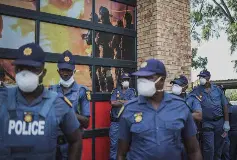
• South African police
The Nigerian Union in South Africa (NUSA) says Olatunde Olaleye, a 40-year-old father of two, has been shot dead in the country.
According to NAN, NUSA said Olaleye, an indigene of Ikere-Ekiti, was killed on September 21 while working at Spanata Bar and Grills in Mamelodi, Pretoria.
Smart Nwobi, NUSA president-general, in a statement on Thursday, said Olaleye was a husband and father of two children, adding that his death has left his family devastated.
He said the union is concerned by reports that Olaleye was allegedly shot by a South African national following an argument over whether a drinking glass should be taken outside the bar.
According to him, there were also reports that the suspect returned to the premises to threaten the bar’s management, with a promise that members of his crew would return.
Nwobi called for a thorough, transparent and impartial investigation into the circumstances surrounding the incident.
“We cannot continue to lose Nigerians under circumstances that leave families devastated and communities traumatised,” he said.
News
Nigerian Editors Brace for Democracy Protection Ahead of 2027 Elections
“As editors, we must remain above board in an increasingly polarised environment. We must not become agents of disorder. Neither should we display contradictory tendencies that cause the citizenry to question our credibility,” Anaba said.
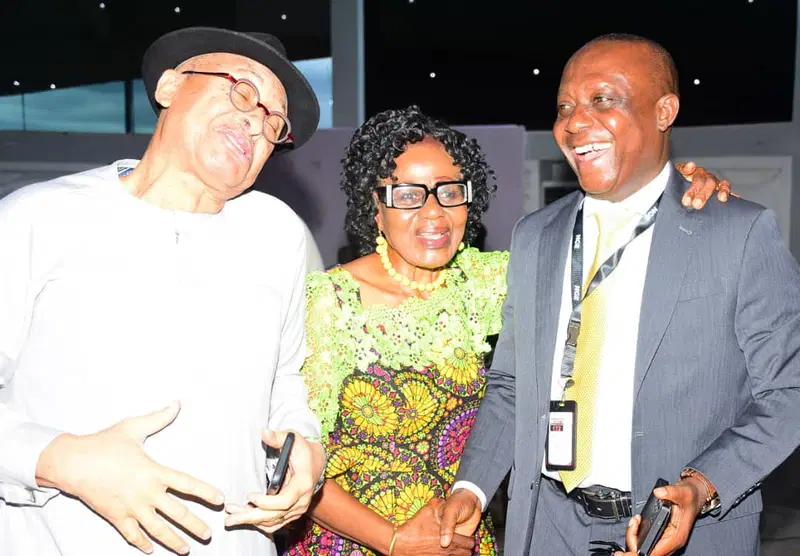
Enugu|•L-R Prof Pat Utomi; Prof Chinyere Okunna and Eze Anaba President Nigerian Guild of Editors at the 22nd All Nigerian Editors Conference in Enugu. Photo. Nwankpa Chijioke
Nigerian editors have been urged to protect the credibility of the ballot and help safeguard democracy as the country prepares for the 2027 general elections.
The call was made by Eze Anaba, President of the Nigerian Guild of Editors (NGE) and Editor of Vanguard Newspaper, in his welcome address at the 22nd Annual All Nigerian Editors Conference, which opened today in Enugu.
The conference is themed, “The Ballot, the Media and the Task of Keeping Democracy Alive.”
Anaba said the media, alongside other critical institutions, had a responsibility to nurture democracy by ensuring that voters were adequately informed and that electoral outcomes reflected the choices of the people.
According to him, the ballot can only fulfil its democratic purpose when voters have access to credible information and are able to make their choices freely, without intimidation or undue influence.
He urged editors and journalists to uphold verification, independence, accuracy, fairness, accountability and courage, particularly in an era of social media, artificial intelligence, deepfakes and the rapid spread of misinformation.
“As editors, we must remain above board in an increasingly polarised environment. We must not become agents of disorder. Neither should we display contradictory tendencies that cause the citizenry to question our credibility,” Anaba said.
He stressed that the media’s overarching responsibility was to serve the public good and help ensure that government derived its legitimacy from the consent of the people.
News
Works Minister Orders Tinubu’s Pictures On First Niger Bridge
“The President has worked so hard and we need to reward his hard work by decorating this bridge with his pictures.”

Minister of Works, David Umahi, has ordered the removal of illegal advertisements from the rehabilitated First Niger Bridge and their replacement with pictures of President Bola Tinubu, saying the display would recognise the President’s work on infrastructure.
Umahi gave the directive during an inspection of ongoing rehabilitation works on the bridge linking Anambra and Delta states.
He said the bridge was expected to reopen to motorists next week, subject to the completion of critical structural work.
“Once we are done with work on this bridge, I want all the illegal adverts on this bridge removed. Anyone who wants to advertise should apply to the Ministry of Works. For now, the bridge will be decorated with the pictures of President Tinubu,” Umahi said.
“The President has worked so hard and we need to reward his hard work by decorating this bridge with his pictures.”


Congo military plane crash kills 13, including three officers

Manchester City Faces Expulsion For Breaching 114 EPL Financial Rules

TIME Names Moniepoint CTO Felix Ike Among 50 Global Executives of the Year

Tech Expert, Zuckerberg trains with UFC champions, Adesanya, Alexander

Organ Trafficking: Ekweremadu bags 10 years in UK prison

SAINT OBI: Between his marriage and his death
-

 Business2 days ago
MAN Urges CBN To Consider CRR Cut Next Phase of Monetary Easing
-
 Crime2 days ago
JUST IN: Zamfara LG Chairman Freed After 61 Days in Captivity
-

 News2 days ago
VP Shettima, Gov Mbah to address Over 500 editors on 2027 election issues
-
 Sports2 days ago
FIFA names Nigerian referee among 81 officials for U-17 World Cup
-

 Entertainment2 days ago
MultiChoice launches Wethu+ as DStv overhauls packages
-
 Business2 days ago
Naira To Dollar , Pound, Euro Rate, Thursday September 24
-
 Business2 days ago
Otedola bypasses seven African billionaires as fortune hits $2 billion
-
 Business2 days ago
China Woos Nigeria To Join WAICO Memberships For Technology Advantages