
International
Niger dumps French, adopts Hausa as national language


Niger military government has officially made Hausa the country’s new national language, moving away from its colonial past where French played a central role.
The change was announced in a new charter released on March 31, published in a special edition of the government’s official journal.
According to the document, “The national language is Hausa,” and “the working languages are English and French.
”Hausa is already the most commonly spoken language across Niger, especially in the Zinder, Maradi, and Tahoua regions.
Most of the country’s population of about 26 million people understand and speak Hausa.
In comparison, only around three million people, just 13 per cent, can speak French.
The new charter also officially lists nine other local languages, including Zarma-Songhay, Fula, Kanuri, Gourmanche, and Arabic, as “the spoken languages of Niger.”
This language switch follows a national meeting held in February.
During that event, the military government received more support and General Abdourahamane Tiani, the junta leader, was given approval to stay in power for five more years.
Since taking over in a coup in July 2023, which removed the country’s civilian president, Mohamed Bazoum, the junta has been cutting off ties with France.
These actions include removing French troops from the country, ending diplomatic relations, and changing the names of roads and buildings that used to carry French names.
Like Niger, Mali and Burkina Faso, which also have military governments and used to be French colonies, are taking similar steps.
They’ve also pulled out of the Organisation Internationale de la Francophonie, a group similar to the Commonwealth that supports French-speaking nations.



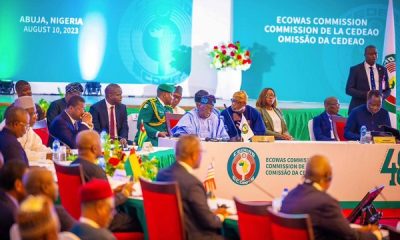





Teachers trained in Nigeria and Ghana are no longer eligible to apply for Qualified Teacher Status (QTS) in England through the UK’s dedicated overseas-trained teacher application route.
The change, confirmed by the Department for Education (DfE), took effect on 9 September 2026. India was also removed from the list of eligible countries.
Under the updated rules, a country must have a national regulator that can confirm a teacher’s professional standing and must be able to provide references that meet the DfE’s verification standards.
For Nigeria and Ghana, the DfE cited problems with employment references. Official data showed that more than 70% of applications from teachers trained in the two countries included work history references sent from public email addresses such as Gmail or Hotmail, rather than official school email domains. The department said this made verification more difficult and resource-intensive.
India was removed because it does not have a national regulator capable of confirming teachers’ professional standing.
South Africa is now the only African country whose teachers remain eligible to use the direct “Apply for QTS in England” service.
The DfE stated that the stricter requirements are intended to ensure overseas teachers awarded QTS have the skills and experience needed to teach in English schools, and that the information they provide can be properly verified.
Teachers trained in Nigeria, Ghana or India who are no longer eligible for the direct application route can still explore alternative paths into teaching in England. These include assessment-only QTS routes offered by some schools or completing initial teacher training in the UK.
International
Trump launches ‘Trump TV’ as US networks halt White House coverage
The development followed the decision by ABC, CBS, Fox News and NBC to suspend their participation in the White House television pool after CNN was prevented from carrying out its scheduled pool duties.

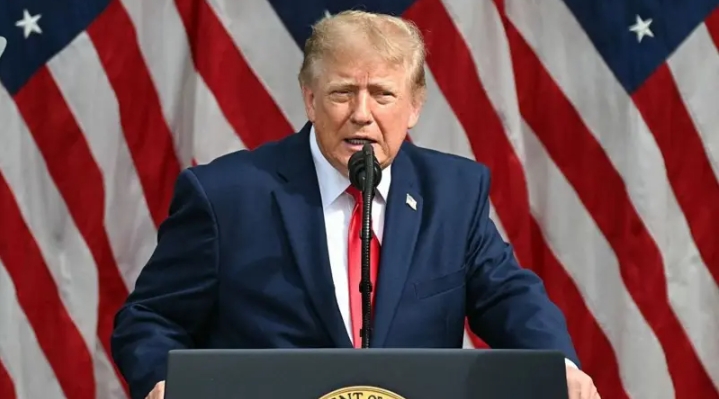
US President Donald Trump’s administration has launched a 24-hour streaming channel, “Trump TV”, after major American television networks suspended their shared coverage of presidential events amid a growing dispute over access to the White House.
The White House announced the launch on Monday, describing the platform as “TRUMP TV: The Essentials Station” and saying it would provide viewers with past presidential moments, major announcements and the latest content from the administration.
The stream is available through the White House website and its official YouTube channel.
The development followed the decision by ABC, CBS, Fox News and NBC to suspend their participation in the White House television pool after CNN was prevented from carrying out its scheduled pool duties.
CNN, MS NOW and Politico had earlier sued the Trump administration after being barred from the White House grounds, arguing that the restrictions violated their constitutional rights.
The administration has defended the ban, with Trump accusing the affected outlets of publishing what he calls “fake news”.
The television pool normally allows participating networks to rotate responsibility for recording and distributing footage of the President to broadcasters across the United States and other parts of the world.
CNN was scheduled to handle the pool coverage on Monday but was prevented from doing so.
The other networks subsequently declined to provide a replacement, creating an unusual gap in shared television coverage of Trump’s official activities. The decision also affected coverage of the President’s inauguration of a new helipad at the White House on Monday.
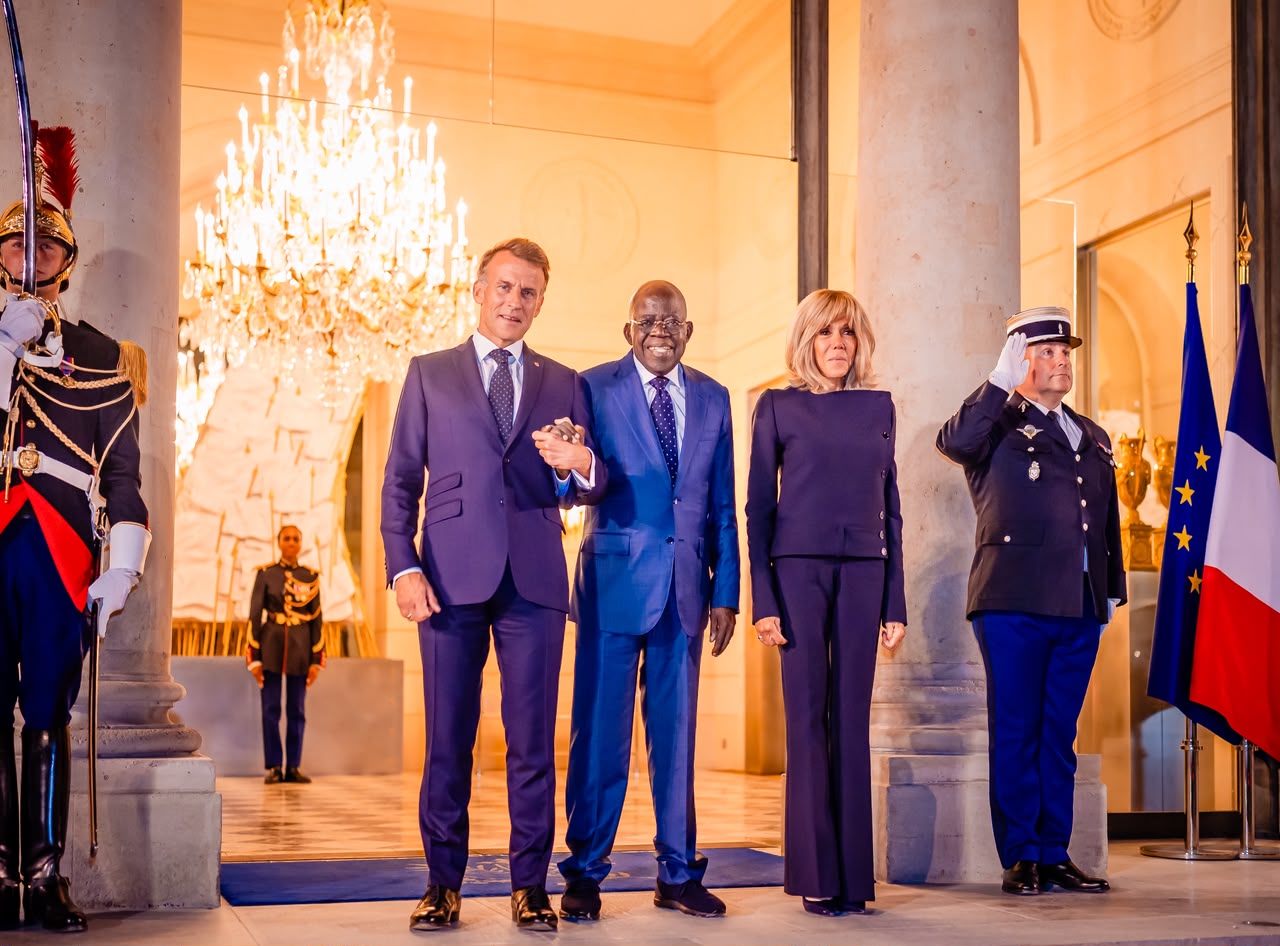
Reaffirming Nigeria-France Ties
French President Emmanuel Macron received Nigerian President Bola Ahmed Tinubu for a private dinner at the Élysée Palace in Paris on Thursday night, in a high-level engagement underscoring the enduring bilateral relationship between the two countries.
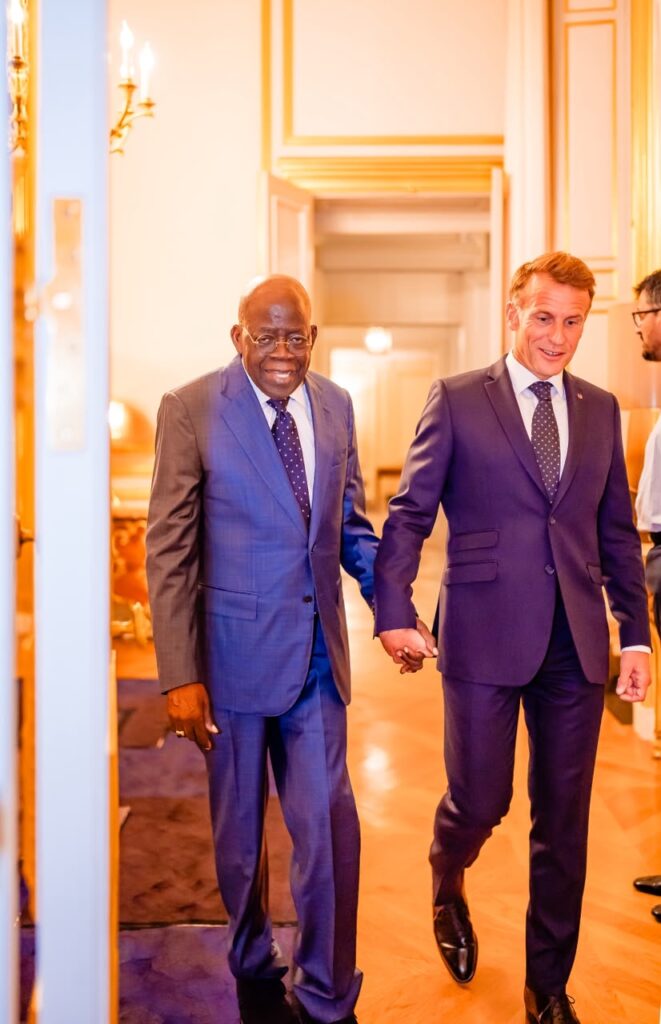
The dinner, held on September 17, 2026, was disclosed on Friday by Bayo Onanuga, Special Adviser to the President on Information and Strategy. In a post on X, Onanuga stated that the meeting reflected “the enduring relationship between Nigeria and France and their shared commitment to strengthening bilateral cooperation.” Photographs released from the evening showed Tinubu with Macron and France’s First Lady, Brigitte Macron, in a cordial setting at the presidential palace.
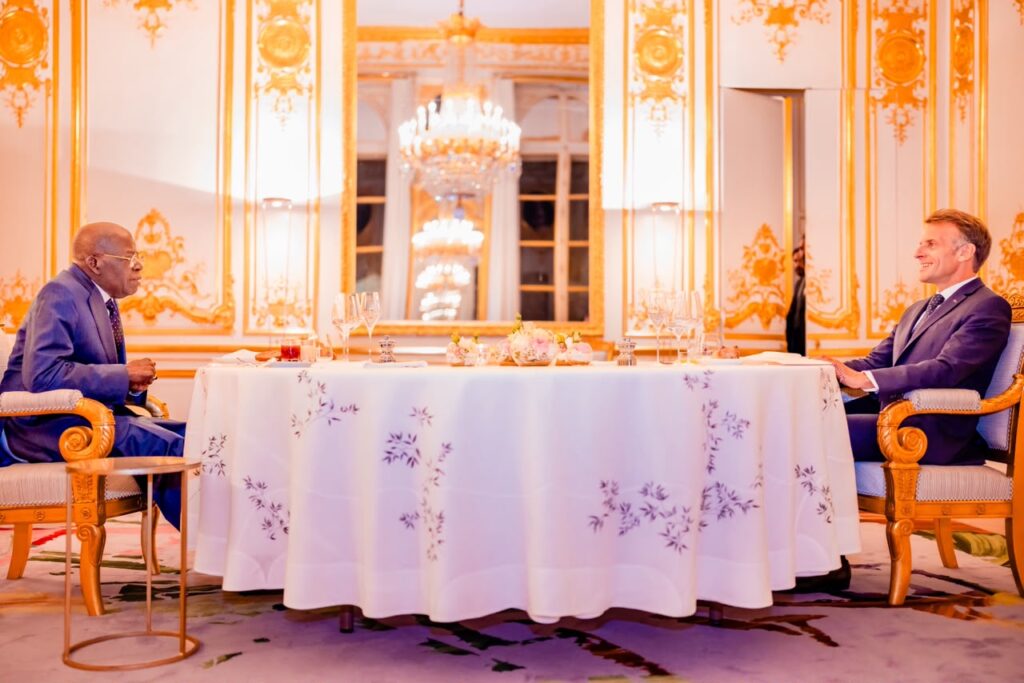
President Tinubu is currently in Europe on a three-week annual leave. He departed Abuja on August 30, 2026, first spending time in London before proceeding to Paris. The private dinner took place during the Paris leg of his vacation and marks another personal interaction between the two leaders.
In related comments, Tinubu described the evening as a pleasure and said the conversation reaffirmed the strong friendship between Nigeria and France as well as their shared commitment to deepening cooperation and building a mutually beneficial partnership. He thanked Macron for his warm hospitality and friendship.
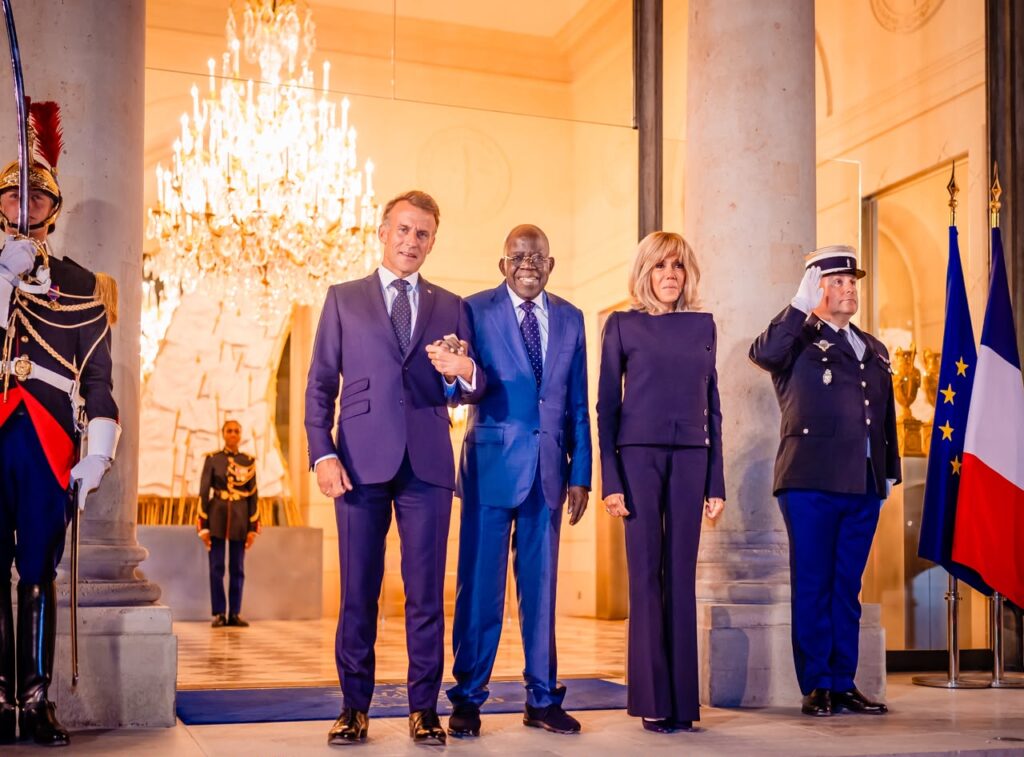
Nigeria and France have maintained active diplomatic and economic engagement in recent years, covering areas such as trade, investment, energy, security cooperation, infrastructure, and critical minerals. The private dinner continues a pattern of direct leader-level contacts that both sides have used to advance practical cooperation beyond formal state visits.
No detailed official readout of specific discussion topics or new agreements was immediately released by either the Élysée Palace or the Nigerian presidency. Such informal encounters have previously helped lay groundwork for subsequent formal engagements between Abuja and Paris.


Nigerian Editors Brace for Democracy Protection Ahead of 2027 Elections

China Woos Nigeria To Join WAICO Memberships For Technology Advantages

JUST IN: Zamfara LG Chairman Freed After 61 Days in Captivity

Tech Expert, Zuckerberg trains with UFC champions, Adesanya, Alexander

Organ Trafficking: Ekweremadu bags 10 years in UK prison

SAINT OBI: Between his marriage and his death
-

 Business2 days ago
Gambia Orders Nigerian Banks To Replace Foreign Staff by December 2026
-

 International2 days ago
Trump launches ‘Trump TV’ as US networks halt White House coverage
-

 News2 days ago
Independent Panel Begins Probe into 37 Deaths in Civil Defence Custody
-
 Business2 days ago
Naira To Dollar, Pound, Euro…Rate Today, September 22
-

 Business2 days ago
Fans shown 65,000 junk food ads at World Cup
-

 Sports2 days ago
Mbappé Leaves Nike To Promote Swiss Sportswear Brand On
-

 Business3 days ago
Dangote Whets Investors Appetite Ahead 2028 Fertiliser IPO
-
 Health2 days ago
Nigerian hospital successfully performs kidney cancer surgery via tele-robotic