
Business
MAN Wants Tinubu To Appoint Incorruptible Minister of Power


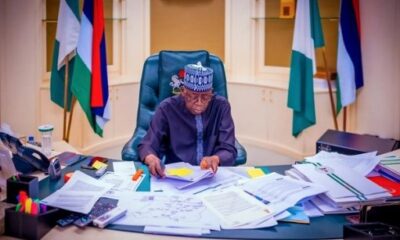
The Manufacturers Association of Nigeria is requesting President Bola Ahmed Tinubu to appoint a committed and incorruptible Minister of Power that has broad experience of the operations and politicking within the power sector.
Otunba Francis Meshioye, President of the Manufacturers, who made the call, lauded President Tinubu for having signed the Electricity Act 2023 Bill into Law, describing it as a game changer.
He said that given the numerous constraints within the sector, the success of the new Act largely rests on its effective implementation, hence , the need for an incorruptible Minister of Power.
” Over the past decades, the Nigerian power sector has encountered much turbulence in its electricity value chain due to poor policy enforcement, over-regulation, instability of gas supply and bottlenecks in its transmission network.
” These problems have culminated into erratic electricity supply, frequent power outages and persistent collapses of national grid.
“For many years, the situation has stunted the growth of the economy. Consequently, access to electricity has remained a hurdle for millions of Nigerians,” he said.
Highlight of the Electricity Act 2023
In replacement of the Electricity and Power Sector Reforms Act 2005, the Electricity Act 2023 is aimed at providing an all-inclusive framework which will serve as a guide to the decentralization of the power sector in order to encourage private investment and build a competitive electricity market.
Major high points from the Electricity Act are as outlined:
* States, private companies and individuals are now legally permitted to generate, transmit and distribute electricity.
* Power generation licensees are obligated to meet renewable energy generation as prescribed by the NERC.
* NERC will only surrender regulatory responsibilities to states with established electricity market laws.
*Without a license but an undertaking, the Act empowers any private individual or company to generate not more than 1MW in aggregate at a location.
* Subject to the determination of the NERC, private individuals or companies can sign an undertaking to distribute electricity of not more than 100 Kilowatts in aggregate at a location.
* The Act prohibits interstate or transnational electricity distribution.
* Generating companies are mandated to either generate or purchase electricity from renewable sources or procure instruments for generating renewable energy.
* The Act empowers legislative committees to carry out an oversight function over the NESI
* Except for Lagos, Kaduna and Edo with established electricity market laws, electricity in other states will still be regulated by NERC.






Business
President Tinubu Approves N3.3Trn Payments Plan To Restore Reliable Electricity
Implementation has begun, with 15 power plants signing settlement agreements totalling ₦2.3 trillion.

President Bola Tinubu has approved the payment plan to finally settle the outstanding debts under the Presidential Power Sector Financial Reforms Programme.
The debt repayment plan followed the final review of the legacy debts that have beset the power sector for more than a decade.
State House press release signed by Bayo Onanuga Special Adviser to the President(Information and Strategy), said that the long-standing debts accumulated between February 2015 and March 2025.
Following verification, ₦3.3 trillion has been agreed as a full and final settlement, ensuring a fair and transparent resolution.
Implementation has begun, with 15 power plants signing settlement agreements totalling ₦2.3 trillion.
The Federal Government has already raised ₦501 billion to fund these payments.
Out of the amount, N223 billion has been disbursed, with further payments underway.
What this means for Nigerians: With payments reaching the power value chain, generation will be more stable. With power plants supported, electricity reliability will improve.
And as the sector stabilises, more investment, more jobs, and better service will follow. “This programme is not just about settling legacy debts.
It is about restoring confidence across the power sector — ensuring gas suppliers are paid, power plants can keep running, and the system begins to work more reliably”, explained Olu Arowolo-Verheijen, Special Adviser on Energy to President Tinubu.
“It is part of a broader set of reforms already underway — including better metering and service-based tariffs that link what you pay to the quality of electricity you receive.
“The government is also prioritising power supply to businesses, industries, and small enterprises — because reliable electricity is critical to creating jobs, supporting livelihoods, and growing the economy.
“The goal is simple: more reliable power for homes, stronger support for businesses, and a system that works better for all Nigerians”, she added.
President Tinubu has commended all stakeholders who supported efforts to resolve the legacy issues in the power sector.
He has also confirmed that the next phase (Series II) will begin this quarter.
Business
33 Nigerian Banks Beat CBN’s Recapialisation with ₦4.65trn Combined Capital Base
The recapitalisation programme has strengthened the capital base of Nigerian banks, reinforcing the resilience of the financial system and ensuring it is wellpositioned to support economic growth and withstand domestic and external shocks.”
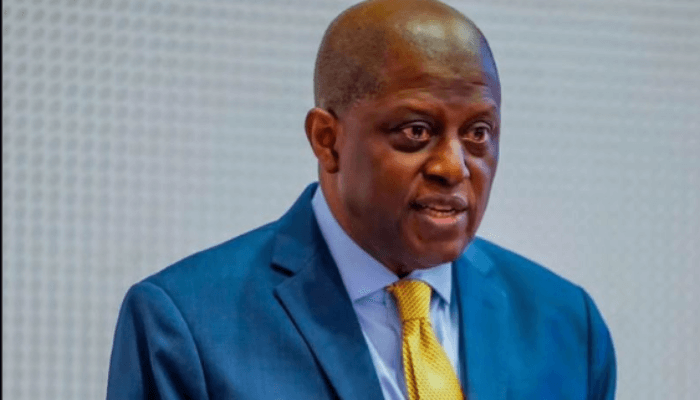
•Governor of CBN, Olayemi Cardoso
The Central Bank of Nigeria (CBN) has wrapped up the banking sector recapitalisation programme it introduced two years ago (March 2024-March 31, 2026) with 33 banks successfully met the requirements deadline.
The banks raised a total of ₦4.65 trillion in new capital, according to a statement signed by Olubukola A. Akinwunmi, the Director, Banking Supervision and Hakama Sidi Ali (Mrs.), the Ag. Director, Corporate Communications.
It said that the recapialisation exercises recorded strong participation from both domestic and international investors, with 72.55% of capital sourced locally and 27.45% from international markets, reflecting sustained confidence in the Nigerian banking sector.
The statement noted that the Governor of CBN, Olayemi Cardoso said “the recapitalisation programme has strengthened the capital base of Nigerian banks, reinforcing the resilience of the financial system and ensuring it is wellpositioned to support economic growth and withstand domestic and external shocks.”
“The CBN confirms that 33 banks have met the revised minimum capital requirements established under the programme.
A limited number of institutions remain subject to ongoing regulatory and judicial processes, which are being addressed through established supervisory and legal frameworks.
“All banks remain fully operational, ensuring continued access to banking services for customers.
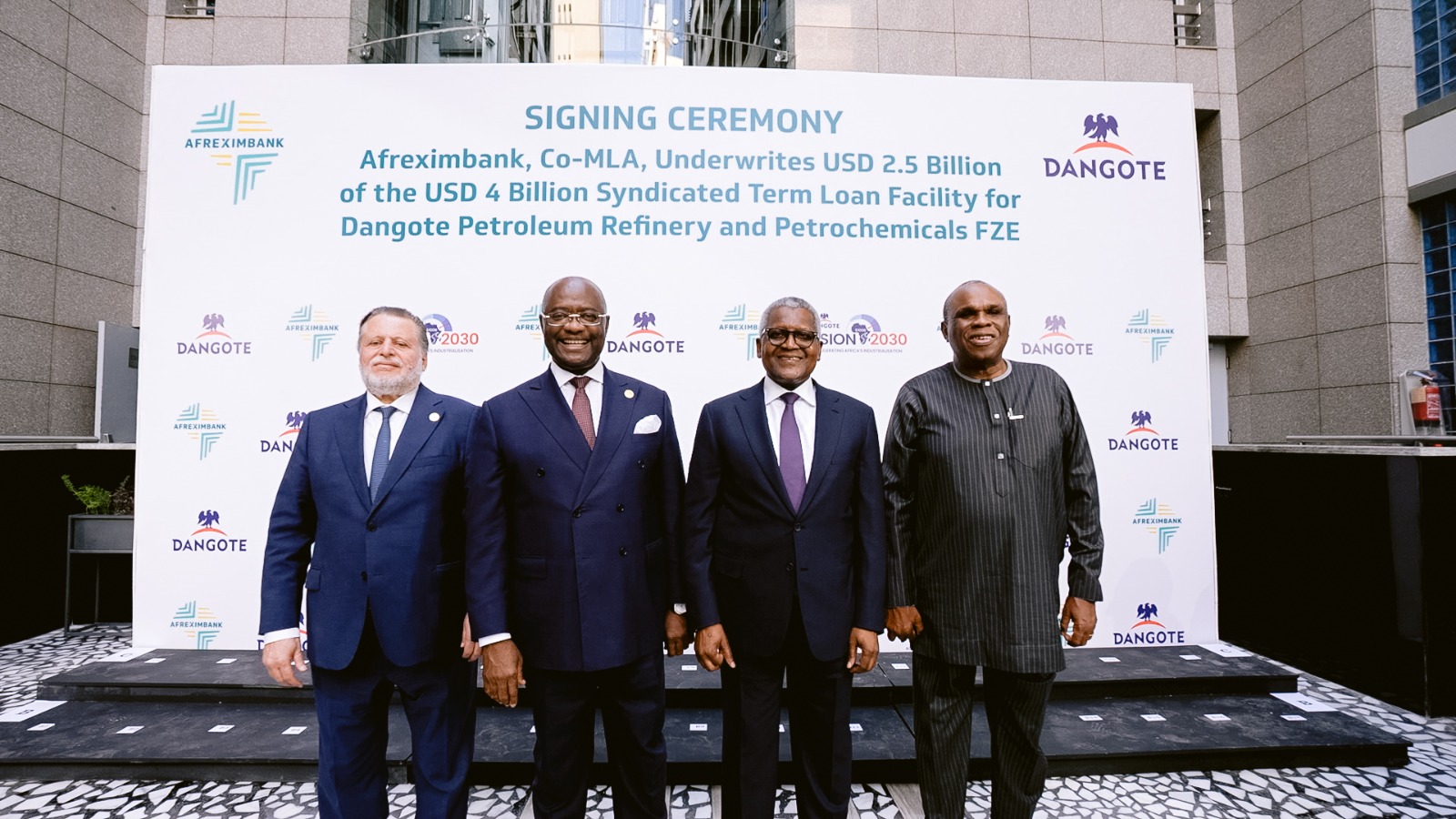
African Export-Import Bank has underwritten $2.5 billion in a $4 billion senior syndicated term loan for Dangote Petroleum Refinery and Petrochemicals, in a move aimed at strengthening the refinery’s financial position and supporting its long-term growth and expansion strategy.
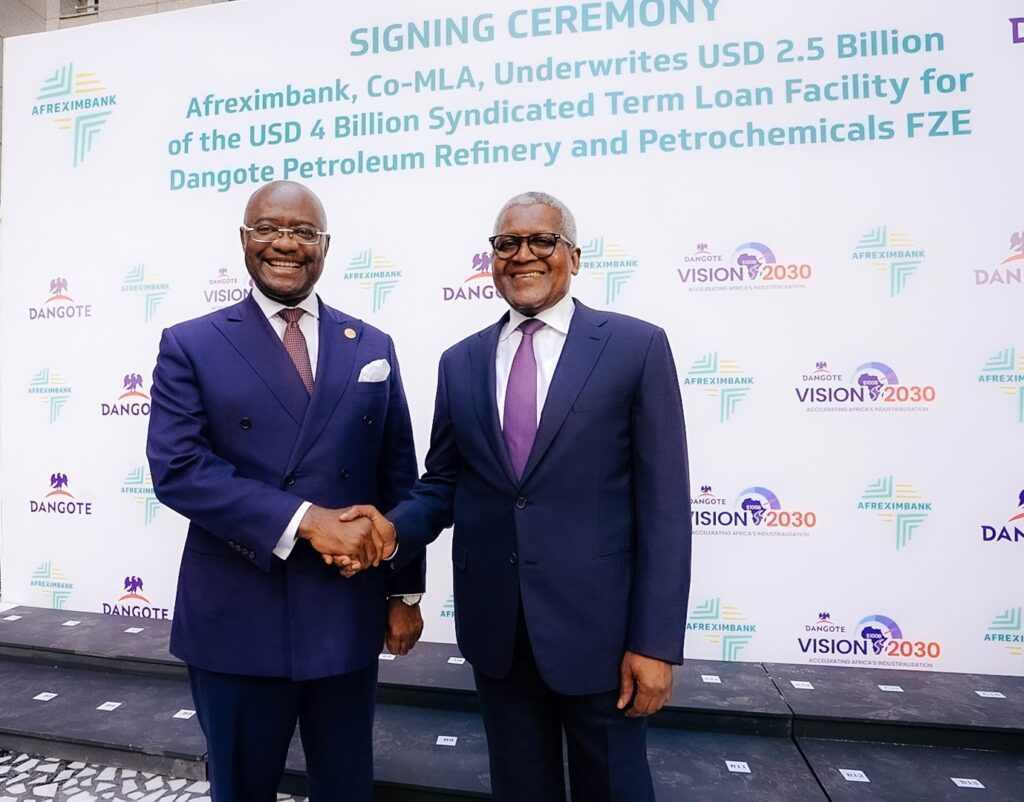
The five-year facility, arranged alongside Access Bank as co-Mandated Lead Arrangers, is designed to consolidate existing debt, optimise the refinery’s capital structure and align its financing with current operational realities.
The transaction marks a significant milestone for the Dangote Refinery, Africa’s largest refining and petrochemical complex with a capacity of 650,000 barrels per day.
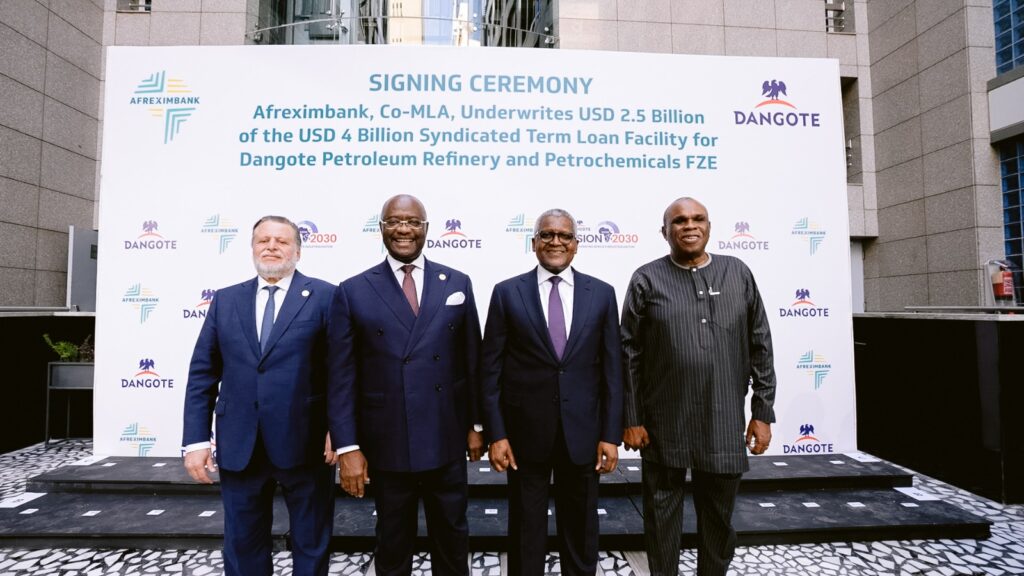
Afreximbank’s $2.5 billion participation represents the largest share of the syndicate, underscoring its strategic role in mobilising capital for industrial projects across the continent.
The bank said the financing aligns with its mandate to promote industrialisation, reduce reliance on imported petroleum products and deepen intra-African trade.
Since refining operations commenced in February 2024, Afreximbank has played a key role in supporting the project, including providing a $1 billion working capital facility and acting as financial adviser on the Naira-for-Crude initiative, which facilitates crude procurement and product sales in local currency.
Speaking during a strategy session in Cairo, Egypt, President and Chairman of the Board of Directors of Afreximbank, George Elombi, said the bank’s continued backing reflects confidence in indigenous African enterprises.
“We take immense pride in being the single largest provider of financing to the Dangote Group. We do so primarily because Dangote is African,” he said.
“When we invest in ourselves, we do more than create jobs and wealth or expand government revenues; we build a secure and resilient future for our continent”
Elombi disclosed that Afreximbank has committed about $15 billion to Dangote Group since 2015, highlighting the scale of its long-term partnership with the conglomerate.
President and Chief Executive of Dangote Industries Limited, Aliko Dangote, described the financing as a critical step in positioning the refinery for its next phase of expansion.
“This financing marks an important step in strengthening the financial foundation of Dangote Petroleum Refinery & Petrochemicals and positions the business for the next phase of its growth,” he said.
“We appreciate Afreximbank’s continued support and confidence in our vision to build world-class industrial capacity that serves Nigeria, Africa and global markets.”
The syndicated loan attracted strong participation from a mix of African and international financial institutions, reflecting sustained investor confidence in the refinery as a transformative industrial asset in advancing Africa’s energy security, reducing import dependence and supporting the continent’s broader industrialisation agenda.


CAF confirms 16 teams for U-17 AFCON 2026

Trump orders Iran to open Strait of Hormuz by Tuesday or face ‘hell’

Women giving birth on their backs or squatting – Which is Better?

Tech Expert, Zuckerberg trains with UFC champions, Adesanya, Alexander

Organ Trafficking: Ekweremadu bags 10 years in UK prison

SAINT OBI: Between his marriage and his death
-

 Crime2 days ago
Three Killed, One Injured in Fresh Jos Attack (Video)
-

 Politics3 days ago
Onyejeocha resigns as Minister of State for Labour
-
 Politics3 days ago
Labour Party to hold presidential primary April 28
-
 Politics3 days ago
No force can defeat Tinubu in 2027 –Umahi
-
 News1 day ago
Kaduna Mando Garage Explosion Not Bomb- Police
-

 News2 days ago
JUST IN: Lagos Fire Service Successfully Contains Two Overnight Fire Incidents iin Lagos
-
 News2 days ago
Nigerian Army Debunks Claims of Attack on Bishop Matthew Kukah’s Residence and Sokoto Catholic Cathedral
-

 News1 day ago
Atiku hires US lobbying firm for $1.2m to boost image – Report