
Business
MAN Forecasts Rough Starting, Better Ending For Manufacturing Sector in 2024

” In broad terms, the year 2024 may start on a tough note for manufacturing but may end with some measured improvements because the envisaged policy reforms, improved commitment to domestic production and general positive outlook seams favourable for the sector. “
Segun Ajayi-Kadir, the Director-General of Manufacturers Association of Nigeria(MAN), gives this insight in a document-
‘Manufacturing Sector Outlook For 2024.’
He notes that although, the manufacturers expects the following developments and trends to shape the sector this year, yet , things may brighten up in the third quarter of the year.
“The period will be challenging, with a subtle possibility of recovery from the third quarter. The envisaged recovery is highly dependent on the deployment of policy stimulus supported with a synthesis of domestic growth driven, export focused and offensive trade strategies.
This will promote resilience, steady growth and ensure that the sector gains meaningful traction in the later part of the year,” he said.
He said that drawing from likely economic dynamics and in the light of the aforementioned, our projections for the manufacturing sector in 2024 are as follows:
▪︎3.2% Sectoral Growth
In 2024, sectoral real growth is expected to hit about 3.2 percent; contribution to the economy will most likely exceed 10 percent and the Manufacturers’ CEOs Confidence Index is predicted to rise above 55 points thresholds by the end of Q4 2023.
▪︎Average capacity utilization will still hover around the 50 percent threshold as the forex-related challenges and high inflation rate limiting manufacturing performance may linger until mid-year.
▪︎Forex, Inflation and Interest Rate Challenges
The sector may experience a meagre improvement in manufacturing output as forex and interest rates-related challenges are expected to subside from the third quarter.
▪︎Cement Sector To Enhance Manufacturing Outputs
Higher manufacturing output is envisaged from the beginning of the third quarter of the year as the government disburses capital provisions of the budget to abandoned, ongoing and new capital projects with expected special preference for locally made products.
▪︎The ongoing concessions of seaports, airports and roads may also provide opportunities for the cement sub-sector and contribute to infrastructure upgrade needed to enhance manufacturing productivity.
▪︎Reasonable stability in the monetary policy ambience as the apex bank reverts to playing its conventional roles and deliberately improves forex supply to the productive sector for import of inputs not available locally.
▪︎Stability in the forex market
The results of the emerging upward surge in global oil prices, domestic oil and gas production, local refining of petroleum products and projected gains of exchange rate unification will promote stability in the forex market and impact manufacturing positively from the second half of the year.
This will lead to reduction in the pressure on demand for forex and improve the inflow of export proceeds from oil and gas.
▪︎Tax Reforms and Banks Recapitalisation
The ongoing tax reforms and the envisaged bank recapitalization will frontally address the challenges of multiple taxation and poor access to credit that have continued to limit manufacturing sector performance, if successfully implemented.
▪︎Electricity Act 2023
Expect dynamic implementation of the Electricity Act 2023, which will increase private investment in renewable energy, enhance energy efficiency and improve electricity supply to the manufacturing sector.
▪︎The improved electricity supply will ameliorate the issue of inadequacy, reduce the disruptions occasioned by frequent outages and in turn improve energy security.


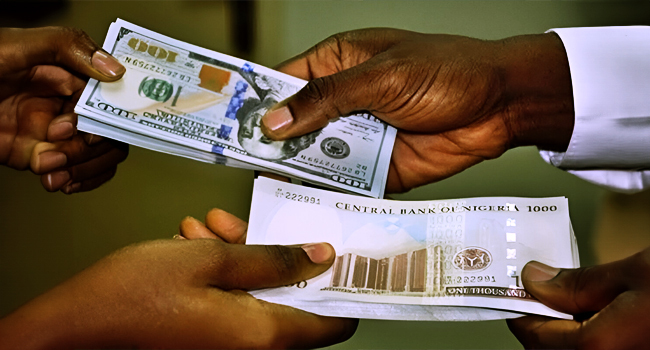
BLACK/ PARALLEL MARKET RATES
₦1370 DOLLAR (USD)
₦1800 POUND (GBP)
₦1510 EURO (EUR)
₦970 CANADIAN DOLLAR (CAD)
₦65 SOUTH AFRICAN RAND (ZAR)
₦350 UAE DIRHAM (AED)
₦190 CHINESE YUAN (CNY)
₦100 GHANAIAN CEDI (GHS)
₦2300 WEST AFRICAN CFA F.(XOF)
₦2200 CENTRAL AFRICAN CFA F.(XAF)
₦850 AUSTRALIAN DOLLAR AUSSIE (AUD)
CBN OFFICIAL RATES
DOLLAR (USD)₦1331.61
POUND (GBP)₦1764.26
EURO (EUR)₦1490.48
SWISS FRANC (CHF)₦1608.23
JAPANESE YEN (JPN)₦8.4
CFA FRANC (XOF)₦2.27
WEST AFRICAN UNIT OF ACCOUNT (WAUA)₦1802.33
CHINESE YUAN (CNY)₦199.01
SAUDI RIYAL (SAR)₦354.83
SOUTH AFRICAN RAND (ZAR)₦80.49
Business
WEF could appoint Lagarde as its next chair, sources say
The WEF’s Board of Trustees, which includes Lagarde herself, was due to meet on November 2 and could elect her as its next chair, said the people close to the organisation, who spoke on condition of anonymity due to the sensitivity of the matter.

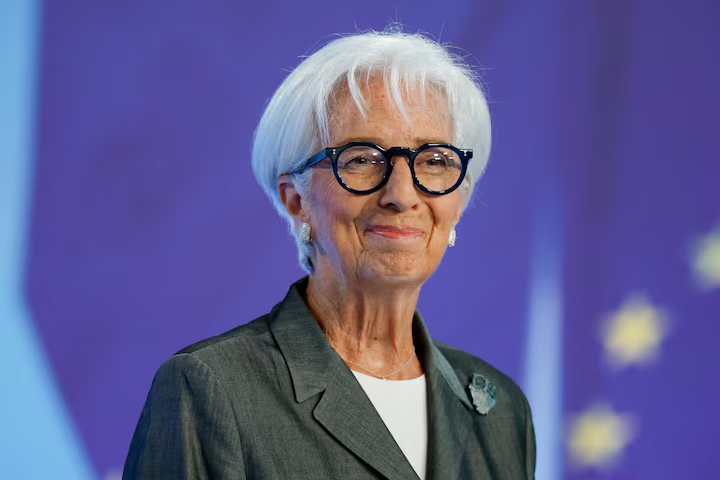
•European Central Bank President Christine Lagarde
The World Economic Forum could appoint Christine Lagarde as its next chair as soon as next month, four people close to the organisation told Reuters, meaning she would step down early as European Central Bank chief and trigger a wider reshuffle at the top of the ECB.Lagarde’s ECB term is scheduled to end in October 2027.
Leaving early would give European Union leaders a chance to pick a new ECB President before France’s spring presidential election, which opinion polls suggest the far-right could win, and could pave the way for a deal involving two other senior ECB roles.
The WEF’s Board of Trustees, which includes Lagarde herself, was due to meet on November 2 and could elect her as its next chair, said the people close to the organisation, who spoke on condition of anonymity due to the sensitivity of the matter.
No final decision has been taken yet, they said.
A spokesperson for the WEF said the forum could not confirm when the next full Board of Trustees meeting would take place, but that the aim was to hold one before the end of the year.
Business
Germany plans tax on sugary drinks
The tax is expected to generate additional revenue for the federal government of €690 million in 2027 and €925 million in 2028.
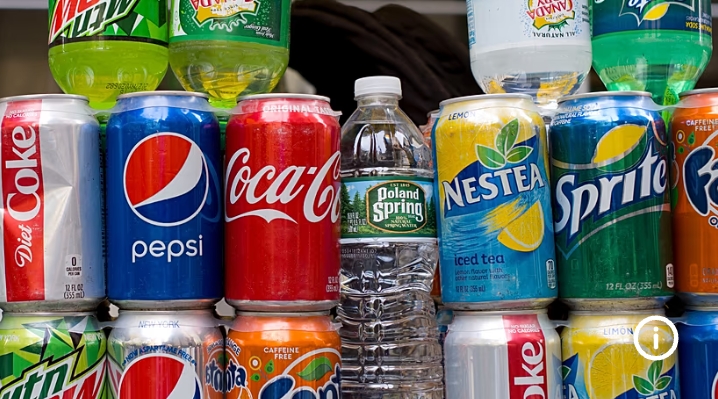
The German cabinet has approved draft legislation to tax sugary drinks in Europe’s biggest economy.
If passed by the German Bundestag, the tax will take effect on 1 July 2027.
The coalition aims to raise revenue for the federal budget while encouraging manufacturers to reduce sugar content and offer healthier products.
The levy is intended to ease pressure on the healthcare system, which faces costs of more than €2 billion every year linked to the high consumption of sugary drinks, which contributes to obesity, diabetes and tooth decay.
According to the federal government, Berlin is using the tax to implement “what associations from the fields of health, science, child protection, and consumer protection have long been demanding.”
The tax is expected to generate additional revenue for the federal government of €690 million in 2027 and €925 million in 2028.


JUST IN: Mob Sets BRT Bus Ablaze After Motorcyclist’s Death in Lagos

BREAKING: DSS Arrests Fugitive Maina Son, Hands Him to EFCC

BREAKING: 5 Arrested Over Imo NYSC Abduction

BREAKING: Lagos Govt Declares Today, Thursday Work-Free to Mark 2026 Ìṣẹ̀ṣe Day

Tech Expert, Zuckerberg trains with UFC champions, Adesanya, Alexander

Organ Trafficking: Ekweremadu bags 10 years in UK prison
-

 Business3 days ago
NAFDAC scolds fake manufacturers: “You are killing Nigerians in order to make money”
-
 Business2 days ago
Naira Exchange Rates For Thursday, October 15
-

 Business3 days ago
Oyedele Chairs G-24 Call for Fairer Global Financial System, Affordable Development Financing
-
 Sports2 days ago
CAF Increases Annual Funding for Member Federations to $700,000
-
 Politics3 days ago
Exclusion of candidates from INEC list: CD cautions INEC against manipulation by politicians
-

 News2 days ago
ASCON To Be Rebranded “National School Of Government”
-

 Business2 days ago
Germany plans tax on sugary drinks
-

 News2 days ago
Sanwo-Olu Appoints Olatunbosun Ogunbanwo, 5 Others as Perm Secs