
Business
MAN Calls For Jaw- Jaw On Inflation Control


The Manufacturers Association of Nigeria (MAN) says that it has become necessary for stakeholders comprising the government, central bank, private sector, and civil society to address how best to bring the rising inflation in the economy under control.
As reported by the National Bureau of Statistics (NBS), in July 2023, Nigeria experienced a surge in inflation, with the rate reaching a new 18-year high of 24.08 percent.
This marks an increase of 1.29 percent from the previous month’s rate of 22.79 percent.
Segun Ajayi-Kadir,
Director – General of MAN, said that it’s important to note that addressing inflation is a complex and long-term endeavor that requires a coordinated effort from various stakeholders, including the government, central bank, private sector, and civil society.
He believes that the combination of recommendations from the stakeholders, can help mitigate inflationary pressures and promote sustained economic growth.
Commenting on the inflationary impacts on the manufacturing sector, he said that it has leads to decreased demand for products which adversely affects manufacturers’ sales.
” As you would expect, the current inflationary condition in Nigeria is adversely affecting the operation of the manufacturing sector, just like most other sectors of the economy.
Some of the impacts of the rise in inflation on manufacturing include:
▪︎Increase in the cost of Production: Rising inflation often leads to higher costs of raw materials, labour, and other production inputs.
▪︎Reduced Profit Margin: As costs increase due to inflation, manufacturers might struggle to pass on these cost increases to consumers in the form of higher prices.
This results in reduced profit margins, especially as it is becoming more difficult to pass the burden to the consumers as a result of income squeeze leading to price resistance.
▪︎Supply Chain Disruptions: Inflation is disrupting supply chains, making it difficult for manufacturers to obtain necessary materials and components.
This will lead to delays in production and potentially halt operations as key supplies become scarce or unavailable.
▪︎Uncertainty in Planning: Inflation introduces a level of uncertainty in economic conditions. Manufacturers will continue to find it challenging to make long-term business plans due to unpredictable cost fluctuations, demand shifts, and overall economic instability.
▪︎Reduction of Consumer Spending: High inflation often reduces consumers’ purchasing power. As prices rise, consumers are cutting back on discretionary spending, including manufactured goods. “



Shell has agreed to sell its entire interest in the Shell Nigeria Gas Group, which runs a domestic natural gas distribution network, to Nigerian energy firm Vaaris Energy Limited.
The deal, announced on Tuesday, October 13, 2026, covers Shell Petroleum B.V.’s full stake in the business. Shell Nigeria Gas, established in 1998, operates about 170 kilometres of pipelines across Ogun, Abia and Rivers states and supplies more than 130 industrial and commercial customers. Financial terms were not disclosed. Completion remains subject to regulatory approvals and other conditions.
Shell said the business will continue operating as normal and serving customers until the transaction closes. The company does not participate in upstream production, LNG or international gas trading through this unit.
Elohor Aiboni, Shell’s Country Chair in Nigeria, said: “Shell Nigeria Gas has served industrial and commercial customers in Nigeria for more than 25 years, supported by the commitment and expertise of its people. We believe this agreement provides a much stronger platform for the business’ next chapter under new ownership. Shell continues to focus on strategic Deepwater and Integrated Gas positions in Nigeria.”
The sale forms part of Shell’s broader strategy under CEO Wael Sawan to simplify its portfolio and concentrate on higher-return assets. It follows the company’s completed exit from onshore oil production in Nigeria, when it sold the Shell Petroleum Development Company to the Renaissance consortium in 2025.
Vaaris Energy is a privately held Nigerian company with interests across the oil and gas value chain and an existing operational presence in the country.
Business
FAO Names 22 African Women Agrifood Heroes, Nigeria Missing
The UN agency recognises women from 22 African countries for contributions to agriculture, food security and rural development under its global Women Heroes initiative.

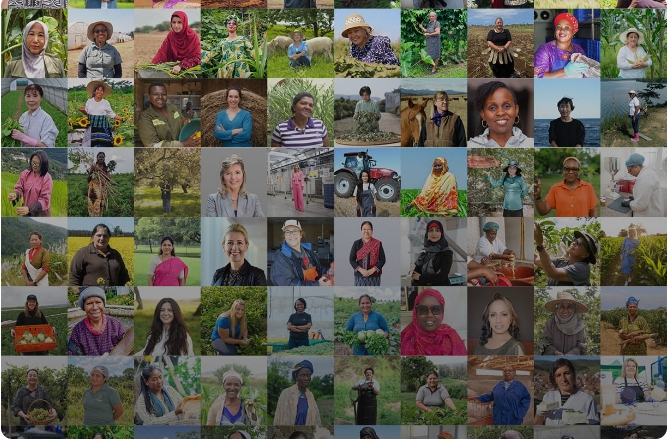
Image credit : FAO
By Ochefa
The Food and Agriculture Organization of the United Nations (FAO) has recognised 22 African women among its 100 Women Heroes in Agrifood Systems and Rural Development, with Nigeria conspicuously absent from the list.
The initiative, launched to mark the International Year of the Woman Farmer 2026, celebrates women whose contributions are advancing agriculture, strengthening food security and transforming rural communities worldwide.
The honourees represent diverse segments of the agrifood value chain, with achievements spanning market access, job creation, skills development, environmental conservation and the preservation of indigenous knowledge.
According to the initiative, their work demonstrates the critical role women play in building inclusive, sustainable and resilient agrifood systems.
22 African Honourees
The 22 women recognised come from different parts of the continent.
They include Teresa de Castro Vieira Mariz of Angola; Senait Gezahegn of Ethiopia; Lembie Tlhalerwa of Botswana; Simone Kountangni of Benin; and Amal Mekni of Tunisia.
Others are Grace Tumeo Bwanali of Zambia; Victoria Matebogo of South Africa; Didja Djaili Garga of Cameroon; Sanou Adiarra of Burkina Faso; and Zipporah Nyaguthii Gitonga of Kenya.
The list also features Sylvie Yakanandji of the Central African Republic; Pelegrinah Musingwini of Zimbabwe; Basamat Suliman Mursal Khalil of Sudan; Brenda Tsiba Djouassa of Gabon; and Alimata Coulibaly of Côte d’Ivoire.
Completing the list are Crescentia Mushobozi of the United Republic of Tanzania; Hasna Meeke Ahmed of Djibouti; Rozina Mebrahtu of Eritrea; Awa Jagne of The Gambia; Malerato Mary Khoeli of Lesotho; Berdiss Mohamed of Mauritania; and Nadege Uwamahoro of Rwanda.
Nigeria’s Absence Raises Questions
Despite agriculture’s importance to Nigeria’s economy and the livelihoods of millions of Nigerians, no Nigerian woman appears among the 22 African honourees identified in the list provided.
The omission raises questions about the visibility and international recognition of Nigerian women working across the agricultural value chain, from farming and processing to agribusiness, research and rural development.
Business
Global smartphone shipments fall 20% in Q3 2026, lowest in 14 years
“Consumers are holding on to their devices longer than estimated, increasingly considering refurbished devices and prioritizing higher-value devices,” said Shilpi Jain, a senior analyst at Counterpoint Research.

Counterpoint Research has reported drops in global smartphone shipments by 20% year on year in the third quarter of 2026, hitting the lowest level for the period in 14 years, or since 2012.
The report published on Monday showed that persistent memory shortages and rising component costs disrupted supply and pushed retail prices up.
Smartphone retail prices have increased by 20% so far in 2026 as manufacturers pass higher memory costs on to consumers.
Counterpoint said rising prices for DRAM and NAND memory components inflated bill of materials (BOM) costs, deepened supply shortages and disrupted shipments.
Manufacturers were forced to adjust shipment plans, raise prices and prioritise profitability over sales volumes.
The pressure is changing consumer behaviour. Buyers are holding on to their devices longer and considering alternatives.
“Consumers are holding on to their devices longer than estimated, increasingly considering refurbished devices and prioritizing higher-value devices,” said Shilpi Jain, a senior analyst at Counterpoint Research.
According to the report, Samsung and Apple gain market share during the period under review.
Samsung retained its position as the world’s largest smartphone manufacturer in the third quarter, accounting for 23% of global shipments despite a 3% year on year decline in shipment volume.
Counterpoint attributed Samsung’s performance to demand for its Galaxy Z Fold8 series and stable component supplies for its mid-range devices.
Apple’s market share reached 22%, crossing 20% for the first time in a third quarter, despite a year on year decline in shipments.
The absence of a base iPhone 18 model resulted in a smaller launch-month channel fill than the full iPhone 17 lineup a year earlier.
Counterpoint said the iPhone 18 Pro models recorded a stronger launch than their predecessors, particularly in China and India, while continued momentum from the iPhone 17 series helped offset the shipment decline.


BREAKING: Shell to Exit Nigeria’s Domestic Gas Distribution Business

FAO Names 22 African Women Agrifood Heroes, Nigeria Missing

NAF Crash: Residents Fear Disease as Body Parts Foul Community River

Tech Expert, Zuckerberg trains with UFC champions, Adesanya, Alexander

Organ Trafficking: Ekweremadu bags 10 years in UK prison

BREAKING: Lagos Govt Declares Today, Thursday Work-Free to Mark 2026 Ìṣẹ̀ṣe Day
-
 Business2 days ago
Nigeria’s ₦33bn Fruit Import Bill Exposes Missed Opportunities in Jos
-

 Business2 days ago
Naira To Dollar, Pound ,Euro …Rates For Monday, October 12
-

 International2 days ago
‘Up to our people’ to pick leader, Zelenskyy responds to Trump’s pledge for new elections in Ukraine
-

 Opinions2 days ago
Human Capital Africa Statement For International Day of the Girl Child 2026
-

 Politics2 days ago
BEWARE: Fake 2027 Gov’ Candidates List Circulating Online — INEC Raises Alarm
-
 News2 days ago
Forbes Scores GTBank Best Employers 2026
-

 Politics2 days ago
2027: 119 Women Jostle For State’s Governors
-

 Business18 hours ago
Dangote Refinery IPO Attracts N8.61trn in Subscriptions, Four Times Offer