
Business
Tech Expert, Zuckerberg trains with UFC champions, Adesanya, Alexander


The Meta Chief Executive Officer, Mark Zuckerberg, on Tuesday, was pictured training with UFC champions, Israel Adesanya and Alexander Volkanovski.
The picture of his training session with the UFC champions has further increased speculations on the possibility of an MMA fight between him and Twitter CEO, Elon Musk.
Recall that the prospect of an MMA showdown between the tech gurus started as an online banter some weeks back.
However, tension has heightened between the duo since Zuckerberg launched his Twitter-like app called Threads.
Threads launched on July 5, 2023, and has since gathered more than 100 million users worldwide.
However, Musk, the Tesla and SpaceX CEO believes Threads was only made possible by “cheating.”
Musk stated this while responding to a tweet reporting that Twitter was threatening to sue Facebook and Instagram’s parent company Meta for cheating with its new app Threads on Friday, July 7, 2023. Musk tweeted, “Competition is fine, cheating is not.”
As arguments heated over the new app online, the two tech moguls have once again renewed their banter challenge on having a showdown cage fight.
However, while some viewed the challenge for an MMA fight as playful banter between the influential figures, the anticipation surrounding this unlikely showdown continued to grow with both of them pictured training with MMA fighters.
Meanwhile, Zuckerberg while reacting to his picture with the UFC champions – Adesanya and Volkanovski wrote, “It’s an honour to train with you guys!”
Responding, “The Last Stylebender’ who posted photos of the training session, wrote, “No fugazi with Mark. This is Serious Business.”
Also, Volkanovski, the UFC featherweight kingpin responded, “@zuck you’re a beast! Always great to catch up.”
Musk also looks to be in a training session already as he was also spotted with UFC legend Georges St-Pierre on Tuesday, July 3, 2023.
Business
NAICOM Revokes Nigeria Reinsurance’s Licence, Freezes Operations Over Capital Shortfall
Banire directed banks, financial institutions, policyholders and members of the public not to honour any instruction relating to the company except those issued by him or persons expressly authorised by him.

The National Insurance Commission (NAICOM) has revoked the operating licence of Nigeria Reinsurance Corporation for failing to meet the statutory Minimum Capital Requirement (MCR) and appointed Senior Advocate of Nigeria, Dr. Muiz Banire, SAN, as Receiver/Provisional Liquidator to wind up the company’s affairs.
The appointment took effect on August 3, 2026, following the cancellation of the company’s certificate of registration by the insurance regulator.
In a public notice dated August 4, 2026, Banire said NAICOM appointed him, in exercise of its statutory powers, to oversee the receivership and liquidation of Nigeria Reinsurance Corporation (RR-002).
In the notice, the company’s licence was revoked after it failed to comply with the prescribed Minimum Capital Requirement applicable to its category of licence within the stipulated compliance period, in accordance with the Nigerian Insurance Industry Reform Act (NIIRA) 2025 and other extant laws, regulations and guidelines.
Banire said his appointment authorises him to immediately trace, recover, secure and take possession of the company’s assets, collate and settle its liabilities in line with the NIIRA 2025, liaise with NAICOM on matters relating to the liquidation, and submit periodic reports to the Commission.
Banire directed banks, financial institutions, policyholders and members of the public not to honour any instruction relating to the company except those issued by him or persons expressly authorised by him.
Source: ThisDay
Business
NDIC begins paying depositors of 46 closed microfinance banks
NDIC Managing Director and Chief Executive Oludare Sunday confirmed the development at a retreat for members of the House of Representatives Committee on Insurance and Actuarial Matters in Lagos on Wednesday.

The Nigeria Deposit Insurance Corporation (NDIC) has started reimbursing depositors affected by the closure of 46 microfinance banks nationwide.
NDIC Managing Director and Chief Executive Oludare Sunday confirmed the development at a retreat for members of the House of Representatives Committee on Insurance and Actuarial Matters in Lagos on Wednesday.
” Payments are ongoing, and over 700,000 Heritage Bank customers have already received their insured funds through BVN-linked accounts.
“We have started paying depositors of those banks, and gradually we intend to cover all the insured depositors,” he said,” he said.
Following the revocation of the 46 MFB operating licences, the CBN subsequently appointed the NDIC as provisional liquidator of the failed financial institutions.
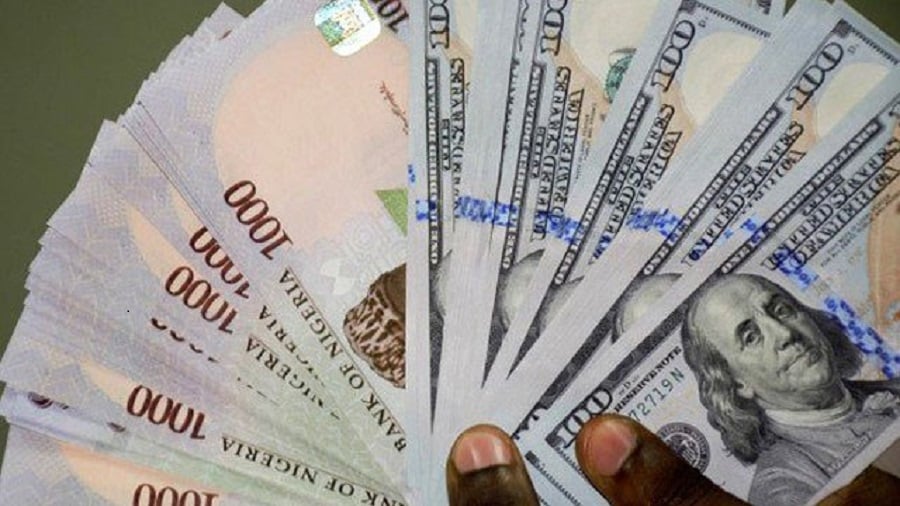
BLACK MARKET RATES
US DOLLAR (USD) Buy ₦1,420 Sell ₦1,425
GREAT BRITISH POUND (GBP) Buy ₦1,900 Sell: ₦1,915
EURO (EUR) Buy ₦1,585 Sell ₦1,600
CANADIAN DOLLAR (CAD) Buy ₦1,020 Sell ₦1,080
SOUTH AFRICAN RAND (ZAR) Buy ₦75 Sell ₦90
UAE DIRHAM Buy ₦350 Sell ₦370
CHINESE YUAN Buy ₦190 Sell ₦205
GHANA CEDI (GHS) Buy ₦95 Sell ₦110
WEST AFRICAN CFA Buy ₦2, 300 Sell ₦2, 400
CENTRAL AFRICAN CFA Buy ₦2,150 Sell 2,250
AUSTRALIAN DOLLAR Buy ₦800 Sell ₦900
Commercial Bank Exchange Rates
Access Bank
Currency Sell
USD / NGN ₦1378.00
Fidelity Bank
Currency Sell
USD / NGN ₦1370.00
GBP / NGN ₦1869.78
EUR / NGN ₦1604.54
Sterling Bank
Currency Buy Sell
USD / NGN ₦1350.00 ₦1385.00
GBP / NGN ₦1795.89 ₦1884.00
EUR / NGN ₦1536.93 ₦1618.33
ZAR / NGN ₦82.34 ₦86.99
Official CBN Exchange Rates
US DOLLAR (USD) ₦1,363.85
GREAT BRITISH POUND (GBP) ₦1,837.38
EURO (EUR) ₦1,575.25
SWISS FRANC (CHF) ₦1,686.26
JAPANESE YEN (JPN) ₦8.65
CHINESE YUAN (CNY) ₦202.05
WEST AFRICAN CFA (XOF) ₦2. 39
WEST AFRICAN UNIT ACCOUNT (WAUA) ₦1,859.53
SAUDI RIYAL (SAR) ₦363.12
SOUTH AFRICAN RAND (ZAR) ₦83.35


BREAKING: Lionel Messi Loses Father Jorge Messi at 68

ICPC: Adeyemi’s fake letter not from Presidency

BREAKING: DSS Arrests 3 More Fleeing Suspects Linked to Kidnap of Nasarawa Varsity Professor

Tech Expert, Zuckerberg trains with UFC champions, Adesanya, Alexander

Organ Trafficking: Ekweremadu bags 10 years in UK prison

SAINT OBI: Between his marriage and his death
-
 Politics2 days ago
Atiku Condemns Freezing Osun Govt’s Account On The Eve Of Election
-
 Business2 days ago
Naira Exchange Rates Thursday, August 5
-
 News2 days ago
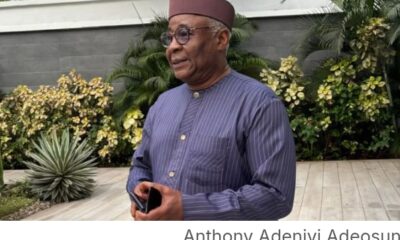
Ex-finance minister Kemi Adeosun loses husband
-

 Business2 days ago
NDIC begins paying depositors of 46 closed microfinance banks
-
 Business2 days ago
NAICOM Revokes Nigeria Reinsurance’s Licence, Freezes Operations Over Capital Shortfall
-
 News2 days ago
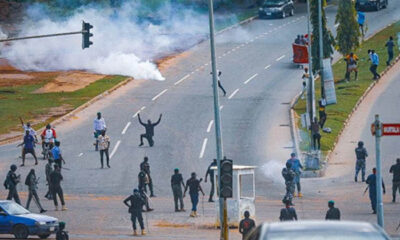
Tremor Rocks Abuja, no casualties
-
 News2 days ago
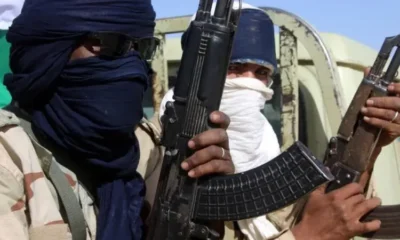
BREAKING: Five Abducted Ogun Polytechnic Students Regain Freedom
-

 Politics2 days ago
OSUN ELECTION: Davido Calls for Peaceful, Violence-Free Elections