
News
Land Banking in Lagos: What Is It and Why Smart Investors Are Doing It, by Dennis Isong
Who Is Land Banking For? What are the risks, and how can you avoid them?


Some years ago, Mr. Adebayo, a civil servant in his late 40s, bought a large piece of land in the outskirts of Lagos—somewhere past Epe. His friends laughed.
The land had no road network, no visible development, and certainly no electricity poles in sight. “You’ve just bought bush,” one friend said, chuckling over a bottle of palm wine.
But Adebayo had something else in mind. Today, that same bush has turned into a budding estate. His plot—bought for N500,000 per acre—is now valued at over N15 million.
And the best part? He hasn’t built a single block on it. This, my friend, is the power of land banking inLagos.So, what is land banking—and why are smart investors flooding into it?
Let’s take a walk through of what makes this quiet, strategic game of land investment so powerful in Lagos real estate today.
1. What Is Land Banking?
Land banking is the act of buying undeveloped or underdeveloped land now—at a low price—with the intention of holding it for future sale or development.
The idea is simple: get the land while it’s cheap, wait for surrounding development or urban expansion, and then reap the benefits when its value skyrockets.It’s not a new concept.
Wealthy families, governments, and savvy investors have been doing it for decades, quietly amassing land in strategic locations.
But in Lagos, land banking has taken on a whole new meaning due to the city’s rapid urban sprawl and high demand for land.
As more people flood into Lagos for work and business, areas that were once considered “far” are now becoming the next hotspots for development.
And the best part? You don’t need to be a millionaire to start. What you need is foresight,patience, and good information.
2. Why Lagos? Why Now?
Lagos is a land-hungry city. It’s the smallest state in Nigeria by land size, but with the highest population—over 20 million people and counting.
Every day, people are moving in, businesses are expanding, and infrastructure is being built. But land? It’s not expanding.
This imbalance between supply and demand is what makes land such a valuable asset here.
Take Ibeju-Lekki for example. Ten years ago, it was mostly bush, sand, and silence. But today, it’s home to massive developments like the Dangote Refinery, Lekki Deep Sea Port, and the Lekki Free Trade Zone.
Investors who bought land here when it was “just sand” are now smiling to bank. The Lagos State Government is also pushing development into the outskirts. Projects like the proposed 4th Mainland Bridge and new road networks are opening up areas like Epe, Badagry,and Agbowa.
This means land in these regions won’t remain cheap for long. Smart investors are not waiting until buildings start springing up. They’re getting in early—buying into the future while the price tag is still friendly.
3. Who Is Land Banking For?
There’s a popular myth that land banking is only for the rich or big-time developers.
Not true.It’s actually a smart move for young professionals, retirees, low-risk investors, and anyonethinking long-term. Think of it like planting a tree—you don’t eat the fruit the next day, but whenit matures, it feeds you for life.
Some people buy shares. Others put money in fixed deposits. But land banking offers something more physical and arguably safer—an asset you can visit, touch, and eventually profit from.
Especially great for those who want to leave something for their children or retire in peace with a solid asset base.
Let’s not forget those who aren’t ready to build yet. If you’re not financially prepared toconstruct a house now, buying land and holding it gives you a head start.
By the time you’re ready to build, the land may have tripled in value—and you’d have saved yourself millions in future costs.
Smart investors understand that the best deals are usually quiet. While the world is running after flashy real estate brochures, they’re planting seeds in overlooked areas.
4. What Are the Risks—and How Can You Avoid Them?
Now, this wouldn’t be a realistic article without addressing the elephants in the room: landscams, Omonile wahala, and poor documentation. These are real risks in Lagos, and anyone who jumps into land banking blindly could lose hard-earned money.
The good news is, these risks are avoidable—if you do your due diligence. Always ensure the land is properly documented: look out for a Survey Plan, Deed of Assignment, and if possible, Certificate of Occupancy (C of O).
Work with trustworthy real estate companies or consultants who have verifiable track records and are registered with relevant authorities.
Also, don’t buy land just because it’s cheap. Buy because it’s strategic.
Ask yourself: Is there ongoing or planned development in the area? Are there accessible roads? Is the title clean? In the case of Mr. Adebayo, he didn’t just buy random land. He researched future government plans, asked questions from locals, and worked with a reputable realtor.
That’s why today, his land is not just appreciated—it’s prime.
5. So, Why Are Smart Investors Doing It?Because it works. Smart investors understand that the best deals are usually quiet. While the world is running after flashy real estate brochures, they’re planting seeds in overlooked areas.
They know that Lagos is expanding, and that time, development, and demand will eventually catch up with the land.
Some flip the land after a few years, making huge profits.
Others hold onto it and develop it into residential estates, short lets, or commercial spaces when the time is right. Either way, they win.
The beauty of land banking is that it doesn’t demand much. No tenants. No property management stress. No construction deadlines. Just patience—and strategy.
In Lagos today, the rush is not just about buying houses.
It’s about owning the land under the houses of tomorrow. Those who see the future are already positioning themselves quietly.
Final Thoughts Land Banking in Lagos: What Is It and Why Smart Investors Are Doing It is more than justa trendy topic—it’s a real, practical investment strategy that has changed lives.
It’s not without it’s risks, but it holds enormous potential for those who do it right.If you’ve been thinking about real estate but haven’t figured out how to start, land banking might just be your entry point.
It’s not glamorous at first. It doesn’t make noise. But in five or ten years,it could be the decision that secures your financial future.
So, whether you’re a young worker, a retiree, or just someone who’s tired of letting money sit in the bank, remember: Lagos may not be expanding in size, but the opportunities in its land keep growing.
And like Mr. Adebayo learned—today’s “bush” could be tomorrow’s goldmine.
Dennis Isong is a TOP REALTOR IN LAGOS.He Helps Nigerians in Diaspora to OwnProperty In Lagos Nigeria STRESS-FREE. For Questions WhatsApp/Call 2348164741041
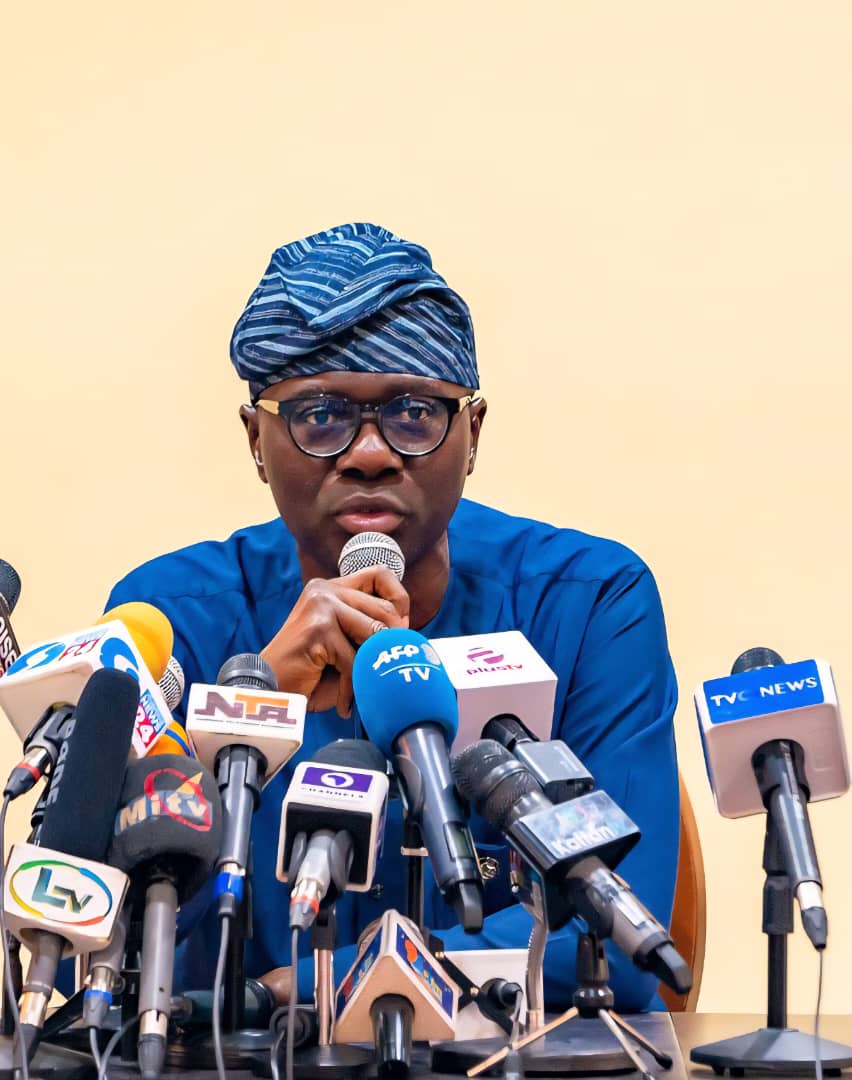
Lagos State Governor Babajide Sanwo-Olu has assured residents that the Opebi-Mende-Ojota Link Bridge will be opened to the public before Christmas, despite missing its earlier September completion target.
The governor gave the assurance on Sunday, October 25, 2026, during an inspection of the project to assess progress and determine the reasons for the delay. He said the distinctive steel superstructure on the bridge is about 80 per cent complete.
Sanwo-Olu explained that the complex architectural design — inspired by the area’s traditional cane-weaving heritage — involves installing more than 300 tonnes of steel at heights of up to 25 metres.
Three of the four major steel components have been completed, with work ongoing on the remaining one. LED lighting featuring the colours of Lagos State will also be installed to give the structure an iconic appearance.
He emphasised that the state government prioritises engineering quality and public safety over speed. Additional finishing works, including site cleaning, kerb repainting, restoration of affected areas and landscaping, will be carried out before the bridge opens.
The link bridge, which connects Opebi, Mende and Ojota, is expected to ease traffic congestion and provide an alternative route for motorists in the Ikeja, Maryland and surrounding corridors.
News
BREAKING: Former Arise News Anchor, Constance Ikokwu Appointed NDC National Campaign Council Spokesperson


Former Arise News Anchor, Dr. Chiogo Constance Ikokwu has been appointed Campaign Spokesperson for the Obi/Kwankwaso National Campaign Council. Her appointment is contained in the list of appointments released by the Nigeria Democratic Congress (NDC)
Ikokwu brings over two decades of experience in journalism across print, radio and television, alongside expertise in political communication, media strategy and international affairs. Her career includes Washington, DC Bureau Chief and Deputy Editor at THISDAY Newspapers, political analyst and anchor at Arise News, and academic work in journalism and communications. She holds a PhD in Journalism and Communications, with research focused on the intersection of media and politics. Ikokwu was also Strategic Communications Adviser to former Minister of Finance Dr. Ngozi Okonjo-Iweala and former Minister of Industry, Trade and Investment Dr. Okechukwu Enelamah.
She recently participated in the NDC’s nomination process for the House of Representatives seat for Idemili North and South Federal Constituency, Anambra State, and continues to pursue her commitment to public service.
In her new role, Ikokwu will serve as a Spokesperson for the National Campaign Council, helping to communicate Obi/Kwankwaso positions, articulate campaign messages and engage the media on issues relating to the party’s programmes and priorities. Her appointment comes as the party prepares to strengthen its public communications and engagement with Nigerians ahead of the 2027 general elections.
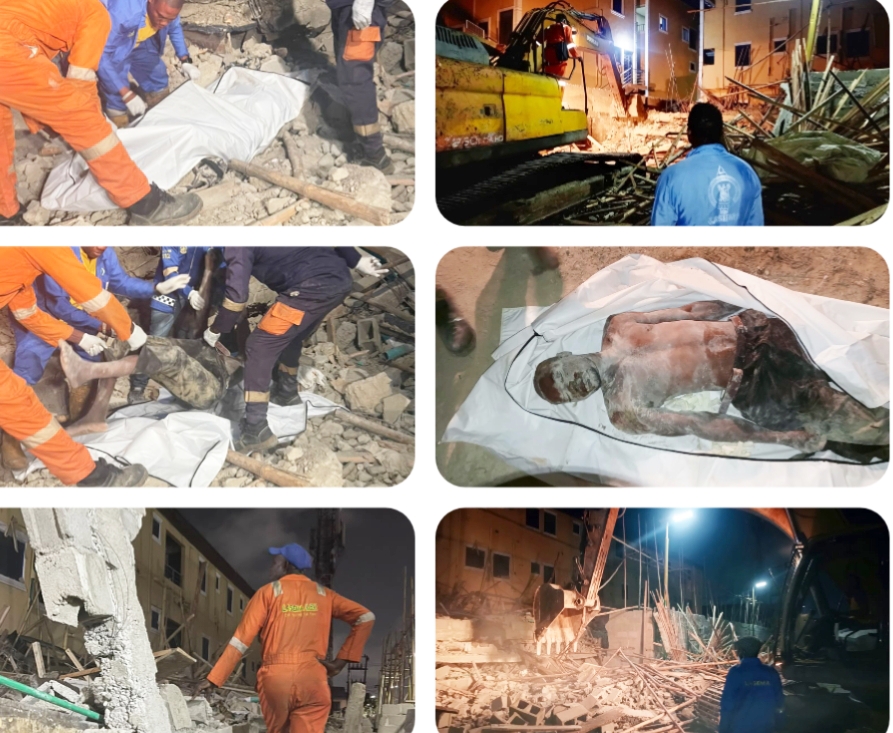
A two-storey building has collapsed in the Fadeyi area of Lagos, resulting in one fatality and the rescue of three people, emergency officials confirmed on Friday morning.
The incident occurred in the early hours, sending residents and nearby traders into panic as the structure suddenly gave way. Rescue teams from the Lagos State Emergency Management Agency (LASEMA) and other first responders quickly arrived at the scene and began extracting victims from the rubble.
According to preliminary reports, one person was confirmed dead at the site, while three others were pulled out alive and rushed to a nearby hospital for treatment. Their conditions have not yet been disclosed.
Security personnel have cordoned off the area to allow rescue operations to continue and to prevent further access by onlookers. Officials are still assessing whether any other persons remain trapped under the debris.
The cause of the collapse has not been established. Authorities have not ruled out structural failure, but investigations are ongoing.
Further updates are expected as the rescue operation progresses and more details become available from emergency services.


Nigeria’s First Imported Ebola Patient Moved to Switzerland

Dangote Refinery’s IPO Ends Tomorrow

Ebola: Nigeria Sends Back Swiss Woman Via Medivac Plane

BREAKING: Lagos Govt Declares Today, Thursday Work-Free to Mark 2026 Ìṣẹ̀ṣe Day

Tech Expert, Zuckerberg trains with UFC champions, Adesanya, Alexander

Organ Trafficking: Ekweremadu bags 10 years in UK prison
-

 Politics2 days ago
2027 presidential election: Tinubu’s Northern test begins today
-

 News4 hours ago
BREAKING: Former Arise News Anchor, Constance Ikokwu Appointed NDC National Campaign Council Spokesperson
-

 Health2 days ago
Ebola patient in Abuja showing signs of recovery – FG
-

 Health15 hours ago
EBOLA: Lagos Heightens Watch at Airports After Abuja Case
-

 Business4 hours ago
Naira To Dollar, Pound, Euro…Rate Monday, October 26
-

 Business3 hours ago
Dangote Visit London Stock Exchange Ahead of November Cement Listing
-

 Entertainment2 days ago
JUST IN: Another Nollywood Actor, Dies After Brief Illness
-

 International2 days ago
JUST IN: Four Pilots Die After Mid-Air Collision of Military Planes in Philippine