
Health
LAAF Writes Attorney General to Decriminalize Suicide in Nigeria


▪︎UGC : Attorney General of the Federation, Honourable Lateef Fagbemi; Halima Layeni
Halima Layeni Men’s Mental Advocate Executive Director, Life After Abuse Foundation (LAAF), has urged the Federal Government to decriminalize suicide attempts in Nigeria.
” Countries like India, Canada, and New Zealand have decriminalized suicide attempts, recognizing the need for supportive health interventions rather than criminal penalties,” said Halima Layeni.
In an Open Letter to the Attorney General of the Federation, Honourable Lateef Fagbemi, Halima Layeni pointed out : ” Under Section 327 of the Nigerian Criminal Code, any individual who attempts suicide can be imprisoned for up to one year.
This law, which criminalizes suicide attempts, is not only outdated but also ineffective in addressing the root causes of the mental health crisis we face.”
She further noted that instead of offering treatment and support, the criminalization of suicide perpetuates suffering, pushing those in need further into silence and shame.
” The suicide crisis disproportionately affects men, who make up the majority of suicide cases worldwide, and Nigeria is no exception.
Men are often pressured to suppress their emotions, adhere to societal norms of masculinity, and face stigmatization when they seek help for mental health issues. Consequently, many men in Nigeria feel trapped in isolation, leading to higher rates of depression and suicide. Rather than being met with compassion and support, these men risk being labeled as criminals under the current law.
Criminalizing suicide attempts is, at its core, a violation of human rights. Article 5 of the African Charter on Human and Peoples’ Rights and Article 12 of the International Covenant on Economic, Social, and Cultural Rights both emphasize the right to dignity, health, and mental well-being.
Punishing someone for attempting suicide disregards their fundamental human right to access the care they need.
The act of criminalization perpetuates the idea that those suffering from mental health crises are less deserving of protection, violating principles of equality and human dignity.
Suicide is not a crime; it is a symptom of profound mental health distress. To view it through a legal lens rather than a medical one is to misunderstand the gravity of the issue.
Those who attempt suicide do not need punishment—they need mental health care, compassion, and a system that prioritizes their well-being.
Mental health is a critical element of overall health, and just as we treat physical illnesses, so too must we treat mental health crises with proper support, not prosecution.”






Country of birth, date she arrived in Abuja and other key details emerge as health authorities contain Nigeria’s first case in over a decade
Nigeria’s first confirmed Ebola case since the 2014 West African outbreak involves a 42-year-old woman originally from Uganda who is resident in Abuja and is the wife of a diplomat. She arrived in the Nigerian capital on 3 October 2026 after spending about two and a half weeks in Kampala on holiday, according to Africa Centres for Disease Control and Prevention (Africa CDC) Director-General Dr Jean Kaseya and Nigeria’s Coordinating Minister of Health and Social Welfare, Professor Muhammad Ali Pate.
Her return journey included a two-hour stopover in Addis Ababa, Ethiopia, before landing in Abuja. She had not travelled outside the Federal Capital Territory since her arrival. Symptoms began on 6 October (or 7 October in some accounts). She initially sought care at a private hospital in Abuja around 11 October, believing she had malaria. When her condition did not improve, public health authorities were alerted on 19 October. Laboratory confirmation of Ebola (Bundibugyo strain) came on 20 October after three molecular tests.
The patient is currently in isolation and receiving medical care. Minister Pate has described her condition as stable and improving, though some reports have noted multi-organ failure. Authorities have identified 44 contacts, including healthcare workers, patients, caregivers and her husband (reported in some accounts as a Swiss national living with her in Abuja). None of the contacts had developed symptoms as of the latest updates, and they remain under monitoring.
There are differing accounts of her exact nationality and travel purpose. Africa CDC and Nigerian officials describe her as Ugandan-born and resident in Abuja who holidayed in Uganda. Uganda’s Ministry of Health has stated she is a Nigerian national who travelled to eastern Democratic Republic of Congo for business and only transited through Uganda, emphasising that Uganda has no active Ebola cases and that transit does not mean infection occurred there. The location of exposure remains under investigation.
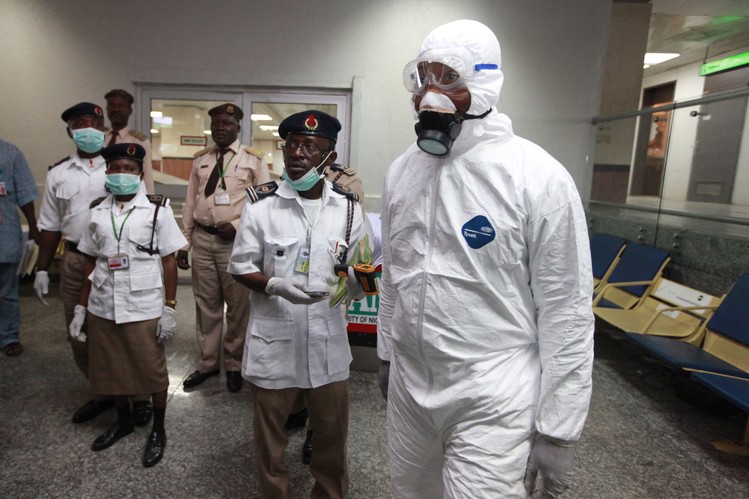
Nigerian authorities have activated emergency response measures, intensified surveillance at entry points, and are working with the Africa CDC and other partners to prevent further spread. They have urged passengers who may have travelled on the same flights to cooperate with contact tracing. The Bundibugyo strain currently circulating has no approved vaccine or specific treatment.
This is Nigeria’s first imported Ebola case in more than a decade and the first linked to the ongoing East and Central African outbreak that began earlier in 2026. Health officials stress that the case is considered contained at this stage, drawing on lessons from the successful 2014 response.
Further updates will be provided as contact tracing and investigations continue.
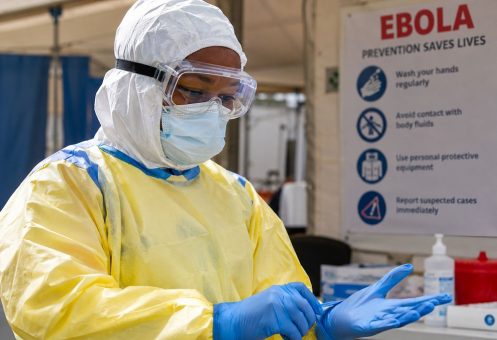
The Federal Government has urged Nigerians not to panic over the country’s first confirmed Ebola case in more than a decade, stressing that authorities have the capacity to contain the imported infection.
Coordinating Minister of Health and Social Welfare Muhammad Ali Pate made the call on Wednesday after meeting Chief of Staff to the President Femi Gbajabiamila at the Presidential Villa in Abuja.
Pate confirmed that a woman who arrived in Nigeria on an international flight from Uganda tested positive for Ebola after seeking treatment at a private hospital in the Federal Capital Territory. The patient is in isolation and receiving care. Health officials have identified 44 contacts and are conducting intensive contact tracing.
“We have found this one case. We are doing contact tracing, and we are putting containment measures to ensure that it doesn’t go into our population,” Pate said. “Federal government has competent authorities to be able to deal with this. We have done it in 2014, and we have good public health institutions. Nigerians should be reassured.”
He urged the public to remain vigilant but avoid hysteria or panic, respect information from trusted sources, and refrain from spreading misinformation. “It’s one case. It’s an imported case, and we are containing it,” he added. “If the situation changes, we’ll come out and inform Nigerians.”
The Presidential Task Force on Ebola Preparedness, chaired by Gbajabiamila, also met in an emergency session and assured citizens that response systems, including those of the Nigeria Centre for Disease Control and Prevention (NCDC), are fully activated. Officials credited early detection protocols and noted collaboration with the World Health Organization and Africa CDC.
The case involves Bundibugyo Ebola virus and marks Nigeria’s first detection since the 2014 West African outbreak. Authorities continue to monitor contacts, strengthen infection prevention at the treating facility, and call on healthcare workers nationwide to maintain a high index of suspicion.
Health
Ebola In Nigeria: Symptoms, Spread and How To Protect Yourself
According to the WHO, transmission between people occurs primarily through direct contact with the blood or other body fluids of an infected person who has developed symptoms, or someone who has died from the disease.
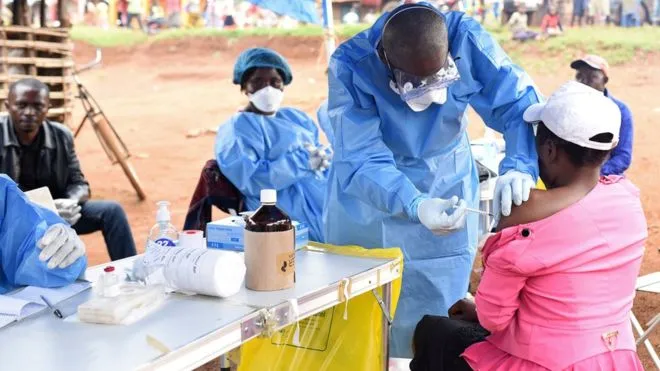
•Health workers attend to an Ebola patient in Democratic Republic of Congo
Ebola is a severe viral disease that can cause high levels of mortality.
The WHO says the average case fatality rate across Ebola disease outbreaks is approximately 50 per cent, although the rate varies substantially according to the virus, outbreak circumstances and access to care.
The virus is not airborne in the manner of infections that spread through ordinary breathing in shared indoor spaces.
According to the WHO, transmission between people occurs primarily through direct contact with the blood or other body fluids of an infected person who has developed symptoms, or someone who has died from the disease.
Infection can occur when contaminated fluids enter the body through broken skin or the eyes, nose or mouth.
Objects contaminated with infectious body fluids, including clothing, bedding and medical equipment, can also spread the virus.
People may also become infected through contact with infected animals, particularly when handling sick or dead wildlife or consuming inadequately handled products from infected animals.
Traditional burial practices involving direct contact with the body of someone who died from Ebola can contribute to transmission if appropriate precautions are not taken.
Healthcare workers and family members caring for patients without suitable protective measures can face a heightened risk.
The WHO says people infected with Ebola do not transmit the disease before symptoms develop.
Once symptoms begin, they can remain infectious while the virus is present in their blood.
The incubation period — the time between infection and the appearance of symptoms — ranges from two to 21 days.


History of Naira Revaluation and Devaluation (1973–2026) (Part 1)

JUST IN: 1 Dead, 3 Rescued in Fadeyi Building Collapse, Lagos

Obasanjo Accuses Tinubu : “You Made Every Nigerian Poor By 300% Naira Devaluation”

BREAKING: Lagos Govt Declares Today, Thursday Work-Free to Mark 2026 Ìṣẹ̀ṣe Day

Tech Expert, Zuckerberg trains with UFC champions, Adesanya, Alexander

Organ Trafficking: Ekweremadu bags 10 years in UK prison
-
 Business3 days ago
Currency Words You Should Know
-

 Business3 days ago
NCC, CBN To Warn Companies By Flagging Fraudulent Phone Numbers
-
 Business3 days ago
JPMorgan Eyeing Entry Into Nigeria’s Banking Industry
-

 Business3 days ago
Naira Exchange Rates Wednesday, October 21, 2026
-

 Business3 days ago
RMRDC Taking 2027 Africa Raw Materials Summit To Kenya
-
 Health2 days ago
Ebola In Nigeria: Symptoms, Spread and How To Protect Yourself
-

 News2 days ago
JUST IN: Gas Emissions Hit Ogun Schools, Hundreds of Pupils Hospitalised
-
 Health2 days ago
Ebola Outbreak: Don’t Panic, FG Assures Nigerians