
Health
JUST IN: Ogun confirms Lassa fever outbreak as NYSC member dies

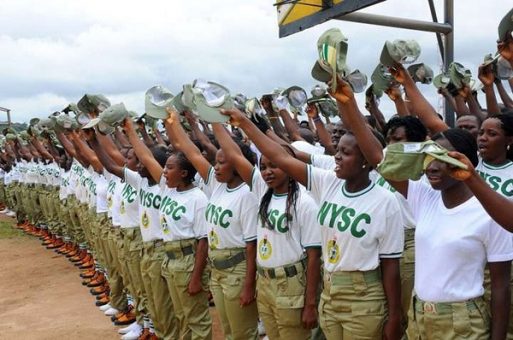
A 25-year-old member of the National Youth Service Corp (NYSC), has reportedly died of Lassa fever at a secondary health facility in ljebu North Local Government Area of Ogun State.
It wwas learnt that the female corp member who fell sick while in Ondo State, was brought to the health facility last Tuesday and later died same day.
This was contained in a statement signed by the Commissioner for Health, Tomi Coker, on Wednesday.
Coker also confirmed the outbreak of Lassa fever in the state.
The statement reads, “Ogun State has confirmed a case of Lassa Fever and as such declared Lassa fever outbreak.
“The index case is a 25-year-old female National Youth Corp member who fell sick while in Ondo State and was brought to on of our secondary health facility in ljebu North LGA on 18th March 2025 and later died same day.
“ Lassa fever is a viral Haemorrhagic disease that presents with High grade fever, Headache, General body weakness, Sore throat, Muscle pain, Cough, Nausea, Vomiting, Diarrhoea, Chest pain and Unexplained bleeding from the ears, eyes, nose, mouth and other body openings.
”Coker urged members of the community to report to the hospital if any of the listed symptoms is noticed.
“We implore members of the community to promptly report to the hospital if they notice any of these symptoms.
Any case of febrile illness that has not responded to 48 hours use of anti-malaria or antibiotics should raise an index of suspicion for Lassa fever!
“We implore all Health facilities in Ogun State, public and private, to step up Infection Prevention and Control measures and to encourage compliance by all health facility staff.“
Healthcare worker that suspects Lassa fever in a patient, are advised to call their local government disease surveillance and notification officer (LGA DSNO) whose numbers are placed in our health facilities or call State Disease surveillance and Notification Officer (0703-421-4893) or State Epidemiologist (0808-425-0881),” she added.
The commissioner, however reiterated the Governor Dapo Abiodun-led administration’s dedication to protecting the health of the citizens through continuous surveillance and prompt response to infectious diseases.
She added that the ministry in collaboration with the Rapid Response Team at ljebu North East is keeping the situation under control with enhanced surveillance and community engagement and mobilization for effective response.









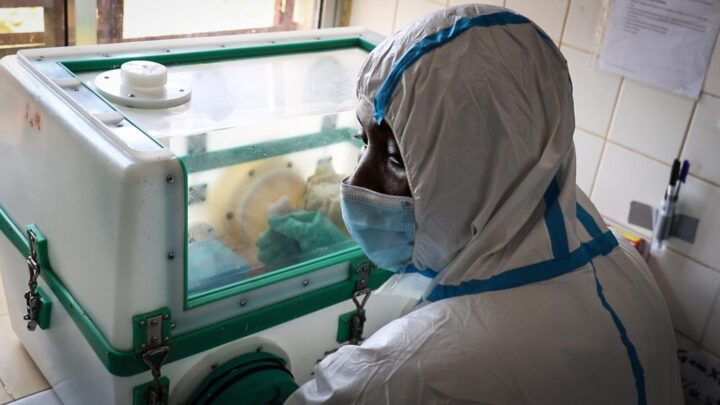
The Federal Government has said the confirmed Ebola patient in Abuja is responding well to treatment and showing signs of recovery, with laboratory results indicating significant improvement.
Coordinating Minister of Health and Social Welfare, Professor Muhammad Ali Pate, disclosed this while briefing journalists on the national response. He said he had spoken with the clinicians managing the case and that there is a possibility the patient could recover fully, though authorities would not take anything for granted.
The patient is a woman who recently arrived in Nigeria from Uganda (via Addis Ababa). She was asymptomatic on arrival but developed symptoms days later and was admitted to a private hospital in the Federal Capital Territory, where she received care for several days before laboratory confirmation of Ebola virus disease on 20 October 2026. The infection has been identified as the Bundibugyo strain.
Authorities have identified 44 contacts, including healthcare workers, patients, caregivers and travel contacts. High-risk contacts have been placed in quarantine, while others remain under monitoring. The government has intensified contact tracing, surveillance and infection-prevention measures, and has stated there is currently no evidence of community transmission.
Pate emphasised that the priority remains containing the single confirmed case and preventing any wider outbreak. The Nigeria Centre for Disease Control and Prevention (NCDC) has activated its incident management system in collaboration with the FCT Health Services Secretariat and international partners, including the World Health Organization.
Country of birth, date she arrived in Abuja and other key details emerge as health authorities contain Nigeria’s first case in over a decade
Nigeria’s first confirmed Ebola case since the 2014 West African outbreak involves a 42-year-old woman originally from Uganda who is resident in Abuja and is the wife of a diplomat. She arrived in the Nigerian capital on 3 October 2026 after spending about two and a half weeks in Kampala on holiday, according to Africa Centres for Disease Control and Prevention (Africa CDC) Director-General Dr Jean Kaseya and Nigeria’s Coordinating Minister of Health and Social Welfare, Professor Muhammad Ali Pate.
Her return journey included a two-hour stopover in Addis Ababa, Ethiopia, before landing in Abuja. She had not travelled outside the Federal Capital Territory since her arrival. Symptoms began on 6 October (or 7 October in some accounts). She initially sought care at a private hospital in Abuja around 11 October, believing she had malaria. When her condition did not improve, public health authorities were alerted on 19 October. Laboratory confirmation of Ebola (Bundibugyo strain) came on 20 October after three molecular tests.
The patient is currently in isolation and receiving medical care. Minister Pate has described her condition as stable and improving, though some reports have noted multi-organ failure. Authorities have identified 44 contacts, including healthcare workers, patients, caregivers and her husband (reported in some accounts as a Swiss national living with her in Abuja). None of the contacts had developed symptoms as of the latest updates, and they remain under monitoring.
There are differing accounts of her exact nationality and travel purpose. Africa CDC and Nigerian officials describe her as Ugandan-born and resident in Abuja who holidayed in Uganda. Uganda’s Ministry of Health has stated she is a Nigerian national who travelled to eastern Democratic Republic of Congo for business and only transited through Uganda, emphasising that Uganda has no active Ebola cases and that transit does not mean infection occurred there. The location of exposure remains under investigation.
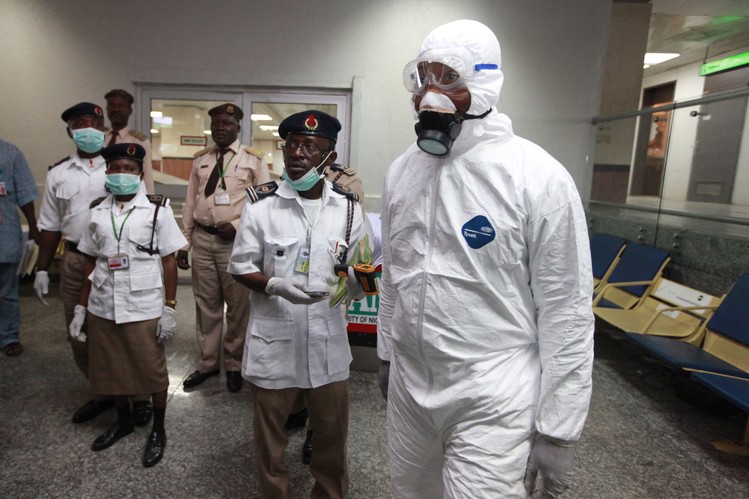
Nigerian authorities have activated emergency response measures, intensified surveillance at entry points, and are working with the Africa CDC and other partners to prevent further spread. They have urged passengers who may have travelled on the same flights to cooperate with contact tracing. The Bundibugyo strain currently circulating has no approved vaccine or specific treatment.
This is Nigeria’s first imported Ebola case in more than a decade and the first linked to the ongoing East and Central African outbreak that began earlier in 2026. Health officials stress that the case is considered contained at this stage, drawing on lessons from the successful 2014 response.
Further updates will be provided as contact tracing and investigations continue.
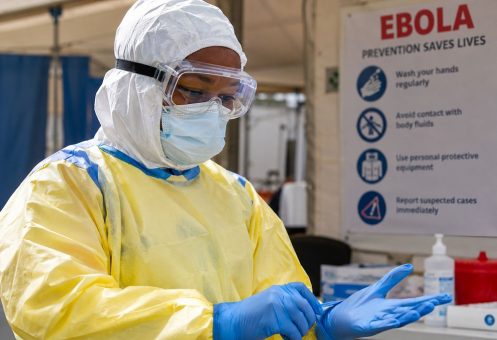
The Federal Government has urged Nigerians not to panic over the country’s first confirmed Ebola case in more than a decade, stressing that authorities have the capacity to contain the imported infection.
Coordinating Minister of Health and Social Welfare Muhammad Ali Pate made the call on Wednesday after meeting Chief of Staff to the President Femi Gbajabiamila at the Presidential Villa in Abuja.
Pate confirmed that a woman who arrived in Nigeria on an international flight from Uganda tested positive for Ebola after seeking treatment at a private hospital in the Federal Capital Territory. The patient is in isolation and receiving care. Health officials have identified 44 contacts and are conducting intensive contact tracing.
“We have found this one case. We are doing contact tracing, and we are putting containment measures to ensure that it doesn’t go into our population,” Pate said. “Federal government has competent authorities to be able to deal with this. We have done it in 2014, and we have good public health institutions. Nigerians should be reassured.”
He urged the public to remain vigilant but avoid hysteria or panic, respect information from trusted sources, and refrain from spreading misinformation. “It’s one case. It’s an imported case, and we are containing it,” he added. “If the situation changes, we’ll come out and inform Nigerians.”
The Presidential Task Force on Ebola Preparedness, chaired by Gbajabiamila, also met in an emergency session and assured citizens that response systems, including those of the Nigeria Centre for Disease Control and Prevention (NCDC), are fully activated. Officials credited early detection protocols and noted collaboration with the World Health Organization and Africa CDC.
The case involves Bundibugyo Ebola virus and marks Nigeria’s first detection since the 2014 West African outbreak. Authorities continue to monitor contacts, strengthen infection prevention at the treating facility, and call on healthcare workers nationwide to maintain a high index of suspicion.


JUST IN: Four Pilots Die After Mid-Air Collision of Military Planes in Philippine

JUST IN: Another Nollywood Actor, Dies After Brief Illness

Ebola patient in Abuja showing signs of recovery – FG

BREAKING: Lagos Govt Declares Today, Thursday Work-Free to Mark 2026 Ìṣẹ̀ṣe Day

Tech Expert, Zuckerberg trains with UFC champions, Adesanya, Alexander

Organ Trafficking: Ekweremadu bags 10 years in UK prison
-

 Business1 day ago
Naira To Dollar, Pound, Euro… Today October 23
-
 Health2 days ago
Ebola Outbreak: Don’t Panic, FG Assures Nigerians
-

 Health2 days ago
UPDATE: Identity of Woman Who Flew into Nigeria with Ebola Virus Revealed
-

 Business1 day ago
Obasanjo Accuses Tinubu : “You Made Every Nigerian Poor By 300% Naira Devaluation”
-
Business2 days ago
Dollar to Naira Exchange Rate – Thursday, October 22, 2026
-

 Entertainment1 day ago
JUST IN: Nollywood Veteran Francis Duru Dies at 57 After Brief Illness
-

 News2 days ago
UNILAG School Teachers Begin Work-to-Rule Over Unpaid Arrears
-
 News1 day ago
JUST IN: 1 Dead, 3 Rescued in Fadeyi Building Collapse, Lagos