
News
JUST IN: FG To Consider Minimum wage review as labour begins strike on Wednesday Over Subsidy


The Federal Government has said it is considering an increase in the national minimum wage to reflect the current economic realities in the country.
This was as the controversy trailing the Federal Government’s removal of fuel subsidy and the subsequent increase in the price of premium motor spirit (petrol) took a fresh turn on Friday when the Nigeria Labour Congress threatened to embark on a nationwide strike on Wednesday.
NLC specifically cautioned that it would not go back on its decision to withdraw its services should the Nigerian National Petroleum Company Limited fail to reverse the increase of the price of PMS to N184 per litre.
The workers’ union had during its emergency National Executive Council meeting in Abuja directed its affiliates, including state councils and industrial unions, to mobilise workers for a nationwide strike and protest if nothing was done by the Federal Government to embrace the status quo as far the price of petrol was concerned.
But President Tinubu, who spoke when he received members of the Progressive Governors Forum led by the Chairman and Imo State Governor, Hope Uzodimma, at the Presidential Villa, said that an improved livelihood for Nigerians remained the top priority of his administration through more people-focused economic policies.
“We need to do some arithmetic and soul searching on the minimum wage. We will have to take a look at that together, and the revenue. We must strengthen the source and application of our revenue,” Tinubu added.
The President urged the governors to seize the opportunity of being chosen among millions of citizens in their states to make a difference in the lives of people, adding that he would work for the benefit of Nigerians.
On the planned workers’ strike, the NLC President, Joe Ajaero, while briefing journalists after the union’s emergency National Executive Council meeting, said, “The NEC in session directed that the leadership of NLC should be cautious of negotiations with people without portfolios.
“It is destructive and until the government is properly constructed and the people who will negotiate with labour are people with mandate and capacity to convince the government of the day, such negotiations may not be valid wherever.
“Consequently, the NLC decided that if by Wednesday next week, the NNPCL, a private limited liability company that illegally announced a price regime in the oil sector, refuses to reverse, the NLC and all its affiliates will withdraw their services and commence protest nationwide until this is complied with.
“The NLC NEC directs all state councils and industrial unions to commence mobilisation from this moment.”
Recall that President Tinubu, during his inaugural speech on Monday, May 29, announced the removal of fuel subsidy, saying, “Subsidy is gone”.
Though the President’s image makers had in different statements insisted that Tinubu was misquoted by some sections of the media.
However, Tinubu’s declaration led to an increase in panic buying with some filling stations across the country pegging the pump price of petrol at N600 per litre few hours after the announcement.
The NNPCL had on May 31, 2023 announced new pump prices according to states, even as some representatives of the government met with NLC officials, a meeting which ended in a deadlock.
TUC, FG meet
Meanwhile, the Trade Union Congress on Friday said it would meet with the representatives of the Federal Government on Sunday over the increase in the price of petrol.
The congress also noted that it would not take any action until the end of the meeting.
The TUC disclosed this following an emergency meeting of its National Executive Council which held in Abuja.
Addressing journalists in Abuja, the union’s National President, Festus Osifo, said, “After the holistic review and painstakingly going through the entire sequence, we want to say that the congress is unhappy with the unilateral decision of the fuel subsidy removal by the government.
“Our expectation was that they should have engaged the representatives of the people, the organised labour, but it was done unilaterally.
“Having noted this, we wish to state as follows that the NEC in session resolves that discussions should continue while we demand that government should reverse to status quo ante.
“And because of the fact that we had a meeting with government on Wednesday, NEC has mandated us to go back to that meeting and put our demand before the government. It is how government reacts to our demand that will now necessitate the next line of action.
“We will tarry till Sunday when we will meet with the representatives of government. Once we are done with the meeting and the demands that the TUC will put forward, their reaction will determine our next line of action.”
In a related development, the APC governors have accused oil marketers of inflicting pains on Nigerians by hoarding fuel supply after President Tinubu’s announcement on Monday on the removal of fuel subsidy.
Addressing State House Correspondents on Friday, the Chairman of PGF and Governor of Imo State, Hope Uzodimma, condemned the price increase in what he described as “old stock” and called on Nigerians to rally behind the government’s decision to discontinue the payment of petrol subsidy.
When asked how states would intervene to ameliorate the suffering of Nigerians, Uzodinma said, “There’ll be new economic realities and once a new policy comes, there’s usually this panic. For instance, from May 29 till today, I’m not aware that any petroleum marketer has imported any product.
“All the products in their storage facilities are those already imported, subsidised by government. Why the rush to increase the prices? It is man’s inhumanity to man. So, I think that what we should do is to be our brother’s keepers and learn how to save the firewood we got during the dry season, so that we can use it during the rainy season.
“I have no doubt in my mind that the man who has raised his pump price from N300 plus to N500 plus is creating panic that there’ll be no product.”
MAN reacts
Speaking on the planned workers’ strike, the Director-General of the Manufacturers Association of Nigeria, Segun Ajayi-Kadir, called on labour to give the President a chance and allow the deregulation process.
“Labour should drop the idea of going on strike so that we can all move in the same direction. You can give a benefit of doubt to this current administration because they are just coming on board.
“They should dialogue with the government to see how the negative impact of the removal of subsidy can be ameliorated. So far, the President has spoken well, and there is every possibility that we must witness some positive movement. He needs to put his word into action.
“If you ask me whether I want to buy petrol at a lower cost, I will tell you yes, but as to whether the government should continue to subsidise, the answer is no. When you remove it, the price will go up, but the government should not reverse its decision to remove the subsidy.”
Reacting to the issue, former Director of Lagos Chamber of Commerce and Industry, Muda Yusuf, said it was not an advisable move to reverse the pump price of fuel, noting that it would be best for the Federal Government and the Labour Union to intensify negotiations so that palliatives that would cushion the hardship could be discussed.
He noted, “Well I don’t think it’s advisable to reverse the pump price of petrol. What needs to happen is for negotiations to take place in an accelerated manner so that palliatives and things like that can be discussed because the economy is already on the brink.
“It is also in the interest of the workers because this reform will put more money in the hands of government so that government will be able to pay these people well.”
He added that strike by labour was not the way out, adding that any industrial action would further disrupt the economy.
In a related development, the leadership of Labour Party has thrown its weight behind the planned industrial action of the NLC, describing the removal of petroleum subsidy as wicked, deliberate and ill-timed.
In an interview with Saturday PUNCH, the National Chairman of LP, Julius Abure, knocked President Tinubu for bringing further hardship on the people barely 24 hours after his inauguration.
He said, “For us, I see it as wicked and a deliberate attempt on the part of government to continue to impoverish the people.
“The NLC is justified to go on strike. It has no option than to do what it is doing now. The truth is that Nigerians are not saying continuation of subsidy is justified. Even as a party, we also said that we are going to remove subsidy.
“But it was supposed to be done in phases and proper planning by putting certain infrastructure in place to take care of the situation we now find ourselves.”
However, the chief spokesman for the dissolved APC Presidential Campaign Council, Festus Keyamo, frowned upon the decision of the NLC to embark on strike.
He said, “I warned Nigerians before about what this same NLC could do after the presidential election. What they are trying to do is a method that is outdated and I don’t think they will enjoy the support of the majority of Nigerians this time.
“So, I will appeal to them to reconsider this modus operandi that is now overused by the congress. Nigerians are well educated on this subsidy issue now and have shown their support for it.
“We have been told the President and Commander-in- Chief is lining up some palliatives in respect of the effect of the action by the Buhari regime.”
Makinde, Wike, Ibori back Tinubu
Lending his voice to the matter, the Oyo State Governor, Seyi Makinde, said in Abuja on Friday that although the discontinuance of subsidy was a tough decision for Nigerians, the Bola Tinubu-led administration had started on the right foot.
Emerging from an hours-long meeting with President Tinubu at the State House, Makinde urged citizens to support the new administration, adding that fuel subsidy topped the agenda of their discussions during the meeting.
“Yes, we discussed it (petrol subsidy). It’s something that is on top of public discourse right now. We know it’s a tough decision for the people and he (Tinubu) needs the support of everybody to see this through.
“We also let him know that he has started well and that he has the support of the generality of the people,” Makinde said.
Meanwhile, the immediate past governor of Rivers State, Wike, said Tinubu’s decision to discontinue fuel subsidy “shows that he’s prepared for the job.”
Wike said, “There’s no big deal about it. The governor of Oyo has told you what we came to do; to give him support. We are supporting all the decisions he’s taking.
“It shows that he’s prepared for the job and there’s nothing bad about that. It requires tough decisions for a country to move forward.”
Makinde and Wike had arrived at the State House in the company of former governor of Delta State (1999-2007), James Ibori, around 4:30pm.
Commenting on the threat by the NLC to commence strike on Wednesday if the fuel pump price is not reversed, an economist, Paul Alaje, explained that the Federal Government should as a matter of urgency, find a way to appease the union from embarking on the planned industrial action.
Alaje further stated that the Tinubu administration should find a way to convince the union and provide palliatives and alternatives for the poor.
He said, “Subsidy removal is also very essential at the same time the government must prove beyond reasonable doubt that this will reflect, unlike the removal of subsidy on kerosene that has no major impact on the lives of people.”
Meanwhile, the Paramount Ruler of Iwoland, Oba Abdulrosheed Akanbi, has called on labour to give Tinubu the benefit of the doubt, stating that industrial actions will do more harm than good to the economy.
The monarch made the appeal in a statement issued through his press secretary, Alli Ibraheem, on Friday, adding that the long-term effect of the fuel subsidy removal would be to the advantage of innocent Nigerians.
‘Avoid panic buying’
Lagos State, the Deputy Governor, Dr Obafemi Hamzat, urged residents of the state to avoid panic buying in reaction to the recent increase in the price of petrol following the removal of fuel subsidy.
Hamzat made the call on Friday while speaking to journalists during an on-the-spot assessment of some filling stations in the Ikoyi area of the state.
He added that the essence of the tour was to see the situation of things, saying, “In terms of volume, according to the managers of fuel stations visited, we have enough; so, there is no need to rush to buy. There is no need to patronise black marketers.
“The regime of fuel subsidy was announced to have ended. Lagos is always the epicentre of everything; forty per cent of cabs are in Lagos, and whatever affects PMS, affects Lagos. So, the essence is to go around and assess the situation.
“Don’t patronise black marketers. The bottom line is very simple because there is no regime of fuel subsidy again.
“People don’t have the incentive to hoard anymore. It was sold for N185 in Nigeria and the Republic of Benin selling for N650, that is why we claim the volume is high, so the volume will crash.”
The deputy governor also cited the remarks by the International Monetary Fund, noting that the fuel subsidy was not sustainable.
“There are 48,000km of borders in Nigeria, even if you deploy the military, the Navy, people will steal because we are talking of market, we are subsidising fuel for other countries.
“Various commentators and IMF have told us we are spending trillions subsidising substantially rich people because we are spending on 13 per cent of the less privileged and 87 per cent for people who can afford it. It doesn’t make sense.
“So if we can plough that money back, then it makes it easier to invest in education, health, and others. So the President will be able to harness it and be able to use it for various projects,” he added.
Hamzat stated that the state government was aware of the effect of the subsidy removal because of its effects on the prices of transportation and commodities but things would get better.
“I understand that the transportation fares have gone higher but the only thing is that it will get a little tougher before it gets better. Remember, the prices in Lagos will be different from Ibadan. And even in Lagos, because of efficiency, prices will differ but you are not subsidising anybody’s inefficiency.
“It is a question of time, in just two or three months, things will stabilise. So, if the international prices crash, they will also crash. Competition will always make it crash, market forces will determine the prices,” he said.
Speaking on the matter, the Director General of the National Institute of Legislative and Democratic Studies, Prof Abubakar Sulaiman, pleaded with the Federal Government to use the proceeds of the gains of the recently removed petrol subsidy to help the generality of Nigerians.
Sulaiman made the appeal on Friday while delivering the first annual Faculty of Humanities and Social Sciences lecture and book presentation at the Al-Hikmah University Ilorin.
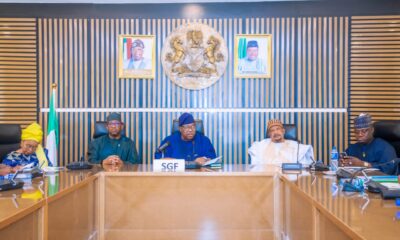

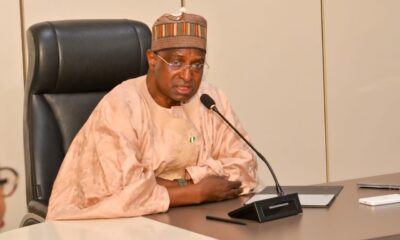

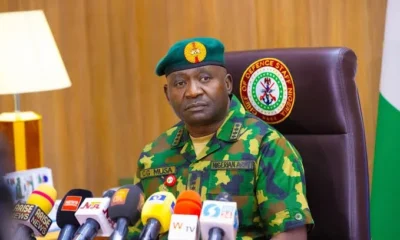





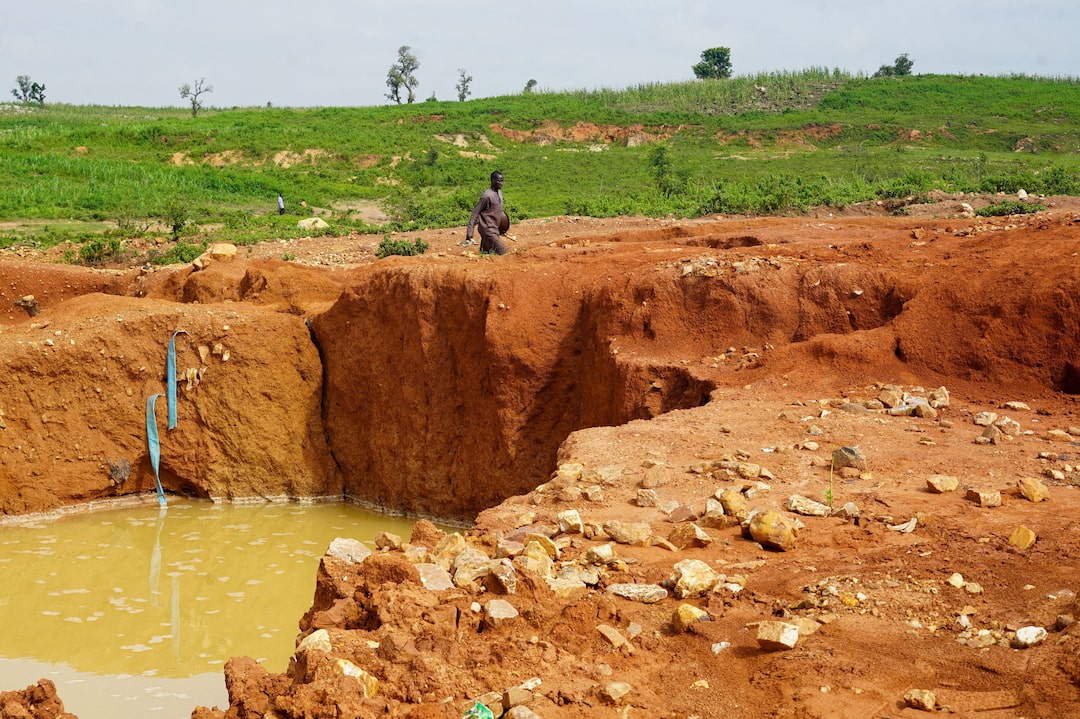
Severe overcrowding, dehydration and negligence by officers caused the deaths of 37 people held in Nigeria Security and Civil Defence Corps (NSCDC) custody in Minna, Niger State, a probe panel has concluded.
The independent ministerial committee submitted its final 65-page report to Interior Minister Olubunmi Tunji-Ojo in Abuja. The minister pledged full implementation of the findings and ordered the immediate suspension of officers implicated in alleged evidence tampering.
The report rejected earlier claims of a disease outbreak. It found that the victims died from environmental asphyxia and acute respiratory failure caused by prolonged confinement in an overcrowded cell, extreme heat and lack of water.
The incident followed raids on illegal mining sites around the M.I. Wushishi axis of Minna on 15 and 16 September. Investigators established that the operation was carried out without an operational order from NSCDC national headquarters and without the specialised Mining Marshals Unit.
By the evening of 16 September, 75 suspects — including men, women and children — had been detained. About 50 males were held in a cell measuring just 20 square metres.
Distress signals began as early as 7 p.m. that evening. Detainees banged on doors, shouted for help and repeatedly begged for water, but their pleas were allegedly ignored. When the cell was opened the next day, 33 people were dead, including 14 minors. Forty-one others survived.
Receiving the report, Minister Tunji-Ojo said the findings and recommendations would be carefully reviewed and fully implemented. He ordered the suspension of officers linked to alleged tampering with evidence, stressing the need for accountability.
Committee member Deji Adeyanju later raised concerns about a portion of the report but offered further clarification in a subsequent interview.
The report is expected to be forwarded to the Attorney-General of the Federation and Minister of Justice for further action. Attention is now focused on the Federal Government’s implementation of the panel’s recommendations.
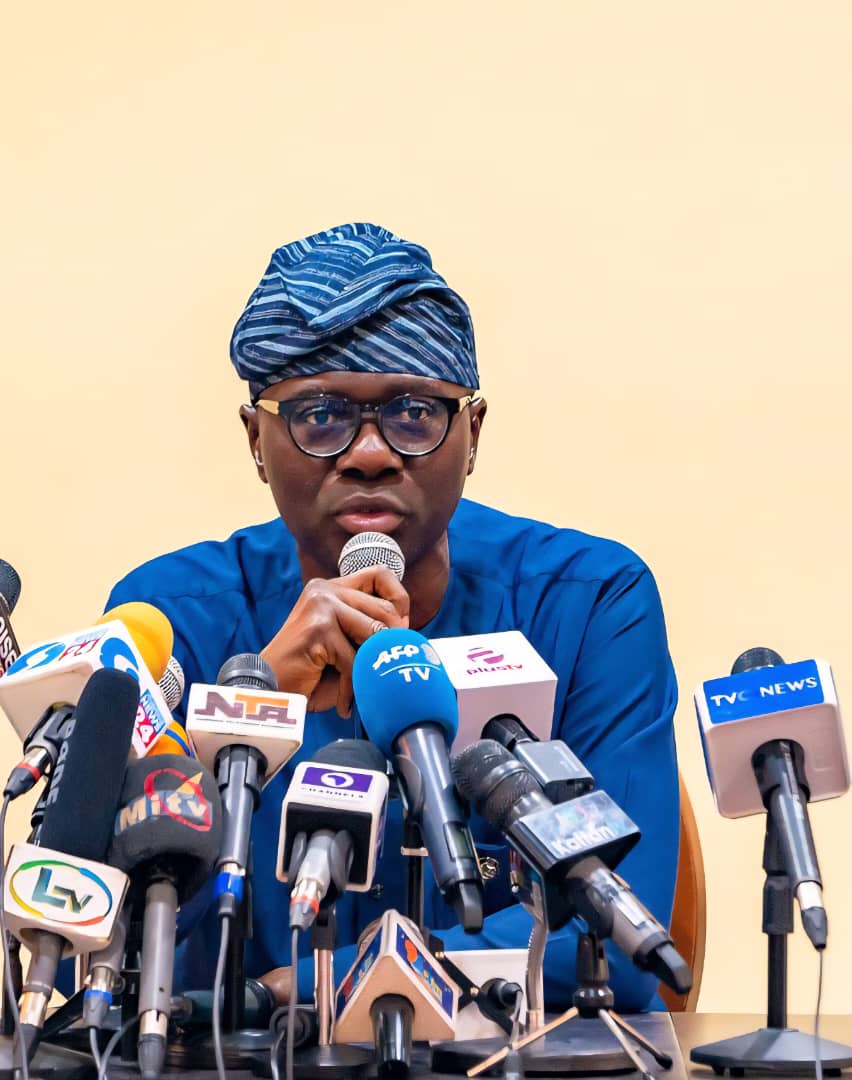
Lagos State Governor Babajide Sanwo-Olu has assured residents that the Opebi-Mende-Ojota Link Bridge will be opened to the public before Christmas, despite missing its earlier September completion target.
The governor gave the assurance on Sunday, October 25, 2026, during an inspection of the project to assess progress and determine the reasons for the delay. He said the distinctive steel superstructure on the bridge is about 80 per cent complete.
Sanwo-Olu explained that the complex architectural design — inspired by the area’s traditional cane-weaving heritage — involves installing more than 300 tonnes of steel at heights of up to 25 metres.
Three of the four major steel components have been completed, with work ongoing on the remaining one. LED lighting featuring the colours of Lagos State will also be installed to give the structure an iconic appearance.
He emphasised that the state government prioritises engineering quality and public safety over speed. Additional finishing works, including site cleaning, kerb repainting, restoration of affected areas and landscaping, will be carried out before the bridge opens.
The link bridge, which connects Opebi, Mende and Ojota, is expected to ease traffic congestion and provide an alternative route for motorists in the Ikeja, Maryland and surrounding corridors.
News
BREAKING: Former Arise News Anchor, Constance Ikokwu Appointed NDC National Campaign Council Spokesperson

Former Arise News Anchor, Dr. Chiogo Constance Ikokwu has been appointed Campaign Spokesperson for the Obi/Kwankwaso National Campaign Council. Her appointment is contained in the list of appointments released by the Nigeria Democratic Congress (NDC)
Ikokwu brings over two decades of experience in journalism across print, radio and television, alongside expertise in political communication, media strategy and international affairs. Her career includes Washington, DC Bureau Chief and Deputy Editor at THISDAY Newspapers, political analyst and anchor at Arise News, and academic work in journalism and communications. She holds a PhD in Journalism and Communications, with research focused on the intersection of media and politics. Ikokwu was also Strategic Communications Adviser to former Minister of Finance Dr. Ngozi Okonjo-Iweala and former Minister of Industry, Trade and Investment Dr. Okechukwu Enelamah.
She recently participated in the NDC’s nomination process for the House of Representatives seat for Idemili North and South Federal Constituency, Anambra State, and continues to pursue her commitment to public service.
In her new role, Ikokwu will serve as a Spokesperson for the National Campaign Council, helping to communicate Obi/Kwankwaso positions, articulate campaign messages and engage the media on issues relating to the party’s programmes and priorities. Her appointment comes as the party prepares to strengthen its public communications and engagement with Nigerians ahead of the 2027 general elections.


Suffocation, Overcrowding Kill 37 Niger Miners – Panel

Nigeria’s First Imported Ebola Patient Moved to Switzerland

Dangote Refinery’s IPO Ends Tomorrow

BREAKING: Lagos Govt Declares Today, Thursday Work-Free to Mark 2026 Ìṣẹ̀ṣe Day

Tech Expert, Zuckerberg trains with UFC champions, Adesanya, Alexander

Organ Trafficking: Ekweremadu bags 10 years in UK prison
-

 News2 days ago
BREAKING: Former Arise News Anchor, Constance Ikokwu Appointed NDC National Campaign Council Spokesperson
-
 Business2 days ago
Naira To Dollar, Pound, Euro…Rate Monday, October 26
-
 Business2 days ago
Dangote Visit London Stock Exchange Ahead of November Cement Listing
-

 International2 days ago
Brazil’s Lula Wins Fourth Term In Presidential Runoff
-
 Health2 days ago
EBOLA: Lagos Heightens Watch at Airports After Abuja Case
-
News2 days ago
Sanwo-Olu: Opebi-Ojota Link Bridge Will Open Before Christmas
-
 Business2 days ago
History of Naira Revaluation and Devaluation (1973–2026) (Part 2)
-
 Business2 days ago
Olagunju to head JPMorgan’s Proposed Nigerian Merchant Bank