
Business
Five Hidden Dangers of Buying Inherited Land in Nigeria by Dennis Isong


Not every land deal in Nigeria is as straightforward as it looks.
In fact, one of the trickiest types of property transactions you can ever get involved in is buying inherited land.
It often comes with stories, long family histories, and sometimes, unexpected headaches.
While the price may be attractive and the land location desirable, buyers need to slow down and look deeper.
Understanding the 5 Hidden Dangers of Buying Inherited Land in Nigeria can save you from emotional stress, wasted money, and years of court battles.
Let’s take the case of Chidi, a businessman who returned from abroad with the dream of building his retirement home in Lagos.
A relative introduced him to a family selling their dead father’s land.
The documents looked convincing, the price was lower than the market rate, and everything seemed fine—until a year later when one of the late owner’s children sued him, claiming the land was sold without his consent.
What Chidi thought was a dream turned into a nightmare of endless court sessions.
Sadly, his story is not uncommon.This is why we need to unpack the hidden dangers behind inherited land transactions.
1. Family Disputes and Unresolved Ownership
One of the biggest dangers of buying inherited land is family disagreement.
In many Nigerian families, land is passed down without clear documentation of who truly owns what. Some children may feel entitled, while others may want to sell.
The problem arises when not all family members agree.Imagine buying a piece of land from three siblings only to discover later that their fourth brother, who lives abroad, never approved of the sale.
That brother can return anytime and challenge the transaction in court. Until the matter is resolved legally, the land remains under dispute, and your investment stays trapped.
This is why it’s important to confirm that all rightful heirs have agreed in writing before any transaction takes place.
2. Lack of Proper Documentation
Inherited land often lacks complete or updated documentation. Many times, the original owner may have bought the land decades ago without processing proper title documents like a Certificate of Occupancy (C of O), Governor’s Consent, or even a Deed of Assignment.
As the land passes down to the children, the paperwork becomes even more confusing.
Some families rely only on informal documents, such as old receipts or local chiefs’ notes, which are not recognized in court.
If you buy such land, you may spend years chasing documents or, worse still, discover that the land was never legally theirs to sell.
Without valid documentation, ownership becomes shaky, and as a buyer, your claim over the land may not stand when challenged.
3. Multiple Sales of the Same Land
This is a common trap with inherited property. Because different family members may see themselves as “owners,” they sometimes sell the same land to multiple buyers.
One sibling may sell to you today, another may sell the same plot to someone else tomorrow, and yet another may use it as collateral for a loan.
When this happens, the buyer with the strongest legal proof wins. If you’re unlucky, you may lose both the land and the money you invested.
In fact, many land disputes in Nigerian courts stem from this exact scenario.
To protect yourself, you need to investigate carefully, confirm the true heirs, and insist on a family agreement that is signed, stamped, and legally backed.
4. Pending Legal Cases or Government Encumbrances
Another hidden danger of buying inherited land in Nigeria is the possibility of hidden lawsuits or government interests. Sometimes, the land may already be under dispute in court between family members.
Other times, the government may have acquired the land for future development, but the family continues selling to unsuspecting buyers.
If you unknowingly buy such land, you automatically inherit the legal problems that come with it.
Court cases can drag for years, draining you financially and emotionally. Worse still, if the government has plans for the land, you may lose everything without compensation.
This is why land verification through proper search at the land registry and even community checks is not optional—it is essential.
5. Emotional Attachments and Delays
Again, many families selling inherited land struggle with emotional attachments. Even after they agree to sell, one family member may suddenly change their mind or refuse to sign the final documents.
Others may delay the process, hoping to renegotiate or back out.This often frustrates buyers who have already invested time and money into the deal.
Unlike buying land from a registered estate company, transactions involving inherited property tend to drag on unnecessarily, causing you to lose both opportunities and peace of mind.
Final Thoughts
Buying land in Nigeria can be one of the smartest investments you ever make, but it must be done with caution.
When it comes to inherited property, the risks are higher than most people imagine.
From family disputes and lack of documents to multiple sales and hidden court cases, these are the five Hidden Dangers of Buying Inherited Land in Nigeria that every buyer must be aware of.
If you ever consider buying such land, work with professionals—lawyers, surveyors, and trusted realtors who understand the system.
Cutting corners may look cheaper today, but it could cost you everything tomorrow.
And remember, you don’t have to walk this path alone.
• I’m Dennis Isong, a top realtor in Lagos. I help Nigerians in the diaspora own property in Lagos, stress-free.
If you have questions about safe property investment or need guidance on avoiding land scams, call or WhatsApp me at +2348164741041.











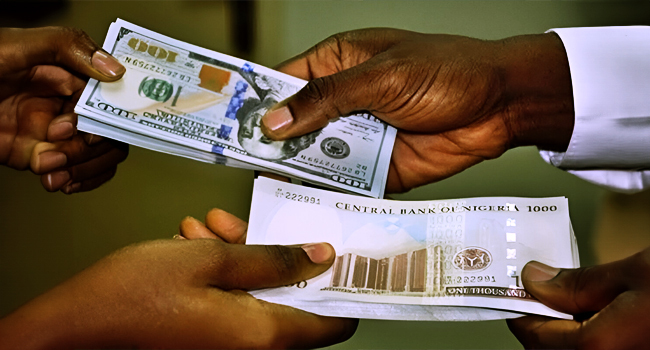
BLACK/ PARALLEL MARKET RATES
₦1370 DOLLAR (USD)
₦1800 POUND (GBP)
₦1510 EURO (EUR)
₦970 CANADIAN DOLLAR (CAD)
₦65 SOUTH AFRICAN RAND (ZAR)
₦350 UAE DIRHAM (AED)
₦190 CHINESE YUAN (CNY)
₦100 GHANAIAN CEDI (GHS)
₦2300 WEST AFRICAN CFA F.(XOF)
₦2200 CENTRAL AFRICAN CFA F.(XAF)
₦850 AUSTRALIAN DOLLAR AUSSIE (AUD)
CBN OFFICIAL RATES
DOLLAR (USD)₦1331.61
POUND (GBP)₦1764.26
EURO (EUR)₦1490.48
SWISS FRANC (CHF)₦1608.23
JAPANESE YEN (JPN)₦8.4
CFA FRANC (XOF)₦2.27
WEST AFRICAN UNIT OF ACCOUNT (WAUA)₦1802.33
CHINESE YUAN (CNY)₦199.01
SAUDI RIYAL (SAR)₦354.83
SOUTH AFRICAN RAND (ZAR)₦80.49
Business
WEF could appoint Lagarde as its next chair, sources say
The WEF’s Board of Trustees, which includes Lagarde herself, was due to meet on November 2 and could elect her as its next chair, said the people close to the organisation, who spoke on condition of anonymity due to the sensitivity of the matter.


•European Central Bank President Christine Lagarde
The World Economic Forum could appoint Christine Lagarde as its next chair as soon as next month, four people close to the organisation told Reuters, meaning she would step down early as European Central Bank chief and trigger a wider reshuffle at the top of the ECB.Lagarde’s ECB term is scheduled to end in October 2027.
Leaving early would give European Union leaders a chance to pick a new ECB President before France’s spring presidential election, which opinion polls suggest the far-right could win, and could pave the way for a deal involving two other senior ECB roles.
The WEF’s Board of Trustees, which includes Lagarde herself, was due to meet on November 2 and could elect her as its next chair, said the people close to the organisation, who spoke on condition of anonymity due to the sensitivity of the matter.
No final decision has been taken yet, they said.
A spokesperson for the WEF said the forum could not confirm when the next full Board of Trustees meeting would take place, but that the aim was to hold one before the end of the year.
Business
Germany plans tax on sugary drinks
The tax is expected to generate additional revenue for the federal government of €690 million in 2027 and €925 million in 2028.

The German cabinet has approved draft legislation to tax sugary drinks in Europe’s biggest economy.
If passed by the German Bundestag, the tax will take effect on 1 July 2027.
The coalition aims to raise revenue for the federal budget while encouraging manufacturers to reduce sugar content and offer healthier products.
The levy is intended to ease pressure on the healthcare system, which faces costs of more than €2 billion every year linked to the high consumption of sugary drinks, which contributes to obesity, diabetes and tooth decay.
According to the federal government, Berlin is using the tax to implement “what associations from the fields of health, science, child protection, and consumer protection have long been demanding.”
The tax is expected to generate additional revenue for the federal government of €690 million in 2027 and €925 million in 2028.


JUST IN: Mob Sets BRT Bus Ablaze After Motorcyclist’s Death in Lagos

BREAKING: DSS Arrests Fugitive Maina Son, Hands Him to EFCC

BREAKING: 5 Arrested Over Imo NYSC Abduction

BREAKING: Lagos Govt Declares Today, Thursday Work-Free to Mark 2026 Ìṣẹ̀ṣe Day

Tech Expert, Zuckerberg trains with UFC champions, Adesanya, Alexander

Organ Trafficking: Ekweremadu bags 10 years in UK prison
-

 Business3 days ago
NAFDAC scolds fake manufacturers: “You are killing Nigerians in order to make money”
-

 Business2 days ago
Naira Exchange Rates For Thursday, October 15
-

 Business3 days ago
Oyedele Chairs G-24 Call for Fairer Global Financial System, Affordable Development Financing
-
 Sports2 days ago
CAF Increases Annual Funding for Member Federations to $700,000
-
 Politics3 days ago
Exclusion of candidates from INEC list: CD cautions INEC against manipulation by politicians
-

 News2 days ago
ASCON To Be Rebranded “National School Of Government”
-

 Business1 day ago
Germany plans tax on sugary drinks
-

 News2 days ago
Sanwo-Olu Appoints Olatunbosun Ogunbanwo, 5 Others as Perm Secs