
Business
Why Real Estate Is Still the Safest Investment in Nigeria by Dennis Isong
And if you are looking for a trusted guide in this journey, remember that Dennis Isong is a TOP REALTOR IN LAGOS who helps Nigerians in the diaspora own property in Lagos stress-free.

When Kunle moved back to Nigeria after years of working abroad, he was torn between several investment choices. Friends encouraged him to put money into a new tech startup, others insisted on cryptocurrency, while his uncle swore by trading foreign exchange.
But Kunle remembered how his father’s only surviving investment—two plots of land in Lagos bought in the 1980s—had multiplied in value far beyond any bank deposit or business venture. That realization shaped his decision, and today, he doesn’t regret it.
This simple story reflects a truth many Nigerians already know but sometimes forget: real estate remains one of the most dependable ways to grow and preserve wealth. The question is why.
In this article, we will explore Why Real Estate Is Still the Safest Investment in Nigeria, breaking it down into key aspects that make property ownership a timeless choice, no matter the economic climate.
1. Land Never Disappears, It Only Appreciates
One of the most unique qualities of real estate is permanence. Unlike businesses that can collapse overnight, or digital investments that can vanish with a market crash, land and property are tangible assets.
No matter what happens in Nigeria’s economy, the land will remain.
In Lagos, for example, areas that were once regarded as “far” or “undeveloped” have now transformed into prime real estate. Take Lekki as a case study.
Two decades ago, land there was sold for peanuts compared to today. Those who bought early are now enjoying values that have multiplied many times over.
This consistent appreciation of land and property values is why many wealthy Nigerians—whether they made their fortune from oil, politics, or business—end up pouring their money into real estate. They know it will stand the test of time.
It’s true that markets can slow down, and not every area appreciates at the same rate, but the overall trend has always favored real estate.
Property prices may fluctuate slightly in the short term, but in the long run, they continue to rise, making land one of the most stable wealth-building tools in Nigeria.
2. Protection Against Inflation and Currency Fluctuations
Nigeria’s economy has its fair share of ups and downs. Inflation eats into savings, and the naira’s value against the dollar continues to fall.
In times like these, people who keep their money in bank accounts often watch its purchasing power weaken.But real estate provides a shield.
A piece of land bought today will not lose value just because the naira dropped tomorrow. Instead, as prices of goods and services rise, so does the value of property.
This is why many Nigerians in the diaspora who earn in dollars or pounds prefer to secure land or houses back home.
It is a way of ensuring that their money is converted into something lasting that grows in value, regardless of the exchange rate.
Even within Nigeria, families that invested in properties decades ago now realize that those assets have become their strongest defense against inflation.
Unlike cars or gadgets that depreciate over time, houses and land appreciate, ensuring that wealth is not just protected but also multiplied.
3. Real Estate Provides Tangible Security and Legacy
Another reason Why Real Estate Is Still the Safest Investment in Nigeria lies in its physical presence.
You can touch it, live in it, rent it out, or pass it on to your children. In a country where trust in financial systems can be shaky, people find comfort in owning something they can see and control.
Families often rely on real estate as a form of inheritance.
A father may not leave millions in cash to his children, but a plot of land in Lagos or a block of flats in Ibadan can sustain generations.
The sense of permanence attached to property ownership is what makes it more reassuring than stocks, bonds, or even businesses that may collapse due to poor management.
Beyond legacy, real estate also provides immediate personal security.
Having a home of your own shields you from the uncertainty of rising rent prices or sudden eviction notices.
For landlords, rental income provides a steady cash flow that supports daily needs and future investments.
This combination of financial returns and peace of mind explains why Nigerians view property ownership not just as an investment, but as a necessity.
4. Flexibility of Use and Wealth Creation Opportunities
One thing that sets real estate apart from other investments is its flexibility. A single property can serve multiple purposes over time.
A plot of land in Lagos could begin as farmland, later converted into residential housing, and eventually developed into commercial spaces like shopping complexes or warehouses.
This adaptability ensures that investors are never stuck with one rigid outcome. For instance, an individual who builds rental apartments enjoys regular income.
If the area grows in commercial value, that same property could be converted into office spaces or shops. Unlike stocks or crypto, where you wait for a buyer or market shift, real estate allows you to actively shape and increase its value.
Nigerians are creative when it comes to land use. From turning properties into Airbnb apartments to building student hostels in university towns, real estate offers countless opportunities to generate wealth.
This dynamic nature makes it safer, because even if one income channel slows down, another can be developed from the same asset.
5. Consistent Demand Driven by Nigeria’s Growing PopulationNigeria’s population is not slowing down.
With over 200 million people and projections to become one of the most populated countries in the world, the demand for housing will always remain high.
Cities like Lagos, Abuja, and Port Harcourt continue to expand as more people migrate in search of better opportunities.
This growth translates into a constant need for land and housing. Developers can barely keep up with demand, and rental prices keep climbing in urban centers.
For investors, this means that there will always be a market for real estate. Unlike some investments that depend on trends or hype, property ownership is tied to a basic human need—shelter.
As long as people need a place to live, real estate will remain relevant and profitable.
It’s important to note that while not every location will yield the same returns, population growth ensures that property in the right places will always remain valuable.
This long-term demand reinforces the argument of Why Real Estate Is Still the Safest Investment in Nigeria, because it is supported by something as fundamental as human survival.
Kunle’s decision to choose real estate over flashy investments turned out to be wise.
His story mirrors the experience of countless Nigerians who have discovered that while quick-money ventures come and go, property remains steady.
The permanence of land, its protection against inflation, its role as tangible security and legacy, its flexibility for wealth creation, and the ever-growing population demanding housing all explain why real estate continues to be the safest and most reliable investment in Nigeria.
For anyone thinking about securing their financial future—whether you are based in Nigeria or living abroad—real estate should not just be an option; it should be a priority.
And if you are looking for a trusted guide in this journey, remember that Dennis Isong is a TOP REALTOR IN LAGOS who helps Nigerians in the diaspora own property in Lagos stress-free.
For questions, WhatsApp or call +2348164741041 today.









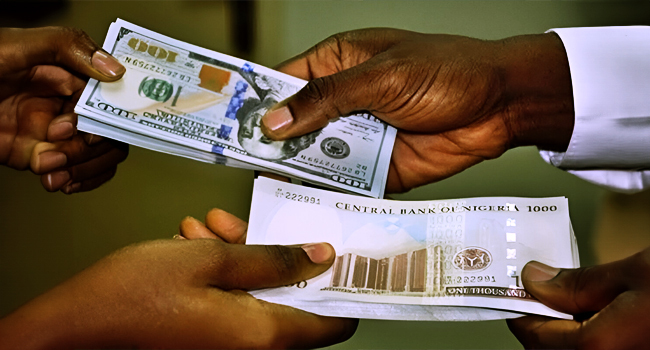
BLACK/ PARALLEL MARKET RATES
₦1370 DOLLAR (USD)
₦1800 POUND (GBP)
₦1510 EURO (EUR)
₦970 CANADIAN DOLLAR (CAD)
₦65 SOUTH AFRICAN RAND (ZAR)
₦350 UAE DIRHAM (AED)
₦190 CHINESE YUAN (CNY)
₦100 GHANAIAN CEDI (GHS)
₦2300 WEST AFRICAN CFA F.(XOF)
₦2200 CENTRAL AFRICAN CFA F.(XAF)
₦850 AUSTRALIAN DOLLAR AUSSIE (AUD)
CBN OFFICIAL RATES
DOLLAR (USD)₦1331.61
POUND (GBP)₦1764.26
EURO (EUR)₦1490.48
SWISS FRANC (CHF)₦1608.23
JAPANESE YEN (JPN)₦8.4
CFA FRANC (XOF)₦2.27
WEST AFRICAN UNIT OF ACCOUNT (WAUA)₦1802.33
CHINESE YUAN (CNY)₦199.01
SAUDI RIYAL (SAR)₦354.83
SOUTH AFRICAN RAND (ZAR)₦80.49
Business
WEF could appoint Lagarde as its next chair, sources say
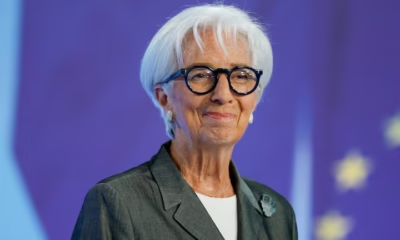
The WEF’s Board of Trustees, which includes Lagarde herself, was due to meet on November 2 and could elect her as its next chair, said the people close to the organisation, who spoke on condition of anonymity due to the sensitivity of the matter.

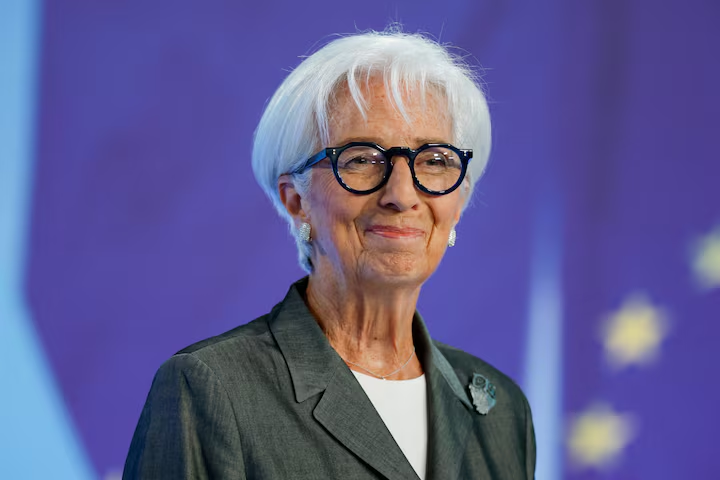
•European Central Bank President Christine Lagarde
The World Economic Forum could appoint Christine Lagarde as its next chair as soon as next month, four people close to the organisation told Reuters, meaning she would step down early as European Central Bank chief and trigger a wider reshuffle at the top of the ECB.Lagarde’s ECB term is scheduled to end in October 2027.
Leaving early would give European Union leaders a chance to pick a new ECB President before France’s spring presidential election, which opinion polls suggest the far-right could win, and could pave the way for a deal involving two other senior ECB roles.
The WEF’s Board of Trustees, which includes Lagarde herself, was due to meet on November 2 and could elect her as its next chair, said the people close to the organisation, who spoke on condition of anonymity due to the sensitivity of the matter.
No final decision has been taken yet, they said.
A spokesperson for the WEF said the forum could not confirm when the next full Board of Trustees meeting would take place, but that the aim was to hold one before the end of the year.
Business
Germany plans tax on sugary drinks
The tax is expected to generate additional revenue for the federal government of €690 million in 2027 and €925 million in 2028.
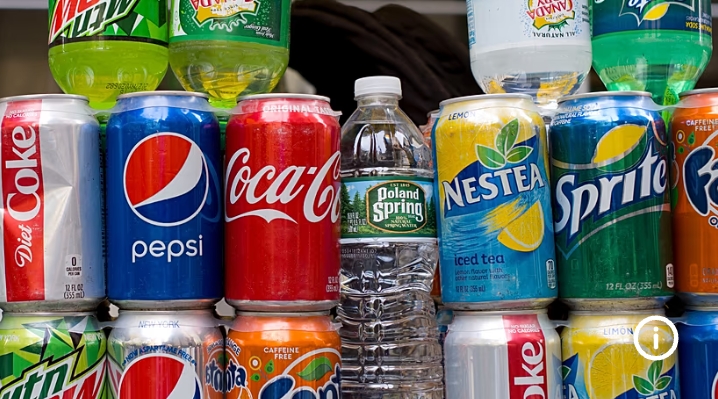
The German cabinet has approved draft legislation to tax sugary drinks in Europe’s biggest economy.
If passed by the German Bundestag, the tax will take effect on 1 July 2027.
The coalition aims to raise revenue for the federal budget while encouraging manufacturers to reduce sugar content and offer healthier products.
The levy is intended to ease pressure on the healthcare system, which faces costs of more than €2 billion every year linked to the high consumption of sugary drinks, which contributes to obesity, diabetes and tooth decay.
According to the federal government, Berlin is using the tax to implement “what associations from the fields of health, science, child protection, and consumer protection have long been demanding.”
The tax is expected to generate additional revenue for the federal government of €690 million in 2027 and €925 million in 2028.


JUST IN: Mob Sets BRT Bus Ablaze After Motorcyclist’s Death in Lagos

BREAKING: DSS Arrests Fugitive Maina Son, Hands Him to EFCC

BREAKING: 5 Arrested Over Imo NYSC Abduction

BREAKING: Lagos Govt Declares Today, Thursday Work-Free to Mark 2026 Ìṣẹ̀ṣe Day

Tech Expert, Zuckerberg trains with UFC champions, Adesanya, Alexander

Organ Trafficking: Ekweremadu bags 10 years in UK prison
-

 Business3 days ago
NAFDAC scolds fake manufacturers: “You are killing Nigerians in order to make money”
-
 Business2 days ago
Naira Exchange Rates For Thursday, October 15
-

 Business3 days ago
Oyedele Chairs G-24 Call for Fairer Global Financial System, Affordable Development Financing
-
 Sports2 days ago
CAF Increases Annual Funding for Member Federations to $700,000
-

 News2 days ago
ASCON To Be Rebranded “National School Of Government”
-

 Business1 day ago
Germany plans tax on sugary drinks
-
 Politics3 days ago
Exclusion of candidates from INEC list: CD cautions INEC against manipulation by politicians
-
 Business1 day ago
WEF could appoint Lagarde as its next chair, sources say