
Business
Financial Inclusion: FG Engages ICAN, CIBN and four other Professional Bodies to Train 10 million Nigerians
Shettima noted that the nation “cannot build a one-trillion-dollar economy on weak skills, fragmented standards, or disconnected professional ecosystems.

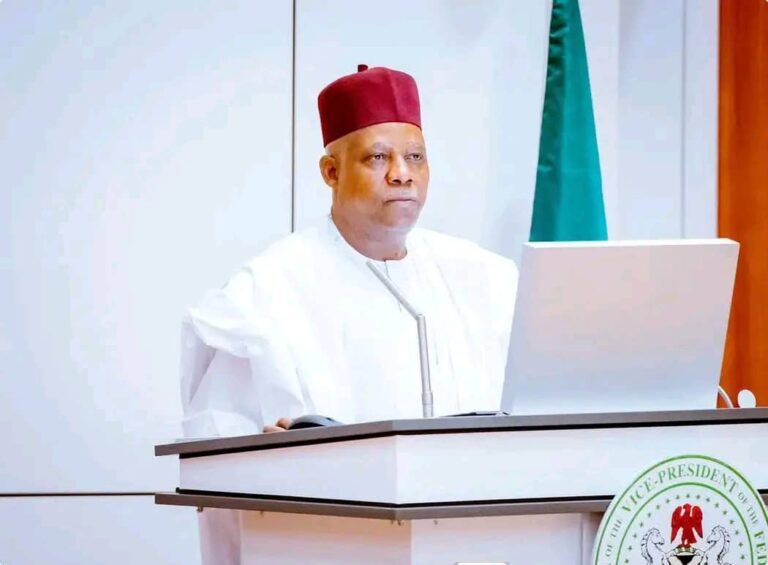
• VP Shettima
The Federal Government, through the Office of the Vice President, has launched a nationwide training program to educate 10 million Nigerians on financial inclusion and literacy.
The training being implemented through the Presidential Committee on Economic & Financial Inclusion (PreCEFI), chaired by Vice President Kashim Shettima, is designed to equip Nigerians, particularly women and youths, with essential financial skills, investment knowledge, and digital competencies for sustainable wealth creation.
The Office of the Vice President, through the PreCEFI, on Monday, signed the Memorandum of Understanding (MOU) with the Institute of Chartered Accountants of Nigeria (ICAN); Chartered Institute of Bankers of Nigeria (CIBN); Chartered Institute of Stockbrokers (CIS); National Institute of Credit Administration (NICA); Chartered Risk Management Institute (CRMI) and Nigeria Institute of Innovation and Entrepreneurship (NIIE.
They are to jointly design training programmes, certification pathways, digital skills initiatives, and mentorship platforms that would strengthen Nigeria’s financial and enterprise workforce.
Vice President Shettima, commented: “The training is a strategic national investment in capacity as infrastructure which is the human, institutional, and ethical foundations upon which inclusive growth must rest.
Shettima noted that the Aso Accord on Economic and Financial Inclusion, which the PreCEFI is mandated to implement, recognises the fact that “financial inclusion is not achieved by access alone, but by competence, trust, and capability.”
Shettima noted that the nation “cannot build a one-trillion-dollar economy on weak skills, fragmented standards, or disconnected professional ecosystems.
VP Shettima pointed out that while capacity building is financial inclusion, “without accountants who understand MSME formalisation, credit administrators who can assess risk beyond collateral, bankers who embed consumer protection, risk professionals who anticipate digital threats, and innovators who translate ideas into enterprises, inclusion remains a slogan rather than a system.”
Maintaining that the training programme must prioritise young Nigerians and women, the VP said,
“Importantly, this collaboration prioritises women and youth inclusion and digital transformation, recognising that Nigeria’s demographic dividend will only materialise if young people are equipped with relevant skills and ethical grounding for a fast-evolving digital economy.”
He charged the PreCEFI and the professional bodies not to treat the MoU as a mere document, but as a living platform for execution.
Earlier, the President of the Institute of Chartered Accountants of Nigeria (ICAN), Mallam Haruna Nma Yahaya, applauded the administration of President Bola Ahmed Tinubu for its bold economic reforms that has culminated in the flag off of the financial inclusion free training programme for 10 million women and youths in Nigeria.
He said the decision to embark on the project was prompted by visible improvements in the economy as a result of the gains of the Federal Government’s policy reforms.
Yahaya assured the Vice President of their professional support in the realisation of set objectives, describing their involvement in the project as an institutional honour.
The CEO of WAWU Africa – technical partners in the programme, Mr Emmanuel Lennox, assured of the company’s readiness to deliver on the project, particularly in providing the digital platform and overall enabling environment for its success.
The Technical Adviser to the President on Economic and Financial Inclusion, Dr Nurudeen Abubakar Zauro, emphasised why the training of 10 million Nigerians on financial inclusion had become necessary.
“Exclusion is not only by lack of access, but by limited skills, weak institutional capacity, and insufficient professional support.
Consequently, financial inclusion is not achieved by infrastructure alone; it is achieved when people and institutions are equipped to use that infrastructure responsibly, productively, and sustainably,” he said
The high point of the event was the signing of the MoU for the capacity building programme by the Federal Government and the six professional bodies.

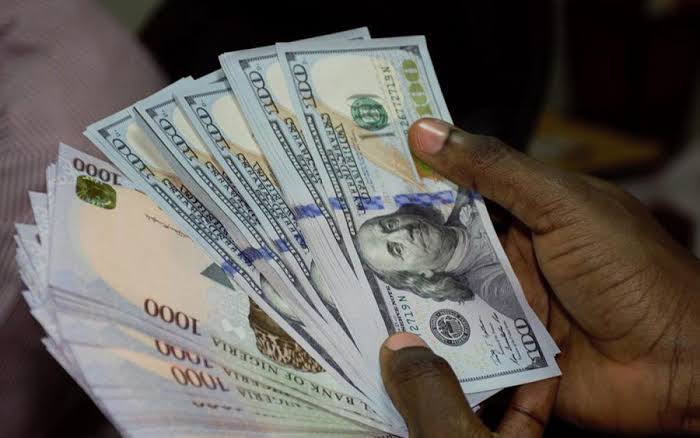
The Nigerian naira traded near recent levels against the US dollar on Thursday, with a modest gap between the official and parallel markets.
Official Market (CBN / NFEM)
- The official Nigerian Foreign Exchange Market (NFEM) rate closed around ₦1,334.72 per US dollar on October 21 (the most recent published CBN figure).
- Intraday trading on that day ranged roughly between ₦1,333 and ₦1,337.
- Interbank FX turnover rose sharply to about $127.6 million.
Parallel / Black Market (Aboki / Street Rate)
- Bureau de Change and parallel market dealers are quoting the dollar in the ₦1,370–₦1,390 range for selling (what you pay to buy dollars).
- Typical buy rates (what dealers pay for dollars) are around ₦1,355–₦1,375.
- The premium over the official rate remains relatively moderate by recent historical standards (roughly 3–4%).
Mid-Market Reference
International mid-market rates (used by many global converters) hover around ₦1,332–₦1,335 per dollar.
Quick Summary
| Market | Approx. Rate (₦ per $1) | Notes |
|---|---|---|
| Official (CBN/NFEM) | 1,335 | Latest published close |
| Parallel (Sell) | 1,370 – 1,390 | Street / BDC rate |
| Mid-market | 1,332 – 1,335 | Global reference |
Context: The naira has been relatively stable in recent sessions, supported by improved FX liquidity and external reserves. The gap between official and parallel rates remains narrower than the wide spreads seen in previous years, though demand for dollars for imports, travel, and remittances continues to influence the street rate.
Rates can shift during the day. Always confirm with a trusted bank, Bureau de Change, or licensed operator before transacting.
Business
RMRDC Taking 2027 Africa Raw Materials Summit To Kenya
Speaking with newsmen during the conclusion of the ARMS 2026, Ike-Muonso said Nigeria is the only county that has an organisation, government-owned organisation in the continent that is fully dedicated to adding value to raw materials.
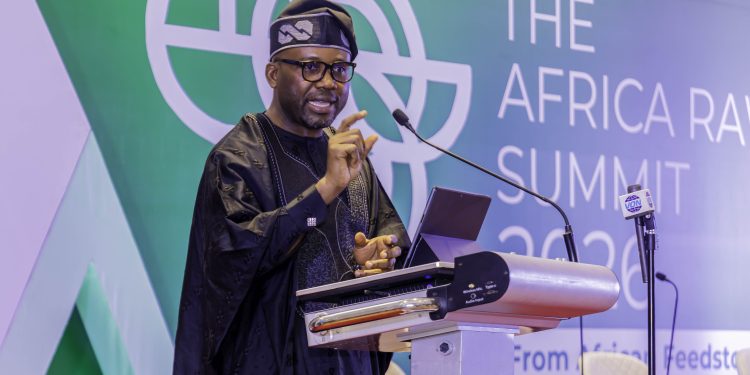
• Photo: Hon.Minister, Federal Ministry of Innovation, Science and Technology (FMIST), Dr Kingsley Udeh, declaring the event open.
The third edition of the Africa Raw Materials Summit (ARMS) 2027, would be used to garner support for setting up a centralised continental database for raw processing and value addition that is accessible to investors and industrialists.
The Director-General of the Raw Materials Research and Development Council (RMRDC), Prof. Nnanyelugo Ike-Muonso, disclosed this during the ARMS 2026 Summit , held in Abuja, themed, ‘From African Feedstock To Factories.’
Building enthusiasm ahead of the next year’s event scheduled to hold in Kenya, East Africa, Ike-Muonso explained that the decision to take the summit to Kenya was reached following what he described as the East Africa country participants’ dominance in the first and second edition of the summit.
Ike-Muonso said Nigeria is the only county that has an organisation, government-owned organisation in the continent that is fully dedicated to adding value to raw materials.
Business
JPMorgan Eyeing Entry Into Nigeria’s Banking Industry
J.P. Morgan operates in more than 100 countries worldwide, providing financial services, investment banking, asset management, and commercial banking across major global markets in the Americas, Europe, the Middle East, Africa, and Asia-Pacific.

JPMorgan Chase & Co has deposited N50 billion with the Central Bank of Nigeria as part of efforts to secure a merchant banking licence and expand its operations in Nigeria .
J.P. Morgan operates in more than 100 countries worldwide, providing financial services, investment banking, asset management, and commercial banking across major global markets in the Americas, Europe, the Middle East, Africa, and Asia-Pacific
Bloomberg reported that the CBN deposit, valued at about $38m, meets a key requirement in the American lender’s application and signals its readiness to establish a licensed banking operation in Nigeria.
However, the payment does not guarantee approval, as the CBN is yet to make a final decision on the application.
People familiar with the process, said the deposit was one of the final regulatory requirements for the licence.
They added that the bank expects to obtain approval by the end of 2026 or in early 2027, subject to the regulator’s decision.


UPDATE: Identity of Woman Who Flew into Nigeria with Ebola Virus Revealed

UNILAG School Teachers Begin Work-to-Rule Over Unpaid Arrears

Dollar to Naira Exchange Rate – Thursday, October 22, 2026

BREAKING: Lagos Govt Declares Today, Thursday Work-Free to Mark 2026 Ìṣẹ̀ṣe Day

Tech Expert, Zuckerberg trains with UFC champions, Adesanya, Alexander

Organ Trafficking: Ekweremadu bags 10 years in UK prison
-
 Business2 days ago
Currency Words You Should Know
-

 Business2 days ago
Naira Exchange Rates Wednesday, October 21, 2026
-

 Business2 days ago
NCC, CBN To Warn Companies By Flagging Fraudulent Phone Numbers
-
Business2 days ago
JPMorgan Eyeing Entry Into Nigeria’s Banking Industry
-

 Business2 days ago
RMRDC Taking 2027 Africa Raw Materials Summit To Kenya
-
 Health2 days ago
BREAKING: Nigeria Confirms First Ebola Case
-

 Business2 days ago
How I steal ATM users’ PINs, defraud them
-
 Health2 days ago
Ebola In Nigeria: Symptoms, Spread and How To Protect Yourself