
News
FARM TO FEED CAMPAIGN: Soludo’s Solution to Hunger at a Time of Anger


By Christian ABURIME
We do not live to eat, but we need to eat to live.
Thus, food security is a fundamental aspect of societal well-being, encompassing the availability, access, and utilisation of nutritious food for everyone.

Also, it is not just about preventing hunger; it is about fostering dignity, justice, and prosperity within communities that make up a state and a nation.
As the celebrity Spanish and American chef, restaurateur, and humanitarian José Andrés, founder of World Central Kitchen, also aptly stated, “Food is national security. Food is the economy.
It is employment, energy, and history. Food is everything”. This highlights the multifaceted role that food plays in shaping our societies and economies.
Naturally, therefore, addressing food insecurity is a moral imperative in any society.
The need for immediate action to alleviate hunger and ensure that every individual has access to sufficient food is sacrosanct.
Yet, it calls for the wisdom of collective action as echoed in the words of Irish singer-songwriter and activist Bono, who stated, “If you want to eliminate hunger, everybody has to be involved”.
The foregoing proposition, advocating that solutions to hunger and economic hardship require the collaboration of all sectors of society, from government and businesses to individuals and communities, is why the Governor of Anambra State, Professor Chukwuma Charles Soludo, CFR, has lately launched “Farm to Feed Campaign”.

Coming at a time of nationwide hunger protests against economic hardship sweeping across Nigeria, Governor Soludo’s initiative offers a promising path forward, underscoring the power of agriculture as a sustainable solution to hunger, both in the short and long term.
While many regions in Nigeria have seen citizens take to the streets in protest against food inflation and economic challenges, Anambra State is taking a different approach. Governor Soludo’s campaign is a call to reasonable action, urging Ndi Anambra to be part of the solution rather than merely lamenting the problem.
This proactive stance embodies the resilient spirit of the Igbo people at large and offers valuable lessons for the rest of the country.
The “Farm to Feed Campaign”, if faithfully embraced by Anambra people and others, promises several immediate benefits.
By encouraging citizens to utilise every available piece of land for farming, the initiative aims to increase food supply within months, potentially easing the pressure on food prices.
The campaign will also foster a sense of shared responsibility and community spirit, with local government chairmen, churches, and other stakeholders actively involved in promoting farming.

As more people engage in micro-farming, be it in their domestic backyards or other available spaces in rural and urban centres, it creates opportunities for additional income generation, helping to alleviate economic hardship at the individual level.
This is not to talk of skill development through which the initiative provides an opportunity for citizens to acquire or enhance farming skills, which can be valuable long-term assets.
Beyond short-term gains, Governor Soludo’s “Farm to Feed Campaign” is also laying the groundwork for lasting change. By promoting widespread engagement in agriculture, Anambra State is working towards long-term food security, reducing dependence on imports and buffering against future food inflation crises.
Economic diversification is another long-term benefit. The focus on agriculture can contribute to diversifying the state’s economy, creating a more resilient economic structure less vulnerable to shocks in any single sector.
Besides, Governor Soludo’s call to make farming and agriculture “the new national pride” could spark a cultural transformation, elevating the status of agriculture in society as a trendy occupation like ICT, acting and others.
There is also the advantage of environmental sustainability with the initiative, which includes the distribution of palm and coconut seedlings being done by the Soludo administration long before now.
The “Farm to Feed Campaign” has a great potential for promoting sustainable agricultural practices that can have long-term positive environmental impacts.
By encouraging youth participation in agriculture, the campaign goes further to address unemployment issues while ensuring the continuity of farming knowledge and practices.
So, as Nigeria contends with severe economic challenges and food inflation, Governor Soludo has swung into action with a practical solution.
The “Farm to Feed Campaign” offers a bright ray of hope and pragmatism. If embraced by all, it can transform the current crisis into an opportunity for growth, self-reliance, and nation building, turning Nigeria’s vast arable lands into a source of abundance rather than scarcity.
Governor Soludo’s words ring true: “Let us get to work, every citizen, one at a time…be the change you desire.” This way, Nigeria may well find its path to food security and economic stability, one farm at a time.









News
Toxic fumes kill 37 in Okrika oil tragedy
The incident occurred on Thursday at the Okari Jetty in the Okrika Mainland area, where youths from Okrika and neighbouring communities had reportedly gathered to load a petroleum product from an illegal tapping point.


About 37 persons have reportedly died after inhaling fumes from a petroleum product at a jetty in Okrika Local Government Area of Rivers State.
The incident occurred on Thursday at the Okari Jetty in the Okrika Mainland area, where youths from Okrika and neighbouring communities had reportedly gathered to load a petroleum product from an illegal tapping point
Many others were said to be missing following the incident, which occurred in the mainly coastal community.
A source in the community told our reporter that more than 100 persons had stormed the jetty with locally made boats while a vessel was anchored at the riverside to load petroleum products.
The source said trouble started while the youths were loading the product, as a strong smell suddenly saturated the air, causing several of them to collapse.
“Many of them collapsed into the river, while others who managed to escape the scene had serious respiratory disorders and were being treated at the hospital.
“As I speak to you, over 37 bodies were identified as Okrika people, while six others were yet to be identified and many are still missing,” the source, who pleaded anonymity, said.
(PUNCH)

The Presidency has clarified that the ongoing Freedom of Information Act (FOIA) case before the United States District Court for the District of Columbia is a civil records-disclosure dispute and not a criminal case against President Bola Ahmed Tinubu. The court has not found the President guilty of any criminal wrongdoing.
In a statement issued on September 3, 2026, Special Adviser to the President (Information and Strategy), Bayo Onanuga, addressed recent speculative reports surrounding the matter.
The statement recalled that 23 years ago, on February 4, 2003, the American Consulate in Lagos informed the then Inspector General of Police, Mr Tafa Balogun, that an FBI records check found no criminal arrest records, wants, or warrants for then Governor Bola Ahmed Tinubu.
In 2022, Mr Aaron Greenspan, known to work with Nigerian opposition figures including David Hundeyin and Atiku Abubakar, submitted FOIA requests to several United States government agencies seeking records relating to President Tinubu. After the agencies withheld certain records or declined to confirm or deny their existence, Mr Greenspan filed Civil Action No. 23-1816 in the United States District Court for the District of Columbia in 2023. The court later allowed President Tinubu to participate as an intervenor.
During the proceedings, the defendants invoked the “Glomar defence,” a standard position under which a US government agency neither confirms nor denies the existence of records in order to protect personnel, techniques, and sources. On this basis, the court granted summary judgment in favour of the CIA, EOUSA, Department of State, Department of the Treasury, and the Internal Revenue Service (IRS), removing them from the case. Claims involving the Federal Bureau of Investigation (FBI) and the Drug Enforcement Administration (DEA) remained for further consideration.
In compliance with court orders, the FBI and DEA produced 399 pages of records with portions redacted under statutory exemptions. The plaintiff challenged the redactions. The agencies, through the United States Department of Justice, defended the withholdings on the following grounds:
- Protection of grand jury materials and pen register information under FOIA Exemption 3
- Attorney-work product and attorney-client privileges under FOIA Exemption 5
- Records prepared for law enforcement purposes under FOIA Exemption 5
- Protection against unwarranted invasion of personal privacy under FOIA Exemptions 6 and 7(C)
- Protection of confidential sources and law enforcement techniques under FOIA Exemptions 7(D) and 7(E)
President Tinubu has also asserted his rights under FOIA Exemption 7(C) on the advice of his lawyers.
The plaintiff has until September 11, 2026, to file any opposition, while the FBI, DEA, and the intervenor have until September 18, 2026, to respond.
The Presidency emphasised that the release or withholding of records under FOIA does not, by itself, establish criminal liability. The case concerns access to government records and the proper application of statutory exemptions. It remains exclusively under the control of Judge Beryl A. Howell of the United States District Court, who will decide the matter based on the evidence, applicable law, and the parties’ arguments—not political preferences.
Recent public commentary by Mr Karl von Batten has inaccurately portrayed him and his client as central to the proceedings. Neither is a party to the case.
The Presidency urged the media and the public to distinguish verified court proceedings from partisan speculation.
News
Eko Electricity blames Lekki-Ajah power outages on feeders disruption
The following feeders are currently out of supply: Ibeju, Ajah Local 1, Medallion Data, Urban Prime, Main One, Maroko, Chevron, Oke-Ira, Ikate Express, Ilasan, NTDA 1, Eleko,” the company said.

Eko Electricity Distribution Plc (EKEDP) has announced a power outage across parts of Lagos, including Lekki, Ajah and Ibeju-Lekki, following a loss of supply affecting 12 feeders.
The affected feeders are Ibeju, Ajah Local 1, Medallion Data, Urban Prime, Main One, Maroko, Chevron, Oke-Ira, Ikate Express, Ilasan, NTDA 1 and Eleko.
In a notice to customers, EKEDP said the VGC, Oke-Ira and Agungi injection substations were also affected by the disruption.
The distribution company attributed the outage to a fault affecting electricity supply within the Lekki, Ajah and Ibeju-Lekki axis.
The following feeders are currently out of supply: Ibeju, Ajah Local 1, Medallion Data, Urban Prime, Main One, Maroko, Chevron, Oke-Ira, Ikate Express, Ilasan, NTDA 1, Eleko,” the company said.
EKEDP said it was working with the Transmission Company of Nigeria (TCN) to restore the affected transformer and reconnect all the impacted feeders.


Nduka Obaigbena Challenges Tinubu, Atiku, Obi on 2027 election campaigns

Toxic fumes kill 37 in Okrika oil tragedy

Naira Exchange Rates Thursday, September 4

Tech Expert, Zuckerberg trains with UFC champions, Adesanya, Alexander

Organ Trafficking: Ekweremadu bags 10 years in UK prison

SAINT OBI: Between his marriage and his death
-

 Business2 days ago
Naira Exchange Rates Wednesday, September 2
-

 News3 days ago
Olukoyede Sacks 40 EFCC Staff Over Corruption
-

 Business3 days ago
Dangote, NMDPRA Clash Over Refinery’s Free Zone Status
-

 News3 days ago
Death Toll in Nepal Floods Exceed 1,000
-

 News3 days ago
Edo Influential Politician, Daniel Orbih, dies at 64 •Obaseki mourns
-
 News2 days ago
Eko Electricity blames Lekki-Ajah power outages on feeders disruption
-

 Business2 days ago
BREAKING: Uber winds down operations in Nigeria, effective September 2
-
 News3 days ago
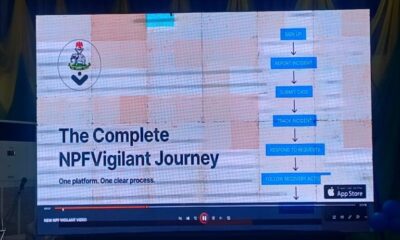
IGP Disu Launches Nigeria Police Force Vigilant App, for Tracking Crimes