
Health
Euracare Hospital replies Chimamanda Adichie, Clarifying Nkanu’s Death
Chimamanda, the bereaved mother, had in a public statement, accused the hospital’s anesthesiologist to have neglected monitoring the sick child after he was given “too much propofol.”

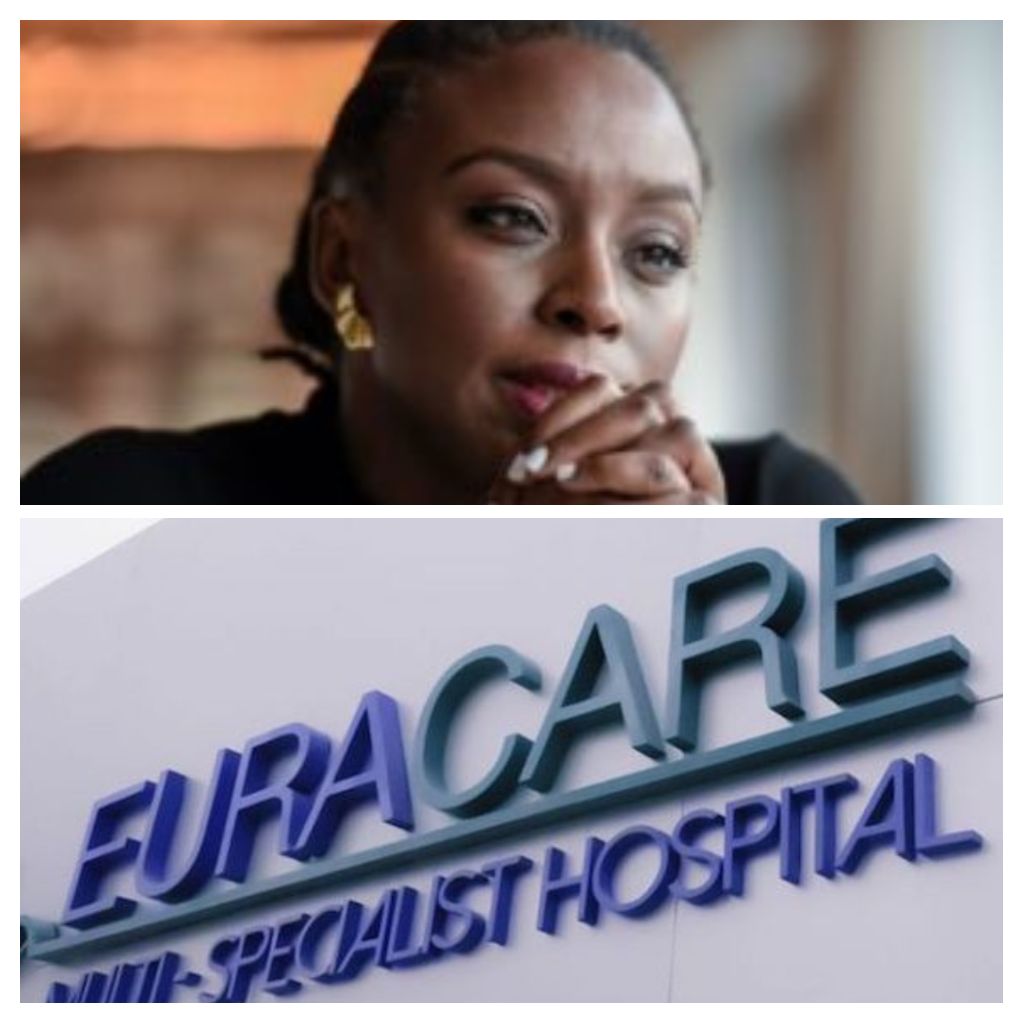
The management of Lagos-based Euracare Multispecialist Hospital said on Saturday, ” We find it necessary, for the record, to clarify that some of the reports currently being circulated regarding the demise of Chimamanda Adichie ‘s son, contain inaccuracies.”
Chimamanda, the bereaved mother, had in a public statement, accused the hospital’s anesthesiologist to have neglected monitoring the sick child after he was given “too much propofol.”
Said Chimamanda: ” It turns out that Nkanu was NEVER monitored after being given too much propofol. The anesthesiologist had just casually carried Nkanu on his shoulder to the theater, so nobody knows when exactly Nkanu became unresponsive. How can you sedate a sick child and neglect to monitor him? Later, after the ‘central line’ procedure, the anesthesiologist casually switched off Nkanu’s oxygen and again decided to carry him on his shoulder to the ICU!The anesthesiologist was CRIMINALLY negligent. He was fatally casual and careless with the precious life of a child. No proper protocol was followed.
“The Hospital’s management, while expressing their deepest sympathies to Chimamanda and family for the loss, acknowledge that the loss of a child is beyond words, adding , ” we offer our most heartfelt condolences to his parents and the entire family.”
In the statement, the management, stated that they have commenced a detailed investigation “consistent with our clinical governance standards and best practices.”
The statement reads: ” Our facility is a reputable centre for complex medical care, led by an internationally trained and experienced clinical team.
The patient, who was critically ill, was referred to our facility for specific diagnostic procedures after receiving treatment for a period of time at two paediatric centres.
Upon arrival, our medical team immediately provided care in line with established clinical protocols and internationally accepted medical standards, including the administration of sedation where clinically indicated.In the course of his care, we worked collaboratively with external medical teams as recommended by his family and ensured that all necessary clinical support was provided.
Despite these concerted efforts, the patient sadly passed away less than 24 hours after presenting at our facility.
We remain committed to engaging transparently and responsibly with all clinical and regulatory processes.
We recognise that the family is grieving an irreplaceable loss and we shall continue to support them in any way that may bring comfort during this devastating period.As medical professionals, we carry the weight of this loss deeply.
Our priority remains compassion, patient safety, and the responsible handling of this matter, while respecting the family’s privacy and allowing due process to take its course. We continue to hold the family in our thoughts and prayers.”



Health
Millions of bedbugs crawl out of mattresses and walls in huge outbreak
Bedbugs can enter homes on clothes, luggage, or second hand furniture – and “hide” in mattresses or walls, according to the NHS.

Millions of bedbugs were crawling out of mattresses in what a pest controller said was the worst outbreak he had seen in 38 years.
They were even in the walls and under the wallpaper, with the mattresses and bed frames needing to be incinerated.
Cardiff pest controller Gareth Davies had to wear full protection as his team tackled the problem in the Canton area of the city, using a specialist vacuum cleaner to collect millions of the bugs.
It came after they had tackled a large cockroach outbreak last month in a scene he likened to a horror movie.
“This house was just horrific,” he told BBC Radio Wales Breakfast.
“Hundreds of thousands of them when you lifted the mattresses up.
“They were coming out of the wallpaper, it was horrendous.”
Bedbugs can enter homes on clothes, luggage, or second hand furniture – and “hide” in mattresses or walls, according to the NHS.
Credit: BBC

The Nigeria Centre for Disease Control and Prevention (NCDC) has confirmed that Lassa fever has claimed 259 lives and infected 1,086 people across 24 states and 118 local government areas so far in 2026.
In its latest Lassa Fever Situation Report for epidemiological week 36 (August 31 to September 6), the agency said the figures represent a case fatality rate of 23.9 percent — significantly higher than the 18.6 percent recorded during the same period in 2025.
Twelve new confirmed cases were recorded in week 36, a decline from the 18 cases reported the previous week. The fresh infections were detected in Ondo, Edo and Kogi states.
Five states continue to bear the heaviest burden, accounting for 87 percent of all confirmed cases this year: Bauchi, Ondo, Taraba, Benue and Edo. People aged 21 to 30 remain the most affected age group.
The NCDC noted that no new infections among healthcare workers were recorded during the latest reporting week. The agency continues to urge the public to maintain hygiene, avoid contact with rodents and their droppings, and seek early medical care if symptoms appear.
Health
Nigerian hospital successfully performs kidney cancer surgery via tele-robotic
The development could reduce the need for Nigerians to travel abroad for specialised medical treatment, thereby reducing expenditure on international travel, accommodation and medical services.
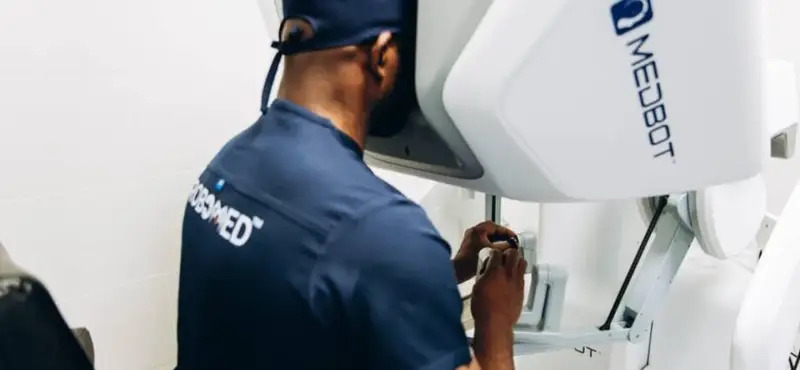
• A surgeon performing tele-robotic surgery.
Nisa Premier Hospital, Abuja, has partnered with RoboMed Global and The Redeemer’s Health Village (RHV) to successfully perform what the hospital described as the first tele-robotic surgery in Nigeria and West Africa.
The landmark kidney cancer surgery was performed on a patient at Nisa Premier Hospital, Abuja, while the surgeon, Professor Obi Ekwenna-Davis, remotely controlled the robotic surgical platform from Redeemer’s Health Village in Lagos.
The procedure, which lasted approximately three hours, was performed to remove a kidney affected by a cancerous tumour.
The hospital said the patient had been discharged following the successful procedure, although details about the patient’s identity and condition were withheld for privacy reasons.
Speaking during an event to mark the milestone, the Chief Executive Officer of Nisa Premier Hospital, Dr Ibrahim Wada, said the development demonstrated the potential of tele-robotic surgery to connect specialist surgical expertise with patients across Nigeria.
Wada said the procedure was carried out using the MicroPort robotic surgical platform installed at Nisa Premier Hospital, with the remote surgeon controlling the system from Lagos.
He said the development could reduce the need for Nigerians to travel abroad for specialised medical treatment, thereby reducing expenditure on international travel, accommodation and medical services.
According to him, the technology also creates an opportunity for Nigerians to access specialised expertise from doctors located in other parts of the world without requiring the doctors to travel physically to Nigeria.
Source: Daily Trust


HAPPENING NOW: Lagos E-Hailing Drivers Begin Indefinite Strike Over Fares, Welfare Others

2027: 119 Women Jostle For State’s Governors

Afreximbank Hails Africa Credit Rating Agency

Tech Expert, Zuckerberg trains with UFC champions, Adesanya, Alexander

Organ Trafficking: Ekweremadu bags 10 years in UK prison

SAINT OBI: Between his marriage and his death
-

 News3 days ago
JUST IN: Omi Eko Project Debunks Claims of Zero Progress
-

 News3 days ago
JUST IN: A’Court Stalls SERAP, Oluwadare Defamation Appeals Over Late Briefs
-

 Business3 days ago
JUST IN: NNPC Clarifies Petrol Discount: Relief Initiative, Not Subsidy Restoration
-

 Business4 hours ago
Naira To Dollar, Pound ,Euro …Rates For Monday, October 12
-

 Business3 hours ago
Nigeria’s ₦33bn Fruit Import Bill Exposes Missed Opportunities in Jos
-

 Business3 days ago
Investors Rush For Airtel Money IPO on LSE
-

 International17 hours ago
‘Up to our people’ to pick leader, Zelenskyy responds to Trump’s pledge for new elections in Ukraine
-

 Opinions11 hours ago
Human Capital Africa Statement For International Day of the Girl Child 2026