
Politics
Atiku, Obi, Mark Unite Under ADC Banner to Challenge Tinubu in 2027 Elections

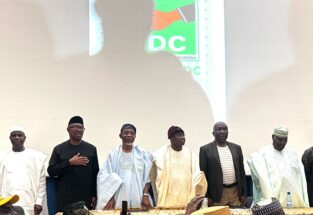
Former Vice President Atiku Abubakar, 2023 Labour Party presidential candidate Peter Obi, former Senate President David Mark and other coalition leaders have officially adopted the African Democratic Congress as the platform to spearhead President Bola Tinubu’s defeat in the 2027 election.
During the unveiling, held on Wednesday, Mark and ex-Osun State Governor Rauf Aregbesola were announced as the interim National Chairman and Secretary of the ADC, respectively.
Meanwhile, ADC’s 2023 presidential candidate, Dumebi Kachikwu and other members of the party’s old bloc criticised Atiku, Obi, and others, accusing them of hijacking the party and claiming they lacked the capacity to lead.
In a separate response, the PDP Acting National Chairman, Umar Damagum, maintained that the party remains united and warned that there will be consequences for members undermining the PDP in the name of a coalition.
On its part, the All Progressives Congress dismissed the opposition leaders as retired politicians who have refused to step aside, asserting that the ruling party would easily defeat them in the 2027 elections.
Against the backdrop of the hardships and lamentations caused by Tinubu’s economic reforms, the opposition parties are seeking to build a coalition that would defeat the President in the next presidential poll.
In a bid to present a strong challenge ahead of the 2027 elections, prominent opposition figures unveiled a new political coalition in Abuja on March 20.
The development sparked nationwide discussions on the potential and effectiveness of a united opposition.
On May 19, the ADC was selected as the coalition’s official political base.
In his acceptance speech, the newly interim National Chairman of the ADC, Mark, acknowledged that the efforts by the 2027 coalition to unseat Tinubu will be challenging.
He said, “Let it be known to all that this coalition of national political opposition groups goes beyond gaining political power. It is a concerted effort to rebuild the crumbling pillars of Nigeria’s democracy.
“Today marks the beginning of what we believe will be a long, difficult and tedious journey.
However, it is a journey that we are prepared to undertake, united in our collective belief that no price or sacrifice is too high in the service of our fatherland,’’ he said.
The ADC interim chairman stated that within two years in office, the current administration has taken control of key democratic institutions and is gradually steering the country toward a full-blown civilian dictatorship.
He stated, “The blatant destabilisation and infiltration of all major opposition political parties is aimed at achieving only one objective, to enhance total state capture and leave Nigerians with no alternative or options in 2027.
This coalition is to prevent our country’s descent into a one-party state.
“We have never seen a government so much at home with corruption, a government that disdains accountability in all ramifications.
A government more concerned with the next election rather than the survival of the ordinary Nigerians.
“A government so totally consumed with politicking that governance is abandoned, while the majority of our people wallow in hunger and poverty.
“We have never seen this level of insecurity across the length and breadth of our nation. Bandits and kidnappers kill Nigerians at will and on a daily basis.
Yet, this ongoing tragedy has not moved the government to any action that would stop these mindless killings and stem the tide of needless bloodshed.
”Mark stated that Nigerians deserved a government that ensures their safety and makes them feel secure in their own homes.
He continued, “Equally disturbing is the total emasculation of the legislative institution.
Never in our history have we witnessed a National Assembly where legislators, the trustees of the very bastion of our democracy, saddled with the sacred duty to protect Nigerians from misuse of executive power, are reduced to cheerleaders and praise singers of the President, head of the executive arm.
“Without doubt, the transformation of Nigeria’s National Assembly to a mere appendage of presidential authority is a dangerous conspiracy against the Nigerian people.
“It is the reason why the government can get away with various whimsical, unconstitutional policies and actions or inactions that have reduced more Nigerians to abject poverty and widened the boundaries of insecurity and fear.”
The ADC interim chairman accused the APC-led government of undermining the sacrifices of Nigeria’s founding heroes and affirmed that the coalition party belongs to all Nigerians.
He stated, “This coalition is determined to offer Nigerians a path to security, prosperity, peace and progress.
Coming from various party affiliations, we are united in our resolve to present a constructive alternative to the hardship, insecurity and waste that has become the hallmark of the current APC government.
“As we proceed this day, we acknowledge the practical implications of imminent bye-elections and one state governorship election for some of our coalition partners in their respective legacy political parties.
However, all of us remain firmly united under the ADC banner for the 2027 general elections and beyond.
”Earlier in his remarks, the founding National Chairman of the ADC, Ralph Nwosu, said the party leaders voluntarily resigned to allow Mark and Aregbesola to take charge and lead efforts to reposition both the party and the country.
Nwosu stated, “We all decided to resign so that Mark, Aregbesola and others can lead us to the (Presidential) Villa. We also approved Mark as National Chairman and Aregbesola as the National Secretary of the party.
When you look at the two of them and their commitment to this country, you’ll see that this is a new beginning. They will reposition the party and Nigeria.
”Nwosu said the opposition coalition is not about seeking power, but moving Nigeria to “global reckoning.”
“ADC has always been about the rejuvenation of Nigeria and Africa. This journey started about 18 months ago, and we have had over 12 NEC meetings.
“When we were consulted, we said we have also been consulting because we are a party that believes in coalition.
A day like this shows that we are ready to sacrifice anything for Nigeria. We don’t have any doubt in the man; we all have decided to resign.”
Speaking after the unveiling of the ADC interim leadership, former transport minister Rotimi Amaechi said inflation is at its peak and many Nigerians can no longer afford food.
He revealed he resigned from the APC on Tuesday night and expressed surprise he wasn’t expelled earlier, having warned the party not to invite him to meetings.
The former Rivers State governor stated, “No, it’s not about changing the government, if it is about changing the government, there is no need to change the government, it’s about changing Nigeria.
“Nigeria is destroyed. People can’t eat. People can’t buy food. There’s no money to buy food. Everything is gone. Inflation is at its peak. And the federal government is busy going around trying to hijack the election.
INEC is helping them to hijack the election.
“No, no, no. What must happen here is that we must start not just a party, but a movement, it must be a movement that brings in Nigerians to, on their own, take over government, not us.
”Those present at the unveiling include the 2023 presidential candidates of the Peoples Democratic Party, Atiku Abubakar; the Labour Party, Peter Obi; and Aregbesola.
Other key figures include a former National Chairman of the All Progressives Grand Alliance, Victor Umeh; former PDP National Chairman, Prince Uche Secondus; Labour Party’s 2023 Vice Presidential candidate, Datti Baba-Ahmed; former APC National Chairman, John Odigie-Oyegun; and former Inspector-General of Police, Mohammed Abubakar.
Also in attendance were former Governors Nasir El-Rufai (Kaduna), Rotimi Amaechi (Rivers), Gabriel Suswam (Benue), Abdulfattah Ahmed (Kwara), Aminu Waziri Tambuwal (Sokoto), Oserheimen Osunbor (Edo), Celestine Omehia (Rivers), Liyel Imoke (Cross River), Window Jibrilla (Adamawa), Emeka Ihedioha (Imo), Capt. Idris Wada (Kogi), former deputy governor of Ondo State, Agboola Ajayi; former Ekiti Deputy Governor Kolapo Olushola and Deputy Governor of Kogi State, Simon Achuba.
Others are a former Attorney General of the Federation, Abubakar Malami, and former Secretary to the Government of the Federation, Babachir Lawal, Senator Dino Melaye, former Youth Minister Solomon Dalung, media mogul Chief Dele Momodu, Senators Enyinnaya Abaribe, Suleiman Nazif, Lee Maeba, Alhaji Kashim Imam, former Chief of Air Staff, Air Marshal Sadique Baba Abubakar, Senator Ishaku Abbo; former National Vice Chairman, Northwest, of the APC, Salihu Lukman; the Senator representing the Federal Capital Territory, Ireti Kingibe; and an activist, Aisha Yesufu.





Politics
Again, Desmond Elliot begs political mentor,Gbajabiamila , “I’m sorry, Daddy”
The latest apology is not the first time Elliot has publicly sought forgiveness from Gbajabiamila over the political disagreement.

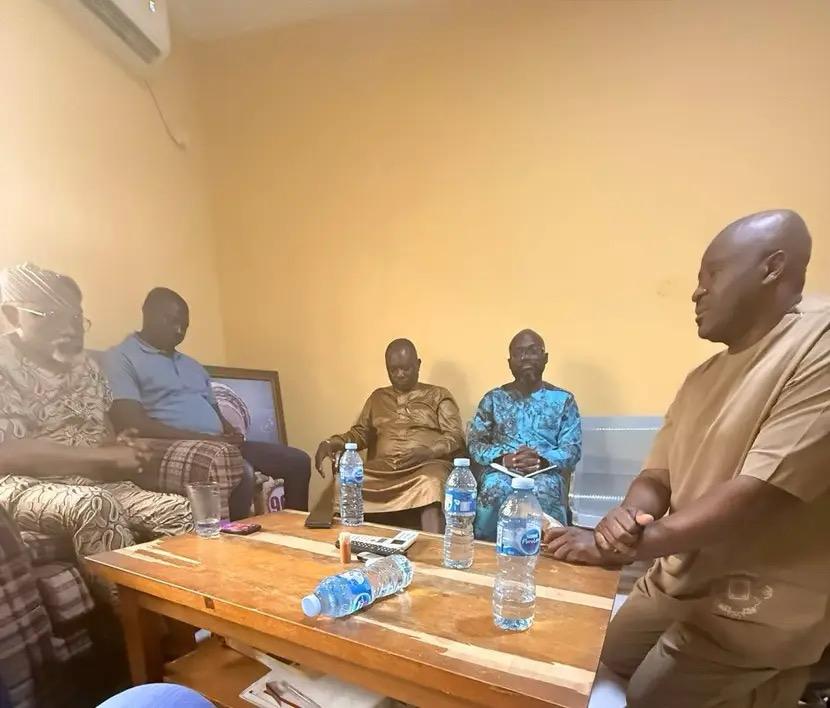
“I’m sorry. I have no excuse; I have nothing other than to say I’m deeply sorry. I’m deeply sorry, sir. And in our culture, we prostrate. Don’t be angry, Daddy.”
The above statement was made by
The lawmaker representing Surulere Constituency I in the Lagos State House of Assembly also reaffirmed his loyalty to the APC leadership and appealed for an end to any disagreement between him and Gbajabiamila.
The latest apology is not the first time Elliot has publicly sought forgiveness from Gbajabiamila over the political disagreement.
During an earlier appearance on TVC’s Your View, Elliot acknowledged that he may have offended his political mentor through his political engagements, while maintaining that any misunderstanding between them was not deliberate.
“I’m not saying, oh, yes, media will come out, oh yes, Desmond begs again. Yes, because he’s my egbon. And I grew up learning everything I knew in politics through him,” he said.
He added, “To err is human, to forgive is divine. So I’m sorry, my daddy, if I’ve offended you in any way.”
The dispute occurred amid the political tensions surrounding the Lagos State House of Assembly leadership crisis, during which Gbajabiamila said he faced difficulties at the Presidency over allegations concerning Elliot’s political activities.
Politics
I will concede defeat if 2027 election is credible — Obi
However, Obi maintained that he won the 2023 presidential election, saying those who conducted the poll knew what happened.
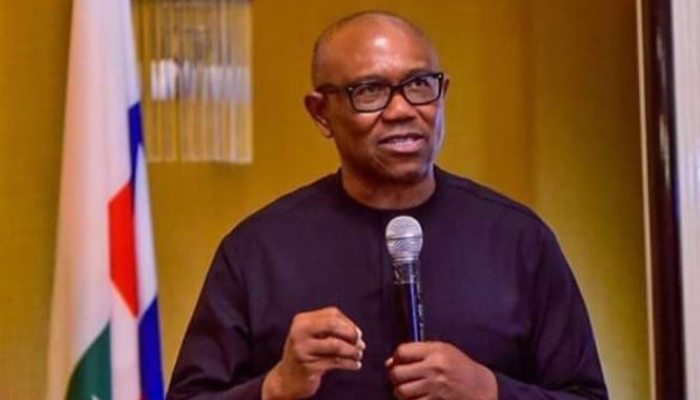
The presidential candidate of the Nigeria Democratic Congress (NDC), Peter Obi, has declared that he will concede defeat in the 2027 presidential election if the poll is free, fair and credible.
Obi stated this in an interview aired on Arise TV on Thursday, saying he would respect the will of Nigerians if they chose another candidate.
“If the election is free, fair and credible, I will because it’s an election. It’s the people that would say who they want to serve, and I will respect the will of the people; that’s democracy,” he said.
However, Obi maintained that he won the 2023 presidential election, saying those who conducted the poll knew what happened.
“I did, and I will maintain that as long as I live that I won the 2023 election. Those who conducted it know the records; they know why there was a glitch and what happened,” he said.
Fielding question on what about “turn-by-turn” presidency, Obi said elections should not be determined by tribe or religion.
“Election should not be driven by tribe or religion. Today, in terms of qualification, I’m qualified to be president of Nigeria. I have the competence; I have been all over the world studying what it takes to be president of a country, and I know what I can do to turn around this country in the right direction.”
Politics
Trump promises $5,000 ‘dividend’ to U.S. citizens if Republicans win midterms
It is estimated that the total proposed “Trump dividend” payout would cost more than $1 trillion — raising questions about how such an expense would be funded and its impact on fiscal strain facing the Federal budget.
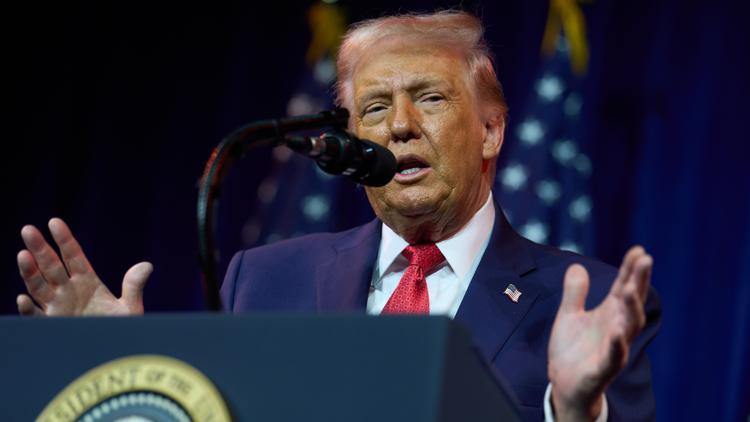
U.S. President Donald Trump has promised every adult American citizen a $5,000 “dividend” if the Republicans are victorious at the upcoming midterm elections.
Americans will vote in the midterms in early November, with the Democrats currently projected to win control of the House of Representatives.
Such a result would likely create barriers to Trump’s legislative agenda and send a signal about public opinion on the president’s policy mix throughout his second presidential term.
“Here is my promise: if the Republicans win the House of Representatives and the United States Senate, both of them… because of our tremendous strength and success economically, I will issue a dividend to every adult citizen in the United States of America for $5,000,” he told a crowd at the GOP’s midterm convention in Dallas.
“I’m asking you to pretend that I’m on the ballot,” he added.
It is estimated that the total proposed “Trump dividend” payout would cost more than $1 trillion — raising questions about how such an expense would be funded and its impact on fiscal strain facing the Federal budget.
The potential payout compares to the $1.27 trillion the U.S.


Congo military plane crash kills 13, including three officers

Manchester City Faces Expulsion For Breaching 114 EPL Financial Rules

TIME Names Moniepoint CTO Felix Ike Among 50 Global Executives of the Year

Tech Expert, Zuckerberg trains with UFC champions, Adesanya, Alexander

Organ Trafficking: Ekweremadu bags 10 years in UK prison

SAINT OBI: Between his marriage and his death
-
 Business3 days ago
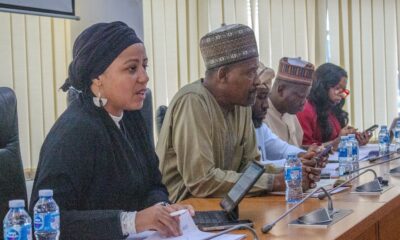
FG Engages Stakeholders On Nigeria’s Rice Value Chain
-

 Business3 days ago
Naira To Dollar, Pound , Euro Rate Wednesday September 23
-

 Business2 days ago
Airtel Money Targets October Listing On London Stock Exchange
-
 Business2 days ago
MAN Urges CBN To Consider CRR Cut Next Phase of Monetary Easing
-

 Business3 days ago
Cardoso Says Multiple FX Windows Cost Nigeria 3% of GDP, Higher Than Fuel Subsidy
-
 Crime1 day ago
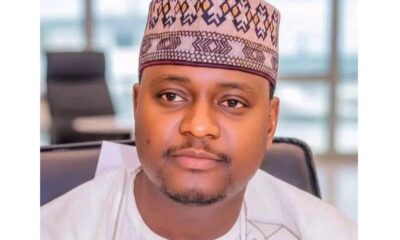
JUST IN: Zamfara LG Chairman Freed After 61 Days in Captivity
-

 News2 days ago
VP Shettima, Gov Mbah to address Over 500 editors on 2027 election issues
-
 Sports1 day ago
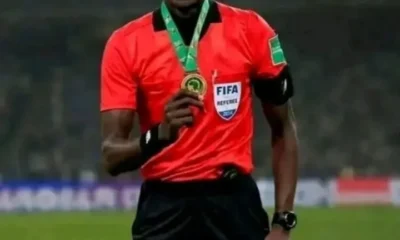
FIFA names Nigerian referee among 81 officials for U-17 World Cup