
Business
What You Should Know About Boats Building And Why It’s Profitable

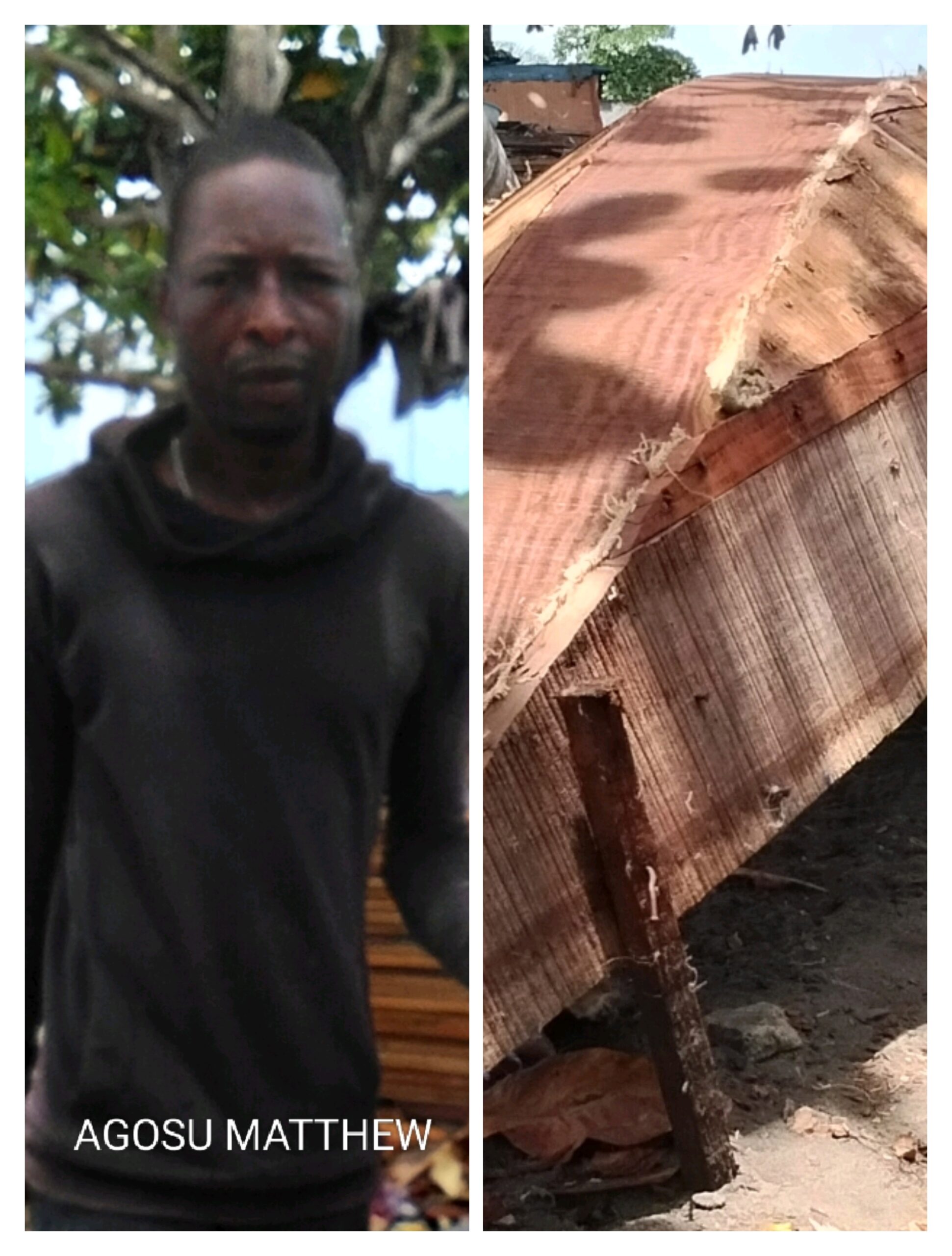
For thousands of years, people have been using boats as a means of traveling, trading, and even for sports on water.
But how are boats built? What are the raw materials and tools for building boats? Again, how long does it take to build a boat, and what of the apprenticeship scheme?
Mr AGOSU MATTHEW, a local boat (also called canoe) builder at Badore waterfronts fishermen’s settlement, Ajah Town in Lagos State, shares the answers with our Editor, Franklin Ocheneyi.
Happy reading:
Tell our readers about yourself.
My name is Agosu Matthew. I am a skilled boat builder. What motivated you to go into building boats?
First, I started as a fisherman. As time passed, I thought deeply about what else I could do to enhance my income from the fishing business.
I consulted with some of my co-fishermen. They advised that I go into boat building, which is an extension of the business.
How long have you been building boats?
I started 25 years ago.
It took me 14 years to acquire the skills, up to 2013, when I graduated from my master.
What are the tools for boat building?
The traditional tools include hammer hammer, axe, nails, Cutlass, and scissors, etc.
What about the woods?
We use the following woods: Opepe, Eru, Agboin, Afara, and parateru
Where do you get these woods?
Makoko at Lagos Island, and Itamagba sawmills market at Ikorodu.
How many pieces of wood make a boat?
It depends on the size of the boat.
For a big boat with 8-10 passenger capacity, we use about twelve pieces of wood.
The small boat takes between 6-7 pieces of wood.
How long does it take to build a boat?
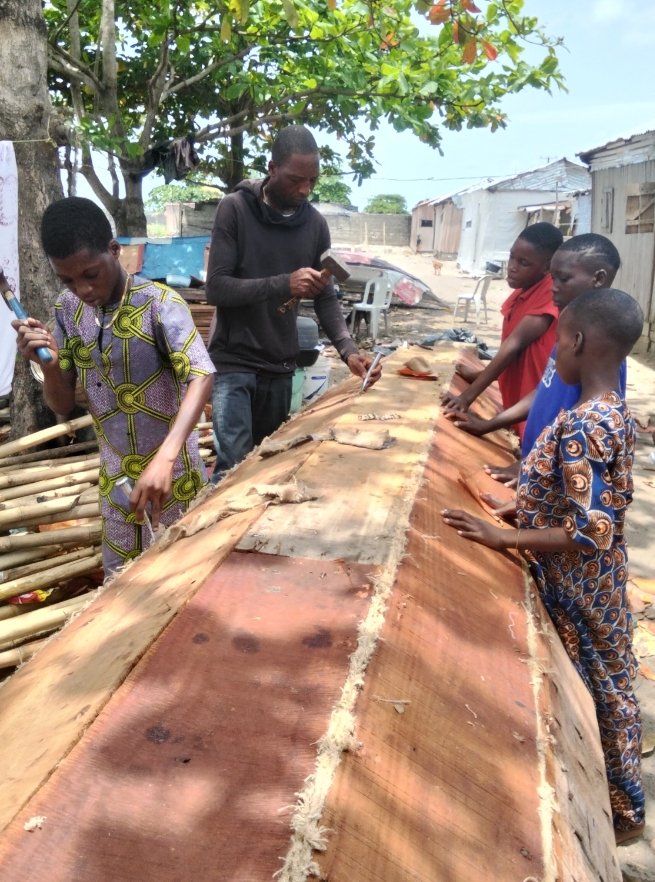
∆ Mr Agosu Matthew at work with his apprentice.
Again, it depends on the size of the Canoe.
Big boat takes up to two weeks if it’s only me working on it without the support of my apprentices, and if I don’t allow other things to distract me from the work.
However, if I have enough hands, it makes the construction faster and the work can be done in seven days.
What are the challenges of the business?
There are many challenges. One of them is getting the modern tools.
I rent those tools we don’t have and because of the pressure to return them within a specific hours, it slows down the pace of the construction and the timely delivery of the project.
Nevertheless, with the introduction of modern tools, the training patterns have changed. So, if an apprentice is humble, focused, brainy, and sharp, he can use four years to acquire the skills.
How is the boat market, in terms of patronage?
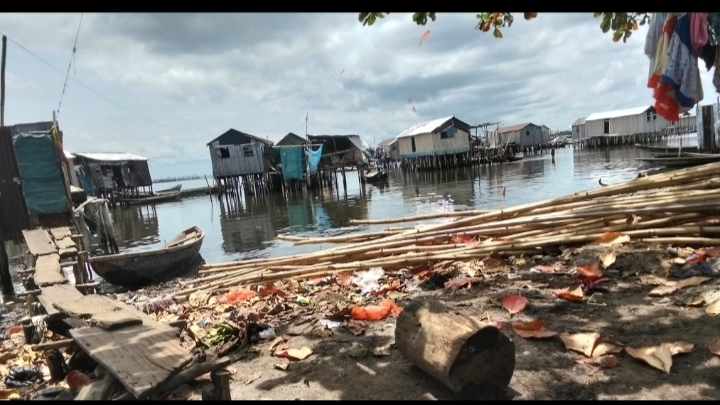
∆ An aerial view of the community/ Ohi baba.com image.
People come to buy, or place orders when their boats is spoiling.
These locally made boats last for five years before spoiling.
Sometimes, we sell two boats in a month. The price of a boat is costly. We sell the big boat at N500 thousand, while the small one goes for N300 thousand.
How long does it take to learn the work?
As I said earlier, it took me 14 years to learn under my Master’s.
It took me that long because I had no financial support from anyone.
Nevertheless, with the introduction of modern tools, the training patterns have changed. So, if an apprentice is humble, focused, brainy, and sharp, he can use four years to acquire the skills.
Last, do you have an association for boat builders?
Yes; we have an association at Ikorodu. I belonged to the association ( That’s my membership ID card). The association has a lawyer, and if any challenge should arise, our chairman is the first person to know.
Business
TCN improves Power Supply to Apapa corridors by additional 208MW
The upgrade replaces an outdoor transformer that had served as a stopgap after the original facility, commissioned in 1985, was decommissioned.

The Managing Director/Chief Executive Officer of the Transmission Company of Nigeria (TCN), Mr. Sule Ahmed Abdulaziz , says from now Apapa Causeway, Ijora, Amukoko, Ajegunle, Apapa Wharf, Tin Can Island and other major commercial areas, will be having improved power supply.
Abdulaziz made the declaration on Monday during the commission of Ijora and Apapa Road transmission substations in Lagos by additional 208MW .
The project is aimed at improving the volume and reliability of electricity available to distribution companies for onward supply to homes, businesses and industries.
Abdulaziz said that the projects, sponsored by the Japan International Cooperation Agency (JICA) and the World Bank respectively, in partnership with TCN, underscored the Federal Government’s commitment to modernising the transmission network and improving grid stability.
He commended the Ministry of Power, JICA, the Government of Japan, Lagos State Government and other stakeholders for supporting the projects, while appealing for additional grant assistance to upgrade other critical sections of the transmission network.
Speaking at the commissioning, Minister of Power, Mr. Joseph Tegbe, said that the projects were part of the Federal Government’s efforts to address longstanding transmission constraints and infrastructure decay that have limited the country’s ability to fully utilise available generation.
The upgrades increased the Ijora substation’s capacity by 112MW, from 90MVA to 230MVA, following the installation of two new 100MVA transformers.
At Apapa Road, a new Gas Insulated Substation (GIS) added another 96MW, raising the facility’s capacity from 60MVA to 180MVA.
The upgrade replaces an outdoor transformer that had served as a stopgap after the original facility, commissioned in 1985, was decommissioned.
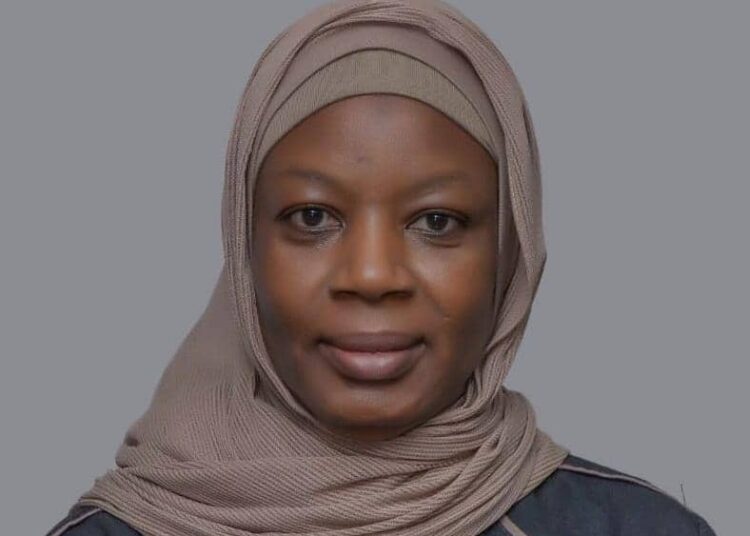
•Mrs Hakama Sidi Ali.
The Ag. Director of Corporate Communications of the Central Bank of Nigeria (CBN), Mrs. Hakama Sidi-Ali, has won the 2026 edition of the National Spokespersons Award (NSA).
The recognition was announced during the 6th National Spokespersons Awards and the 4th Economic Confidential Annual Lecture, organised by Image Merchants Promotion Limited (IMPR), publishers of PRNigeria, Economic Confidential and Spokespersons Digest, held in Abuja, recently.
The organisers stated: “With the latest honour, Sidi-Ali completed an unprecedented hat-trick at the National Spokespersons Awards, becoming the first communications professional to progress from winning a sector-specific award twice consecutively to claiming the overall Spokesperson of the Year title.
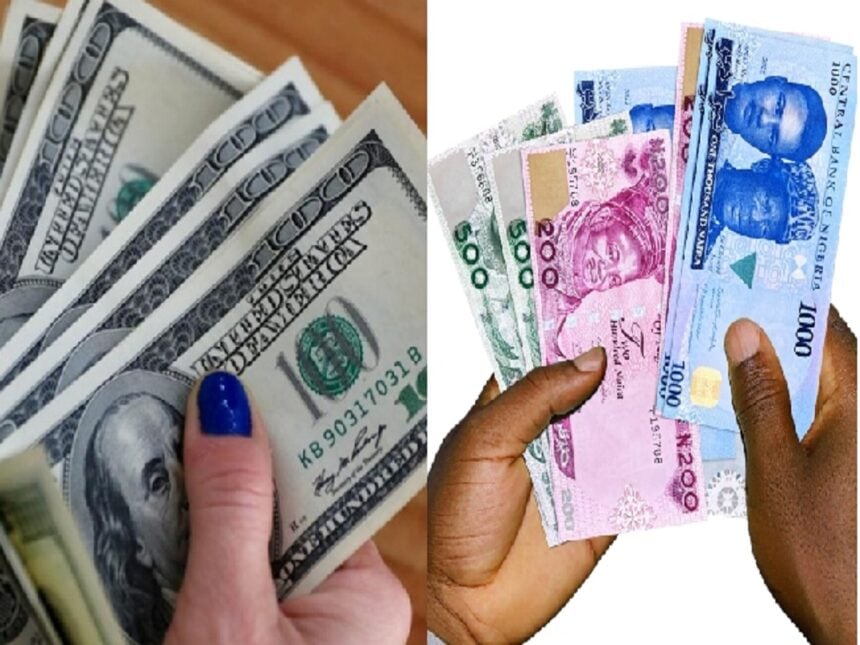
BLACK MARKET RATES
US Dollar (USD) Buy ₦1,405 Sell ₦1,413
Great British Pound (GBP) Buy ₦1,880 Sell: ₦1,900
EURO (EUR) Buy ₦1,580 Sell ₦1,600
Canadian Dollar (CAD) Buy ₦1,020 Sell ₦1,080
South African Rand (ZAR) Buy ₦75 Sell ₦90
Ghana Cedi (GHS) Buy ₦95 Sell ₦110
West African CFA Buy ₦2, 300 Sell ₦2, 400
CENTRAL AFRICAN CFA Buy ₦2,150 Sell 2,250
CBN Exchange Rates
US Dollar (USD) ₦1,349.54
Great British Pound (GBP) ₦1,830.11
EURO (EUR) ₦1,564.79
Swiss Franc (CHF) ₦1,667.74
Chinese Yuan (CNY) ₦200.19
West African CFA (XOF) ₦2. 39
West African Unit Account (WAUA) ₦1,855.18
Saudi Riyal (SAR) ₦359.44
South African Rand (ZAR) ₦83.31


83 Nigerians Return from South Africa (Video)

Tinubu Appoints Abel Enitan Head of Civil Service

BREAKING: FEC Approves Decriminalisation of Attempted Suicide

Tech Expert, Zuckerberg trains with UFC champions, Adesanya, Alexander

Organ Trafficking: Ekweremadu bags 10 years in UK prison

SAINT OBI: Between his marriage and his death
-

 Politics3 days ago
Kebbi Governor picks new running mate , Ibrahim Augie
-
 Politics3 days ago
Osun poll: ADC’s Salaam, Tambuwal Hail Adeleke for Second Term Win
-

 Sports3 days ago
Cameroon Win First WAFCON Cup Title
-

 Politics3 days ago
BREAKING: Edo Assembly Speaker Agbebaku Resigns
-

 Entertainment3 days ago
US Actress Hayden Panettiere Dies At 36
-

 News3 days ago
Edo Assembly Speaker Agbebaku Resigns Amid Impeachment Plot (Video)
-

 Business3 days ago
Naira Exchange Rates Monday,17 August
-

 News3 days ago
Defence Headquarters say X Account Compromised