
News
JUST IN: President Tinubu Arrives Ethiopia for AU Summit

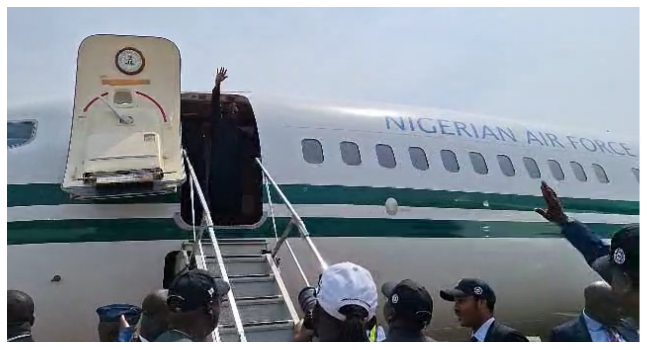
President Bola Tinubu has arrived in Addis Ababa, the Ethiopian capital, to participate in the 38th Ordinary Session of the Assembly of the African Union Heads of State and Government.
The meeting is slated for February 14 – 18, 2025.
Special Adviser to the President on Information and Strategy, Bayo Onanuga, disclosed this in a statement he signed in the early hours of Friday titled ‘President Tinubu arrives Ethiopia for AU summit.’
“The President was received at the airport by the Ethiopian Deputy Chief of Protocol, Eshetu Legesse, the Minister of Foreign Affairs, Yusuf Tuggar, and the charge d’affaires of the Nigerian embassy in Ethiopia, Nasir Aminu,” the statement read.
Tuggar later briefed President Tinubu about the summit and some diplomatic wins for the country, a session that stretched until about 2 a.m. on Friday.
Among these was the re-election of Bankole Adeoye as African Union Commissioner for Political Affairs, Peace and Security.
Nigeria also retained its seat on the African Union Peace and Security Council which, in Tuggar’s words, reaffirmed “Nigeria’s leadership and commitment to peace and security on the continent”.
At the briefing were the Ministers of Finance, Mr Wale Edun; Defence, Abubakar Badaru; Trade and Investment, Jumoke Oduwole; Aviation, Festus Keyamo; Information and National Orientation, Muhammed Idris; Environment, Balarabe Lawal and State for Finance, Doris Uzoka-Anite.
The Director-General of the National Intelligence Agency, Mohammed Mohammed and the Chief of Naval Staff, Vice Admiral Emmanuel Ogalla, also attended the briefing.
This year’s AU summit, under the theme ‘Justice for Africans and People of African Descent Through Reparations,’ focuses on reparatory justice and racial healing.
Tinubu will deliver a speech at the Summit-level meeting of the African Union Peace and Security Council, where discussions will focus on current security challenges on the continent, including the escalation of conflict in the Democratic Republic of Congo.
The President will participate in meetings on health financing, establishing an Africa Credit Rating Agency, and climate change.
“Tinubu will be expected to return to Abuja on Monday, February 17,” the statement concluded.








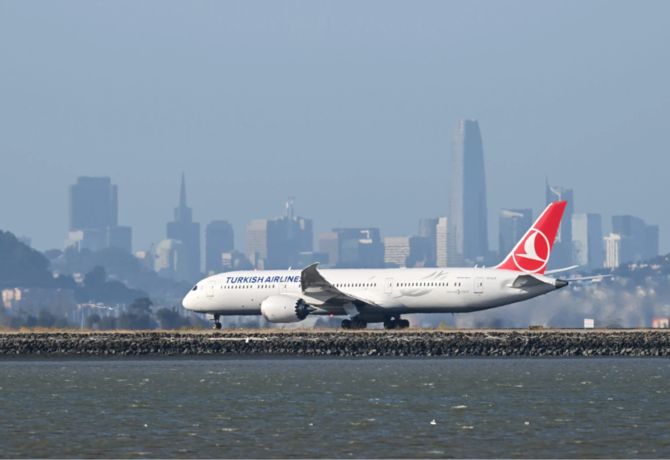
Airlines operating in Nigeria have issued a stern warning of an indefinite shutdown of flights if ongoing disruptions by aviation unions are not urgently resolved.
Industry operators cited repeated industrial actions, including strikes and work-to-rule tactics by union members, as severely impacting flight schedules, passenger movements, and operational costs. The threatened action could ground both domestic and international flights across major airports, including Lagos and Abuja.
Airline representatives stated that prolonged union-related interruptions have already caused significant financial losses and eroded passenger confidence. They called on the federal government and relevant labour authorities to intervene immediately to prevent a total collapse of commercial air travel.
No specific deadline for the proposed shutdown has been publicly announced, but stakeholders described the situation as “critical.” Passengers have been advised to monitor airline communications closely for any developments.
Authorities and union leaders have yet to issue detailed responses. Further updates are expected as talks continue.

A fire has broken out at the Lagos Customs Command office, officials confirmed early Monday.
Emergency services were dispatched to the scene as thick smoke rose from the building.
The cause of the blaze and the extent of the damage remain under investigation.
No immediate reports of casualties have been released. Authorities have urged the public to avoid the area while firefighters work to contain the flames.
Further updates are expected as the situation develops.
News
Nigeria is 66, Thursday October 1
The citizens are expecting the details of the anniversary events by the Federal Government, through the Minister of Interior, Olubunmi Tunji-Ojo.

Since Nigeria gained independence on October 1, 1960, the country will mark its 66th Independence Anniversary on Thursday, October 1, 2026.
The citizens are expecting the details of the anniversary events by the Federal Government, through the Minister of Interior, Olubunmi Tunji-Ojo.


BREAKING: Tragic One-Way Crash Claims Tricycle Driver’s Life in Meiran Lagos

BREAKING: AAC sues Tinubu, NASS over Europe vacation

2027: Atiku, ADC Move to Amend Suit Challenging Tinubu’s Eligibility

Tech Expert, Zuckerberg trains with UFC champions, Adesanya, Alexander

Organ Trafficking: Ekweremadu bags 10 years in UK prison

SAINT OBI: Between his marriage and his death
-

 Business17 hours ago
SEC Highlights Focus of National Capital Market Conference 2026
-

 Business17 hours ago
NGX Debuts Invest WhatsApp Channel
-

 Sports17 hours ago
Flamingos win WAFU B U-17 women’s tournament
-

 Business18 hours ago
Naira To Dollar, Pound, Euro …Today, September 28
-

 Business18 hours ago
Ghana Moves to Cut Domestic Airfares as Ticket Prices Stay High
-

 News16 hours ago
Nigeria is 66, Thursday October 1
-

 News9 hours ago
JUST IN: Fire Engulfs Lagos Customs Command Office
-

 Entertainment16 hours ago
Madonna and Taylor Swift win big at the MTV VMAs