
News
FG Welcomes Positive IMF Assessment of Nigeria’s Economy, Vows to Sustain Reform Momentum

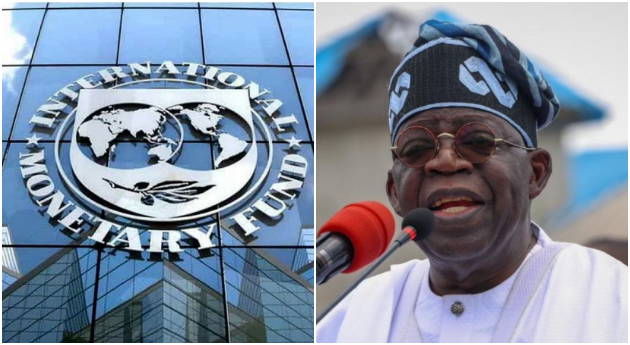
The Federal Government has welcomed the International Monetary Fund’s (IMF) 2026 Article IV Mission Concluding Statement, describing it as an independent validation of the success of President Bola Ahmed Tinubu’s economic reform programme.
In a statement, the government noted the IMF’s overall positive assessment, saying the Fund’s observations confirm that the bold reforms implemented over the past three years are strengthening macroeconomic stability, restoring investor confidence, and laying a solid foundation for sustainable and inclusive growth.
The IMF highlighted several key achievements, including improved functioning of the foreign exchange market, stronger external buffers, ongoing fiscal and revenue reforms, and resilience in the banking sector. These developments, the government said, have enhanced Nigeria’s ability to withstand external shocks compared to recent years.
Particular emphasis was placed on the impact of major policy decisions such as the removal of fuel subsidies, the end of deficit monetisation, the liberalisation of the foreign exchange market, and strengthened fiscal discipline. According to the statement, these measures have significantly reduced economic vulnerabilities and rebuilt confidence.
Despite new global challenges arising from the Middle East conflict — including higher energy and food prices, tighter financial conditions, and supply chain disruptions — the IMF acknowledged Nigeria’s notable resilience. The parallel market premium has remained below five percent, sovereign spreads have stayed broadly stable, and investor confidence has been preserved.
The Fund also noted that Nigeria is well positioned to benefit from elevated energy prices through increased export earnings, improved fiscal revenues, and higher foreign exchange inflows. The government said it will focus on translating these opportunities into lasting gains by ramping up crude oil production, expanding domestic refining capacity, boosting gas production and exports, and attracting fresh investments across the energy sector.
Addressing Poverty and Food Insecurity
The government acknowledged the IMF’s observation that poverty and food insecurity remain pressing challenges. While per capita income grew by nearly 10 percent in 2025, indicating a marked reduction in poverty levels, authorities stressed that macroeconomic stability alone is not enough.
To ensure inclusive growth, the government is strengthening social protection programmes, including direct cash transfers to vulnerable households, support for small businesses, student loans through NELFUND, consumer credit schemes, and healthcare investments.
In the agricultural sector, efforts are being scaled up through the Renewed Hope National Agricultural Mechanisation Programme and other initiatives aimed at boosting productivity, expanding irrigation, improving access to inputs and financing, and strengthening food security.
The government also welcomed the IMF’s recognition of progress in domestic revenue mobilisation and public financial management. It pledged to continue implementing new tax laws, digitising revenue collection, and improving transparency and accountability. Steps are already being taken to enhance fiscal data integrity and meet the highest international standards in economic and fiscal statistics.
Positive Medium-Term Outlook
The IMF projects continued economic growth above four percent over the medium term, alongside improving external reserves, rising investment, and stronger fiscal revenues. Public debt has declined as a percentage of GDP, while reserve buffers have strengthened significantly. These positive developments complement recent sovereign credit rating upgrades by international agencies.
The Federal Government reaffirmed its commitment to maintaining macroeconomic stability, accelerating inclusive growth, deepening structural reforms, improving the investment climate, expanding infrastructure, and enhancing human capital development and job creation.
“While challenges remain, the direction is clear and the foundations are stronger,” the statement said. “The ultimate objective of these reforms is not merely improved economic indicators, but better outcomes for all Nigerians — lower inflation, decent jobs, higher incomes, greater economic opportunity, and a better quality of life.

An angry mob has set a Bus Rapid Transit (BRT) bus on fire after it reportedly crushed a commercial motorcyclist to death at Ogolonto Bus Stop along Ikorodu Road in Lagos State.
The incident occurred on Friday, October 16, 2026. Eyewitness accounts and social media reports indicate that the motorcyclist was riding alone along the restricted BRT lane when the collision happened. He died at the scene.
Enraged residents and youths then attacked the bus driver and set the vehicle ablaze. Police officers and officials of the Lagos Neighbourhood Safety Corps (LNSC), who were nearby, intervened promptly and rescued the driver unharmed.
The identity of the deceased motorcyclist and the exact circumstances of the crash had not been officially confirmed at the time of filing this report. It was also unclear whether any arrests had been made in connection with the burning of the bus.
News
ARISE News Wins Seven Honours At Nigerian Broadcasters Merit Awards
The awards recognised the network’s achievements in television journalism and programming, with ARISE News winning the Best TV Channel (Viewer’s Choice) category.


• ARISE News Anchor and host of What’s Trending Ojy Okpe was named Best Newscaster (TV – Female)
ARISE News has emerged as one of the major winners at the just ended Nigerian Broadcasters Merit Awards (NBMA).
ARISE News won seven honours across television broadcasting, news reporting, presentation and production during the ceremony.
The awards recognised the network’s achievements in television journalism and programming, with ARISE News winning the Best TV Channel (Viewer’s Choice) category.
The network’s flagship breakfast programme, The Morning Show, also won the Best TV Talk Show award, further strengthening its recognition in television broadcasting.
ARISE News Anchor and host of What’s Trending Ojy Okpe was named Best Newscaster (TV – Female).
Rufai Oseni was named Nigerian Broadcaster of the Year (Male), while Vimbai Mutinhiri-Ekpeyong received the Nigerian Broadcaster of the Year (Female) award.
The recognition extended to the network’s newsroom, with Ovieteme George winning Best TV News Reporter (Male) for his contributions to television news reporting.
Behind the camera, Sam Adeyemi received the Best Camera Operator/Cinematographer award, recognising his work in television production and visual storytelling.
News
Meta removes 3.7 million accounts in West Africa scam crackdown
The joint operation led to 28 arrests, identified more than 30 suspected scam centres and rescued 117 people allegedly trafficked and forced to work in scam compounds in Ghana.
Meta, the parent company of Facebook and Instagram, has removed more than 3.7 million Facebook and Instagram accounts, pages and groups linked to suspected scam networks operating in West Africa.
The joint operation led to 28 arrests, identified more than 30 suspected scam centres and rescued 117 people allegedly trafficked and forced to work in scam compounds in Ghana.
The company announced the crackdown in a statement on Tuesday, October 13, 2026. It involved 14 technology companies and law enforcement agencies from 10 countries.
The United Kingdom’s National Crime Agency coordinated the operation with the US Department of Justice, the Federal Bureau of Investigation and other agencies. Nigerian authorities were involved.
Other countries included Ghana, Australia, Canada, New Zealand and India.Tech companies that took part included Google, Microsoft, OpenAI, Coinbase, Starlink and Adobe.
Meta said the partnership let participants share intelligence across digital platforms, countries and financial systems to identify criminal networks.


JUST IN: Mob Sets BRT Bus Ablaze After Motorcyclist’s Death in Lagos

BREAKING: DSS Arrests Fugitive Maina Son, Hands Him to EFCC

BREAKING: 5 Arrested Over Imo NYSC Abduction

BREAKING: Lagos Govt Declares Today, Thursday Work-Free to Mark 2026 Ìṣẹ̀ṣe Day

Tech Expert, Zuckerberg trains with UFC champions, Adesanya, Alexander

Organ Trafficking: Ekweremadu bags 10 years in UK prison
-
 Business3 days ago
Naira Exchange Rates For Thursday, October 15
-
 Sports3 days ago
CAF Increases Annual Funding for Member Federations to $700,000
-
 News3 days ago
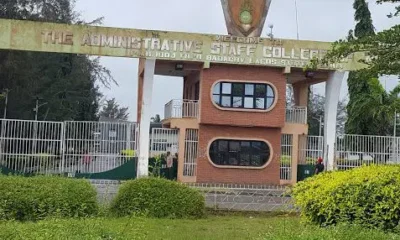
ASCON To Be Rebranded “National School Of Government”
-

 Business2 days ago
Germany plans tax on sugary drinks
-

 International2 days ago
“Mother of all bombs,” Trump Plans To Hit Iran
-
 Business2 days ago
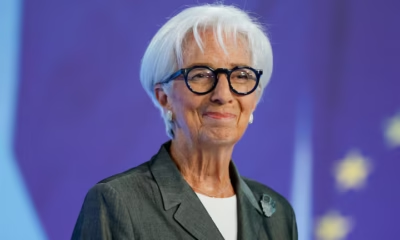
WEF could appoint Lagarde as its next chair, sources say
-
 Business2 days ago
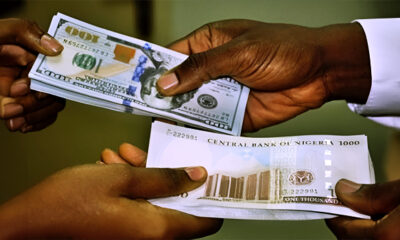
Naira Exchange Rates Friday, October 16
-
 Crime1 day ago
BREAKING: 5 Arrested Over Imo NYSC Abduction