Business
Lagos developing world – class new business district —Sanwo-Olu
Sanwo-Olu said Lagos was deliberately building a globally competitive economy driven by innovation, infrastructure and private-sector participation.

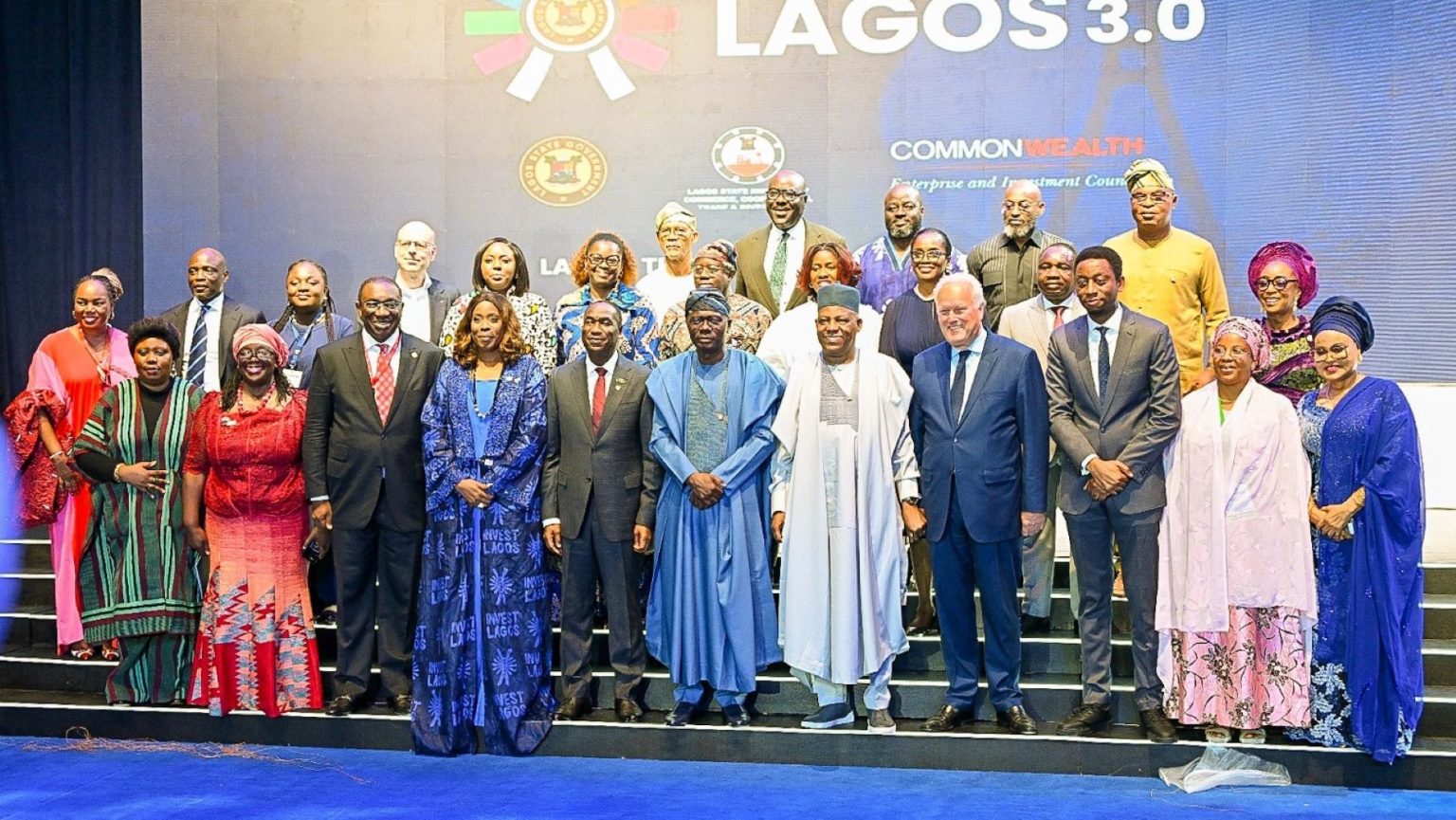
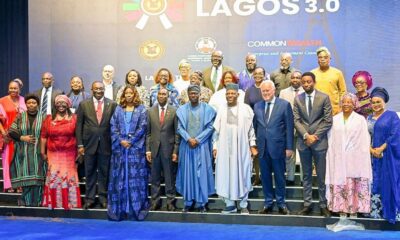
• Invest Lagos Summit 3.0: Secretary to the Lagos State Government, ‘Bimbola Salu-Hundeyin (right); Member, House of Representatives, Kafilat Ogbara; Commissioner for Innovation, Science and Technology, Tunbosun Alake; Chairman, Commonwealth Enterprise & Investment Council (CWEIC), Lord Jonathan Marland; Vice President Kashim Shettima; Governor of Lagos State, Babajide Sanwo-Olu; his Deputy, Dr. Obafemi Hamzat; Commissioner for Commerce, Cooperatives, Trade & Investment, Mrs Folashade Bada Ambrose-Medebem; Deputy Chief of Staff to the Governor, Sam Egube, Dr Toyosi Akerele-Ogunsiji and members of the State Executives Council at the opening of Invest Lagos 3.0, themed: “Lagos – The Business Gateway to Africa”, in Lagos, yesterday.
Lagos State Governor, Babajide Sanwo-Olu, has disclosed that as part of efforts to deepen access to global capital, his administration is developing the Lagos International Financial Centre (LIFC), envisioned as a world-class financial district that would strengthen the state’s position as a gateway for investment into Africa.
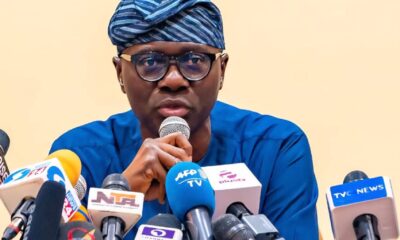
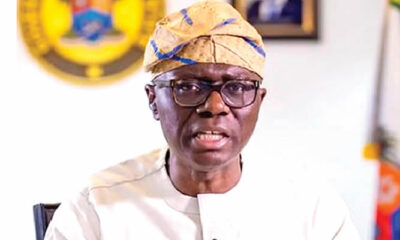
Speaking yesterday at the third edition of the Invest Lagos Summit, attended by Vice President Kashim Shettima, other governors, foreign investors, development finance institutions and business leaders, Sanwo-Olu said Lagos was deliberately building a globally competitive economy driven by innovation, infrastructure and private-sector participation.
Sanwo-Olu said that the state had recorded significant economic progress in recent years through targeted reforms across transportation, digital infrastructure and industrial development.
Highlighting key infrastructure achievements, Sanwo-Olu cited investments in road networks, waterways and rail transportation, describing them as critical enablers of economic growth and investor confidence.
The governor noted that Lagos was increasingly serving as a gateway to African markets and global capital, positioning itself at the centre of continental trade under the African Continental Free Trade Area (AfCFTA).
According to him, Lagos remains one of the continent’s most strategic economic hubs, with a population exceeding 25 million and a gross domestic product steadily approaching the $300 billion mark.







Business
CBN Pledges Policy Consistency Into 2027
The single-digit inflation target remains the anchor.

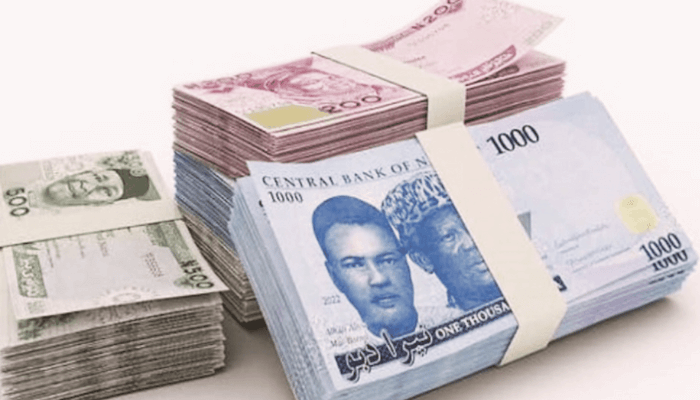
The Central Bank of Nigeria says that it will keep a consistent monetary policy direction in 2027, as it pursues the single-digit inflation target.
The stance puts policy continuity at the centre of the CBN’s inflation fight.
The bank is tying its inflation goal to consistency in monetary policy rather than a change in direction.
The single-digit inflation target remains the anchor.
The CBN’s message is that the target still stands and that policy will stay consistent in 2027.
₦1450 DOLLAR (USD)
₦1875POUND (GBP)
₦1575EURO (EUR)
₦950 CANADIAN DOLLAR (CAD)
₦70 SOUTH AFRICAN RAND (ZAR)
₦350 UAE DIRHAM (AED)
₦190 CHINESE YUAN (CNY)
₦100 GHANAIAN CEDI (GHS)
₦2240 WEST AFRICAN CFA F.(XOF)
₦2180 CENTRAL AFRICAN CFA F.(XAF)
₦820 AUSTRALIAN DOLLAR (AUD)
Business
MAN Seeks Tobacco Exclusion From NAFDAC Bills Over Regulatory Overlap
The association further maintained that the existing regulatory framework, administered through the Federal Ministry of Health and Social Welfare and the Federal Ministry of Industry, Trade and Investment, already provides for the regulation of the legal tobacco sector.
The Manufacturers Association of Nigeria (MAN) has called on the National Assembly for explicit tobacco products exclusion from two proposed bills seeking to repeal and reenact the laws establishing the National Agency for Food and Drug Administration and Control (NAFDAC), warning that their passage could create overlapping regulatory responsibilities and increase compliance costs for manufacturers.
The bills are the National Agency for Food and Drug Administration and Control (Repeal and Enactment) Bill, 2026 (SB. 940) and the Food, Medical Products and Related Products (Registration, Etc.) Bill, 2026 (SB. 952).
The Director-General of MAN, Segun Ajayi-Kadir, therefore urged the lawmakers to remove all references to tobacco from both bills, including relevant definitions, schedules and consequential provisions.
It also called for an explicit exclusion clause to prevent tobacco products from subsequently being brought under the proposed legislation through administrative instruments.
According to the association, such a provision would preserve clarity in institutional mandates and regulatory responsibilities while preventing unnecessary regulatory overlaps.
MAN maintained that regulatory reforms should strengthen public-health protection, address demonstrable regulatory gaps and improve compliance without creating additional administrative burdens for legitimate businesses.
It argued that clear institutional mandates, proportionate enforcement and effective inter-agency coordination were essential to achieving these objectives while supporting manufacturing, employment and investment.
The association further maintained that the existing regulatory framework, administered through the Federal Ministry of Health and Social Welfare and the Federal Ministry of Industry, Trade and Investment, already provides for the regulation of the legal tobacco sector.
MAN reaffirmed its readiness to engage constructively with the National Assembly and relevant government institutions, particularly the two federal ministries, to ensure that the proposed legislation delivers effective regulation without unnecessary duplication, conflicting institutional mandates or regulatory uncertainty.


Senator Idiat Oluranti Adebule Dies at 56

JUST IN: Obi-Kwankwaso Movement Suspends DG with Immediate Effect

CBN Pledges Policy Consistency Into 2027

BREAKING: Lagos Govt Declares Today, Thursday Work-Free to Mark 2026 Ìṣẹ̀ṣe Day

Tech Expert, Zuckerberg trains with UFC champions, Adesanya, Alexander