
News
Tinubu Unveils Four Major CNG Projects in Lagos, Abuja, and Owerri


President Bola Ahmed Tinubu has unveiled four strategic Compressed Natural Gas (CNG) projects in key cities across Nigeria as part of efforts to accelerate the country’s energy transition and reduce reliance on imported petroleum products.
The President announced the initiatives during a virtual commissioning ceremony on Friday, highlighting projects located in Lagos, Abuja, and Owerri. The developments include modern CNG refuelling stations, conversion workshops for vehicles, and infrastructure to support the adoption of cleaner and cheaper fuel for public transportation and private users.
“These four CNG projects represent a bold step towards a more sustainable and affordable energy future for Nigerians,” President Tinubu said. “We are moving decisively to harness our abundant natural gas resources to power our economy, create jobs, and provide relief at the pump.”
The projects are expected to boost the deployment of CNG-powered buses and commercial vehicles, particularly in high-traffic cities, while supporting the federal government’s broader agenda to promote autogas and cleaner fuels following the removal of petrol subsidies.
Senior government officials noted that the initiatives align with the Renewed Hope Agenda’s focus on energy security, environmental sustainability, and economic diversification. The CNG projects are also projected to generate thousands of direct and indirect jobs in construction, technical services, and maintenance.
This latest unveiling comes as the administration continues to push alternative energy solutions to mitigate the impact of high fuel costs and address environmental concerns associated with traditional fossil fuels.
Stakeholders in the transport and energy sectors have welcomed the move, describing it as a practical response to the nation’s energy challenges, though some called for accelerated nationwide rollout and stronger private sector participation to maximise impact.








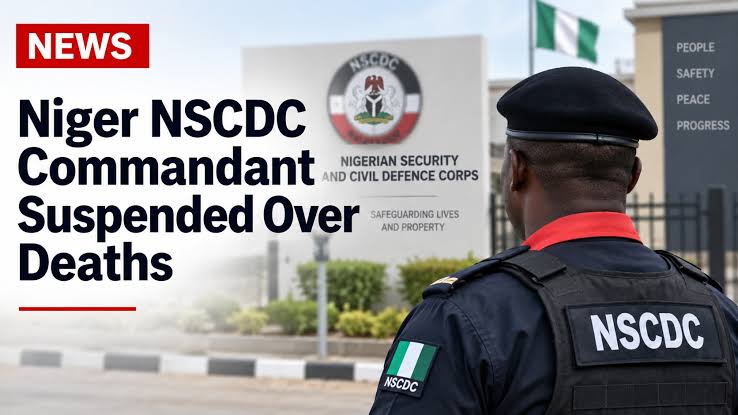
An independent panel has begun its investigation today into the deaths of 37 people who died while in the custody of the Nigeria Security and Civil Defence Corps (NSCDC) in Niger State.
The Federal Government constituted the 10-member committee last week following the deaths, which occurred on Thursday, September 17, 2026. The victims, described as suspected illegal miners, had been arrested during enforcement operations against artisanal mining activities in the state days earlier.
Minister of Interior Olubunmi Tunji-Ojo announced the panel’s formation, stating it would examine the circumstances surrounding the arrests, detention and deaths. The committee, chaired by retired DSS Deputy Director-General Jonathan Kure, has been given two weeks to submit its report. It is also mandated to determine any negligence or misconduct, recommend accountability measures and propose steps to prevent a recurrence.
Twenty NSCDC officers, including the Niger State Commandant, have been suspended pending the outcome of the probe. Authorities have stressed that any attempt to interfere with the investigation or destroy evidence will be treated as a serious offence.
The incident has drawn widespread attention, with reports of overcrowding and poor ventilation in the detention facility cited among possible factors. Officials have confirmed that medical and forensic examinations are under way to establish the precise causes of death.
News
UK court jails Nigerian man for masturbating in front of a woman
British Transport Police said Odutola approached a woman on the train, looked her up and down and became aggressive when she refused to engage with him. He then exposed himself while sitting in a wheelchair and began masturbating while staring at the woman and telling her to “come over”


•A Nigerian man and registered sex offender, Babatunde Odutola
A Nigerian man and registered sex offender, Babatunde Odutola has been jailed in the UK after exposing himself and masturbating in front of a woman on a train travelling towards Manchester.
Odutola, 36, of no fixed address, was sentenced to 44 weeks in prison at Manchester Magistrates’ Court on Monday, September 14, after pleading guilty to outraging public decency and breaching a suspended sentence order.
The incident occurred around 7pm on Friday, September 11, on a train travelling through Cheshire towards Manchester Piccadilly railway station.
British Transport Police said Odutola approached a woman on the train, looked her up and down and became aggressive when she refused to engage with him. He then exposed himself while sitting in a wheelchair and began masturbating while staring at the woman and telling her to “come over”.
A fellow passenger intervened and escorted the distressed woman from the carriage.
According to police, CCTV footage showed Odutola continued masturbating as other passengers walked through the carriage.
British Transport Police officers arrested him after the train arrived at Manchester Piccadilly. He was subsequently prosecuted and jailed within 72 hours of the incident
News
Digital Economy Minister Says NDPC Now Properly Functional With New HQ
” An asset recovered on behalf of the Nigerian people has now been returned to productive use for the Nigerian people. That is reform made tangible,” he said .

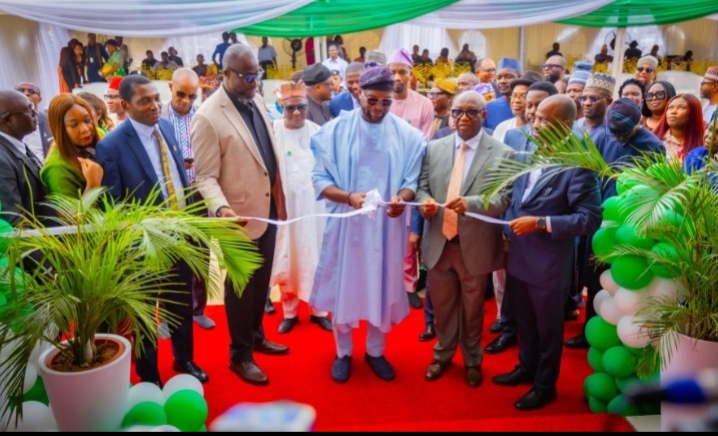
Abuja| NDPC new headquarters commission , Tuesday, 15 September,2026.
An EFCC-recovered property allocated to the Ministry of Communications, Innovation & Digital Economy, has been transformed to the new headquarters of the Nigeria Data Protection Commission (NDPC) in Abuja, as its headquarters.
Speaking during the commissioned ceremony of the building, the Honourable Minister incharge of the ministry, Dr. ‘Bosun Tijani, described the facility as a tangible demonstration of the visionary leadership of President Bola Ahmed Tinubu, and his commitment to building strong institutions that can support Nigeria’s growing digital economy.
The Minister emphasised that said the occasion represented more than the opening of a new office, but a reflection of the administration’s commitment to strengthening the institutions required to protect Nigerians and build trust in the country’s digital economy.
Dr. Tijani said, “Shortly after assuming office in 2023, President Tinubu signed the Nigeria Data Protection Act into law, giving the NDPC the appropriate legal foundation and authority to protect the data and privacy rights of Nigerians.
The President also directed Ministries, Departments and Agencies of the Federal Government to comply with established data protection laws and frameworks, demonstrating that government must lead by example in upholding the standards it expects from citizens and businesses.”
He added, “In the early days of the Commission, it was difficult to ask an institution to protect the data of over 200 million Nigerians and support one of Africa’s largest digital economies without the institutional resources to do so.
President Tinubu recognised this challenge and moved to solve it, approving the resources required for the NDPC to become properly operational and functional, while building towards becoming a sustainable institution in its own right.
He also directed that an EFCC-recovered property be allocated to the Commission as its headquarters.
“An asset recovered on behalf of the Nigerian people has now been returned to productive use for the Nigerian people. That is reform made tangible,” he said .


Airtel Money Targets October Listing On London Stock Exchange

Cardoso Says Multiple FX Windows Cost Nigeria 3% of GDP, Higher Than Fuel Subsidy

Naira To Dollar, Pound , Euro Rate Wednesday September 23

Tech Expert, Zuckerberg trains with UFC champions, Adesanya, Alexander

Organ Trafficking: Ekweremadu bags 10 years in UK prison

SAINT OBI: Between his marriage and his death
-

 Business1 day ago
Gambia Orders Nigerian Banks To Replace Foreign Staff by December 2026
-

 International1 day ago
Trump launches ‘Trump TV’ as US networks halt White House coverage
-

 News1 day ago
Independent Panel Begins Probe into 37 Deaths in Civil Defence Custody
-

 Business2 days ago
CBN, MOF sign pact to align monetary, fiscal policies
-
 Business1 day ago
Dangote Whets Investors Appetite Ahead 2028 Fertiliser IPO
-

 Health1 day ago
Nigerian hospital successfully performs kidney cancer surgery via tele-robotic
-

 Business1 day ago
Fans shown 65,000 junk food ads at World Cup
-

 Sports1 day ago
Mbappé Leaves Nike To Promote Swiss Sportswear Brand On