
Politics
Obidient Movement Urges Members To Register With NDC As O-K Exits ADC
Obi’s exit from the ADC and his subsequent registration with the NDC alongside former Kano State governor, Rabiu Musa Kwankwaso, informed the movement’s decision to consolidate its activities on the platform of the NDC.

“We call on all members of the Obidient Movement to proceed with registration into the Nigeria Democratic Congress at their respective wards,” said its National Coordinator, Dr Yunusa Tanko.
In a statement on Monday Dr Tanko disclosed that movement a digital membership platform had been introduced to facilitate seamless registration for Nigerians both within and outside the country.
He encouraged members to register through the official portal, Nigeria Democratic Congress Registration Portal.
According to the statement, Obi’s exit from the ADC and his subsequent registration with the NDC alongside former Kano State governor, Rabiu Musa Kwankwaso, informed the movement’s decision to consolidate its activities on the platform of the NDC.
The group said the transition was driven by the need for “a more stable, credible, and value-driven vehicle for national transformation.”




Politics
ADC Picks Amaechi as Atiku’s Vice president in 2027 election
The proposed Atiku-Amaechi partnership brings together two experienced political figures with the national reach and leadership credentials needed to tackle Nigeria’s economic and governance challenges.
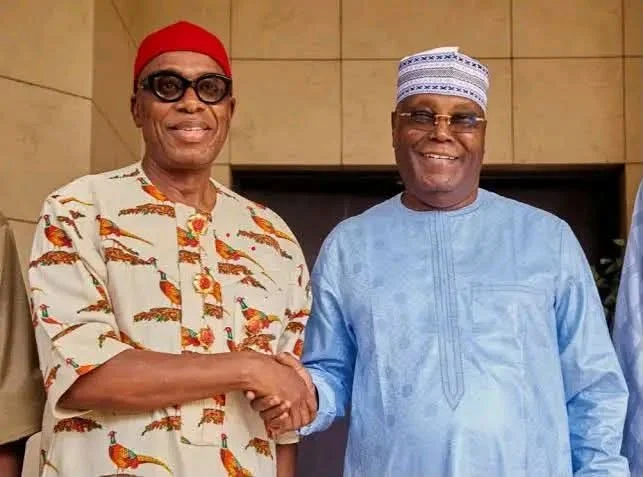
FILE: Amaechi and Atiku | AFP
The African Democratic Congress has selected former Rivers State Governor, Rotimi Amaechi, as its vice-presidential candidate for the 2027 presidential election.
The party described the pair as a “unity and rescue ticket” aimed at offering Nigerians an alternative platform ahead of the next general election.
The party announced Amaechi’s emergence in a statement issued in Abuja on Monday by its National Publicity Secretary, Bolaji Abdullahi, following consultations with party stakeholders, coalition partners and representatives from across the country.
According to the ADC, the decision was influenced by Amaechi’s performance in the party’s presidential primary, where he emerged runner-up, as well as his extensive record in public service spanning the legislative and executive arms of government.
Abdullahi said that the proposed Atiku-Amaechi partnership brings together two experienced political figures with the national reach and leadership credentials needed to tackle Nigeria’s economic and governance challenges.
Politics
FHC Abuja Okays Deregistration of ADC , four other parties • The Judgement Can’t Stand—David Mark
The plaintiff told the court that the ADC, Accord Party and the three other affected parties performed poorly in the 2023 general election and subsequent by-elections, failing to win seats across critical levels of government.
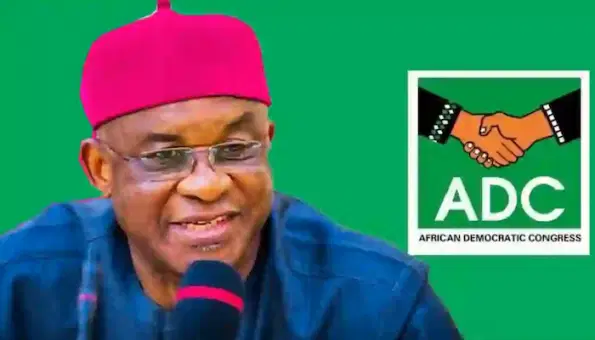
A Federal High Court in Abuja ruled on Monday that the African Democratic Congress (ADC) and the Accord Party, alongside three other political parties be deregister by the INEC.
The other political parties affected by the judgement were the Action Peoples Party (APP), Action Alliance (AA) and Zenith Labour Party (ZLP).
Swiftly reacting to the development, the National Chairman of the ADC, Senator David Mark, urged members, supporters and candidates of the party not to lose hope following the judgment of the Federal High Court in Abuja ordering the deregistration of the party and four others.
In a statement issued by his Special Adviser on Media and Publicity, Kola Ologbondiyan, the former Senate President described the judgment delivered by Justice Peter Lifu as “an arrow fired at the heart of Nigeria’s democracy,” and insisted that the decision would not stand.
According to him, the party remains confident that the ruling would be overturned through the judicial process.
He argued that the Court of Appeal had earlier granted a stay of proceedings in the matter and fixed October 27, 2027, for further hearing, raising questions over the validity of a judgment delivered despite what he described as a subsisting appellate order.
“The judgment cannot stand. It will be set aside because it does not pass the test of law and due process. Our democracy must be protected from actions that seek to undermine the constitutional rights of political parties and the choices available to Nigerians,” Mark said.
He urged party faithful across the country to remain calm and focused, assuring them that the development would not stop the ADC’s preparations for the next general elections.
In the suit filed by the National Forum of Former Legislators, marked FHC/ABJ/CS/2637/2026, Justice Peter Lifu delivered the ruling directing the Independent National Electoral Commission (INEC) to deregister the five parties for failing to meet constitutional performance thresholds.
The plaintiff had asked the court to determine whether INEC was constitutionally obligated to deregister political parties that failed to satisfy the requirements set out in Section 225A of the 1999 Constitution (as amended).
The suit also relied on provisions of the Electoral Act 2022 and INEC regulations, which were cited as reinforcing the constitutional conditions for the registration and continued existence of political parties.
According to the National Forum of Former Legislators, the five parties had persistently failed to meet the constitutional benchmarks required to retain their registration.
The group argued that the parties neither secured the minimum electoral performance required by law nor won elective positions at the national, state or local government levels.
Under the constitutional provisions cited before the court, political parties are expected to secure at least 25 percent of votes cast in a state during a presidential election or win at least one elective seat at the federal, state or local government level to justify their continued registration.
The plaintiff told the court that the ADC, Accord Party and the three other affected parties performed poorly in the 2023 general election and subsequent by-elections, failing to win seats across critical levels of government.
It argued that their continued existence as recognised political parties was unlawful and undermined the integrity of the country’s electoral system.
Among the reliefs sought, the plaintiff asked the court to declare that INEC was duty-bound to deregister political parties that fail to meet the constitutional requirements and to compel the electoral commission to carry out the exercise before preparations for the 2027 elections advance further.
The group also sought an order restraining the five parties from participating in elections or engaging in political activities such as campaigns, rallies and primary elections, while asking the court to prohibit INEC from recognising or dealing with them unless they fully comply with constitutional provisions.
The group also sought an order restraining the five parties from participating in elections or engaging in political activities such as campaigns, rallies and primary elections, while asking the court to prohibit INEC from recognising or dealing with them unless they fully comply with constitutional provisions.
In his judgement, Justice Lifu granted the reliefs sought and ordered INEC to deregister the five political parties.
Politics
You’re looking for campaign funds — Okonkwo reacts to Obi’s N5bn defamation suit
Okonkwo, a former spokesperson for Obi during the 2023 presidential election campaign made his position known in a statement posted on his X account on Wednesday.
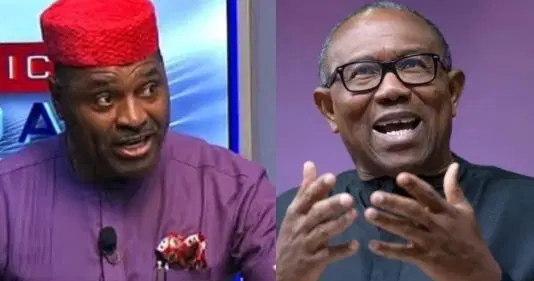
Photo: A collage of Kenneth Okonkwo, and Peter Obi
Actor-turned-politician Kenneth Okonkwo has reacted to the N5 billion defamation suit reportedly being prepared against him by the Nigeria Democratic Congress (NDC) Party’s presidential candidate Peter Obi, describing the move as unwise and challenging Obi to proceed with the court action.
Okonkwo, a former spokesperson for Obi during the 2023 presidential election campaign made his position known in a statement posted on his X account on Wednesday.
Okonkwo’s reaction followed reports that Obi had threatened legal action against him over alleged defamatory comments, with a demand for N5 billion in damages.
Responding to the development, Okonkwo said he had been informed of a letter allegedly sent by Obi and his lawyers but had yet to read it.
“It has been brought to my notice that there is a letter circulating online from Peter Obi, and his Lawyers that I should pay him N5 billion ; Hahaha!” he wrote.
“If Peter Obi is looking for money to campaign, he should privately ask me for assistance, not come from extortion, and I will help him.”
The former Labour Party chieftain claimed that he personally incurred expenses while serving as Obi’s spokesperson during the 2023 election campaign.
“I did so when I was his Spokesperson paying for my flight tickets and booking for my hotel accommodation to some of our campaigns,” he said.
The former campaign spokesman maintained that he would respond formally after reviewing the letter, while urging Obi and his legal team to proceed with the case.“It will be a shame to Peter Obi and his Lawyers if they do not take this case to court. I don’t have time or patience for scammers,” he said.


Naira Exchange Rates To Foreign currencies Friday, June 19

IPOB Directorate Suspends Nnamdi Kanu as Leader and Director of Radio Biafra Indefinitely

Fire Service Put Out Polaris Bank’s Broad Street fire

Tech Expert, Zuckerberg trains with UFC champions, Adesanya, Alexander

Organ Trafficking: Ekweremadu bags 10 years in UK prison

SAINT OBI: Between his marriage and his death
-
 News2 days ago
EFCC Arrests Aviation Inspector, Two Others for Alleged Cash, Gold Smuggling in Kano
-

 News2 days ago
JAMB releases 2026 UTME original result slips for printing
-

 News3 days ago
Zamfara Police Command Mourns Three Officers Killed in the Line of Duty
-

 Business2 days ago
Naira Exchange Rates Wednesday June 17
-
 News3 days ago
Court Revokes Sowore’s Bail, Orders His Arrest
-
 News3 days ago
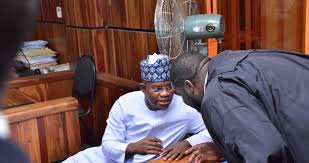
BREAKING: Court Dismisses Yahaya Bello’s Bid to Quash N110bn Fraud Charge
-

 Business2 days ago
Enugu Air, airport concession to support state’s $30bn economy goal –Commissioner
-
 News3 days ago
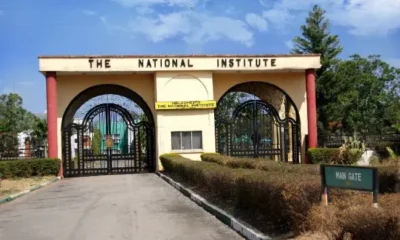
Police confirms NIPSS Kuru Jos killings