
Politics
2027: NDC Welcomes Obi, Kwankwaso, calling ’em “biggest brands in Nigerian politics ”
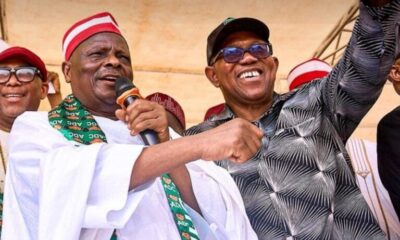
In an address of welcoming the new members, the National Leader of the NDC, Senator Seriake Dickson, said that the entry of Obi and Kwankwaso reinforced the party’s growing national appeal.

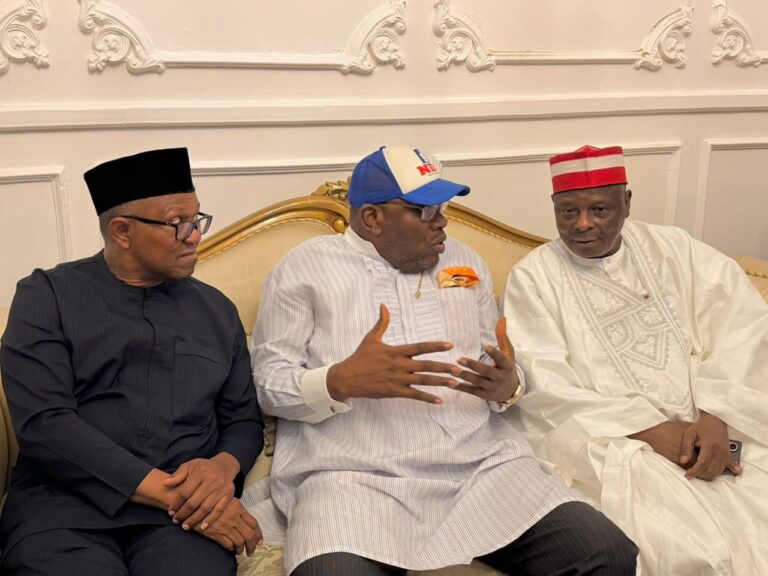
Photo: Peter Obi , Seriake Dickson, and Rabiu Kwankwaso during closed -door meeting
Former Labour Party presidential candidate Peter Obi and ex-Kano State governor Rabiu Kwankwaso have formally joined the Nigeria Democratic Congress, calling on members to avoid litigation and focus on advancing the nation’s development.
The two opposition heavyweights made the call on Sunday in Abuja during their formal reception into the party, amid ongoing political realignments ahead of the 2027 general elections.
Obi declared his switch to the NDC shortly after announcing his resignation from the African Democratic Congress, which he joined last December.
In an address to party leaders and supporters, the presidential aspirant said that their decision to join the NDC was driven by the need for a peaceful political platform devoid of internal crises.
He said, “First of all, sincerely, I join in thanking the leader of our party. And I assure him that we are coming here to be part of the peaceful family that will work hard to build a united, secure, prosperous Nigeria that will work for everybody.
“Kwankwaso is also a leader who has been at the forefront of education, providing primary care and putting people out of poverty because we want to build a country where a child of nobody can be somebody without knowing anybody. That is what we want to do.
“We are using this occasion to plead with the government of today. You know that I contested the election in 2023 in a different party. Rabiu Kwankwaso contested the same election in a different party.”
Continuing, Obi accused the current government of fuelling persistent crises within opposition parties, leading to endless litigation that forced him and others to abandon their former platforms.
He noted their hope for stability was quickly tested by unresolved disputes in every new party.
The government of today has ensured that they put up crisis upon crisis, which led to several lawsuits in our party that made us abandon those parties and move to another party, thinking that our situation would abate.
“But what we saw was a carry-over of the same problem from where we came from – similar unresolved crisis, litigations and everything.
Today, we have left that place to NDC, where the leader has already assured us that they have no litigation.
So, we are pleading with them for the sake of democracy. Please, don’t come here. We want to have peace. We don’t want cases.
“We are equally pleading with the judiciary to please end the cases with parties so we can face the job of building a new Nigeria that is possible and face the job of revival, where our country is deteriorating today. So we want to start building. Please, let there be no litigation. Party members, please don’t go to court.
“We want to build a party. Those of us who are lawyers want you to be good practitioners. We don’t want to spend our time in litigation and fighting ourselves. Let’s spend our time dealing with issues affecting the ordinary Nigerian. This ship is about to sail. Please do everything possible to join,” he urged.
In his remarks, Kwankwaso said that their engagement with the NDC leadership showed strong alignment in ideology and governance priorities, particularly in education, youth empowerment, and national unity.
He said, “We came here together with our team to consult His Excellency, the leader of this party, on our ideology, blueprint, and all that we believe in, especially my humble self and His Excellency, Peter Obi. And we realised that we are all on the same page, be it education, empowerment of young men and women, security, and of course, a very peaceful, united Nigeria.“
During the discussion, we realised that the NDC is submitting its register, I think on May 6. Now, at this point, I would like to invite all Nigerians, including our brothers and sisters in diaspora, especially those who are interested in contesting elections in this party, to register as soon as possible.“
So, Your Excellencies, now that we have realised that we only have a couple of days to register, we have decided that all of us will register by the grace of God today. And once again, I want all of us who are here, those who believe in us, and who believe in promoting the peace and the progress of this country, to register with the NDC.”
Kwankwaso also used the occasion to rally his political base, including former members of the New Nigeria People’s Party and the Kwankwasiyya movement, to align with the new platform.
The two men received the NDC membership cards amid cheers from supporters, shortly after a closed-door meeting with the party leaders.
In an address of welcoming the new members, the National Leader of the NDC, Senator Seriake Dickson, said that the entry of Obi and Kwankwaso reinforced the party’s growing national appeal.
“On behalf of the National Working Committee, teeming members of our party and well-meaning Nigerians, I welcome you both to the party.
‘’We were told you are not coming here with the crowd today. But both of you are personifications of the crowd. As you can see, the crowd has followed you here. This party does not know what is called ‘status quo ante bellum.
’“Let me assure you that the two of you are part of the biggest brands in our political history. We trust and believe you. The Nigerian people know what you are bringing on board. There will be enough time for the campaign when we will also unveil the political process of the party,” he stated.
Dickson added that the NDC represents an ideological movement anchored on integrity, transparency, and inclusive governance, with a strong focus on youth and women’s participation.






Politics
Again, Desmond Elliot begs political mentor,Gbajabiamila , “I’m sorry, Daddy”
The latest apology is not the first time Elliot has publicly sought forgiveness from Gbajabiamila over the political disagreement.
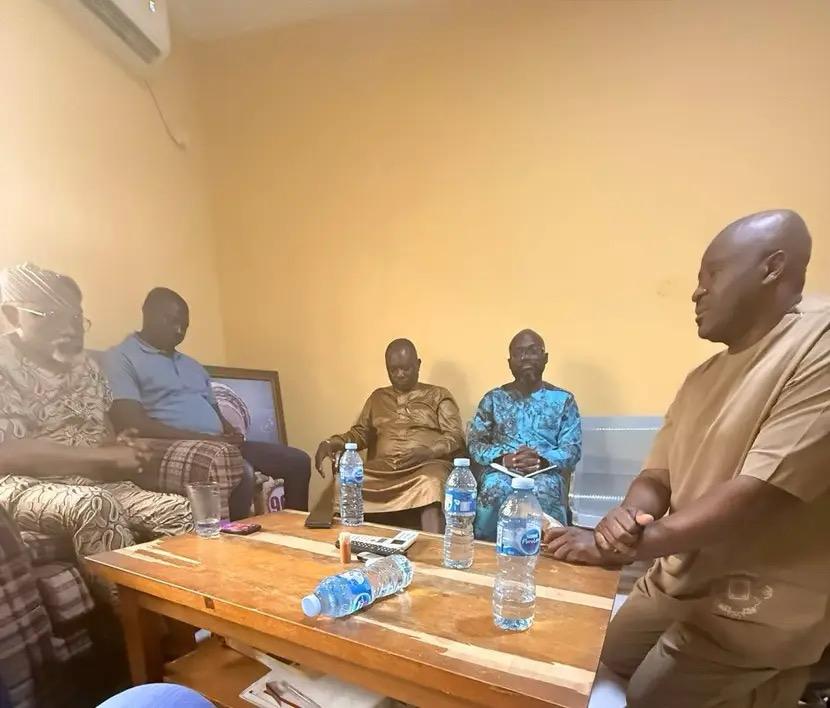
“I’m sorry. I have no excuse; I have nothing other than to say I’m deeply sorry. I’m deeply sorry, sir. And in our culture, we prostrate. Don’t be angry, Daddy.”
The above statement was made by
The lawmaker representing Surulere Constituency I in the Lagos State House of Assembly also reaffirmed his loyalty to the APC leadership and appealed for an end to any disagreement between him and Gbajabiamila.
The latest apology is not the first time Elliot has publicly sought forgiveness from Gbajabiamila over the political disagreement.
During an earlier appearance on TVC’s Your View, Elliot acknowledged that he may have offended his political mentor through his political engagements, while maintaining that any misunderstanding between them was not deliberate.
“I’m not saying, oh, yes, media will come out, oh yes, Desmond begs again. Yes, because he’s my egbon. And I grew up learning everything I knew in politics through him,” he said.
He added, “To err is human, to forgive is divine. So I’m sorry, my daddy, if I’ve offended you in any way.”
The dispute occurred amid the political tensions surrounding the Lagos State House of Assembly leadership crisis, during which Gbajabiamila said he faced difficulties at the Presidency over allegations concerning Elliot’s political activities.
Politics
I will concede defeat if 2027 election is credible — Obi
However, Obi maintained that he won the 2023 presidential election, saying those who conducted the poll knew what happened.
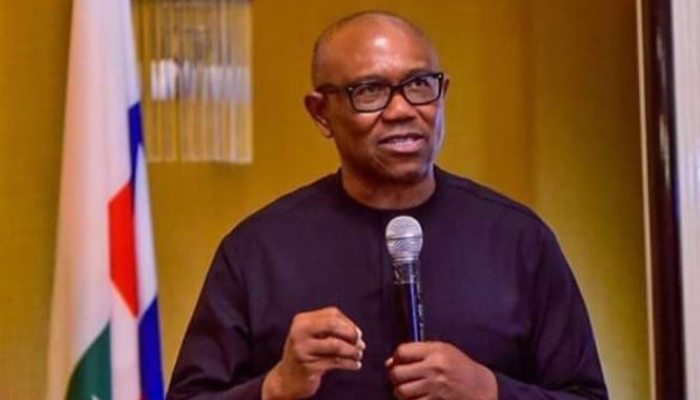
The presidential candidate of the Nigeria Democratic Congress (NDC), Peter Obi, has declared that he will concede defeat in the 2027 presidential election if the poll is free, fair and credible.
Obi stated this in an interview aired on Arise TV on Thursday, saying he would respect the will of Nigerians if they chose another candidate.
“If the election is free, fair and credible, I will because it’s an election. It’s the people that would say who they want to serve, and I will respect the will of the people; that’s democracy,” he said.
However, Obi maintained that he won the 2023 presidential election, saying those who conducted the poll knew what happened.
“I did, and I will maintain that as long as I live that I won the 2023 election. Those who conducted it know the records; they know why there was a glitch and what happened,” he said.
Fielding question on what about “turn-by-turn” presidency, Obi said elections should not be determined by tribe or religion.
“Election should not be driven by tribe or religion. Today, in terms of qualification, I’m qualified to be president of Nigeria. I have the competence; I have been all over the world studying what it takes to be president of a country, and I know what I can do to turn around this country in the right direction.”
Politics
Trump promises $5,000 ‘dividend’ to U.S. citizens if Republicans win midterms
It is estimated that the total proposed “Trump dividend” payout would cost more than $1 trillion — raising questions about how such an expense would be funded and its impact on fiscal strain facing the Federal budget.
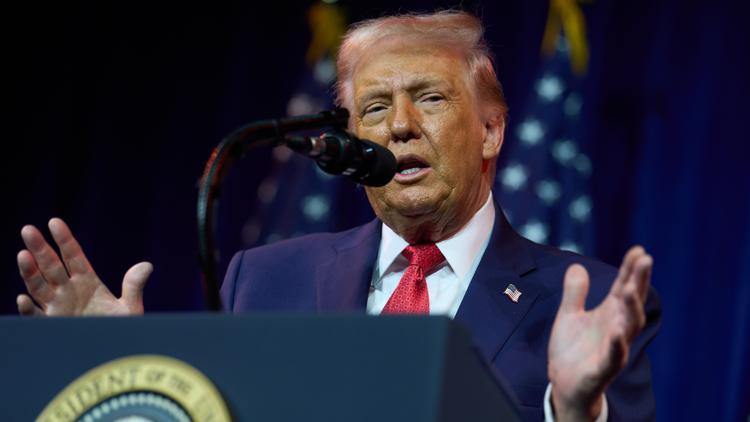
U.S. President Donald Trump has promised every adult American citizen a $5,000 “dividend” if the Republicans are victorious at the upcoming midterm elections.
Americans will vote in the midterms in early November, with the Democrats currently projected to win control of the House of Representatives.
Such a result would likely create barriers to Trump’s legislative agenda and send a signal about public opinion on the president’s policy mix throughout his second presidential term.
“Here is my promise: if the Republicans win the House of Representatives and the United States Senate, both of them… because of our tremendous strength and success economically, I will issue a dividend to every adult citizen in the United States of America for $5,000,” he told a crowd at the GOP’s midterm convention in Dallas.
“I’m asking you to pretend that I’m on the ballot,” he added.
It is estimated that the total proposed “Trump dividend” payout would cost more than $1 trillion — raising questions about how such an expense would be funded and its impact on fiscal strain facing the Federal budget.
The potential payout compares to the $1.27 trillion the U.S.


Congo military plane crash kills 13, including three officers

Manchester City Faces Expulsion For Breaching 114 EPL Financial Rules

TIME Names Moniepoint CTO Felix Ike Among 50 Global Executives of the Year

Tech Expert, Zuckerberg trains with UFC champions, Adesanya, Alexander

Organ Trafficking: Ekweremadu bags 10 years in UK prison

SAINT OBI: Between his marriage and his death
-
 Business3 days ago
Airtel Money Targets October Listing On London Stock Exchange
-
 Business2 days ago
MAN Urges CBN To Consider CRR Cut Next Phase of Monetary Easing
-
 Crime2 days ago
JUST IN: Zamfara LG Chairman Freed After 61 Days in Captivity
-

 News2 days ago
VP Shettima, Gov Mbah to address Over 500 editors on 2027 election issues
-
 Sports2 days ago
FIFA names Nigerian referee among 81 officials for U-17 World Cup
-

 Entertainment2 days ago
MultiChoice launches Wethu+ as DStv overhauls packages
-
 Business2 days ago
Naira To Dollar , Pound, Euro Rate, Thursday September 24
-
 Business2 days ago
Otedola bypasses seven African billionaires as fortune hits $2 billion