
News
21 THINGS TO KNOW ABOUT PROPOSED FOURTH MAINLAND BRIDGE By Dennis Isong

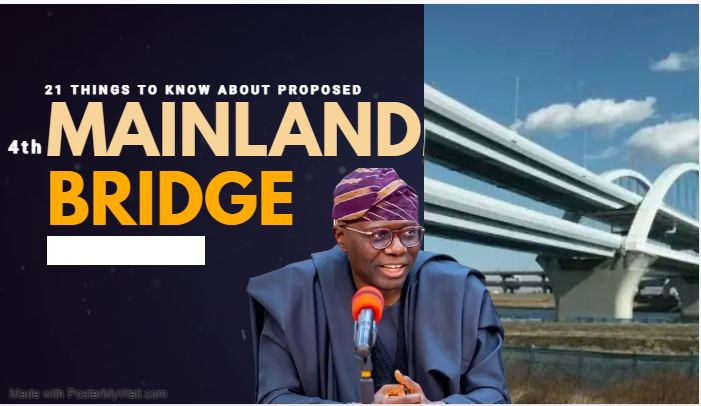
Spanning about 37 kilometers, the bridge will initiate from Abraham Adesanya in Ajah, traverse the Eti-Osa-Lekki-Epe corridor, and extend northwest towards the Lagos-Ibadan Expressway.
THE much-anticipated construction of the Fourth Mainland Bridge in Lagos is set to commence in the first quarter of 2024, as announced by Governor Babajide Sanwo-Olu during the Lagos West Senatorial District Town Hall Meeting.
Here are 21 crucial details that shed light on this transformative infrastructure project:
- COMMENCEMENT AND CONSTRUCTION:
The Governor has confirmed that construction is scheduled to begin by the end of March or April 2024, adopting a phased approach to minimize disruptions caused by building demolitions. - LENGTH AND CONNECTIVITY:
The Fourth Mainland Bridge is an ambitious 38km-long project by the Lagos State Government, linking Lagos Island through Langbasa and Baiyeku in Ikorodu across the Lagos Lagoon to Itamaga in Ikorodu. - CARRIAGEWAY DESIGN:
This 2 x 4 lane carriageway boasts a cross-sectional road configuration with provisions for a Bus Rapid Transit (BRT) Lane and considerations for future road contraction. - ARCHITECTURAL INNOVATION:
The Fourth Mainland Bridge project introduces a paradigm shift in architectural design and engineering. Envisioned as more than just a transportation structure, its innovative architecture combines functionality with aesthetic appeal, creating an iconic landmark that reflects the forward-looking vision of Lagos. - PROJECTED COST AND FUNDING:
Estimated at around $2.5 billion, the project is set to be executed through a public-private partnership initiative with tolling expected for the initial two years. - PREFERRED BIDDER:
In December 2022, the CCECC-CRCCIG CONSORTIUM was announced as the preferred bidder, entrusted with executing the project in alignment with the state government’s plans. - CONSTRUCTION TIMELINE:
Initially slated for 2017 with a projected completion in 2019, the project faced delays. The new timeline, following its commencement, aims for completion in 2027. - INTEGRATION WITH EXISTING INFRASTRUCTURE:
Eight roads, including major arteries like the Lagos-Ibadan Expressway and Igbogbo-Lagos, will be aligned with the Fourth Mainland Bridge, enhancing connectivity across the city. - TRAFFIC RELIEF:
Positioned as a complement to the existing Eko, Carter, and Third Mainland Bridges, the Fourth Mainland Bridge is anticipated to significantly reduce traffic congestion. - SIZE AND SCALE:
Upon completion, it is poised to become the second-longest bridge in Africa, featuring three toll plazas, nine interchanges, a 4.5-kilometer Lagoon Bridge, and an environmentally conscious design. - COMPENSATION FOR DISPLACED RESIDENTS:
Governor Sanwo-Olu assures fair compensation for tenants and landlords affected by building demolitions during the construction process. - VISIONARY ENVIRONMENTAL FEATURES:
The project envisions an eco-friendly environment, ensuring that as Lagos expands, it does so with a commitment to sustainability. - LEKKI-EPE CORRIDOR SPAN:
Spanning about 37 kilometers, the bridge will initiate from Abraham Adesanya in Ajah, traverse the Eti-Osa-Lekki-Epe corridor, and extend northwest towards the Lagos-Ibadan Expressway. - ENVIRONMENTAL CONSIDERATIONS:
With a forward-looking approach, the Fourth Mainland Bridge project places a strong emphasis on environmental sustainability. - Designed to integrate seamlessly with the natural surroundings, the bridge aims to minimize its ecological footprint, ensuring that as Lagos expands, it does so in harmony with the delicate balance of its environment.
- PROJECTED ECONOMIC IMPACT:
The construction and completion of the Fourth Mainland Bridge are anticipated to have a substantial economic impact. - The increased connectivity and improved transportation infrastructure are expected to stimulate economic activities, creating new opportunities for businesses and fostering overall economic growth.
- TECHNOLOGICAL ADVANCEMENTS:
Leveraging modern engineering and construction techniques, the Fourth Mainland Bridge represents a leap forward in technological advancements. The project incorporates state-of-the-art features, setting a benchmark for future infrastructure projects within and beyond the region. - COLLABORATIVE PUBLIC-PRIVATE PARTNERSHIP:
The Fourth Mainland Bridge project exemplifies a successful collaboration between the public and private sectors. The involvement of the CCECC-CRCCIG CONSORTIUM as the preferred bidder showcases the effectiveness of public-private partnerships in driving large-scale infrastructure developments. - JOB CREATION:
The construction phase of the Fourth Mainland Bridge is poised to generate a substantial number of employment opportunities. From skilled labor to support staff, the project will contribute to job creation, providing livelihoods for many within the local community. - ENHANCED REGIONAL CONNECTIVITY:
Beyond its local impact, the Fourth Mainland Bridge is positioned to enhance regional connectivity. Strengthening links between different parts of Lagos, the bridge will contribute to a more integrated and accessible metropolitan area. - CULTURAL INTEGRATION:
The lower level of the bridge, known as ‘Lagos Life,’ is designed to facilitate social, commercial, and cultural interactions. This innovative approach promotes cultural integration, fostering a sense of community and shared experiences among the diverse population of Lagos. - TOURISM BOOST:
The completion of the Fourth Mainland Bridge is expected to boost tourism in Lagos. The iconic structure, coupled with the improved accessibility it provides, is likely to attract visitors interested in experiencing the vibrancy and diversity of one of Africa’s most dynamic cities.
As the Fourth Mainland Bridge takes shape, these additional points further emphasize the multifaceted impact of this transformative project on Lagos and its residents.
For real estate investors, the evolving landscape presents a wealth of opportunities, from economic growth and technological advancements to cultural integration and increased tourism appeal.
Investing in areas surrounding the Fourth Mainland Bridge is not just a financial decision; it’s a strategic move towards being part of the city’s future prosperity.
▪︎Dennis Isong is a TOP REALTOR IN LAGOS.He Helps Nigerians in Diaspora to Own Property In Lagos Nigeria STRESS-FREE. For Questions WhatsApp/Call 2348164741041
News
South African kills Nigerian bar worker
Olaleye was allegedly shot by a South African national following an argument over whether a drinking glass should be taken outside the bar.
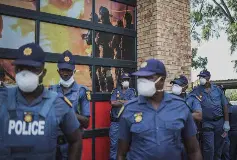
• South African police
The Nigerian Union in South Africa (NUSA) says Olatunde Olaleye, a 40-year-old father of two, has been shot dead in the country.
According to NAN, NUSA said Olaleye, an indigene of Ikere-Ekiti, was killed on September 21 while working at Spanata Bar and Grills in Mamelodi, Pretoria.
Smart Nwobi, NUSA president-general, in a statement on Thursday, said Olaleye was a husband and father of two children, adding that his death has left his family devastated.
He said the union is concerned by reports that Olaleye was allegedly shot by a South African national following an argument over whether a drinking glass should be taken outside the bar.
According to him, there were also reports that the suspect returned to the premises to threaten the bar’s management, with a promise that members of his crew would return.
Nwobi called for a thorough, transparent and impartial investigation into the circumstances surrounding the incident.
“We cannot continue to lose Nigerians under circumstances that leave families devastated and communities traumatised,” he said.
News
Nigerian Editors Brace for Democracy Protection Ahead of 2027 Elections
“As editors, we must remain above board in an increasingly polarised environment. We must not become agents of disorder. Neither should we display contradictory tendencies that cause the citizenry to question our credibility,” Anaba said.
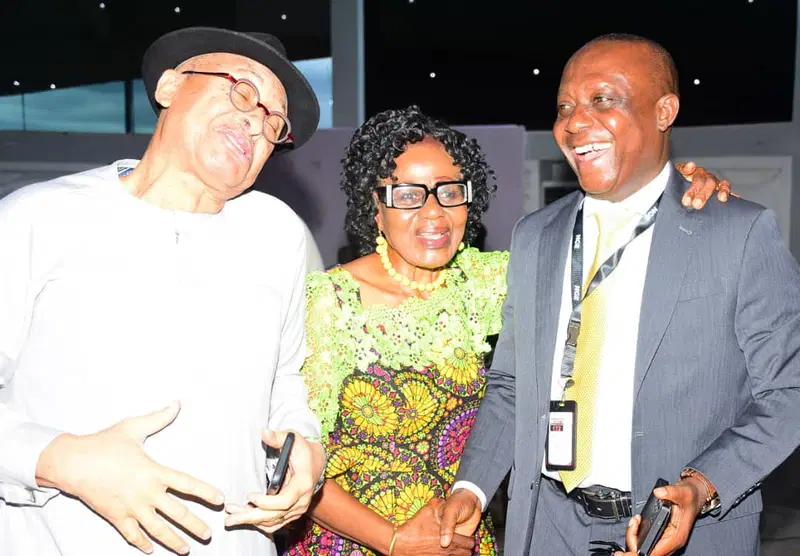
Enugu|•L-R Prof Pat Utomi; Prof Chinyere Okunna and Eze Anaba President Nigerian Guild of Editors at the 22nd All Nigerian Editors Conference in Enugu. Photo. Nwankpa Chijioke
Nigerian editors have been urged to protect the credibility of the ballot and help safeguard democracy as the country prepares for the 2027 general elections.
The call was made by Eze Anaba, President of the Nigerian Guild of Editors (NGE) and Editor of Vanguard Newspaper, in his welcome address at the 22nd Annual All Nigerian Editors Conference, which opened today in Enugu.
The conference is themed, “The Ballot, the Media and the Task of Keeping Democracy Alive.”
Anaba said the media, alongside other critical institutions, had a responsibility to nurture democracy by ensuring that voters were adequately informed and that electoral outcomes reflected the choices of the people.
According to him, the ballot can only fulfil its democratic purpose when voters have access to credible information and are able to make their choices freely, without intimidation or undue influence.
He urged editors and journalists to uphold verification, independence, accuracy, fairness, accountability and courage, particularly in an era of social media, artificial intelligence, deepfakes and the rapid spread of misinformation.
“As editors, we must remain above board in an increasingly polarised environment. We must not become agents of disorder. Neither should we display contradictory tendencies that cause the citizenry to question our credibility,” Anaba said.
He stressed that the media’s overarching responsibility was to serve the public good and help ensure that government derived its legitimacy from the consent of the people.
News
Works Minister Orders Tinubu’s Pictures On First Niger Bridge
“The President has worked so hard and we need to reward his hard work by decorating this bridge with his pictures.”

Minister of Works, David Umahi, has ordered the removal of illegal advertisements from the rehabilitated First Niger Bridge and their replacement with pictures of President Bola Tinubu, saying the display would recognise the President’s work on infrastructure.
Umahi gave the directive during an inspection of ongoing rehabilitation works on the bridge linking Anambra and Delta states.
He said the bridge was expected to reopen to motorists next week, subject to the completion of critical structural work.
“Once we are done with work on this bridge, I want all the illegal adverts on this bridge removed. Anyone who wants to advertise should apply to the Ministry of Works. For now, the bridge will be decorated with the pictures of President Tinubu,” Umahi said.
“The President has worked so hard and we need to reward his hard work by decorating this bridge with his pictures.”


Congo military plane crash kills 13, including three officers

Manchester City Faces Expulsion For Breaching 114 EPL Financial Rules

TIME Names Moniepoint CTO Felix Ike Among 50 Global Executives of the Year

Tech Expert, Zuckerberg trains with UFC champions, Adesanya, Alexander

Organ Trafficking: Ekweremadu bags 10 years in UK prison

SAINT OBI: Between his marriage and his death
-

 Business3 days ago
MAN Urges CBN To Consider CRR Cut Next Phase of Monetary Easing
-
 Crime3 days ago
JUST IN: Zamfara LG Chairman Freed After 61 Days in Captivity
-

 News3 days ago
VP Shettima, Gov Mbah to address Over 500 editors on 2027 election issues
-
 Sports3 days ago
FIFA names Nigerian referee among 81 officials for U-17 World Cup
-

 Entertainment3 days ago
MultiChoice launches Wethu+ as DStv overhauls packages
-
 Business3 days ago
Naira To Dollar , Pound, Euro Rate, Thursday September 24
-
 Business3 days ago
Otedola bypasses seven African billionaires as fortune hits $2 billion
-
 Business3 days ago
China Woos Nigeria To Join WAICO Memberships For Technology Advantages