
International
Zuriel Oduwole, 22, Makes History as Youngest Nobel Prize Nominee
The Norwegian Nobel Committee will announce the 2025 laureate later this year.

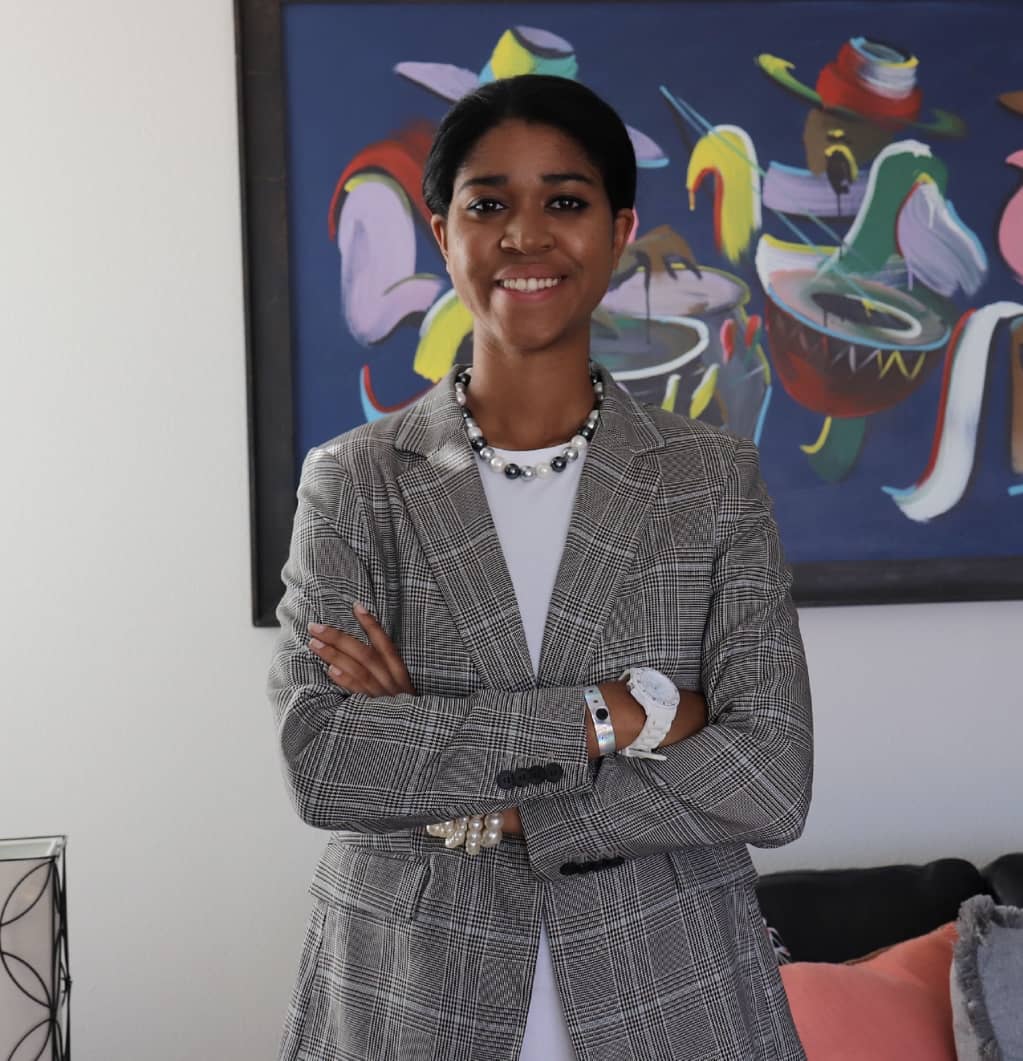
▪︎Zuriel Oduwole
Zuriel Oduwole, 22, an advocate for peace, education, and gender equality, has been nominated for the 2025 Nobel Peace Prize.
Oduwole has actively engaged in global diplomatic efforts, influencing discussions on education and peace, working to create opportunities for marginalized communities, and promoting meaningful change.
Her nomination recognizes her efforts and reflects Nigeria’s growing influence on the global stage.
Born in Los Angeles to Nigerian grandparents, Oduwole has engaged with over 35 world leaders, including presidents and prime ministers, to discuss policy and development issues.
Her efforts focus on improving education access for marginalized communities and promoting systemic change.
At 13, Oduwole mediated a territorial dispute between Guyana and Venezuela, meeting with the then-President David Granger at the United Nations to emphasize the importance of peaceful dialogue.
In 2020, she consulted with Egyptian President Abdel Fattah El-Sisi on global peace strategies during the Arab blockade of Qatar, which concluded peacefully in 2021.
Her advocacy for education, which she views as fundamental to both development and stability, has been central to her mission from an early age.
In 2017, at just 14, she met with then-U.S. Secretary of State John Kerry at the State Department to push for ‘reward-based’ education programs in developing nations, particularly to improve school retention for girls.
This engagement with U.S. leadership reinforced her global efforts to promote education as a driver of peace and opportunity.
In 2022, Oduwole received the 8th UN Secretary-General Ban Ki-moon Leadership Award in New York, recognizing her decade-long mediation efforts and advocacy for gender parity.
Born in Los Angeles to Nigerian grandparents, Oduwole has engaged with over 35 world leaders, including presidents and prime ministers, to discuss policy and development issues.
Her involvement was instrumental in ending child marriage in Mozambique in 2019, following discussions with President Filipe Nyusi.
Oduwole’s commitment to education began at nine when she observed young girls in Accra selling goods instead of attending school.
This experience inspired her to use documentary filmmaking to raise awareness about educational barriers.
In 2013, she founded “Dream Up, Speak Up, Stand Up” (DUSUSU) to empower youth, especially girls, to advocate for education and leadership opportunities.
The initiative has reached young people across Africa and the Caribbean, providing tools to promote gender equality.
Upon learning of her Nobel Peace Prize nomination, Oduwole expressed humility and surprise. “I have never sought recognition, only to speak up where it’s needed.
“This honor reflects the urgent need to invest in young voices as agents of change,” she said.
The Nobel Peace Prize, one of the world’s most esteemed honors, acknowledges individuals and organizations that have made significant contributions to peace and human rights.
Past recipients include Nelson Mandela, former U.S. Presidents Jimmy Carter and Barack Obama, Kenyan environmentalist Wangari Maathai, and former UN Secretary-General Kofi Annan.
The Norwegian Nobel Committee will announce the 2025 laureate later this year.
Regardless of the outcome, Oduwole’s nomination underscores the growing impact of youth advocacy in global policy and sustainable peace efforts.
International
Child marriage in southern Germany: Over 350 cases recorded, some brides as young as 11
The most recent entries in the overview relate to 2026. They include, among other things, marriages of 16- and 17-year-old girls to adult men.

• Child marriage / UNICEF
In the southwestern German state of Baden-Württemberg, a total of 358 so-called child marriages have been officially recorded since 2012.
Euro News reported that only eight of these forced marriages have so far been legally annulled.
According to authorities, the other 350 cases were brought to an end in other ways.
This alarming finding comes from a response by the Baden-Württemberg state government to a minor inquiry submitted by AfD state parliament members Nikolaos Boutakoglou and Emely Knorr.
The Tübingen regional authority is responsible for recording the data, the answer came from the Ministry of the Interior.
The eight final annulments took place between 2018 and 2024. Among the documented cases was the marriage of an 11-year-old girl from Iraq to a 17-year-old Iraqi, which was annulled in 2020.
As early as 2018, the marriage of a 14-year-old Afghan girl to a 30-year-old man had been ended.
In 2024 two further annulments were added: they concerned a 16-year-old German girl and a 25-year-old Pakistani man and a 16-year-old Syrian girl and a 27-year-old man from the same country.State parliament member Nikolaos Boutakoglou wrote on Facebook that the issue was “really awful” but was being treated as a taboo.
According to its own account, the ministry deals exclusively with such marriages entered into abroad.
Since summer 2017, the Act to Combat Child Marriages has been in force in Germany.
In 2024, the Bundestag adopted new rules to protect minors in marriages concluded abroad.
Hundreds of cases without state intervention
The significantly higher number of cases concluded in other ways raises questions about how these marriages continued.
For the period from 2015 to 2026, the regional authority lists a total of 350 proceedings under the heading “other disposals.”But what became of the other child marriages?
The state government cites, among other things, the death of a spouse, reaching adulthood, a decision not to seek annulment or a new marriage concluded abroad.
In these cases, there was therefore no legally binding annulment.
For 2023, the records include the case of a 12-year-old Afghan girl who was married to a 21-year-old Afghan man. Girls aged 13 and 14 also appear several times in the statistics.
The most recent entries in the overview relate to 2026. They include, among other things, marriages of 16- and 17-year-old girls to adult men.
The statistics record the age of the spouses at the time of marriage and their respective nationalities.

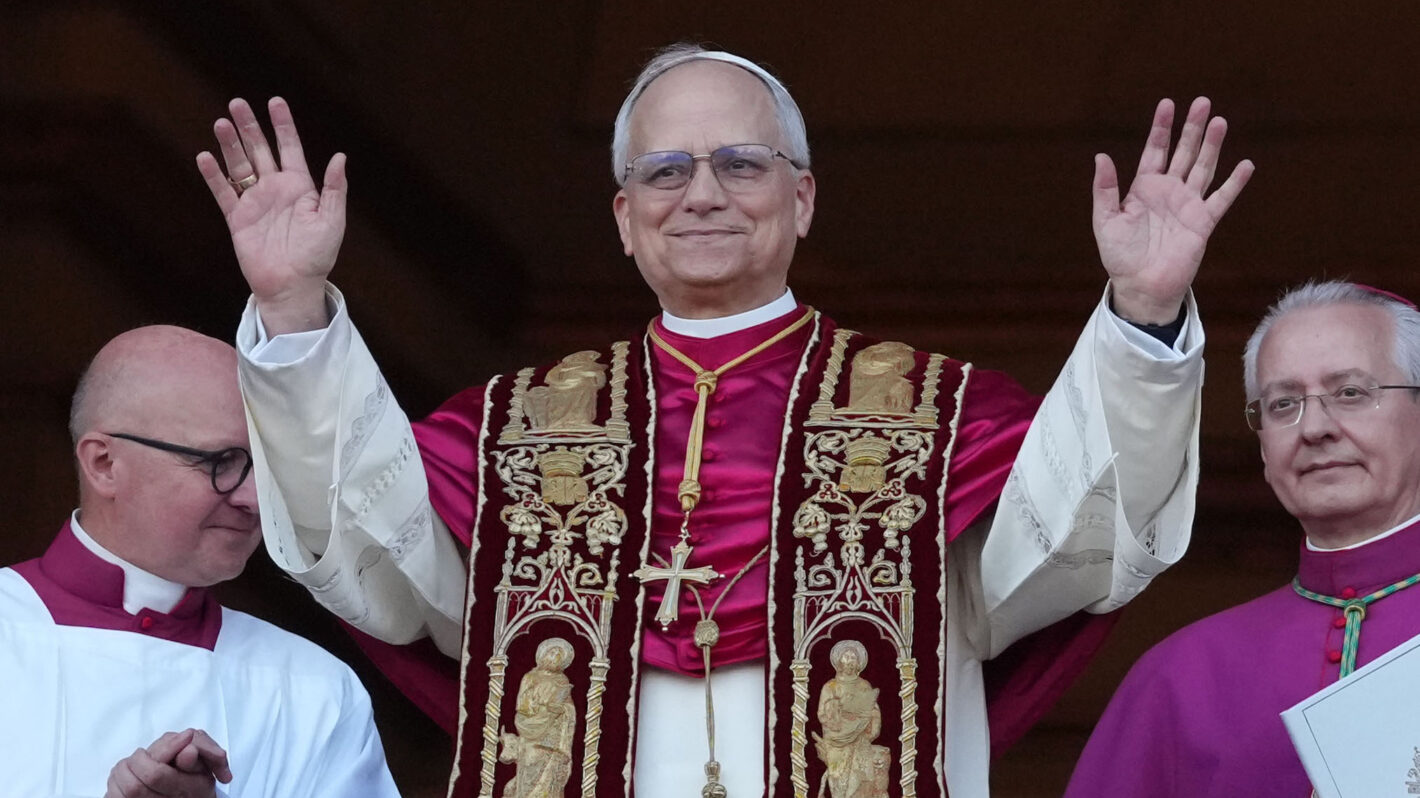
Pope Leo XIV has announced that he will undergo surgery in the coming days to remove a small, localized nodule found on his lung during a recent routine medical checkup.
The 71-year-old pontiff made the disclosure himself during his weekly Angelus prayer in St. Peter’s Square. “Doctors found a localized nodule in my lung,” he said. “It was detected at a very early stage and is well-contained.
The doctors believe it is advisable to intervene, so, following their advice, I have decided to undergo surgery to remove it.”
The Vatican confirmed the operation is scheduled for the first days of this week at Rome’s Gemelli Hospital, which has a dedicated papal suite. Holy See spokesman Matteo Bruni said the Pope is expected to need about a week to recover. On Monday, the Vatican added that Leo will be admitted Tuesday morning.
The nodule’s nature—whether benign or malignant—has not been specified. Medical experts note that most lung nodules are non-cancerous, and early detection generally carries a favorable outlook.
This marks the first significant health issue of Leo’s papacy since his election in May 2025. The American-born pope, known for remaining physically active, has continued his full schedule of audiences and is still expected to proceed with a planned trip to Latin America next month.
International
‘Up to our people’ to pick leader, Zelenskyy responds to Trump’s pledge for new elections in Ukraine
Russia and Ukraine are locked in a long-range aerial war while their armies remain largely deadlocked on the front line, more than four and a half years after Moscow’s full-scale invasion.

• Ukrainian President Volodymyr Zelenskyy
Ukrainian President Volodymyr Zelenskyy said Sunday his country could hold elections if Russia agreed to a 60-day total ceasefire, pushing back against US counterpart Donald Trump’s call for Ukraine to pick a new leader.
“First of all, with all respect to President Trump, it’s up to our society, up to our people to choose one or another leader”, Zelenskyy told ABC News in a televised interview, a day after Trump said Ukraine needed a new president who would agree to end the war.
Zelenskyy said he told Trump’s team that if they really wanted Ukraine to hold elections, “please tell Putin to give us two months, 60 days of total ceasefire, 60 days, and we will organise elections”.
“We want peace, we are ready for a ceasefire, we are ready to begin with any kind of steps of de-escalation”, Zelenskyy told ABC in a TV interview.
“And if the Russians want us not to attack their diesel, their refineries, etc., we are asking President Trump to give them a signal not to attack the energy infrastructure of Ukraine”.
Russia and Ukraine are locked in a long-range aerial war while their armies remain largely deadlocked on the front line, more than four and a half years after Moscow’s full-scale invasion.
Euro News


CAF Increases Annual Funding for Member Federations to $700,000

Naira Exchange Rates For Thursday, October 15

Sanwo-Olu Appoints Olatunbosun Ogunbanwo, 5 Others as Perm Secs

Tech Expert, Zuckerberg trains with UFC champions, Adesanya, Alexander

BREAKING: Lagos Govt Declares Today, Thursday Work-Free to Mark 2026 Ìṣẹ̀ṣe Day

Organ Trafficking: Ekweremadu bags 10 years in UK prison
-

 Politics3 days ago
BEWARE: Fake 2027 Gov’ Candidates List Circulating Online — INEC Raises Alarm
-

 Business2 days ago
Dangote Refinery IPO Attracts N8.61trn in Subscriptions, Four Times Offer
-

 News3 days ago
BREAKING: Fire Engulfs First Bank Branch Along Abuja-Keffi Road
-
Business2 days ago
Top 10 Highest-Paid CEOs in Nigeria
-

 News3 days ago
Governor Seyi Makinde’s Chief of Staff Resigns
-

 News3 days ago
CJN Kekere-Ekun swears in 68 new SANs
-

 Business3 days ago
AI to eliminate 40% of global jobs – IMF boss
-

 Business2 days ago
Naira Exchange Rates To Dollar , Pound ,Euro, … Tuesday, October 13