
Business
Why Northern Industries Collapse – Dangote
“Without electricity, you cannot have growth, no matter how hard you try,” he warned.

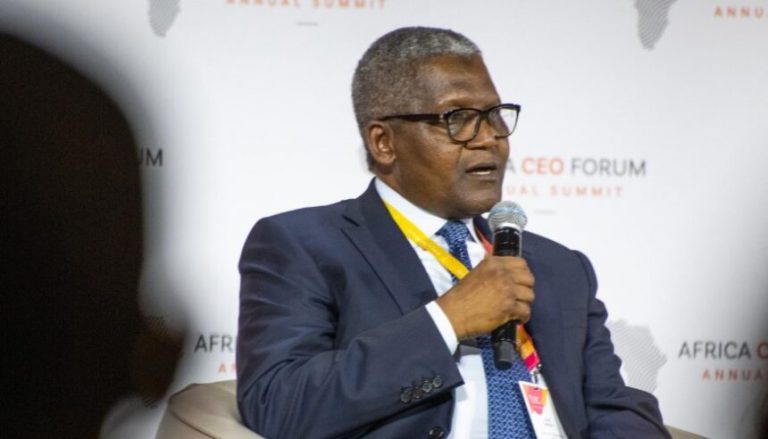
Africa’s richest man, Alhaji Aliko Dangote, has linked the North’s slow economic growth and rising insecurity to decades of policy inconsistency and chronic electricity shortages.
Dangote spoke today during the Arewa Consultative Forum (ACF) 25th anniversary dinner in Kaduna State.
He told the ACF leaders that many promising northern industries collapsed because government policies “kept shifting the goalpost,” eroding investor confidence.
He recalled that Arthur Andersen (now part of KPMG) was commissioned to study why northern textile magnates and other industrialists failed despite strong starts.
The findings, he said, pointed largely to unpredictable government policies and an unreliable power supply.
Dangote disclosed that his group connects to public electricity to public electricity only in South Africa and Ethiopia, because of Nigeria’s unstable grid.
“Without electricity, you cannot have growth, no matter how hard you try,” he warned.
He added that today’s insecurity — banditry, youth joblessness and economic displacement — is a direct consequence of long-standing neglect.
Dangote urged northern leaders to commit to a coherent, long-term economic roadmap anchored on education, industry and agriculture, aligning with the transformation agenda highlighted by the former Vice President Atiku Abubakar.
Atiku stressed that the ACF was conceived not only to foster political harmony, but to drive development in line with the vision of Sir Ahmadu Bello.
He cited the Sardauna’s 1961 priorities — education, agriculture and industrial growth — noting that they remain more urgent today than ever.
He outlined past initiatives such as the Northern Education Project, which exposed the region’s crumbling school system and triggered reforms that boosted enrolment and transition rates.
He also referenced the Northern Development Project, NDP, which sought to rebuild agricultural value chains and address climate-induced productivity challenges.
Yet, he lamented that key obstacles— from energy poverty to multiple taxation — still plague northern industries two decades on.
Business
Dangote: Africa Is Like a ‘Scratch Card’ — Opportunities Are Immense
Dangote’s message, therefore, extends beyond the refinery itself: Africa’s opportunities will remain invisible unless capital is deployed to “scratch” the surface and turn potential into productive assets.
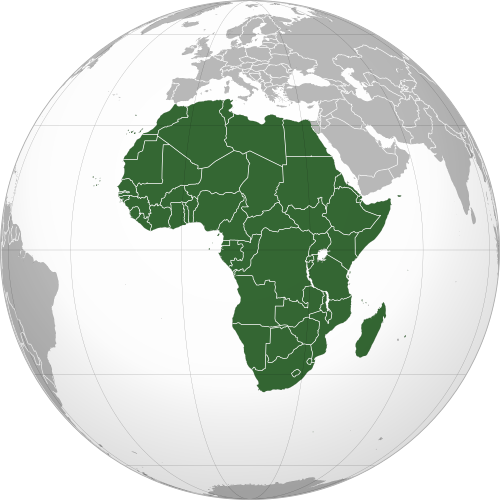
| map of Africa by Wikipedia
By Ochefa
Africa is sitting on enormous economic opportunities that remain largely untapped, President and Chief Executive Officer of Dangote Industries Limited, Alhaji Aliko Dangote, has declared.
Dangote likened the continent to a “scratch card”, saying its vast opportunities would only become visible when Africans and investors take deliberate steps to unlock them.
“Africa is like a scratch card. Unless you scratch it, you don’t see the use of it. The opportunities are immense,” Dangote said.
He spoke in Lagos during the Dangote Petroleum Refinery and Petrochemicals “Facts Behind the Offer” presentation and opening gong ceremony, held to mark the formal opening of the refinery’s Initial Public Offering (IPO) on the Nigerian Exchange Limited (NGX).
The offer comprises 4.1 billion new ordinary shares at ₦525 per share, giving the issue a value of about ₦2.15 trillion, with a minimum subscription of 10 shares valued at ₦5,250. The offer is scheduled to close on October 13, 2026, subject to the terms contained in the prospectus.
Dangote said the group was looking beyond Nigeria as it seeks to expand its industrial footprint across Africa, disclosing plans being explored for the establishment of a refinery in Lamu, Kenya.
The move, he said, reflects the need to build African businesses capable of attracting large-scale international capital while creating greater economic integration across the continent.
According to him, the Dangote Group’s expansion strategy is not simply about building individual businesses, but about creating platforms through which Africans and international investors can participate in the continent’s economic transformation.
“What we are trying to do is to open up the market and make sure that when we open up the market, Africans and non-Africans will join us to have what you call the new Africa rising,” he said.
The refinery IPO represents a major test of Nigeria’s ability to mobilise domestic and international capital behind large-scale industrial projects.
Dangote urged Nigerians and other Africans to seize the opportunity presented by the offer, arguing that the refinery has the potential to become Africa’s largest company by the end of 2026.
His “scratch card” analogy captures the central argument behind the expansion strategy: Africa’s economic potential may be enormous, but unlocking it requires capital, infrastructure, industrial investment and businesses willing to take long-term risks.
For Nigeria, the refinery’s public offering also signals a potentially significant shift in the ownership structure of one of the country’s biggest industrial assets—from a project largely associated with one private investor to an enterprise in which a broader pool of investors can participate.
The development comes as Nigeria seeks to deepen its capital market, retain more domestic savings within the economy and mobilise long-term funding for productive investment.
Dangote’s message, therefore, extends beyond the refinery itself: Africa’s opportunities will remain invisible unless capital is deployed to “scratch” the surface and turn potential into productive assets.

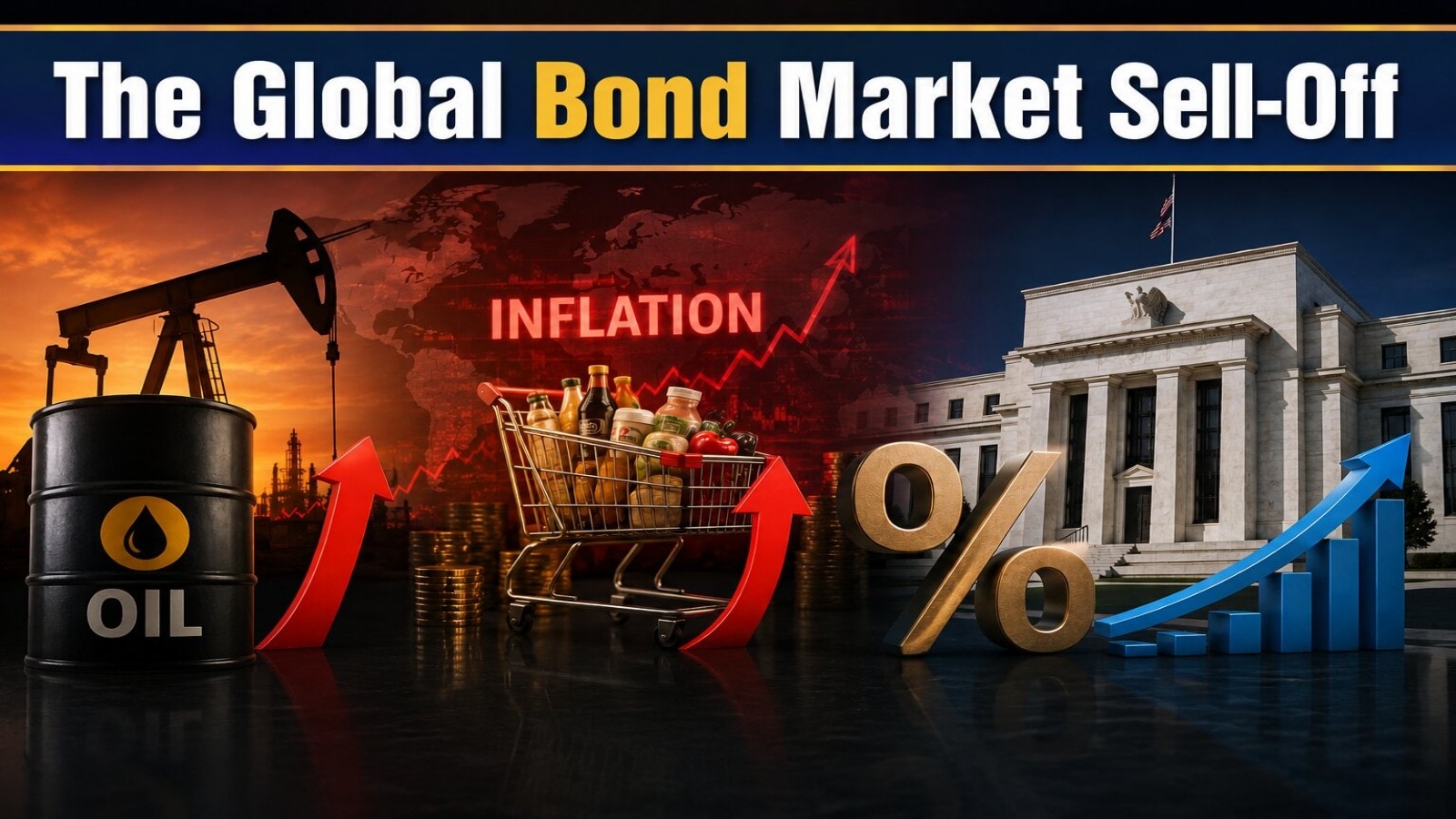
A sharp selloff in the US bond market has driven the benchmark Treasury yield above 5%, sending shockwaves through equity markets and heightening investor anxiety.
The surge in yields, particularly on the 10-year Treasury note, reflects growing concerns over persistent inflation, the outlook for interest rates, and the broader path of monetary policy. As bond prices fell, yields climbed past the psychologically important 5% threshold, marking a significant move that has unsettled risk assets.
US stock markets reacted with broad declines, as higher yields increased the attractiveness of fixed-income investments relative to equities and raised borrowing costs for companies. Major indices came under pressure, with investors reassessing valuations amid the rising cost of capital.
Market analysts note that the rapid move higher in yields has intensified volatility across asset classes. Traders are closely watching upcoming economic data and any signals from the Federal Reserve for clues on whether the upward pressure on yields will persist.
The development underscores the sensitivity of both bond and equity markets to shifting expectations around inflation and monetary policy in the world’s largest economy.
Business
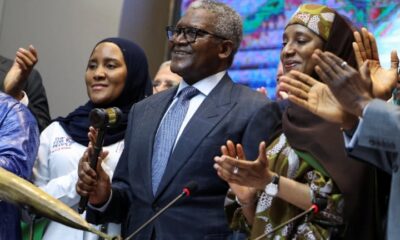
Dangote at IPO Listing, Charges Public,”I don’t want to be called richest man in Africa”
“I don’t want anybody again to call me the richest man in Africa. I want to be called the wealthiest man in Africa so that I can create wealth for others,” he said.
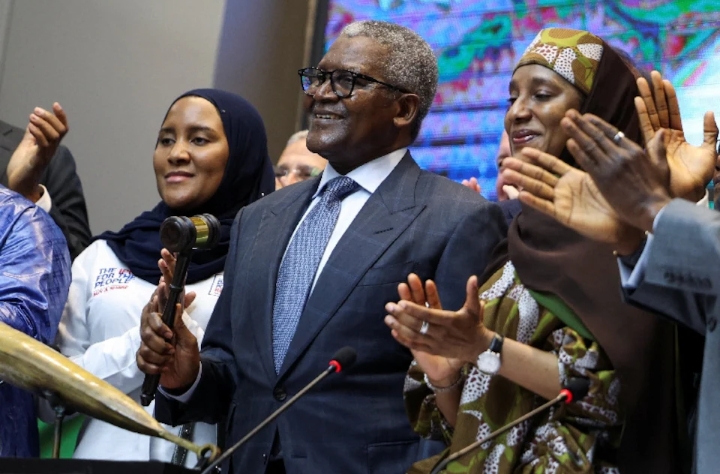
The trading floor of the Nigeria Exchange Limited (NGX) is agog this morning as billionaire industrialist,Aliko Dangote, declared opened trading activities for the day.
“I don’t want anybody again to call me the richest man in Africa. I want to be called the wealthiest man in Africa so that I can create wealth for others,” he said.
Dangote made the remarks on Monday while sounding the gong at the Nigerian Exchange (NGX) in Lagos to formally launch the Initial Public Offering (IPO) of Dangote Petroleum Refinery and Petrochemicals.
The billionaire businessman said the IPO provided an opportunity for investors to participate in what he described as a transformational phase for Nigeria and Africa’s economies.
“Today, we are not merely offering shares. We are offering an opportunity to participate in the transformational chapter of not only Nigeria’s economy, but Africa’s economy,” Dangote said.
He urged Nigerians to deepen the capital market and promote wider ownership of wealth.
“Together, let us deepen our capital market. Together, let us create prosperity through ownership. Together, let us build a stronger Nigeria. Together, let us ensure prosperity for Africa,” he said.


Dangote: Africa Is Like a ‘Scratch Card’ — Opportunities Are Immense

US Bond Selloff Pushes Benchmark Yield Past 5%, Stocks Rattled

Protests Rock Syria Over Sharp Fuel Price Increase

Tech Expert, Zuckerberg trains with UFC champions, Adesanya, Alexander

Organ Trafficking: Ekweremadu bags 10 years in UK prison

SAINT OBI: Between his marriage and his death
-
 News3 days ago
Bamanga Tukur, former Adamawa gov, ex-PDP Chair dies at 90
-
 Business1 day ago
Filling Stations Selling Petrol, Diesel Higher Driven By Global Crude Prices
-
 Business1 day ago
Naira Exchange Rates To Dollar, Pound , Euro… September 14
-
 Business1 day ago
Dangote Refinery’s IPO Officially Opens Today On NGX
-
 Business1 day ago
Dangote at IPO Listing, Charges Public,”I don’t want to be called richest man in Africa”
-
 News6 hours ago
Boko Haram Denies Ceasefire with FG, Vows Continued Attacks
-
 Politics1 day ago
Again, Desmond Elliot begs political mentor,Gbajabiamila , “I’m sorry, Daddy”
-

 News6 hours ago
Police Raise Alarm Over Terrorists and Informants Spying on Schools, Other Targets