
Business
What Happens if You Build on Unregistered Land in Nigeria? By Dennis Isong
In Lagos and other parts of Nigeria, registration is what gives life to land ownership. It’s like having a car without registration papers—you may drive it for a while, but if the authorities stop you, you’ll have questions to answer.

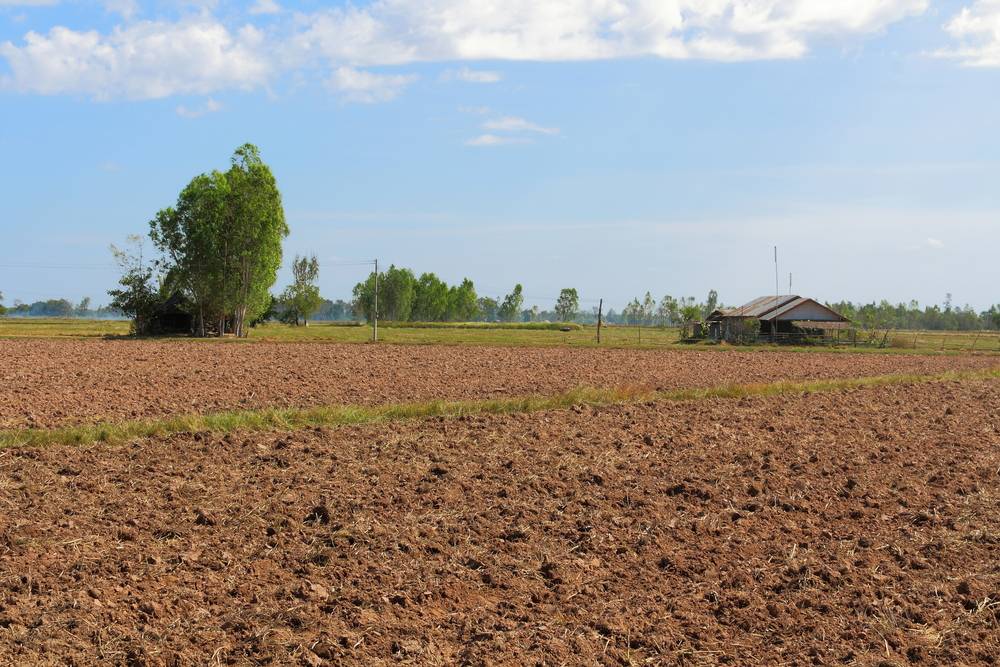
It started with Tunde, a middle-aged man who had finally saved enough to build a small bungalow for his family in Lagos. He bought land through a “family agent,” eager to start construction quickly.
Within months, the foundation was up, walls were rising, and he proudly watched his dream take shape. But one morning, government officials showed up with an order—his building was sitting on unregistered land.
Tunde’s heart sank. Everything he had worked for was suddenly at risk.Tunde’s story is not uncommon in Nigeria. Many people rush into building on land without confirming its legal status.
The result is often heartbreaking—loss of property, endless court cases, or government demolition. So, what happens if you build on unregistered land in Nigeria? Let’s break it down carefully and realistically.
1. Understanding What Unregistered Land Means
Before we talk about what happens if you build on unregistered land in Nigeria, it’s important to understand what unregistered land actually means.
In simple terms, unregistered land is land that has not been formally recorded with the government or does not have an official title document such as a Certificate of Occupancy (C of O), Governor’s Consent, or registered Deed of Assignment.
When land is registered, it means the government recognizes you as the lawful owner.
Your name and the property details are stored in official land registries, making your ownership legally protected.
But if your land is unregistered, your ownership may only be based on informal documents—like receipts, family agreements, or a local survey plan—which are not legally binding in court.
In Lagos and other parts of Nigeria, registration is what gives life to land ownership. It’s like having a car without registration papers—you may drive it for a while, but if the authorities stop you, you’ll have questions to answer.
The same principle applies to land. You may fence it, build on it, and even live there, but if your land is not legally registered, you don’t have full ownership rights.
This is why real estate experts always warn buyers to confirm land titles before paying a dime. Because in Nigeria, owning land and proving ownership are two different things.
2. The Legal Consequences of Building on Unregistered Land
Now, let’s answer the main question—what happens if you build on unregistered land in Nigeria? The legal consequences can be very serious.
When you build on unregistered land, your development is seen as being done without proper authorization.
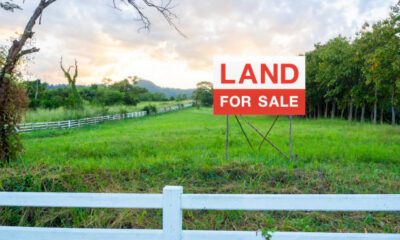
According to the Land Use Act of 1978, all land in each state belongs to the Governor, who holds it in trust for the people.
To legally own or use any land, you must have the Governor’s approval through the Certificate of Occupancy or Governor’s Consent. Without this, your ownership is incomplete in the eyes of the law.
If government officials discover that your land is unregistered, they can issue a “stop-work” order, preventing further construction. In many cases, if the land falls under government acquisition or reserved area, the building may be marked for demolition.
And if the land belongs to another person who has legal registration, you could be charged with trespass, even if you didn’t know.
Imagine spending millions building your dream house only to be told that it stands on land that belongs to someone else—or worse, on land the government has already allocated for a public project.
In such cases, ignorance is not an excuse. The law prioritizes the registered owner.Another hidden danger is that you can’t use unregistered land for financial transactions.
For example, banks will never accept such property as collateral for a loan because it lacks a valid title.
Even selling it later becomes difficult since buyers now demand proper documentation before parting with money.
So, while you may enjoy the land temporarily, the long-term risk is too great. Building on unregistered land in Nigeria can cost you not just your investment but also your peace of mind.
3. The Financial and Emotional Cost of Building Without Proper Registration
There is a painful truth many Nigerians have learned the hard way—building on unregistered land might seem cheaper at first, but in the long run, it is far more expensive.Let’s go back to Tunde’s story.
After the authorities stopped his construction, he tried to regularize his documents.
He soon discovered that the land was under government acquisition, meaning it was never meant for private use.
To reclaim it, he had to go through an expensive and uncertain process called ratification.
That process involved multiple visits to government offices, lawyers’ fees, and months of waiting—with no guarantee of success.
Even if you’re lucky enough that the land can be ratified, the total cost of perfecting the title after building is usually higher than if you had done it before construction.
You might need to pay for survey plans, excision, governor’s consent, and other documentation. Each stage involves money, time, and patience.
Financially, you could also lose everything.
If a legitimate owner appears with registered documents, you’ll have no legal claim to the land.
Nigerian courts rely heavily on documentary evidence, not just physical possession.
So even if you’ve built a house and lived there for years, the registered owner can claim it and even obtain an order to demolish your structure.
Beyond money, there’s the emotional toll. Many families have experienced sleepless nights, endless anxiety, and strained relationships because of land issues.
You can’t enjoy your property when you’re constantly worried about losing it. And in some communities, land disputes can turn violent.
So, the next time someone offers you “cheap land,” pause and ask yourself: Is it registered? Because what looks like a bargain today might become your biggest loss tomorrow.
4. How to Avoid the Trap of Building on Unregistered Land
If you truly want to avoid the painful consequences of building on unregistered land in Nigeria, you must follow due process before laying a single block.The first step is verification.
Always confirm the status of the land with the Ministry of Lands or relevant authorities in the state.
In Lagos, for example, you can conduct a land search at the Alausa Land Registry. This search will show whether the land has a valid title, is under acquisition, or has any disputes.
Second, work with professionals. Engage a registered surveyor, a real estate lawyer, or a trusted realtor who understands the terrain.
They can help you verify documents, identify red flags, and guide you through the legal requirements.Third, insist on seeing original documents before paying for any land. Don’t rely on photocopies or word-of-mouth assurances.
If your land is not under government acquisition, you can apply for ratification or regularization.
This process involves the state government officially approving your ownership and issuing a title document.
Check for the C of O, Deed of Assignment, or Governor’s Consent. And if the land is family-owned, make sure you deal directly with recognized family heads, not self-appointed agents.
Fourth, once you buy the land, register it immediately. Many people delay registration because they want to “build first and register later.”
This is risky.
Once you start construction, you expose yourself to legal issues. Registering your land protects your ownership and gives you the confidence to develop it freely.
Last, remember that due diligence is cheaper than regret. Spending a few weeks verifying land is better than losing years of hard work.
5. What You Should Do If You’ve Already Built on Unregistered Land
Let’s be realistic—many people reading this might already be living on unregistered land.
The good news is that all hope is not lost. There are legal steps you can take to regularize your property, although it depends on the specific situation.
If your land is not under government acquisition, you can apply for ratification or regularization. This process involves the state government officially approving your ownership and issuing a title document.
You’ll need to submit your survey plan, proof of purchase, and other documents. It can take time, but once completed, your land becomes legally recognized.
However, if your land is within a government-acquired area or marked for public use, things get complicated. In such cases, the government may reclaim it without compensation.
But sometimes, depending on the policy and nature of the land, you may be able to apply for excision, which means the government releases a portion of the acquired land for private ownership.
Another option is negotiation. If the land belongs to a private owner with proper documents, you can reach an agreement and purchase the land officially through a fresh Deed of Assignment. It might be costly, but it’s better than losing your investment entirely.
The key is not to ignore the situation. Visit the Ministry of Lands, talk to a property lawyer, and start the regularization process.
The earlier you act, the higher your chances of securing your property legally.Building on unregistered land in Nigeria may seem like an innocent mistake, but the consequences can be devastating.
You risk losing your property, facing legal battles, or spending double the cost trying to fix documentation problems.
The question—What happens if you build on unregistered land in Nigeria?—should not just be a curiosity; it should be a serious warning to every property owner or investor.
Real estate in Nigeria is one of the most profitable investments, but only when done correctly.
Always prioritize legal ownership over quick development. Verify, register, and secure your documents before building.
It’s the only way to truly own your land without fear or uncertainty.So, learn from Tunde’s story. Don’t rush the process.
A dream home built on shaky legal ground can easily become a nightmare. But with proper guidance, patience, and professional help, you can own property in Nigeria safely and confidently.
Dennis Isong is a TOP REALTOR IN LAGOS.
He Helps Nigerians in Diaspora to Own Property In Lagos Nigeria STRESS-FREE. For Questions WhatsApp/Call +2348164741041








Business
Oil price jumps to $106, stocks drop on uncertainty over US-Iran talks
Crude prices rallied more than three percent on Thursday, with Brent crude above $106 per barrel and WTI around $93.


Oil prices jumped and equities slid Thursday as hopes for a peace deal between the US and Iran wavered after Tehran rejected Washington’s bid to wind down the nearly four-week war.
Markets had been buoyed this week by US President Donald Trump’s announcement that strikes targeting Iran’s energy infrastructure would be postponed, adding that the two sides were in peace talks.
But uncertainty over the talks and the virtual closure of the Strait of Hormuz — through which around 20 percent of oil and liquefied natural gas passes — have cast a shadow over market sentiment.
“The market rollercoaster continues,” said Joshua Mahony, chief market analyst at Scope Markets.
Crude prices rallied more than three percent on Thursday, with Brent crude above $106 per barrel and WTI around $93.
( VANGUARD)
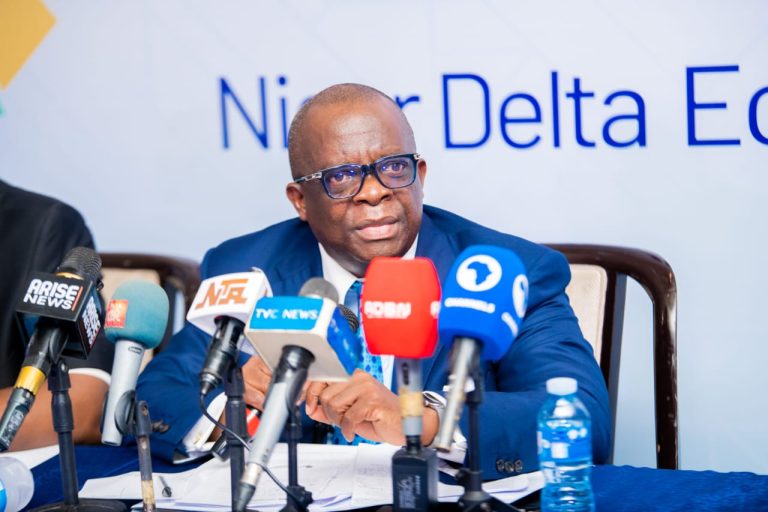
Photo: Ambassador Idaere Gogo Ogan
The Niger Delta Chamber of Commerce, Industry, Trade, Mines and Agriculture (NDCCITMA) has unveiled plans to attract up to five billion dollars structured investments to the oil-producing region in five years.
The Chairman of NDCCITMA, Ambassador Idaere Gogo Ogan, made the disclosure at a pre-summit conference ahead of the Niger Delta Economic and Investment Summit in Port Harcourt, Rivers State.
He said that the initiative would catalyse no fewer than 500,000 direct and indirect jobs as well as spur investments and create wealth.
He said the summit with the theme, “Driving Investment, Innovation, and Industrial Growth in the Niger Delta”, slated for Port Harcourt, would deliberate on investment mobilisation, enterprise growth, industrial expansion, and regional coordination.
Business
Dangote: Middle East crisis might take us back to ‘Work from home’ COVID era
In some countries today, what they’ve done is ask everybody to work from home because they cannot afford it.“I think in Indonesia, they only go to work four days a week.

The President of the Dangote Group, Aliko Dangote, has expressed concerns about the ongoing Middle East crisis taking many countries back to the COVID19 era’s work from home.
Dangote stated this on Monday, after a meeting with President Bola Ahmed Tinubu at his residence in Lagos.
While expressing concern about the economic impact of oil price uncertainty, Africa’s Richest man noted that Nigeria and other African countries might be forced to start working from home, just like the COVID19 era.
Dangote called for prayers and international intervention to end the conflict which has affected the price of fuel and other energy sources in the country.
He said, “In some countries today, what they’ve done is ask everybody to work from home because they cannot afford it.“I think in Indonesia, they only go to work four days a week. And they will look at the situation. If it doesn’t improve, they will ask everybody not to go to work anymore. We will do like that time of COVID, where people will now go and work from home,” Dangote said.
It’s not only energy. Some people will try to take a chance and say, ‘Ah, this is an opportunity. So, let me make money. So, if this thing doesn’t de-escalate, it is going to keep going up and governments cannot really now go and add salaries also. So, people will really feel the pinch,” he said.
Dangote explained that the crisis would hit hardest at ordinary Africans operating small businesses, “People who are barbers, people who are doing bread, people who have industries who have to pay their own generator, I mean, you can see what is happening,” he said.


El-Rufai’ loses mother, Hajiya Umma

Kano Deputy Governor Resigns

Abia State Holds State Burial for Renowned Evangelist Rev. Dr. Uma Ukpai

Tech Expert, Zuckerberg trains with UFC champions, Adesanya, Alexander

Organ Trafficking: Ekweremadu bags 10 years in UK prison

SAINT OBI: Between his marriage and his death
-
 Sports3 days ago
Tributes To NRA President Sanni Zubairu
-

 Sports3 days ago
Int’l friendlies: 15 players open Eagles camp in Turkey
-

 Sports3 days ago
NBF Kida’s board to remain in office until October , says FIBA
-
 Business3 days ago
Dangote: Middle East crisis might take us back to ‘Work from home’ COVID era
-

 Sports3 days ago
Mohamed Salah quitting Liverpool after nine historic years
-
 News3 days ago
Nigeria partner Japan to redevelop Abuja Master Plan
-
 Business3 days ago
Niger Delta Chamber Investment Summit Targets $5bn, 500,000 Jobs
-
 Politics3 days ago
2027: Labour Party says Presidential flag bearer must be a southerner