
Business
Police Burst Factories in Anambra for Destroying Returnable Packaging Materials
These Returnable Packaging Materials (RPMs) are company-owned assets designed for multiple reuse cycles and form a critical part of their sustainability, cost-efficiency, and product quality systems. It’s a criminal activity to destroy them.


The Nigeria Police Force, in collaboration with Beverage manufacturers, stormed a number of illegal sites in Onitsha, Anambra State, and its environs, and apprehended some persons for destroying returnable packaging materials, including glass bottles and plastic crates belonging to various beverage manufacturing companies.
The Director -General of Manufacturers Association of Nigeria, Mr. Segun Ajayi-Kadir, explained that the police, working with member companies, acted on credible intelligence and stormed the factories to crack down on illegal disposal, theft, and unauthorised recycling of the returnable packaging materials of the affected companies, notably returnable glass bottles and plastic crates.
Mr. Ajayi-Kadir noted that the association was alerted by its members that owners of these untoward factories were involved in destroying returnable packaging materials for reuse, thereby causing the businesses to lose millions of naira in investments.
He stated that the group had engaged relevant security and regulatory authorities through formal petitions and intelligence-sharing, seeking lawful intervention to curb the illegal practices, recover company assets, and dismantle unauthorised recycling operations.
According to him, member companies identified multiple illegal locations in the South-East where they crush our bottles and crates for resale as raw materials.
He added that investigations by the police had revealed that significant quantities were being diverted from legitimate channels into informal recycling networks.
He also disclosed that, in several instances, reusable bottles were deliberately broken and crates were intentionally shredded for sale as raw materials, undermining the beverage companies’ circular packaging model.
“The recent raid is the outcome of sustained engagements and intelligence-led investigations and represents a decisive step by authorities to protect legitimate business operations, uphold environmental standards, and deter further illegal activity”, he said.
He described the act as criminal and a serious economic sabotage, noting that these assets remain the property of beverage companies that have invested heavily in these sustainable packaging materials to protect the environment.
He warned those involved in the act to desist, as the Association will continue to collaborate with law enforcement agencies to ensure that offenders are held liable and made to face the wrath of the law.
He stressed further that, beyond the asset loss, the activities of these individuals pose significant risks to businesses, including supply chain disruptions, increased operational costs, environmental risks arising from unsafe recycling practices, and threats to public safety.
“These Returnable Packaging Materials (RPMs) are company-owned assets designed for multiple reuse cycles and form a critical part of their sustainability, cost-efficiency, and product quality systems. It’s a criminal activity to destroy them”, he added.
He urged the relevant government agencies to move against the illegal destruction and diversion of returnable packaging material outside the value chain and encouraged the public to remain vigilant and report any suspicious activity of this nature to the police or call the consumer care lines of the beverage companies.
Over the years, beverage companies have been contending with a sustained challenge involving illegal disposal, theft, and unauthorised recycling of their returnable packaging materials.
Business
WEF could appoint Lagarde as its next chair, sources say
The WEF’s Board of Trustees, which includes Lagarde herself, was due to meet on November 2 and could elect her as its next chair, said the people close to the organisation, who spoke on condition of anonymity due to the sensitivity of the matter.

•European Central Bank President Christine Lagarde
The World Economic Forum could appoint Christine Lagarde as its next chair as soon as next month, four people close to the organisation told Reuters, meaning she would step down early as European Central Bank chief and trigger a wider reshuffle at the top of the ECB.Lagarde’s ECB term is scheduled to end in October 2027.
Leaving early would give European Union leaders a chance to pick a new ECB President before France’s spring presidential election, which opinion polls suggest the far-right could win, and could pave the way for a deal involving two other senior ECB roles.
The WEF’s Board of Trustees, which includes Lagarde herself, was due to meet on November 2 and could elect her as its next chair, said the people close to the organisation, who spoke on condition of anonymity due to the sensitivity of the matter.
No final decision has been taken yet, they said.
A spokesperson for the WEF said the forum could not confirm when the next full Board of Trustees meeting would take place, but that the aim was to hold one before the end of the year.
Business
Germany plans tax on sugary drinks
The tax is expected to generate additional revenue for the federal government of €690 million in 2027 and €925 million in 2028.
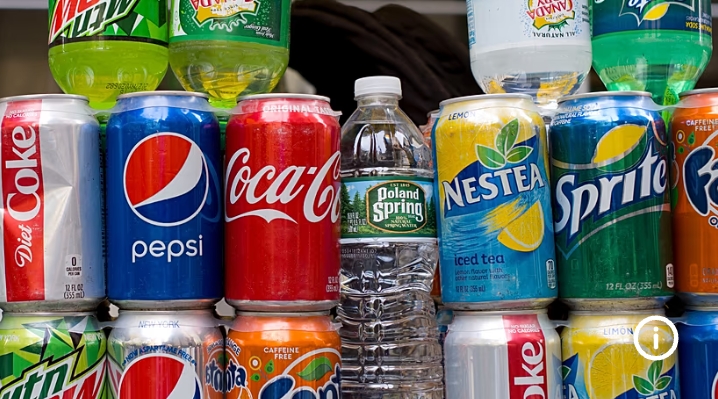
The German cabinet has approved draft legislation to tax sugary drinks in Europe’s biggest economy.
If passed by the German Bundestag, the tax will take effect on 1 July 2027.
The coalition aims to raise revenue for the federal budget while encouraging manufacturers to reduce sugar content and offer healthier products.
The levy is intended to ease pressure on the healthcare system, which faces costs of more than €2 billion every year linked to the high consumption of sugary drinks, which contributes to obesity, diabetes and tooth decay.
According to the federal government, Berlin is using the tax to implement “what associations from the fields of health, science, child protection, and consumer protection have long been demanding.”
The tax is expected to generate additional revenue for the federal government of €690 million in 2027 and €925 million in 2028.

BLACK (PARALLEL) MARKET RATES
₦1370 DOLLAR (USD
₦1800 POUND (GBP)
₦1500 EURO (EUR)
₦970 CANADIAN DOLLAR (CAD)
₦65 SOUTH AFRICAN RAND (ZAR)
₦350 UAE DIRHAM (AED)
₦190YUAN (CNY)
₦2300CFA F.(XOF)
₦2200CFA F.(XAF)
₦850AUSSIE (AUD)SELL₦1000
Official CBN Exchange Rates
DOLLAR (USD)₦1332.59
POUND (GBP)₦1765.55
EURO (EUR)₦1491.57
SWISS FRANC (CHF)₦1590.77
JAPANESE YEN (JPN)₦8.39
CFA FRANC (XOF)₦2.27
WEST AFRICAN UNIT OF ACCOUNT (WAUA)₦1802.33
CHINESE YUAN (CNY)₦199.10
SAUDI RIYAL (SAR)₦354.92
SOUTH AFRICAN RAND (ZAR)₦80.37


BREAKING: Explosion Rocks Rivers, Many Rushed to Hospital

“Mother of all bombs,” Trump Plans To Hit Iran

WEF could appoint Lagarde as its next chair, sources say

Tech Expert, Zuckerberg trains with UFC champions, Adesanya, Alexander

BREAKING: Lagos Govt Declares Today, Thursday Work-Free to Mark 2026 Ìṣẹ̀ṣe Day

Organ Trafficking: Ekweremadu bags 10 years in UK prison
-

 Business3 days ago
Dangote Refinery IPO Attracts N8.61trn in Subscriptions, Four Times Offer
-
Business3 days ago
Top 10 Highest-Paid CEOs in Nigeria
-

 Business3 days ago
Naira Exchange Rates To Dollar , Pound ,Euro, … Tuesday, October 13
-

 Business3 days ago
Global smartphone shipments fall 20% in Q3 2026, lowest in 14 years
-

 International3 days ago
Child marriage in southern Germany: Over 350 cases recorded, some brides as young as 11
-
Sports3 days ago
Rwanda to host F1’s first race in Africa since 1993
-

 News3 days ago
Nigeria, AfDB Agree Portfolio Review (Photos)
-
 News2 days ago
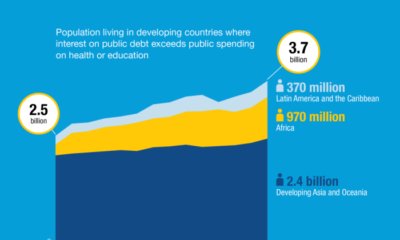
UNCTAD Warns Debt Burden Threatens Future of 3.7bn People