
International
US Imposes 50% Tariffs on India Over Russian Oil Imports

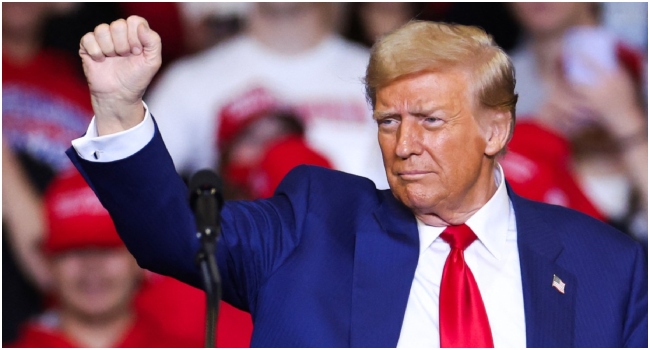
US tariffs of 50 per cent took effect on Wednesday on many Indian products, doubling an existing duty as President Donald Trump sought to punish New Delhi for buying Russian oil.
India has criticised the levies as “unfair, unjustified and unreasonable”, with its export body calling on Wednesday for government intervention to assuage fears of heavy job cuts.
Trump has raised pressure on India over the energy transactions, a key source of revenue for Moscow’s war in Ukraine, as part of a campaign to end the conflict.
The latest salvo strains US-India ties, giving New Delhi fresh incentive to improve relations with Beijing.
While Trump has slapped fresh duties on allies and competitors alike since returning to the presidency in January, this 50-per cent level is among the highest that US trading partners face.
Crucially, however, exemptions remain for sectors that could be hit with separate levies — such as pharmaceuticals, computer chips and smartphones.
Industries that have already been singled out, such as steel, aluminium and automobiles, are similarly spared these countrywide levies.
The United States was India’s top export destination in 2024, with shipments worth $87.3 billion.
But analysts have cautioned that a 50-per cent duty is akin to a trade embargo and is likely to harm smaller firms.
Exporters of textiles, seafood and jewellery were already reporting cancelled US orders and losses to rivals such as Bangladesh and Vietnam, raising fears of heavy job cuts.
Ajay Sahai, director general of the Federation of Indian Export Organisations, called for “liquidity support from the government”.
“We want to ensure that even if business stops, we are able to keep workers on the payroll”, he told AFP, saying they were “still optimistic” for trade negotiations.
– ‘Eroded trust’ –
The world’s fifth-largest economy is looking to cushion the blow, with Prime Minister Narendra Modi promising to lower the tax burden on citizens during an annual speech to mark India’s independence.
Modi earlier vowed self-reliance, pledging to defend his country’s interests.
The foreign ministry previously said India had begun importing oil from Russia as traditional supplies were diverted to Europe over Russia’s invasion of Ukraine.
It noted that Washington actively encouraged such imports at the time to strengthen stability in the global energy market.
Russia accounted for nearly 36 percent of India’s total crude oil imports in 2024. Buying Russian oil saved India billions of dollars on import costs, keeping domestic fuel prices relatively stable.
But the Trump administration held firm on its tariff plans in the lead-up to Wednesday’s deadline.
Trump’s trade adviser Peter Navarro told reporters last week that “India doesn’t appear to want to recognise its role in the bloodshed.”
“It’s cozying up to Xi Jinping,” Navarro added, referring to the Chinese president.
Wendy Cutler, from the Asia Society Policy Institute, said India had moved from being “a promising candidate for an early trade deal to a nation facing among the highest tariffs”
Cutler, a former US trade official, said the “high tariffs have quickly eroded trust between the two countries, which could take years to rebuild.
Trump has used tariffs as a tool for addressing everything from what Washington deems as unfair trade practices to trade imbalances.
US trade deficits were a key justification behind his higher duties on dozens of economies taking effect in early August — hitting partners from the European Union to Indonesia.
But the 79-year-old Republican has also taken aim at specific countries such as Brazil over the trial of its former president Jair Bolsonaro, who is accused of plotting a coup.
US tariffs on many Brazilian goods surged to 50 per cent this month, but with broad exemptions.
AFP








International
Iran reopens Strait of Hormuz following two-week cease-fire agreement with Trump
Pakistan, which has mediated between Tehran and Washington, said that an immediate ceasefire between Iran and the US had taken effect.

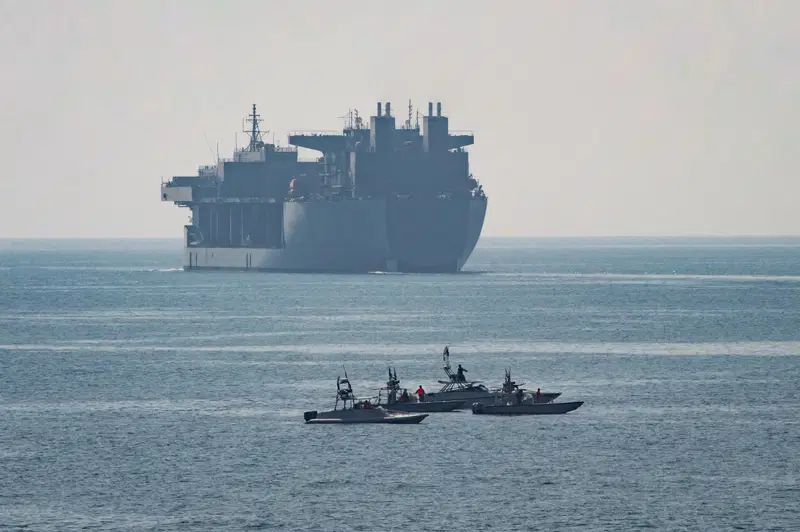
Iranian Foreign Minister Abbas Araghchi said safe passage through the Strait of Hormuz would be possible for two weeks in coordination with Iran’s armed forces “and with due consideration of technical limitations.”
The development follows a two-week ceasefire announced by U.S. President Donald Trump, the Tasnim news agency, which is close to the Islamic Revolutionary Guard Corps (IRGC), reported early on Wednesday.
Pakistan, which has mediated between Tehran and Washington, said that an immediate ceasefire between Iran and the US had taken effect.
Prime Minister Shehbaz Sharif wrote on X that the Islamic Republic of Iran and the U.S., along with their allies, had agreed to an “immediate ceasefire everywhere,” including in Lebanon.“
Trump had made reopening the waterway a condition for the ceasefire and had threatened to target Iran’s energy sector and infrastructure, including bridges, if Tehran failed to comply, setting a deadline of 0000 GMT.
The Strait of Hormuz, crucial to global oil and gas trade, has been largely closed since the United States and Israel launched large-scale attacks on Iran on Feb. 28.
According to a senior U.S. official, Israel will also adhere to what Trump described as a “double sided CEASEFIRE.”
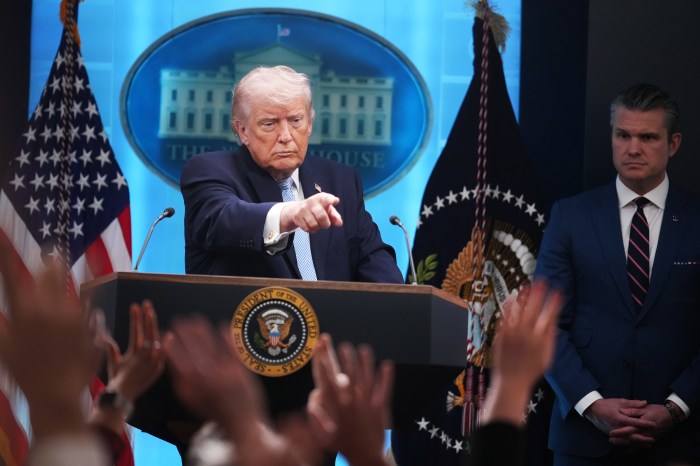
Oil prices climbed sharply while global stocks wavered and mostly declined on Tuesday as President Donald Trump’s looming deadline for Iran to reopen the Strait of Hormuz or face escalated U.S. strikes heightened geopolitical tensions and investor anxiety.
Brent crude futures rose about 1% to trade near $111 per barrel, with U.S. West Texas Intermediate crude also pushing higher amid fears that prolonged disruption to the critical waterway through which a significant portion of global oil supplies passes could worsen energy shortages. Oil has surged more than 50% since the conflict intensified.
Meanwhile, major U.S. stock indexes showed mixed but largely cautious trading, with many shares slipping as investors weighed the risk of further military escalation, including potential strikes on Iranian power plants and infrastructure.
European and Asian markets were similarly tentative, reflecting broader concerns over inflation, energy costs, and economic fallout from the ongoing Middle East conflict.
Trump has set a firm deadline of 8 p.m. ET Tuesday (1 a.m. GMT Wednesday) for Iran to reach a deal and reopen the strait, warning of decisive action if unmet. He has threatened to “decimate” Iranian bridges and power plants, stating the country “could be taken out in one night.
”Iran has rejected recent ceasefire proposals, calling instead for a permanent end to hostilities, while markets remain on edge with no clear resolution in sight.
Analysts warn that sustained high oil prices could fuel global inflation and slow economic growth, though some investors still hope for a last-minute diplomatic breakthrough.
The developments come as the International Energy Agency has described the current oil and gas crisis linked to the Hormuz blockade as potentially more severe than previous major shocks combined.
International
Trump warns Entire Iran could be ‘taken out’ Tuesday night
” The entire country could be taken out in one night, and that night might be Tuesday night,” he said.
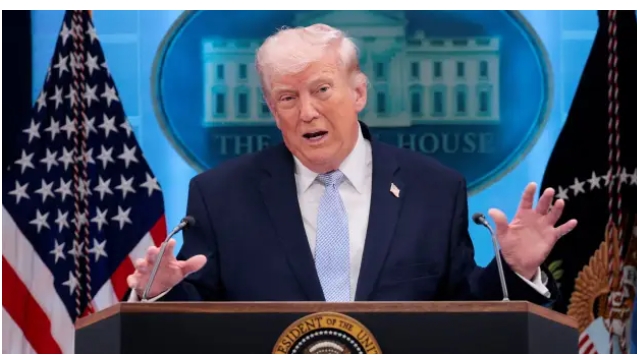
US President Donald Trump says Iran could be “taken out” in one night as the deadline set for the country to open the Strait of Hormuz to shipping traffic approaches.
On Saturday, Trump gave Iran 48 hours to comply or risk facing “hell”.
He later threatened that the US would blow up Iran’s power plants and bridges if Tehran failed to adhere to his warning.
The US president said Iran had until Tuesday at 8 p.m. ET (1 am WAT) to make a deal.
In a press conference on Monday, Trump reiterated and intensified his threats.
“The entire country could be taken out in one night, and that night might be Tuesday night,” he said.


Gunmen Kill Traditional Ruler, Four Others in Imo State, Set Bodies Ablaze

Ex-senatorial candidate jailed 10 yrs for selling petrol to Boko Haram

Breaking: INEC postpones voter revalidation exercise till after 2027 elections

Tech Expert, Zuckerberg trains with UFC champions, Adesanya, Alexander

Organ Trafficking: Ekweremadu bags 10 years in UK prison

SAINT OBI: Between his marriage and his death
-
 News1 day ago
CBN Debunks Viral Fake News of ₦5,000 Banknote Featuring President Tinubu’s Image
-
 News2 days ago
INEC releases updated voters registration figure nationwide
-
 Crime2 days ago
Tinubu Mourns Soldiers Killed in Benisheikh Terror Attack
-
 News2 days ago
US Declares 23 Nigerian States High-Risk for Citizens
-
 Business1 day ago
DR Congo Central Bank Announces Ban on Foreign Currency Cash Transactions from 2027
-
 Politics1 day ago
2027: Bode George warns INEC, Judiciary Drifting Nigeria Towards ” One Party Rule”
-

 News2 days ago
Police Debunk Viral “Terror Attack” Video in Abuja, Launch Investigation
-

 Business23 hours ago
Supreme Court Overturns Appellate’s Ruling on $2bn Debt Recovery Battles Nestoil /Neconde Energy vs FBNQuest Merchant Bank