
News
The Importance of Ember Months in Nigeria’s Real Estate Sector

By Dennis Isong
Ember months refers to the last four months of the year: September, October, November, and December.
These months hold significant importance across various sectors of the Nigerian economy, and the real estate industry is no exception.
The ember months bring about a unique set of circumstances and opportunities that can greatly impact the property market.
This article explores why these months are crucial for Nigeria’s real estate sector and how they influence market dynamics.
- Increased Economic Activity
The ember months in Nigeria are characterized by a surge in economic activity. As the year draws to a close, businesses strive to meet annual targets, and government agencies work to utilize their budgets before the fiscal year ends. This increased economic activity often translates to more money circulating in the economy, which can have a positive impact on the real estate market.
Higher disposable income: Many companies distribute year-end bonuses during this period, increasing the purchasing power of potential property buyers.
Business expansion: Some businesses may look to expand or relocate, leading to increased demand for commercial real estate.
- Diaspora Influence
The ember months coincide with the holiday season, during which many Nigerians living abroad return home to visit family and friends. This influx of diaspora Nigerians has a significant impact on the real estate market:
Investment opportunities: Many in the diaspora see this time as an opportunity to invest in property back home, either for personal use or as an investment.
Increased demand: The temporary surge in population can drive up demand for short-term rentals and potentially influence long-term property values.
Foreign currency injection: Diaspora Nigerians often bring in foreign currency, which can provide a boost to the real estate market, especially in a country where the local currency may be experiencing fluctuations.
- Cultural and Social Factors
Nigerian culture places a strong emphasis on homeownership, and the ember months often amplify this desire:
Status symbol: Owning a home by the end of the year is seen as a significant achievement, motivating many to make property purchases during this period.
Family gatherings: The holiday season prompts many to consider upgrading their living spaces to accommodate family gatherings and celebrations.
- Weather Conditions
The ember months in Nigeria typically mark the end of the rainy season and the beginning of the dry season. This transition in weather patterns can impact real estate activities:
Construction Boost: The dry weather allows for increased construction activity, potentially leading to more properties entering the market.
Property viewing: Improved weather conditions make it easier for potential buyers to view properties and for real estate agents to conduct site visits.
- Year-End Goals and New Year Resolutions
As the year comes to a close, many individuals and businesses reflect on their achievements and set new goals:
Investment decisions: People may choose to invest in real estate as a way to meet financial goals or diversify their portfolios before the year ends.
New Year preparations: Some may aim to secure new living or working spaces in preparation for the coming year, driving up demand in the real estate market.
- Government Policies and Budgets
The ember months often see increased government spending and policy implementation:
Infrastructure development: Governments may rush to complete infrastructure projects before the year’s end, potentially increasing the value of properties in certain areas.
Policy changes: Any new real estate policies or regulations slated for the new year may influence buying and selling decisions in the ember months.
- Stock-taking and Portfolio Restructuring
The approach of the year’s end prompts many investors to reassess their portfolios:
Property disposal: Some investors may decide to sell properties to balance their portfolios or generate liquidity.
Acquisition opportunities: Others may look to acquire new properties to strengthen their real estate holdings.
- Increased Rental Activity
The ember months can see a spike in rental activity:
Corporate rentals: Businesses may seek new office spaces or renew leases for the coming year.
Residential moves: Families or individuals may look to move to new rental properties before the new year begins.
- Emerging Real Estate Hotspots
During the ember months, it’s crucial to pay attention to emerging real estate hotspots:
Satellite Towns: Areas like Ibeju-Lekki in Lagos or Kubwa in Abuja are experiencing rapid development.
Tech Hubs: Locations near growing tech clusters, such as Yaba in Lagos, are becoming increasingly attractive.
New Cities: Planned urban developments like Eko Atlantic City offer unique investment opportunities.
- Types of Properties to Consider
Different property types may offer varying advantages during the ember months:
Residential Properties: High demand for housing during holiday visits makes this a prime option.
Commercial Real Estate: Office spaces and retail outlets can be good investments as businesses plan for the new year.
Land: Undeveloped land in growing areas can offer long-term appreciation potential.
- Leveraging Technology for Remote Transactions
For diaspora investors unable to visit Nigeria:
Virtual Tours: Many real estate agencies now offer virtual property tours.
Digital Documentation: Explore options for digital contract signing and online payment systems.
Real-Time Communication: Utilize video calls for real-time property inspections with local agents.
- Understanding Local Regulations
It’s crucial to be aware of recent changes in real estate regulations:
Land Use Act: Familiarize yourself with the implications of the Land Use Act on property ownership.
Foreign Ownership Laws: Understand any restrictions or requirements for diaspora Nigerians investing in property.
Tax Implications: Research recent changes in property taxes or capital gains taxes that might affect your investment.
During this period, heightened market activity and the availability of potential deals create attractive investment opportunities.
- Financing Options for Diaspora Investors
Explore various financing methods tailored for diaspora investors:
Diaspora Mortgages: Some Nigerian banks offer mortgage products specifically for Nigerians living abroad.
International Money Transfers: Research the most cost-effective ways to transfer large sums for property purchases.
Joint Ventures: Consider partnering with local investors or family members for shared investments.
- Risk Mitigation Strategies
Investing during the ember months doesn’t come without risks. Consider these mitigation strategies:
Due Diligence: Thoroughly research property titles and ownership history.
Legal Representation: Engage a reputable local lawyer to oversee transactions.
- Long-term Investment Strategies
Think beyond the immediate purchase:
Rental Income: Consider properties with strong rental potential for steady income.
Property Management: Research reputable property management companies if you plan to rent out your investment.
Exit Strategies: Have a clear plan for how you might eventually sell or pass on the property.
The ember months provide a distinct set of circumstances that make them an ideal time for diaspora Nigerians to invest in real estate back home.
During this period, heightened market activity and the availability of potential deals create attractive investment opportunities. Additionally, the chance for personal property inspections and the ability to tap into cultural connections further enhance the appeal.
However, successful investment requires thorough research, professional advice, and a well-defined long-term plan.
By staying attuned to local market trends, utilizing technology, and being aware of relevant regulations, diaspora Nigerians can make informed and profitable real estate investments in Nigeria during this dynamic time of year.
▪︎For personalized assistance with property needs in Ojo or other parts of Lagos, interested individuals, particularly Nigerians in the diaspora looking to invest in property back home, can contact Dennis Isong, a top Lagos realtor specializing in helping Nigerians in the diaspora own property stress-free. I can be reached at +2348164741041.










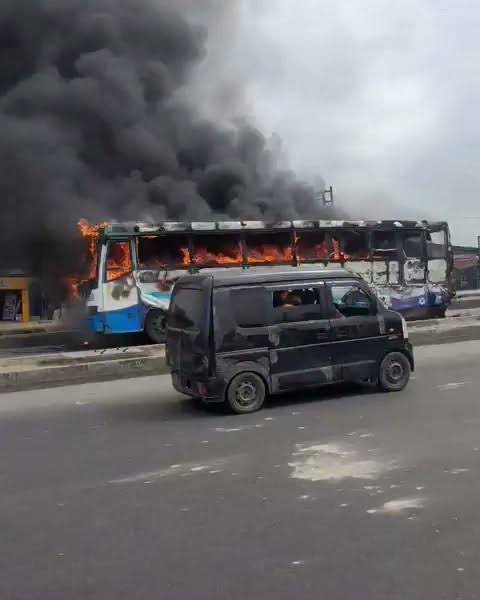
An angry mob has set a Bus Rapid Transit (BRT) bus on fire after it reportedly crushed a commercial motorcyclist to death at Ogolonto Bus Stop along Ikorodu Road in Lagos State.
The incident occurred on Friday, October 16, 2026. Eyewitness accounts and social media reports indicate that the motorcyclist was riding alone along the restricted BRT lane when the collision happened. He died at the scene.
Enraged residents and youths then attacked the bus driver and set the vehicle ablaze. Police officers and officials of the Lagos Neighbourhood Safety Corps (LNSC), who were nearby, intervened promptly and rescued the driver unharmed.
The identity of the deceased motorcyclist and the exact circumstances of the crash had not been officially confirmed at the time of filing this report. It was also unclear whether any arrests had been made in connection with the burning of the bus.
News
ARISE News Wins Seven Honours At Nigerian Broadcasters Merit Awards
The awards recognised the network’s achievements in television journalism and programming, with ARISE News winning the Best TV Channel (Viewer’s Choice) category.


• ARISE News Anchor and host of What’s Trending Ojy Okpe was named Best Newscaster (TV – Female)
ARISE News has emerged as one of the major winners at the just ended Nigerian Broadcasters Merit Awards (NBMA).
ARISE News won seven honours across television broadcasting, news reporting, presentation and production during the ceremony.
The awards recognised the network’s achievements in television journalism and programming, with ARISE News winning the Best TV Channel (Viewer’s Choice) category.
The network’s flagship breakfast programme, The Morning Show, also won the Best TV Talk Show award, further strengthening its recognition in television broadcasting.
ARISE News Anchor and host of What’s Trending Ojy Okpe was named Best Newscaster (TV – Female).
Rufai Oseni was named Nigerian Broadcaster of the Year (Male), while Vimbai Mutinhiri-Ekpeyong received the Nigerian Broadcaster of the Year (Female) award.
The recognition extended to the network’s newsroom, with Ovieteme George winning Best TV News Reporter (Male) for his contributions to television news reporting.
Behind the camera, Sam Adeyemi received the Best Camera Operator/Cinematographer award, recognising his work in television production and visual storytelling.
News
Meta removes 3.7 million accounts in West Africa scam crackdown
The joint operation led to 28 arrests, identified more than 30 suspected scam centres and rescued 117 people allegedly trafficked and forced to work in scam compounds in Ghana.
Meta, the parent company of Facebook and Instagram, has removed more than 3.7 million Facebook and Instagram accounts, pages and groups linked to suspected scam networks operating in West Africa.
The joint operation led to 28 arrests, identified more than 30 suspected scam centres and rescued 117 people allegedly trafficked and forced to work in scam compounds in Ghana.
The company announced the crackdown in a statement on Tuesday, October 13, 2026. It involved 14 technology companies and law enforcement agencies from 10 countries.
The United Kingdom’s National Crime Agency coordinated the operation with the US Department of Justice, the Federal Bureau of Investigation and other agencies. Nigerian authorities were involved.
Other countries included Ghana, Australia, Canada, New Zealand and India.Tech companies that took part included Google, Microsoft, OpenAI, Coinbase, Starlink and Adobe.
Meta said the partnership let participants share intelligence across digital platforms, countries and financial systems to identify criminal networks.


JUST IN: Mob Sets BRT Bus Ablaze After Motorcyclist’s Death in Lagos

BREAKING: DSS Arrests Fugitive Maina Son, Hands Him to EFCC

BREAKING: 5 Arrested Over Imo NYSC Abduction

BREAKING: Lagos Govt Declares Today, Thursday Work-Free to Mark 2026 Ìṣẹ̀ṣe Day

Tech Expert, Zuckerberg trains with UFC champions, Adesanya, Alexander

Organ Trafficking: Ekweremadu bags 10 years in UK prison
-
 Business3 days ago
Naira Exchange Rates For Thursday, October 15
-
 Sports3 days ago
CAF Increases Annual Funding for Member Federations to $700,000
-
 News3 days ago
ASCON To Be Rebranded “National School Of Government”
-

 Business2 days ago
Germany plans tax on sugary drinks
-
 Business2 days ago
WEF could appoint Lagarde as its next chair, sources say
-

 International2 days ago
“Mother of all bombs,” Trump Plans To Hit Iran
-

 Business2 days ago
Naira Exchange Rates Friday, October 16
-
 Crime1 day ago
BREAKING: 5 Arrested Over Imo NYSC Abduction