
Business
South Korea unveils AI Humans


South Korea Pulse9 has created digital humans for some of South Korea’s largest conglomerates, including Shinsegae, with research indicating the global market for such life-like creations could reach $527 billion by 2030.
In South Korea, AI humans have enrolled as students at universities, interned at major companies, and appear regularly on live television driving sellouts of products from food to luxury handbags.
Her face is a deep fake. Her body belongs to a team of similar-sized actors. But she sings, reads the news, and sells luxury clothes on TV as AI humans go mainstream in South Korea.
Meet Zaein, one of South Korea’s most active virtual humans, who was created by Pulse9, an artificial intelligence company that is working to bring corporate dreams of the perfect employee to life.
But Pulse9 says this is only the beginning. They are “working on developing the technology to broaden AI human use”, Park Ji-eun, the company’s CEO, told AFP.
“Virtual humans are basically capable of carrying out much of what real people do,” she said, adding that the current level of AI technology means humans are still needed – for now.
The demand for AI humans in South Korea was initially driven by the K-pop industry, with the idea of a virtual idol – not prone to scandals and able to work 24/7 – proving popular with the country’s notoriously hard-driving music agencies.
But now, Pulse9 is “expanding their roles in society to show that these virtual humans aren’t just fantasy idols but can coexist with humans as colleagues and friends”, Park said.
– K-pop face –
Zaein’s face was created by a deep learning analysis – an AI method that teaches computers to process complex data – of the faces of K-pop stars over the last two decades.
Doe-eyed with delicate features, fair skin and a willowy figure, she is brought to life by overlaying the deepfake on a human actor.
More than 10 human actors, each with different talents — from singing, dancing, acting, to reporting — help animate Zaein, which is what makes this particular AI creation so “special”, Park said.
On a Monday morning, AFP met with one of the actors as she was preparing to deliver a report as Zaein on a live morning news programme on South Korean broadcaster SBS.
“I think it can be a good practice for people who want to become celebrities and that’s what appealed to me,” said the actor, who could not be named due to company policy.
A representative for Pulse9 said the identities of all human actors are concealed and their real faces are not shown.
Despite the strict measures to keep their profiles hidden, the actor said playing as a virtual human opened new doors.
“Typically, a lot of people in their teens and young people become K-pop idols and I’m way past that age, but it’s nice to be able to take on that challenge,” the actor, who is in her 30s, told AFP.
“I’d love to try acting as a man if I can manage my voice well, and maybe a foreigner — something that I can’t become in real life.”
– ‘Real and fake’ –
Creating artificial humans will continue to require real people “until a really strong AI is created in the future which will be able to process everything by itself”, Park said.
The potential — and potential perils — of AI have exploded into the public consciousness in recent months since ChatGPT burst onto the scene at the end of last year.
Experts around the world, including AI pioneers, have spoken out about its dangers, and several countries are seeking regulation of the powerful but high-risk invention.
But Park is not concerned. Her company is working on new virtual idols, virtual influencers, and virtual sales agents to take over customer-facing tasks for South Korean conglomerates, which are increasingly struggling with recruitment in the low-birthrate country.
South Korea — and the world — needs better, clearer regulations on what AI can do, she said, adding that when done properly, the technology can add to “the richness of life”.
The trouble, however, is that a deepfake can “make it impossible to tell what is real and fake”, Kim Myuhng-joo, a professor of information security at Seoul Women’s University, told AFP.
“It’s an egregious tool when used to harm others or put people in trouble. That’s why it’s becoming a problem,” he added.
AFP






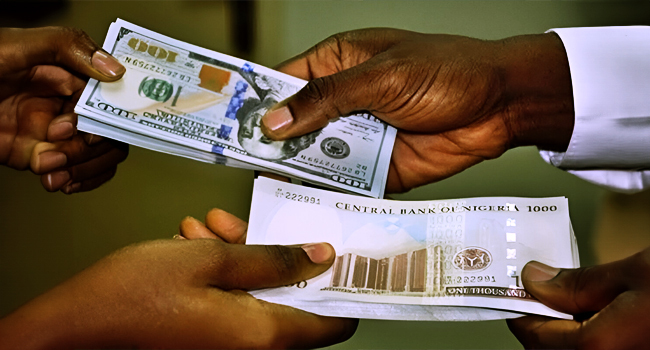
BLACK/ PARALLEL MARKET RATES
₦1370 DOLLAR (USD)
₦1800 POUND (GBP)
₦1510 EURO (EUR)
₦970 CANADIAN DOLLAR (CAD)
₦65 SOUTH AFRICAN RAND (ZAR)
₦350 UAE DIRHAM (AED)
₦190 CHINESE YUAN (CNY)
₦100 GHANAIAN CEDI (GHS)
₦2300 WEST AFRICAN CFA F.(XOF)
₦2200 CENTRAL AFRICAN CFA F.(XAF)
₦850 AUSTRALIAN DOLLAR AUSSIE (AUD)
CBN OFFICIAL RATES
DOLLAR (USD)₦1331.61
POUND (GBP)₦1764.26
EURO (EUR)₦1490.48
SWISS FRANC (CHF)₦1608.23
JAPANESE YEN (JPN)₦8.4
CFA FRANC (XOF)₦2.27
WEST AFRICAN UNIT OF ACCOUNT (WAUA)₦1802.33
CHINESE YUAN (CNY)₦199.01
SAUDI RIYAL (SAR)₦354.83
SOUTH AFRICAN RAND (ZAR)₦80.49
Business
WEF could appoint Lagarde as its next chair, sources say
The WEF’s Board of Trustees, which includes Lagarde herself, was due to meet on November 2 and could elect her as its next chair, said the people close to the organisation, who spoke on condition of anonymity due to the sensitivity of the matter.

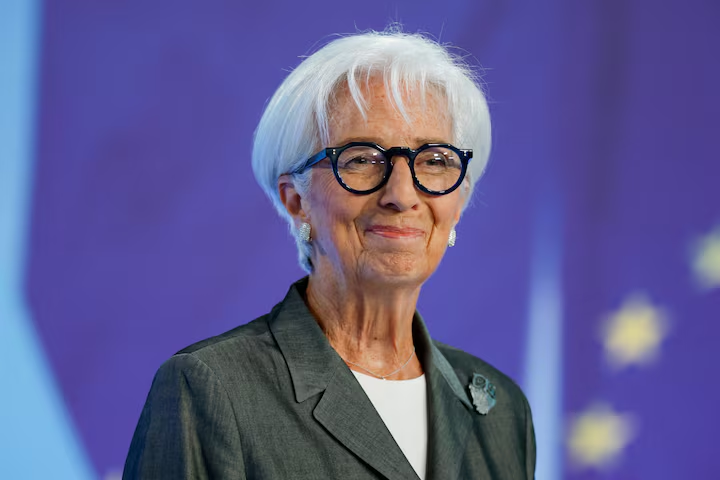
•European Central Bank President Christine Lagarde
The World Economic Forum could appoint Christine Lagarde as its next chair as soon as next month, four people close to the organisation told Reuters, meaning she would step down early as European Central Bank chief and trigger a wider reshuffle at the top of the ECB.Lagarde’s ECB term is scheduled to end in October 2027.
Leaving early would give European Union leaders a chance to pick a new ECB President before France’s spring presidential election, which opinion polls suggest the far-right could win, and could pave the way for a deal involving two other senior ECB roles.
The WEF’s Board of Trustees, which includes Lagarde herself, was due to meet on November 2 and could elect her as its next chair, said the people close to the organisation, who spoke on condition of anonymity due to the sensitivity of the matter.
No final decision has been taken yet, they said.
A spokesperson for the WEF said the forum could not confirm when the next full Board of Trustees meeting would take place, but that the aim was to hold one before the end of the year.
Business
Germany plans tax on sugary drinks
The tax is expected to generate additional revenue for the federal government of €690 million in 2027 and €925 million in 2028.
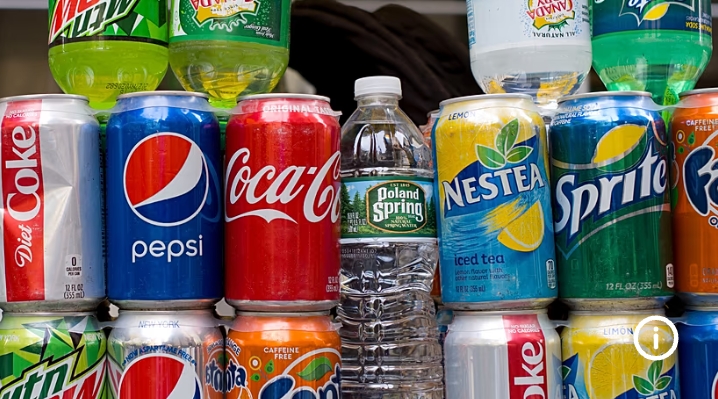
The German cabinet has approved draft legislation to tax sugary drinks in Europe’s biggest economy.
If passed by the German Bundestag, the tax will take effect on 1 July 2027.
The coalition aims to raise revenue for the federal budget while encouraging manufacturers to reduce sugar content and offer healthier products.
The levy is intended to ease pressure on the healthcare system, which faces costs of more than €2 billion every year linked to the high consumption of sugary drinks, which contributes to obesity, diabetes and tooth decay.
According to the federal government, Berlin is using the tax to implement “what associations from the fields of health, science, child protection, and consumer protection have long been demanding.”
The tax is expected to generate additional revenue for the federal government of €690 million in 2027 and €925 million in 2028.


JUST IN: Mob Sets BRT Bus Ablaze After Motorcyclist’s Death in Lagos

BREAKING: DSS Arrests Fugitive Maina Son, Hands Him to EFCC

BREAKING: 5 Arrested Over Imo NYSC Abduction

BREAKING: Lagos Govt Declares Today, Thursday Work-Free to Mark 2026 Ìṣẹ̀ṣe Day

Tech Expert, Zuckerberg trains with UFC champions, Adesanya, Alexander

Organ Trafficking: Ekweremadu bags 10 years in UK prison
-

 Business3 days ago
NAFDAC scolds fake manufacturers: “You are killing Nigerians in order to make money”
-
 Business3 days ago
Oyedele Chairs G-24 Call for Fairer Global Financial System, Affordable Development Financing
-
 Business2 days ago
Naira Exchange Rates For Thursday, October 15
-

 Business3 days ago
BREAKING: Shell to Exit Nigeria’s Domestic Gas Distribution Business
-
 Sports2 days ago
CAF Increases Annual Funding for Member Federations to $700,000
-

 Business1 day ago
Germany plans tax on sugary drinks
-
 Politics2 days ago
Exclusion of candidates from INEC list: CD cautions INEC against manipulation by politicians
-

 News1 day ago
ASCON To Be Rebranded “National School Of Government”