
News
Real Estate Investment in Nigeria by Dennis Isong


The Nigerian real estate market represents one of Africa’s most dynamic and promising investment frontiers.
With over 200 million people and an urbanization rate exceeding 4 percent annually, the demand for residential and commercial properties continues to surge, particularly in major cities like Lagos, Abuja, and Port Harcourt.
This demographic dividend, coupled with the country’s status as Africa’s largest economy, creates compelling opportunities for real estate investors seeking both capital appreciation and rental income.
The market’s potential is further enhanced by Nigeria’s young population, with more than 60% under the age of 25.
This demographic trend is driving demand for affordable housing, student accommodation, and modern office spaces.
Additionally, the expansion of the middle class, despite economic challenges, has created a growing market for mid-range residential properties and retail spaces.
The sector’s contribution to Nigeria’s GDP has consistently grown, demonstrating its resilience and potential for sustainable returns.
Benefits of Real Estate Investment
Real estate investment in Nigeria offers numerous advantages that continue to attract both domestic and international investors.
Perhaps the most significant benefit is the potential for substantial capital appreciation.
Property values in prime locations across major Nigerian cities have historically shown impressive growth rates, often outpacing inflation.
In particular, properties in developing areas of Lagos and Abuja have recorded appreciation rates of 20-30% annually, presenting opportunities for significant wealth creation through strategic property acquisition.
The rental market also provides a steady stream of income for investors.
The persistent housing deficit, estimated at over 17 million units, ensures strong rental demand across various property segments. High-end residential properties in exclusive neighborhoods can command premium rents, while commercial properties in business districts often yield attractive returns.
The dollarization of rents in prime locations also offers a hedge against currency fluctuations, particularly beneficial for international investors. Furthermore, real estate investment serves as an effective inflation hedge in Nigeria’s sometimes volatile economic environment.
As inflation rises, property values and rental income typically adjust upward, preserving the real value of investments.
The tangible nature of real estate assets also provides security and stability compared to more volatile investment options.
Additionally, the sector offers various investment entry points, from direct property ownership to Real Estate Investment Trusts (REITs), allowing investors to participate according to their capital capacity and risk appetite.
The dollarization of rents in prime locations also offers a hedge against currency fluctuations, particularly beneficial for international investors
Strategic Investment Considerations Success in Nigerian real estate investment requires careful consideration of several strategic factors.
Location remains paramount, with properties in established or rapidly developing areas offering the best potential for value appreciation and rental demand. Areas with improving infrastructure, proximity to business districts, or major development projects often present early-mover advantages for astute investors. The choice of property type must align with market demand and demographic trends.
Residential developments targeting the growing middle class, particularly in the form of apartments and townhouses, have shown strong market acceptance.
Similarly, purpose-built student housing near major educational institutions addresses a significant market gap.
In the commercial sector, mixed-use developments combining retail, office, and residential components have gained popularity, offering diversification benefits within a single investment.
Understanding the local real estate market dynamics is crucial for timing investments effectively.
Market cycles in different Nigerian cities can vary significantly, influenced by factors such as infrastructure development, economic activities, and government policies.
Successful investors often combine market timing with a long-term perspective, recognizing that while short-term volatility may occur, the fundamental drivers of demand remain strong.
Challenges and Risk Mitigation Despite its potential, real estate investment in Nigeria faces several significant challenges that investors must navigate carefully. One of the most prominent issues is land title documentation and property rights.
The complex land tenure system, governed by the Land Use Act of 1978, can make property acquisition procedures lengthy and complicated.
Obtaining Governor’s Consent for property transfers and ensuring clean titles requires due diligence and often professional legal assistance. Infrastructure deficits pose another significant challenge.
Many areas suffer from inadequate power supply, water access, and road networks, necessitating additional investments in private infrastructure solutions.
This can significantly impact development costs and eventual returns. However, savvy investors often turn this challenge into an opportunity by incorporating sustainable infrastructure solutions that add value to their properties.
The regulatory environment presents its own set of challenges.
Multiple layers of government oversight, changing policies, and sometimes overlapping jurisdictions can create uncertainty.
Property taxes, development permits, and building regulations vary across states and local governments, requiring thorough understanding and compliance.
Nevertheless, these challenges can be managed through proper research, engagement with local authorities, and partnership with experienced local professionals.
Financing poses a significant hurdle, with high interest rates and relatively short tenure mortgage products limiting funding options. Most Nigerian banks require substantial equity contributions and offer loans at interest rates that can significantly impact project viability.
However, innovative financing solutions are emerging, including partnerships with development finance institutions, vendor financing arrangements, and off-plan sales strategies that help manage funding challenges.
The informal nature of significant segments of the Nigerian real estate market can complicate investment decisions.
Limited availability of reliable market data, price transparency issues, and informal transaction practices make market analysis challenging.
However, this information gap also creates opportunities for investors who conduct thorough research and build strong local networks. Construction costs and quality control present ongoing challenges.
Fluctuating material costs, skilled labor shortages, and the need to import certain building components can impact project budgets and timelines. Maintaining construction quality while managing costs requires careful contractor selection and robust project management systems.
However, investors who successfully navigate these challenges often achieve premium valuations for quality developments.
Security concerns in certain regions and the general business environment risks require careful consideration in investment planning.
However, these risks can be mitigated through appropriate location selection, security measures, and insurance coverage. Many successful investors focus on areas with stable security situations and strong economic fundamentals.
Real estate investments in Nigeria presents significant opportunities for those willing to understand and navigate its unique market dynamics.
While challenges exist, they are not insurmountable and often create opportunities for well-prepared investors.
Success requires a combination of thorough market research, strong local partnerships, professional advisory support, and a long-term perspective.
As Nigeria’s economy continues to grow and urbanize, real estate investment, when approached strategically, offers the potential for substantial returns while contributing to the country’s development.
■ For personalized guidance and expert advice, Dennis Isong is here to help you navigate the complexities of Nigeria’s real estate market, ensuring a stress-free property acquisition process. Contact him today at +2348164741041!


News
Nigerian-Born Former Texas Professor Gets 78 Months For $921,000 Student Aid Fraud
Finnih submitted more than 100 fraudulent financial aid applications over approximately five years using other people’s identities at colleges and universities across Texas, prosecutors said.

•Emmanuel Olugbaike Finnih
A former Texas Southern University adjunct professor will serve 78 months in federal prison for a student financial aid fraud scheme that obtained more than $921,000 and left victims with debt in their names, federal prosecutors announced Friday.
Dallas Express reported that Emmanuel Olugbaike Finnih, 43, of Richmond, is a naturalized U.S. citizen originally from Nigeria.
U.S. District Judge Andrew Hanen imposed the prison sentence and three years of supervised release, the U.S. Attorney’s Office for the Southern District of Texas said in a news release.
Finnih pleaded guilty March 20 to theft of government funds, fraud, unlawful use or transfer of identity documents, and aggravated identity theft.
Finnih submitted more than 100 fraudulent financial aid applications over approximately five years using other people’s identities at colleges and universities across Texas, prosecutors said.
He sought more than $1.3 million in federal grants and loans, and the scheme resulted in $921,189.08 in disbursements.
Finnih used other people’s personal information to complete and sign aid applications and master promissory notes.
He controlled the mailing addresses, phone numbers and email accounts that received communications from schools and the Department of Education, prosecutors said.
He then collected financial aid refunds through electronic transfers, checks and prepaid debit cards sent to addresses or accounts he controlled.
News
FG launches new digital postcodes
The code is designed to provide a precise, GIS-enabled reference for identifying locations.
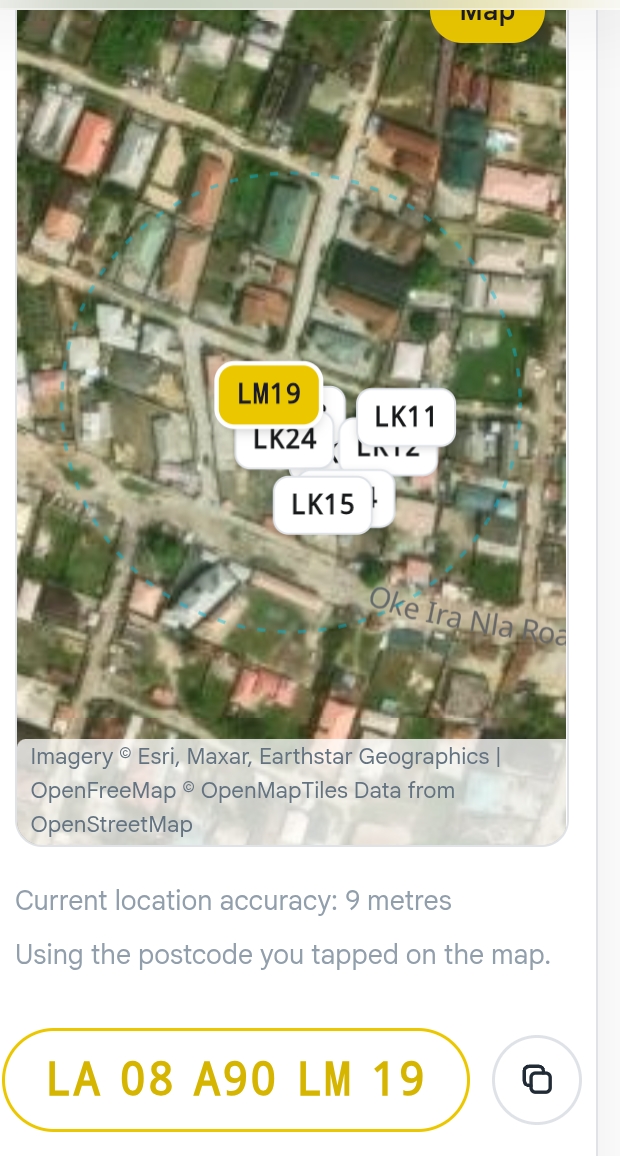
• Image credit: NIPOST
The Federal Government has launched the National Digital Alphanumeric Postcode System, urging Nigerians to find and begin using their postcodes.
The National Digital Alphanumeric Postcode, operated by the Nigerian Postal Service, gives every addressable building a unique 11-character code — the code is designed to provide a precise, GIS-enabled reference for identifying locations.system. Easier to find, share and use.
The Minister of Communications, Innovation and Digital Economy, Bosun Tijani announced the launch in a post on X on Thursday.
Tijani described the system as a step towards making locations across the country easier to identify and connecting people and businesses to services and opportunities.
Tijani said the system could help businesses reach customers beyond their immediate neighbourhoods, enable families to provide accurate locations during emergencies and help government agencies reach communities with essential services.
The minister encouraged Nigerians to search for their postcodes through the official Digital Postcode website, postcode.gov.ng, and share them with family members, friends and businesses.
News
Nigeria @ 66: President Tinubu says next phase of reforms’ll cut cost of living
“Our reforms did not create the weaknesses in our economy. They confronted them,” he said, while warning against attempts to reverse the policies and return to what he described as the “abuse of addictive subsidies”.
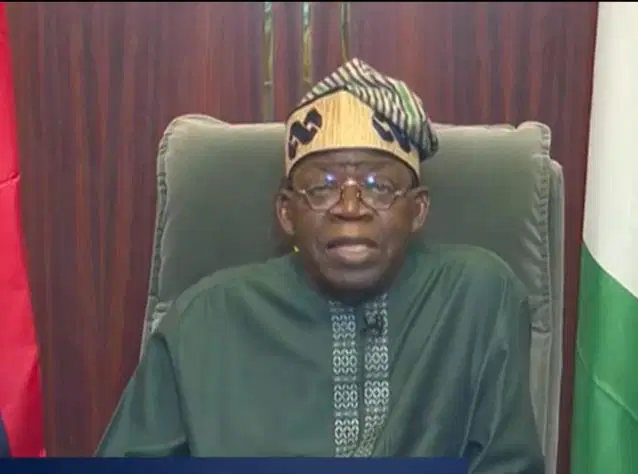
President Bola Tinubu has declared that the next phase of his administration’s reform will be focused on reducing the cost of living, creating jobs and ensuring that the benefits of economic growth were widely shared.
President Tinubu gave the assurance in his Independence Day address to mark Nigeria’s 66th anniversary, titled “From Reform to Prosperity”, in which he defended the economic policies of his administration and urged Nigerians to stay the course.
Tinubu said the reforms undertaken since his assumption of office had corrected the country’s economic direction, describing them as painful but necessary treatment for longstanding structural problems.
Using a cancer patient as an analogy, the President said Nigeria had for too long treated the symptoms of its economic problems rather than confronting their underlying causes.
“By 2023, poverty was rising, and hope was nearly gone. The country’s situation was darker than ever. We had no choice but to act,” he said.
Tinubu said previous administrations had chosen “morphine” by sustaining inefficient arrangements and postponing difficult decisions, while his administration chose to “excise the cancer”.
He acknowledged that the reforms had produced painful “side effects”, but argued that the hardship should not be confused with the underlying economic problems they were designed to address.
“Our reforms did not create the weaknesses in our economy. They confronted them,” he said, while warning against attempts to reverse the policies and return to what he described as the “abuse of addictive subsidies”.
The President’s speech came as some stakeholders and analysts regretted that, despite various reforms embarked upon by successive Federal Governments, the country was yet to come out of the woods economically and socially.


Ethiopian woman says she hasn’t eaten or drunk water since age 10

Nigerian-Born Former Texas Professor Gets 78 Months For $921,000 Student Aid Fraud

Italy marks 800 years since death of Saint Francis of Assisi

Tech Expert, Zuckerberg trains with UFC champions, Adesanya, Alexander

Organ Trafficking: Ekweremadu bags 10 years in UK prison

SAINT OBI: Between his marriage and his death
-

 Business4 hours ago
Diesel Costs Bite: LAMATA Accelerates Shift To CNG, Electric Buses
-

 International3 hours ago
US’s Gullah Geechee communities celebrate historic cultural festival rooted in West Africa
-

 Politics3 days ago
Obafemi Hamzat promises to end ‘unauthorised levies’ in Lagos if he is elected
-
 International2 hours ago
Italy marks 800 years since death of Saint Francis of Assisi
-
News2 hours ago
Nigerian-Born Former Texas Professor Gets 78 Months For $921,000 Student Aid Fraud
-

 Business3 days ago
Naira Rates To Dollar, Pound ,Euro… Friday, October 2
-
 International1 hour ago
Ethiopian woman says she hasn’t eaten or drunk water since age 10