
News
President Tinubu’s reforms push customs revenue to ₦1.3 Trillion in Q1 2025 — CG Adeniyi

The Nigeria Customs Service (NCS) has recorded an unprecedented revenue of ₦1.3 trillion in the first quarter of 2025, more than double the ₦600 billion collected during the same period in 2023.
In a statement released on Saturday, May 24, 2025, by Bayo Onanuga, the Special Adviser to the President on Information & Strategy, the Comptroller-General of Customs Bashir Adewale Adeniyi attributed this remarkable growth to transformative reforms under President Bola Tinubu’s Renewed Hope Agenda, as revealed in an upcoming State House documentary marking the President’s second anniversary.
Adeniyi highlighted that the revenue surge emanated from improved technological deployment, enhanced port operations, tightened enforcement on revenue leakages, and a renewed culture of accountability across Customs commands.
“We collected ₦1.3 trillion in Q1 2025 alone. This is not due to higher import volumes. Imports have dropped due to foreign exchange constraints.
“What has changed is efficiency, transparency, and enforcement,” the Comptroller-General said.
He disclosed that the Service is preparing to launch the E-Customs Modernisation Project.
This $3.2 billion initiative will digitise cargo processing, surveillance, and payment systems across Nigeria’s ports and borders.
“We’re laying the foundation to move from a manual, paper-based system to a fully digital service. The E-Customs Project is central to our future. Once fully deployed, we project it will add $250 billion in cumulative revenue over 20 years,” he said.
Adeniyi added that the newly launched Authorised Economic Operator (AEO) Programme is now onboarding pre-vetted importers, allowing compliant businesses faster processing and reducing port congestion.
“It’s about trust and efficiency. If you’re compliant, you get green-lane treatment. This is how modern customs systems work globally,” he said.
The Customs CG confirmed that the Service has intensified its anti-smuggling operations and closed long-standing revenue leakages.
He said over ₦64 billion was recovered from previously under-assessed or undervalued imports in the last nine months, and major smuggling rings at the Seme, Idiroko, Katsina, and Sokoto borders have been dismantled.
He said the new joint border patrol task forces established in coordination with the Nigerian Army, DSS, and Police have also yielded positive results.
“We’re no longer just chasing smugglers in the bush. We’re using data, surveillance drones, and port intelligence to act in real-time. Once systemic leakages are now being plugged,” ” Adeniyi said.
To ease trade and reduce business costs, Adeniyi disclosed that NCS is fast-tracking the roll-out of the National Single Window.
This digital portal will integrate all government agencies involved in cargo clearance.
“Right now, you deal with up to 15 agencies manually. With the Single Window, you’ll do it all online, in one place. This will slash clearance time and costs,” the CG explained, adding that clearance timelines at Apapa and Tin Can Ports have already dropped from 21 days to 7–10 days for compliant importers.
The Comptroller-General said the agency has introduced fast-track lanes for agro-exports and is working with the Nigerian Export Promotion Council (NEPC) to streamline outbound cargo processes in line with the government’s push for non-oil exports.
“We’re promoting exports aggressively. Last year, Nigeria exported over ₦340 billion worth of solid minerals and agro commodities through formal channels, up by 38%. We’re targeting even more in 2025,” he said.
He stated that the Customs Service is also undergoing internal transformation, with over 1,800 officers trained in advanced data analytics, risk profiling, and artificial intelligence.
“Customs is no longer just about physical inspection. We are becoming an intelligence-led organisation, and our officers are being retrained to match global standards,” Adeniyi said.
“The President gave us a clear directive: block leakages, facilitate trade, and raise revenue without burdening Nigerians. That is what we are doing. And the results are beginning to speak for themselves.”











News
ARISE News Wins Seven Honours At Nigerian Broadcasters Merit Awards
The awards recognised the network’s achievements in television journalism and programming, with ARISE News winning the Best TV Channel (Viewer’s Choice) category.


• ARISE News Anchor and host of What’s Trending Ojy Okpe was named Best Newscaster (TV – Female)
ARISE News has emerged as one of the major winners at the just ended Nigerian Broadcasters Merit Awards (NBMA).
ARISE News won seven honours across television broadcasting, news reporting, presentation and production during the ceremony.
The awards recognised the network’s achievements in television journalism and programming, with ARISE News winning the Best TV Channel (Viewer’s Choice) category.
The network’s flagship breakfast programme, The Morning Show, also won the Best TV Talk Show award, further strengthening its recognition in television broadcasting.
ARISE News Anchor and host of What’s Trending Ojy Okpe was named Best Newscaster (TV – Female).
Rufai Oseni was named Nigerian Broadcaster of the Year (Male), while Vimbai Mutinhiri-Ekpeyong received the Nigerian Broadcaster of the Year (Female) award.
The recognition extended to the network’s newsroom, with Ovieteme George winning Best TV News Reporter (Male) for his contributions to television news reporting.
Behind the camera, Sam Adeyemi received the Best Camera Operator/Cinematographer award, recognising his work in television production and visual storytelling.
News
Meta removes 3.7 million accounts in West Africa scam crackdown
The joint operation led to 28 arrests, identified more than 30 suspected scam centres and rescued 117 people allegedly trafficked and forced to work in scam compounds in Ghana.
Meta, the parent company of Facebook and Instagram, has removed more than 3.7 million Facebook and Instagram accounts, pages and groups linked to suspected scam networks operating in West Africa.
The joint operation led to 28 arrests, identified more than 30 suspected scam centres and rescued 117 people allegedly trafficked and forced to work in scam compounds in Ghana.
The company announced the crackdown in a statement on Tuesday, October 13, 2026. It involved 14 technology companies and law enforcement agencies from 10 countries.
The United Kingdom’s National Crime Agency coordinated the operation with the US Department of Justice, the Federal Bureau of Investigation and other agencies. Nigerian authorities were involved.
Other countries included Ghana, Australia, Canada, New Zealand and India.Tech companies that took part included Google, Microsoft, OpenAI, Coinbase, Starlink and Adobe.
Meta said the partnership let participants share intelligence across digital platforms, countries and financial systems to identify criminal networks.
A gas pipeline explosion in Aleto community, Eleme Local Government Area of Rivers State, on Thursday evening has left at least 20 people injured, with about 50 houses destroyed by the resulting fire.
The blast occurred around 5 pm after a pipeline belonging to the Nigeria Gas Company ruptured along Old Bori Road. Several victims were rushed to hospitals. Stalls and a mechanic workshop with parked cars were also affected.
Residents said the pipeline had been leaking for about three weeks. Stanley, a local, stated that community leaders had alerted the company, but no effective action was taken. Most of those hurt were passers-by and people working in the area.
Daniel Chuma, Leader of the Eleme Legislative Council, visited the scene and confirmed the scale of the damage. He said he had earlier written to the company and petitioned NOSDRA and the Rivers State Ministry of Environment, copying the police, after a previous leak on another section of the same pipeline.
“Today, we were called to an explosion at the same Nigeria Gas Company pipeline that has destroyed over 50 houses and cars, with many casualties. People have been rushed to the hospital,” Chuma said. He added that no company representative had arrived at the scene, and community members had cordoned off the area with barrier tape to prevent further harm.
The Youths and Environmental Advocacy Centre (YEAC-Nigeria) also confirmed the incident. Its Executive Director, Dr Fyneface Dumnamene, said several people had been hospitalised and called on the Rivers State Government, the Ministry of Environment, NOSDRA, the Federal Government and other relevant agencies to support the affected residents of Aleto.
The fire was still burning at the time of early reports.


ARISE News Wins Seven Honours At Nigerian Broadcasters Merit Awards

Meta removes 3.7 million accounts in West Africa scam crackdown

Naira Exchange Rates Friday, October 16

BREAKING: Lagos Govt Declares Today, Thursday Work-Free to Mark 2026 Ìṣẹ̀ṣe Day

Tech Expert, Zuckerberg trains with UFC champions, Adesanya, Alexander

Organ Trafficking: Ekweremadu bags 10 years in UK prison
-
 News3 days ago
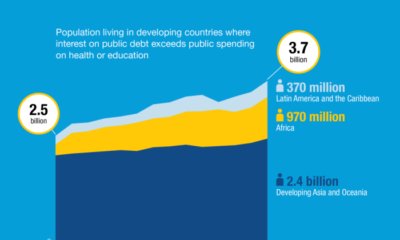
UNCTAD Warns Debt Burden Threatens Future of 3.7bn People
-
 News3 days ago
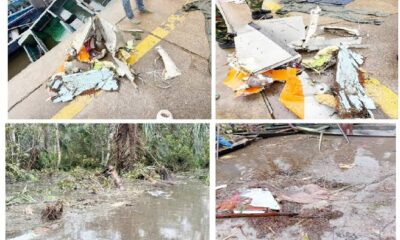
NAF Crash: Residents Fear Disease as Body Parts Foul Community River
-

 Business3 days ago
FAO Names 22 African Women Agrifood Heroes, Nigeria Missing
-

 Business2 days ago
NAFDAC scolds fake manufacturers: “You are killing Nigerians in order to make money”
-

 Business1 day ago
Naira Exchange Rates For Thursday, October 15
-

 Business2 days ago
Oyedele Chairs G-24 Call for Fairer Global Financial System, Affordable Development Financing
-
 Sports1 day ago
CAF Increases Annual Funding for Member Federations to $700,000
-

 Business3 days ago
BREAKING: Shell to Exit Nigeria’s Domestic Gas Distribution Business