
Health
Non-communicable diseases claim 684,000 Nigerians – Stakeholders react

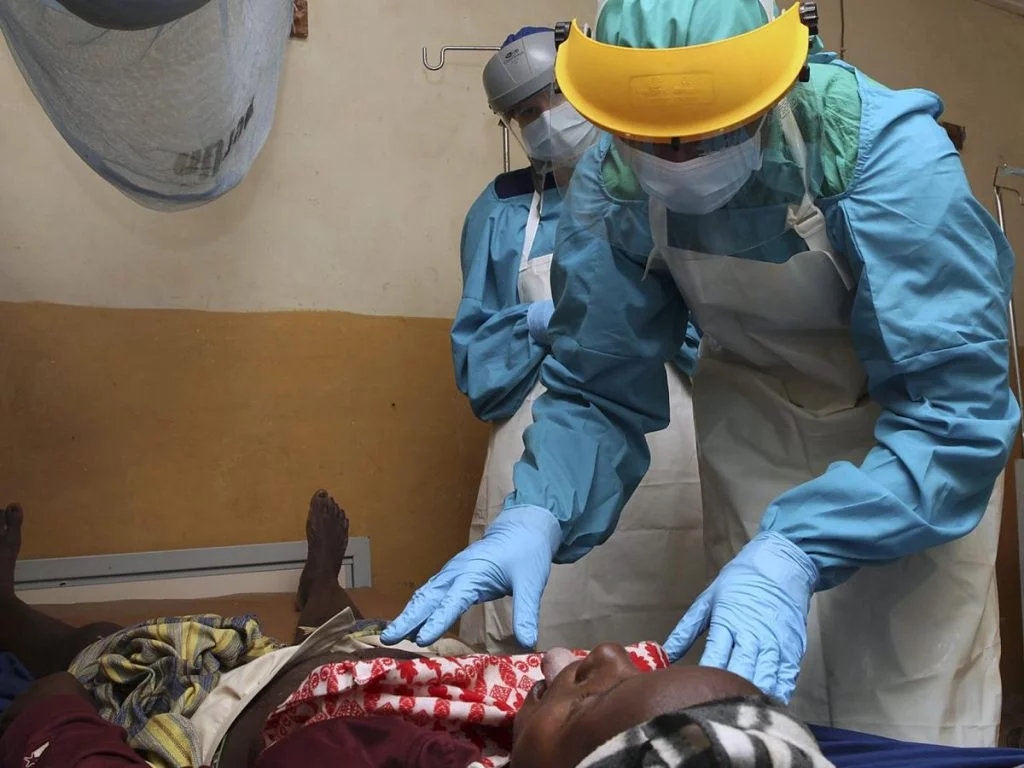
The recent report that over 684,000 Nigerians die from non communicable diseases, NCDs, annually, is a source of concern.
Non communicable diseases are diseases that are not contagious. Most Nigerians have been battling with communicable or infectious diseases like cholera, Human Immuno Virus, HIV, tuberculosis among others.
Such diseases have, however, attracted public attention as they are always in the news.
But, not many pay attention to the non communicable diseases.
However, the staggering number of casualties of non communicable diseases was brought to the front burner by the Lead Strategist of Gatefield, Adewunmi Emoruwa, in Abuja recently at a two-day health summit organised by Gatefield.
Speaking at the summit entitled, “Beyond65: Preventing the Quiet Epidemic,” Emoruwa decried the devastating negative impacts of non communicable diseases, which he said claims over 684,000 lives annually in Nigeria.
He said: “NCDs are responsible for over 684,000 deaths annually in Nigeria. This is equivalent to wiping out an entire population of Luxembourg every single year. This preventable crisis can no longer be ignored.”
He revealed that the NCD-related deaths in Nigeria have increased from 24 percent in 2010 to 29 percent at present.
Gatefield, also launched a new health strategy to tackle the growing crisis of NCDs in Nigeria, where life expectancy averages just 52 years.
Listing what he described as the driving factors for the NCDs’ quiet epidemic, Emoruwa attributed the crisis to the dangerous rise of unhealthy diets such as foods and beverages containing added-sugars, excessive salt consumption, alcohol and tobacco use, and environmental pollution.
He said Nigerians consume 4.9 servings of sugary drinks per week, nearly double the global average.
Salt intake is dangerously high at 5.8 grammes per day, above the World Health Organisation, WHO, recommended level.
“Nigeria has a high prevalence of heavy episodic drinking at 27.3 percent, and without intervention, smoking rates in Africa are projected to rise by 30 percent by 2030“Around 48 million Nigerians are not physically active enough, increasing the risk of obesity, diabetes, and heart disease,” he said.
He said that there was a need to tackle tobacco use, sedentary lifestyle and ensure behaviour change among others.
He said: “NCDs, like cancer and heart diseases, are not death sentences if caught early. But too often, people don’t recognise the signs, don’t get tested, and seek help only when it’s too late.
“The government must invest in messaging. The government shouldn’t wait for the WHO; they shouldn’t wait for the UN. The government needs to bring the money out.
”In her contribution, the Gatefield’s Board Co-chair, Sa’adatu Hamu-Aliyu, said the average Nigerian does not live past the age of 52 and the average African does not live past the age of 64.
She said: “Compare this to Europe, Japan, and Canada, where life expectancy exceeds 80 years.
This means that an average person in the developed world is likely to live at least 20 years longer than their fellow humans in low and middle income populations.
”She said Gatefield’s health strategy outlines five key interventions aimed at reducing preventable deaths and improving life expectancy.
“They are fixing our national diet, taking down tobacco, and supporting mental health among others.
”She added that Gatefield’s strategy would push for policies that encourage routine screenings, public health education, and stronger enforcement of regulations on ultra-processed foods, sugar sweetened beverages, and harmful substances like tobacco and alcohol.
On solutions to addressing the issue, the former Executive Vice-Chairman/Chief Executive Officer, CEO, of the Federal Competition and Consumer Protection Commission, Babatunde Irukera, called for a robust government’s policy.
“A robust policy and structure will be a combination of hard and soft infrastructure in the forms of both physical structures such as facilities and equipment, and soft ones such as sufficiently trained human capital who recognise their roles and obligations as caregivers and institutions to ensure accountability,” he said.
Throwing more light on the subject of discussion, Dr. Uche Okenyi of Nova’s Place Hospital, Festac, Lagos, further described non communicable diseases as chronic non transmittable diseases which can manifest as a result of genetics, environmental factors, lifestyles, among others.
He gave examples to include but not limited to hypertension, asthma, cancer, sickle cell diseases, stroke, among others.
“These types of diseases contrast with diseases which can be transmitted from person to person, for example cholera, tuberculosis, HIV, among others,” he added.
He offered insight into how the 684, 000 annual death figure can be reduced.
He believes that if the number of annual deaths from non communicable diseases in Nigeria must be reduced drastically, both the government and individuals have roles to play.







Health
Millions of bedbugs crawl out of mattresses and walls in huge outbreak
Bedbugs can enter homes on clothes, luggage, or second hand furniture – and “hide” in mattresses or walls, according to the NHS.


Millions of bedbugs were crawling out of mattresses in what a pest controller said was the worst outbreak he had seen in 38 years.
They were even in the walls and under the wallpaper, with the mattresses and bed frames needing to be incinerated.
Cardiff pest controller Gareth Davies had to wear full protection as his team tackled the problem in the Canton area of the city, using a specialist vacuum cleaner to collect millions of the bugs.
It came after they had tackled a large cockroach outbreak last month in a scene he likened to a horror movie.
“This house was just horrific,” he told BBC Radio Wales Breakfast.
“Hundreds of thousands of them when you lifted the mattresses up.
“They were coming out of the wallpaper, it was horrendous.”
Bedbugs can enter homes on clothes, luggage, or second hand furniture – and “hide” in mattresses or walls, according to the NHS.
Credit: BBC
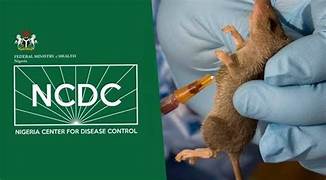
The Nigeria Centre for Disease Control and Prevention (NCDC) has confirmed that Lassa fever has claimed 259 lives and infected 1,086 people across 24 states and 118 local government areas so far in 2026.
In its latest Lassa Fever Situation Report for epidemiological week 36 (August 31 to September 6), the agency said the figures represent a case fatality rate of 23.9 percent — significantly higher than the 18.6 percent recorded during the same period in 2025.
Twelve new confirmed cases were recorded in week 36, a decline from the 18 cases reported the previous week. The fresh infections were detected in Ondo, Edo and Kogi states.
Five states continue to bear the heaviest burden, accounting for 87 percent of all confirmed cases this year: Bauchi, Ondo, Taraba, Benue and Edo. People aged 21 to 30 remain the most affected age group.
The NCDC noted that no new infections among healthcare workers were recorded during the latest reporting week. The agency continues to urge the public to maintain hygiene, avoid contact with rodents and their droppings, and seek early medical care if symptoms appear.
Health
Nigerian hospital successfully performs kidney cancer surgery via tele-robotic
The development could reduce the need for Nigerians to travel abroad for specialised medical treatment, thereby reducing expenditure on international travel, accommodation and medical services.
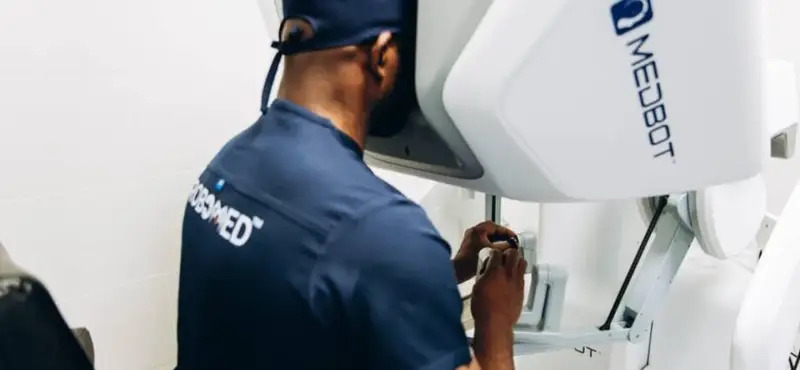
• A surgeon performing tele-robotic surgery.
Nisa Premier Hospital, Abuja, has partnered with RoboMed Global and The Redeemer’s Health Village (RHV) to successfully perform what the hospital described as the first tele-robotic surgery in Nigeria and West Africa.
The landmark kidney cancer surgery was performed on a patient at Nisa Premier Hospital, Abuja, while the surgeon, Professor Obi Ekwenna-Davis, remotely controlled the robotic surgical platform from Redeemer’s Health Village in Lagos.
The procedure, which lasted approximately three hours, was performed to remove a kidney affected by a cancerous tumour.
The hospital said the patient had been discharged following the successful procedure, although details about the patient’s identity and condition were withheld for privacy reasons.
Speaking during an event to mark the milestone, the Chief Executive Officer of Nisa Premier Hospital, Dr Ibrahim Wada, said the development demonstrated the potential of tele-robotic surgery to connect specialist surgical expertise with patients across Nigeria.
Wada said the procedure was carried out using the MicroPort robotic surgical platform installed at Nisa Premier Hospital, with the remote surgeon controlling the system from Lagos.
He said the development could reduce the need for Nigerians to travel abroad for specialised medical treatment, thereby reducing expenditure on international travel, accommodation and medical services.
According to him, the technology also creates an opportunity for Nigerians to access specialised expertise from doctors located in other parts of the world without requiring the doctors to travel physically to Nigeria.
Source: Daily Trust


Sanwo-Olu Appoints Olatunbosun Ogunbanwo, 5 Others as Perm Secs

Exclusion of candidates from INEC list: CD cautions INEC against manipulation by politicians

Oyedele Chairs G-24 Call for Fairer Global Financial System, Affordable Development Financing

Tech Expert, Zuckerberg trains with UFC champions, Adesanya, Alexander

BREAKING: Lagos Govt Declares Today, Thursday Work-Free to Mark 2026 Ìṣẹ̀ṣe Day

Organ Trafficking: Ekweremadu bags 10 years in UK prison
-

 Business3 days ago
Nigeria’s ₦33bn Fruit Import Bill Exposes Missed Opportunities in Jos
-

 Business3 days ago
Naira To Dollar, Pound ,Euro …Rates For Monday, October 12
-

 Politics3 days ago
BEWARE: Fake 2027 Gov’ Candidates List Circulating Online — INEC Raises Alarm
-

 News3 days ago
Forbes Scores GTBank Best Employers 2026
-

 Politics3 days ago
2027: 119 Women Jostle For State’s Governors
-

 Business2 days ago
Dangote Refinery IPO Attracts N8.61trn in Subscriptions, Four Times Offer
-

 News3 days ago
BREAKING: Fire Engulfs First Bank Branch Along Abuja-Keffi Road
-

 Business3 days ago
Afreximbank Hails Africa Credit Rating Agency