
Health
2026 World Malaria Day: WHO lists 5 steps to eliminate malaria by 2030
World Malaria Day 2026 is observed on April 25th under the theme “Driven to End Malaria: Now We Can. Now We Must”

The World Health Organization (WHO) has listed five priority steps that could be taken by malaria-endemic countries especially in Africa to achieve the 2030 global target of eliminating malaria.
WHO emphasises the need for global malaria eradication marking the 2026 World Malaria Day with the theme: “Driven to End Malaria: Now We Can. Now We Must”
World Malaria Day 2026 is observed on April 25th under the theme “Driven to End Malaria: Now We Can. Now We Must”.
It highlights the potential to eliminate malaria in our lifetime, supported by new vaccines and next-generation nets, while urging immediate, accelerated action to address rising threats.
First, WHO said that countries must lead the malaria response with strong national ownership. It noted that when governments prioritize malaria as a dividend of national development and mobilize domestic resources, they lay the foundation for sustainable impact.
Second, it suggested a strategic intelligence action. It noted that robust surveillance systems, improved use of evidence and data analytics allow countries to anticipate threats, deploy interventions more effectively and ensure that resources are used where they can achieve the greatest impact.
Third, it highlighted that innovation must be accelerated and scaled equitably.
WHO said the introduction of malaria vaccines, new vector control tools, and improved treatment strategies represents a major step forward.
At the same time, strengthening Africa’s research capacity and regional manufacturing can help ensure that innovation benefits those who need it most.
Fourth, it insisted that Primary Health Care (PHC) centres must remain at the center of the malaria response. And that people-centered health services delivered through strong community platforms enable early diagnosis, timely treatment and sustained prevention.
And fifth, WHO noted that ending malaria requires a whole-of-society effort. Environmental, social and economic factors shape malaria transmission.

Health
Millions of bedbugs crawl out of mattresses and walls in huge outbreak
Bedbugs can enter homes on clothes, luggage, or second hand furniture – and “hide” in mattresses or walls, according to the NHS.

Millions of bedbugs were crawling out of mattresses in what a pest controller said was the worst outbreak he had seen in 38 years.
They were even in the walls and under the wallpaper, with the mattresses and bed frames needing to be incinerated.
Cardiff pest controller Gareth Davies had to wear full protection as his team tackled the problem in the Canton area of the city, using a specialist vacuum cleaner to collect millions of the bugs.
It came after they had tackled a large cockroach outbreak last month in a scene he likened to a horror movie.
“This house was just horrific,” he told BBC Radio Wales Breakfast.
“Hundreds of thousands of them when you lifted the mattresses up.
“They were coming out of the wallpaper, it was horrendous.”
Bedbugs can enter homes on clothes, luggage, or second hand furniture – and “hide” in mattresses or walls, according to the NHS.
Credit: BBC

The Nigeria Centre for Disease Control and Prevention (NCDC) has confirmed that Lassa fever has claimed 259 lives and infected 1,086 people across 24 states and 118 local government areas so far in 2026.
In its latest Lassa Fever Situation Report for epidemiological week 36 (August 31 to September 6), the agency said the figures represent a case fatality rate of 23.9 percent — significantly higher than the 18.6 percent recorded during the same period in 2025.
Twelve new confirmed cases were recorded in week 36, a decline from the 18 cases reported the previous week. The fresh infections were detected in Ondo, Edo and Kogi states.
Five states continue to bear the heaviest burden, accounting for 87 percent of all confirmed cases this year: Bauchi, Ondo, Taraba, Benue and Edo. People aged 21 to 30 remain the most affected age group.
The NCDC noted that no new infections among healthcare workers were recorded during the latest reporting week. The agency continues to urge the public to maintain hygiene, avoid contact with rodents and their droppings, and seek early medical care if symptoms appear.
Health
Nigerian hospital successfully performs kidney cancer surgery via tele-robotic
The development could reduce the need for Nigerians to travel abroad for specialised medical treatment, thereby reducing expenditure on international travel, accommodation and medical services.
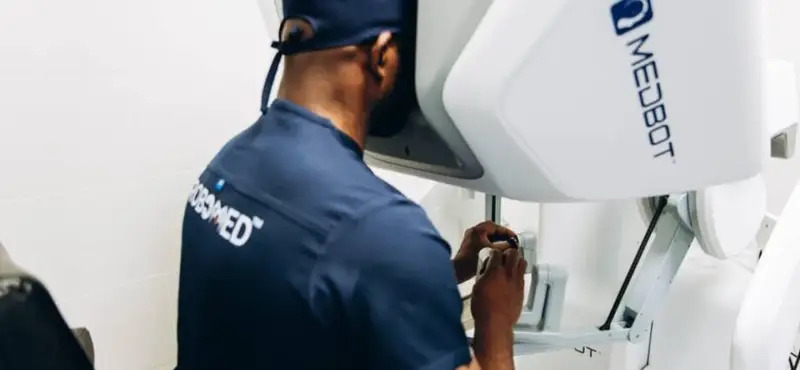
• A surgeon performing tele-robotic surgery.
Nisa Premier Hospital, Abuja, has partnered with RoboMed Global and The Redeemer’s Health Village (RHV) to successfully perform what the hospital described as the first tele-robotic surgery in Nigeria and West Africa.
The landmark kidney cancer surgery was performed on a patient at Nisa Premier Hospital, Abuja, while the surgeon, Professor Obi Ekwenna-Davis, remotely controlled the robotic surgical platform from Redeemer’s Health Village in Lagos.
The procedure, which lasted approximately three hours, was performed to remove a kidney affected by a cancerous tumour.
The hospital said the patient had been discharged following the successful procedure, although details about the patient’s identity and condition were withheld for privacy reasons.
Speaking during an event to mark the milestone, the Chief Executive Officer of Nisa Premier Hospital, Dr Ibrahim Wada, said the development demonstrated the potential of tele-robotic surgery to connect specialist surgical expertise with patients across Nigeria.
Wada said the procedure was carried out using the MicroPort robotic surgical platform installed at Nisa Premier Hospital, with the remote surgeon controlling the system from Lagos.
He said the development could reduce the need for Nigerians to travel abroad for specialised medical treatment, thereby reducing expenditure on international travel, accommodation and medical services.
According to him, the technology also creates an opportunity for Nigerians to access specialised expertise from doctors located in other parts of the world without requiring the doctors to travel physically to Nigeria.
Source: Daily Trust


Investors Rush For Airtel Money IPO on LSE

JUST IN: NNPC Clarifies Petrol Discount: Relief Initiative, Not Subsidy Restoration

JUST IN: A’Court Stalls SERAP, Oluwadare Defamation Appeals Over Late Briefs

Tech Expert, Zuckerberg trains with UFC champions, Adesanya, Alexander

Organ Trafficking: Ekweremadu bags 10 years in UK prison

SAINT OBI: Between his marriage and his death
-

 News2 days ago
NAF Helicopter Makes Precautionary Landing In Makurdi
-

 News2 days ago
Military Chiefs Visit Ondo Crash Site As Underwater Search Intensifies
-

 Business2 days ago
Naira Today Exchange Rates, Thursday October 8
-
 News16 hours ago
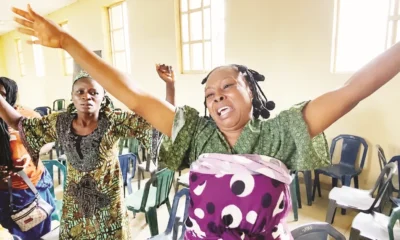
Tears, Embraces as Rescued NYSC Members Reunite with Families in Ibadan
-

 Business2 days ago
African Union launch continent’s first credit rating agency
-

 Business2 days ago
Obi advocates policy support for manufacturers
-

 Business18 hours ago
Naira Exchange Rates Friday, October 9
-

 News2 days ago
Breaking: Military rescue 20 corps members, civilian in Imo