
Business
NNPCL Sells Petrol At ₦1,025 Per Litre In Lagos


Barely three weeks after jerking up the price per litre of petrol, retail outlets owned by the Nigerian National Petroleum Company Limited (NNPCL) adjusted the pump price of the commodity on Tuesday in Lagos from ₦998 to ₦1, 025.
In Lagos, many NNPCL outlets sold a litre of the essential commodity for ₦1,025, from the ₦998 it was sold between October 9 and October 28, about ₦28 higher.
A few NNPCL outlets that sold the premium commodity sold it at ₦1,025 while others owned by independent marketers sold a litre of petrol as high as ₦1,100.
The fresh increase followed the October 9, 2024 hike, from ₦855 to ₦998.
Also, on September 2, 2024, the retail company hiked the price per litre of petrol from ₦568 to ₦855, sparking outrage.
Since the “Subsidy is gone” presidential declaration in May 2023, the NNPCL has gradually increased the pump prices of petrol from ₦184 in Lagos to ₦1,025.
Though there has not been any official statement from the NNPCL on the latest increase in petrol prices, the NNPCL hinted at a fresh price increase when it began loading its first batch of petrol from the Dangote Refinery in mid-September.
Then, the NNPCL said it got petrol at ₦898 per litre from the private refinery and that it would sell it for ₦950 per litre in Lagos and ₦1,019 in Borno.
Dangote Refinery instantly denied selling petrol to the NNPCL at ₦898 but the retail company insisted that it got petrol from Dangote Refinery at ₦898 per litre and challenged the latter to release the price it sold petrol.
The NNPCL further released a breakdown of pricing for Dangote petrol at its filling stations across the country.
Last December, Dangote, Africa’s leading industrialist, commenced operations at his $20bn facility sited in Lagos with 350,000 barrels a day.
The refinery, which was initially bogged by regulatory battles, hopes to achieve its full capacity of 650,000 barrels per day by the end of the year.
The refinery has begun the supply of diesel and aviation fuel to marketers in the country and now petrol.
Nigeria, Africa’s most populous nation, faces energy challenges, with all its state-owned refineries non-operational.
The country is heavily reliant on imported refined petroleum products, with the state-run NNPC being the major importer of the essential commodities.
Fuel queues are commonplace in the country. Prices of petrol more than quadrupled since the removal of subsidy in May 2023 by President Bola Tinubu, from around ₦200/litre to over ₦1000/litre, compounding the woes of the citizens who power their vehicles, and generating sets with petrol, no thanks to decades-long epileptic electricity supply.








Business
CBN admits it opened domiciliary accounts for PFIPC agency
Represented by the Director of its Banking Services Department, Hamisu Ibrahim, the CBN said that the accounts are one in US dollars, the other in British pounds sterling, were opened following a mandate received from the Office of the Accountant-General of the Federation.


File photo : PFIPC agency DG, Adeniyi Adeyemi
The Central Bank of Nigeria had admitted that it opened two foreign-currency domiciliary accounts for the controversial Presidential Foreign Investment Promotion Council (PFIPC).
The apex bank made the confirmation, yesterday, during the public hearing convened at the National Assembly Complex by the House of Representatives Ad-hoc Committee investigating the existence and operations of the PFIPC, chaired by Yusuf Gagdi and inaugurated by Speaker Tajudeen Abbas.
Represented by the Director of its Banking Services Department, Hamisu Ibrahim, the CBN said that the accounts are one in US dollars, the other in British pounds sterling, were opened following a mandate received from the Office of the Accountant-General of the Federation.
He explained that on July 30, 2025, CBN received a mandate dated July 29, 2025 from the Office of the Accountant-General.
“We received the mandate to authorise two accounts, one a US dollar domiciliary account, the other a pound domiciliary account, for the Presidential Economic Advisory Council/Presidential Foreign Investment Promotion Council,” Ibrahim told the committee.
He explained the CBN’s verification process, “The process of opening an account requires a mandate from the Office of the Accountant-General of the Federation.
“Once we receive that mandate, we perform all the necessary verifications to confirm that this mandate is actually coming from that office.
The department that handles the mandate is different from the department that actually does the account opening,” he said.
Nevertheless, he noted that no one came to activate the accounts after they were opened.“We did not receive any correspondence, mandate, signature or mandate cards. We were not introduced to the authorising or approving officers.“Based on that, those accounts remain inactive, with zero balance. There have been no foreign exchange allocations.
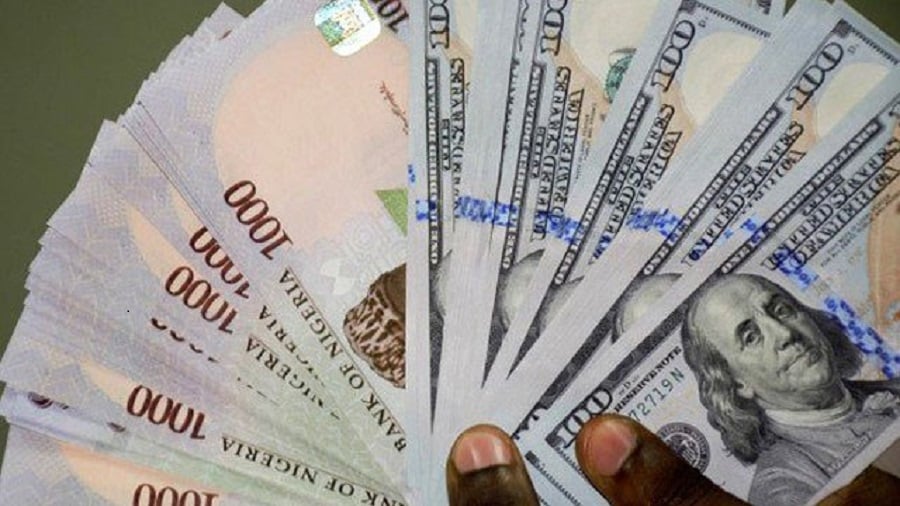
BLACK MARKET RATES
US DOLLAR (USD) Buy ₦1, 410 Sell ₦1,415
GREAT BRITISH POUND (GBP) Buy ₦1,890 Sell: ₦1,910
EURO (EUR) Buy ₦1,580 Sell ₦1,600
CANADIAN DOLLAR (CAD) Buy ₦1,020 Sell ₦1,080
SOUTH AFRICAN RAND (ZAR) Buy ₦75 Sell ₦90
UAE DIRHAM Buy ₦350 Sell ₦370 CHINESE YUAN Buy ₦190 Sell ₦205
GHANA CEDI (GHS) Buy ₦95 Sell ₦110
WEST AFRICAN CFA Buy ₦2, 300 Sell ₦2, 400
CENTRAL AFRICAN CFA Buy ₦2,150 Sell 2,250
AUSTRALIAN DOLLAR Buy ₦800 Sell ₦900
CBN OFFICIAL EXCHANGE RATES
US DOLLAR (USD) ₦1,380.11
GREAT BRITISH POUND (GBP) ₦1,857.35
EURO (EUR) ₦1,575.95
SWISS FRANC (CHF) ₦1,705. 31
JAPANESE YEN (JPN) ₦8.50
CHINESE YUAN (CNY) ₦203.94
WEST AFRICAN CFA (XOF) ₦2.40
WEST AFRICAN UNIT ACCOUNT (WAUA) ₦1,874. 32
SAUDI RIYAL (SAR) ₦367.49
SOUTH AFRICAN RAND (ZAR) ₦83.69
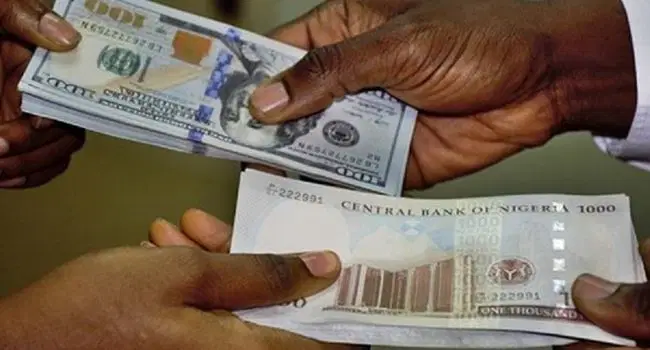
BLACK MARKET RATES
US DOLLAR (USD) Buy ₦1, 416 Sell ₦1,422
GREAT BRITISH POUND (GBP) Buy ₦1,895 Sell: ₦1,915
EURO (EUR) Buy ₦1,590 Sell ₦1,610
CANADIAN DOLLAR (CAD) Buy ₦1,020 Sell ₦1,080
SOUTH AFRICAN RAND (ZAR) Buy ₦75 Sell ₦90
UAE DIRHAM Buy ₦350 Sell ₦370 CHINESE YUAN Buy ₦190 Sell ₦205
GHANA CEDI (GHS) Buy ₦95 Sell ₦110
WEST AFRICAN CFA Buy ₦2, 300 Sell ₦2, 400
CENTRAL AFRICAN CFA Buy ₦2,150 Sell 2,250
AUSTRALIAN DOLLAR Buy ₦800 Sell ₦900
CBN OFFICIAL EXCHANGE RATES
US DOLLAR (USD) ₦1,380.18
GREAT BRITISH POUND (GBP) ₦1,854.42
EURO (EUR) ₦1,577.00
SWISS FRANC (CHF) ₦1,707.94
JAPANESE YEN (JPN) ₦8.50
CHINESE YUAN (CNY) ₦203.57
WEST AFRICAN CFA (XOF) ₦2.40
WEST AFRICAN UNIT ACCOUNT (WAUA) ₦1,874. 32
SAUDI RIYAL (SAR) ₦367.48
SOUTH AFRICAN RAND (ZAR) ₦83.29


CBN admits it opened domiciliary accounts for PFIPC agency

Naira Exchange Rates At The Parallel/ Official Market Tuesday, 21 July

Ayo Fayose Gets Presidential Portfolio As REA Board Chairman

Tech Expert, Zuckerberg trains with UFC champions, Adesanya, Alexander

Organ Trafficking: Ekweremadu bags 10 years in UK prison

SAINT OBI: Between his marriage and his death
-

 News22 hours ago
BIJAMIC College Charges Class of 2026 Graduates to Embrace Resilience, Learn from Thomas Edison
-

 Sports2 days ago
Who made the FIFA World Cup trophy?
-

 News1 day ago
Senegal President, Faye elected new ECOWAS chairman
-

 Sports1 day ago
FIFA To Review Hydration Breaks After World Cup Final – Wenger
-

 Crime2 days ago
Students Killed as Troops Foil ISWAP Abduction Bid in Borno
-

 News2 days ago
Badejo-Okusanya Emerges NBA National President (2026-2028)
-

 Sports1 day ago
Burna Boy shines in first-ever World Cup Halftime Show
-

 Sports2 days ago
England beat France 6-4 to claim World Cup third place