
International
Niger: ECOWAS plans fresh sanctions on Burkina Faso, Mali, UN talks fail

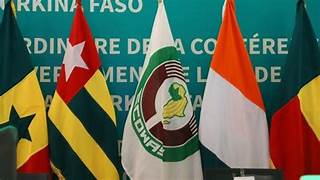
The Economic Community of West African States has imposed heavier financial sanctions on the Niger junta and entities supporting them including the governments of Mali and Burkina Faso.
The development came after a diplomatic mission by the African Union, ECOWAS, United Nations and the United States to resolve the political impasse in Niger hit a brick wall on Tuesday as the military junta refused to grant audience to the delegations.
The military leaders also snubbed the Acting US Deputy Secretary of State, Victoria Nuland, and denied her access to the coup leader, Gen. Abdourahmane Tchiani and ousted President, Muhammed Bazoum, who was being held in the presidential palace.
Some military officers led by Tchiani overthrew Bazoum on July 26 leading to a flurry of sanctions imposed on Niger by ECOWAS to compel them to restore the ousted president to power.
On Tuesday, presidential spokesman, Ajuri Ngelale, told journalists in Abuja that more sanctions had been imposed on the individuals and entities relating with the military junta.
The joint AU, ECOWAS and UN delegation planned a trip to Niamey to negotiate with the junta ahead of the Thursday summit of ECOWAS but the military officers denied permission to enter Niger to the delegation, according to a letter circulated on social media whose authenticity was confirmed by a Niger army spokesman.
Announcing the latest round of sanctions in Abuja on Tuesday, Ngelale said the latest prohibition was targeted at individuals and entities relating with the military junta in Niger Republic.
Although he did not go into details, he said the restriction was carried out through the Central Bank of Nigeria.
He stated, “I can also report that following the expiration of the deadline of the ultimatum and standing on the pre-existing consensus position of financial sanctions meted out on the military junta in Niger Republic by the bloc of ECOWAS Heads of State, President Bola Tinubu has ordered an additional slew of financial sanctions through the Central Bank of Nigeria on entities and individuals related to or involved with the military junta in Niger Republic.
“The ECOWAS mandate and ultimatum is not a Nigerian ultimatum. It is not a Nigerian mandate and the office of the President, also serving as the chairman of ECOWAS, seeks to emphasise this point that due to certain domestic and international media coverage, tending toward personalisation of the ECOWAS sub-regional position to his person and our nation individually.
“It is because of this that Mr President has deemed it necessary to state unequivocally that the mandate and ultimatum issued by ECOWAS is that of ECOWAS position. While President Bola Tinubu has assumed the ECOWAS chairmanship, the position of ECOWAS conveys the consensus position of member Heads of State. And a coup will not occur in one’s backyard, without one being particularly aware of it.”
The fresh sanctions by ECOWAS on the Niger Republic apply to Mali and Burkina Faso, a presidency source revealed on Tuesday.
“They (Burkina Faso and Mali) are included in the ECOWAS sanction. It affects any and every entity that is doing business with the Niger Republic. There is no hidden meaning to that, it’s clear,” the source who didn’t want to be mentioned told our correspondent.
Meanwhile, Ngelale explained that Tinubu had consulted extensively in the past few days following the expiration of the one-week ultimatum issued to the junta to hand over power to the deposed president.
He added, “The President in recent days, particularly following the expiration of the ultimatum given by ECOWAS, has widened consultations internationally but most especially domestically, including interfaces with state governors in Nigeria, who govern states bordering Niger Republic on the various fallouts and outcomes of the unfortunate situation that has unfolded in Niger Republic.
“But President Bola Tinubu wishes to emphasise to this distinguished audience that the response of ECOWAS to the military coup in Niger has been and will remain devoid of ethnic and religious sentiments and considerations.
“The regional bloc is made up of all sub-regional ethnic groups, religious groups, and all other forms of human diversity. And the response of ECOWAS, therefore, represents all of these groups, and not any of these groups individually.”
Intervention snubbed
Reuters reports that the letter said popular anger among Niger’s citizens over sanctions imposed by ECOWAS in response to the coup made it impossible to host the envoys safely and denounced “a climate of threatened aggression against Niger.”
An AU spokesperson confirmed that the mission had been denied access, while ECOWAS declined to comment.
The junta had already snubbed meetings with a senior US envoy and another ECOWAS delegation.
Niger is the world’s seventh-biggest producer of uranium, the most widely used fuel for nuclear energy, adding to its strategic importance.
The UN said Secretary-General Antonio Guterres strongly supported mediation efforts by ECOWAS, while US Secretary of State Antony Blinken told French radio station RFI that diplomacy was the best way to resolve the situation.
He declined to comment on the future of some 1,100 US troops in Niger, where French, German and Italian troops are also stationed.
Blinken later told the BBC he was worried that Russia’s Wagner mercenaries were taking advantage of the instability in Niger to strengthen their presence in the Sahel.
“I think what happened and what continues to happen in Niger was not instigated by Russia or by Wagner, but they tried to take advantage of it,” he was quoted as saying by the BBC.
Western allies fear that Niger could go the way of Mali, which threw out French troops and UN peacekeepers and invited in mercenaries from the Wagner group after a 2021 coup.
“Every single place that this Wagner group has gone, death, destruction and exploitation have followed,” Blinken told the BBC.
Nuland, who was denied permission to meet both Tchiani and Bazoum in Niamey, told reporters her talks with more junior officers were “frank and difficult” and they had shown little interest in exploring ways to restore democratic order.
Last week, ECOWAS sent a mission to Niamey led by former President Abdulsalami Abubakar, but the coup leaders also refused to see him.
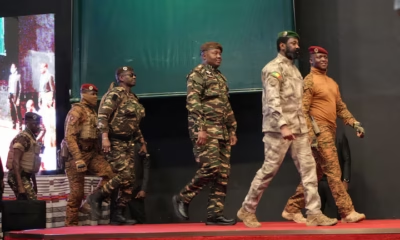
In contrast, Tchiani on Monday met a joint delegation from Mali and Burkina Faso, both neighbouring countries where the military has seized power from civilians. The juntas there have pledged support for the coup in Niger.
Alongside the Malian army, fighters presumed to be from Wagner have reportedly carried out a brutal military offensive, executing hundreds of civilians last year, witnesses and rights groups say, charges the army and Wagner denied.
In a new report seen by Reuters on Monday, UN sanctions monitors said they had also used a campaign of sexual violence and other grave human rights abuses to terrorise the population.
However, in furtherance of its resolution, the ECOWAS under the leadership of President Bola Tinubu has imposed fresh sanctions on the junta in Niger.
The regional bloc had earlier given the coupists seven days to reinstate President Bazoum or risk sanctions, including possible military action.
But they called the bluff of ECOWAS and vowed to resist any foreign intervention on their soil.
They further severed ties with Nigeria, Togo, France and the US, and shut down Nigerien airspace indefinitely.
At the end of the ultimatum, the bloc scheduled a meeting for Thursday to review the situation in the West African nation.
IDPs stranded
Meanwhile, the political situation in Niger has thrown Nigerian refugees in that country into anguish and confusion due to alleged hostilities from their hosts and the hardships resulting from the coup.
Some of the refugees were forced to relocate to Niger from the four northernmost local government areas of Borno State due to the security situation in their communities.
Despite the repatriation of thousands of refugees ahead of the 2023 elections and the postponed census, there are well over 100,000 displaced Nigerians in Diffa and Bosso communities of the Niger Republic, according to the Borno State Emergency Management Agency officials.






International
“Mother of all bombs,” Trump Plans To Hit Iran
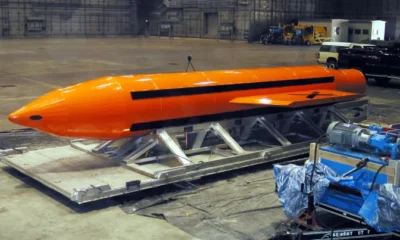
The 21,600-pound airburst weapon is designed to affect surface targets over a wide area and has so far not been deployed by the U.S. in previous strikes on targets inside Iran. It was used in Afghanistan in 2017 during the previous Trump administration.

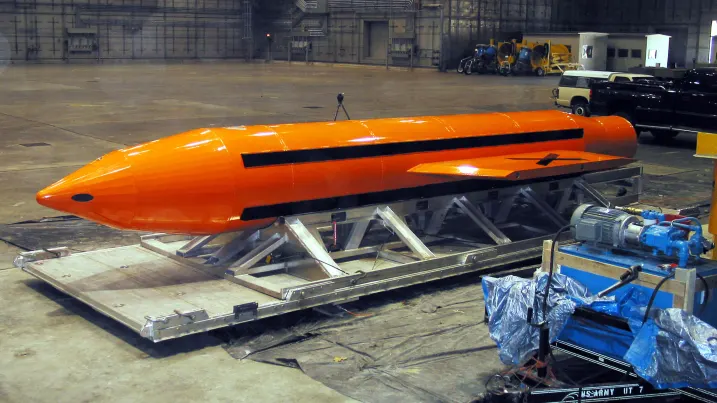
The U.S. military is considering use of the GBU-43/B Massive Ordnance Air Blast (MOAB) bomb if it resumes strikes inside Iran, CNN reported Thursday, citing U.S. officials.
The 21,600-pound airburst weapon is designed to affect surface targets over a wide area and has so far not been deployed by the U.S. in previous strikes on targets inside Iran. It was used in Afghanistan in 2017 during the previous Trump administration.
Trump said Oct. 8 that he would not resume U.S. strikes on Iran before the Nov. 3 midterm elections, while attacks on shipping near the Strait of Hormuz and deadly Houthi strikes in Saudi Arabia have raised regional tensions.
Iranian Parliament Speaker Mohammad Bagher Ghalibaf said Tehran will combine military capabilities and negotiations to press its demands.
International
Child marriage in southern Germany: Over 350 cases recorded, some brides as young as 11
The most recent entries in the overview relate to 2026. They include, among other things, marriages of 16- and 17-year-old girls to adult men.

• Child marriage / UNICEF
In the southwestern German state of Baden-Württemberg, a total of 358 so-called child marriages have been officially recorded since 2012.
Euro News reported that only eight of these forced marriages have so far been legally annulled.
According to authorities, the other 350 cases were brought to an end in other ways.
This alarming finding comes from a response by the Baden-Württemberg state government to a minor inquiry submitted by AfD state parliament members Nikolaos Boutakoglou and Emely Knorr.
The Tübingen regional authority is responsible for recording the data, the answer came from the Ministry of the Interior.
The eight final annulments took place between 2018 and 2024. Among the documented cases was the marriage of an 11-year-old girl from Iraq to a 17-year-old Iraqi, which was annulled in 2020.
As early as 2018, the marriage of a 14-year-old Afghan girl to a 30-year-old man had been ended.
In 2024 two further annulments were added: they concerned a 16-year-old German girl and a 25-year-old Pakistani man and a 16-year-old Syrian girl and a 27-year-old man from the same country.State parliament member Nikolaos Boutakoglou wrote on Facebook that the issue was “really awful” but was being treated as a taboo.
According to its own account, the ministry deals exclusively with such marriages entered into abroad.
Since summer 2017, the Act to Combat Child Marriages has been in force in Germany.
In 2024, the Bundestag adopted new rules to protect minors in marriages concluded abroad.
Hundreds of cases without state intervention
The significantly higher number of cases concluded in other ways raises questions about how these marriages continued.
For the period from 2015 to 2026, the regional authority lists a total of 350 proceedings under the heading “other disposals.”But what became of the other child marriages?
The state government cites, among other things, the death of a spouse, reaching adulthood, a decision not to seek annulment or a new marriage concluded abroad.
In these cases, there was therefore no legally binding annulment.
For 2023, the records include the case of a 12-year-old Afghan girl who was married to a 21-year-old Afghan man. Girls aged 13 and 14 also appear several times in the statistics.
The most recent entries in the overview relate to 2026. They include, among other things, marriages of 16- and 17-year-old girls to adult men.
The statistics record the age of the spouses at the time of marriage and their respective nationalities.
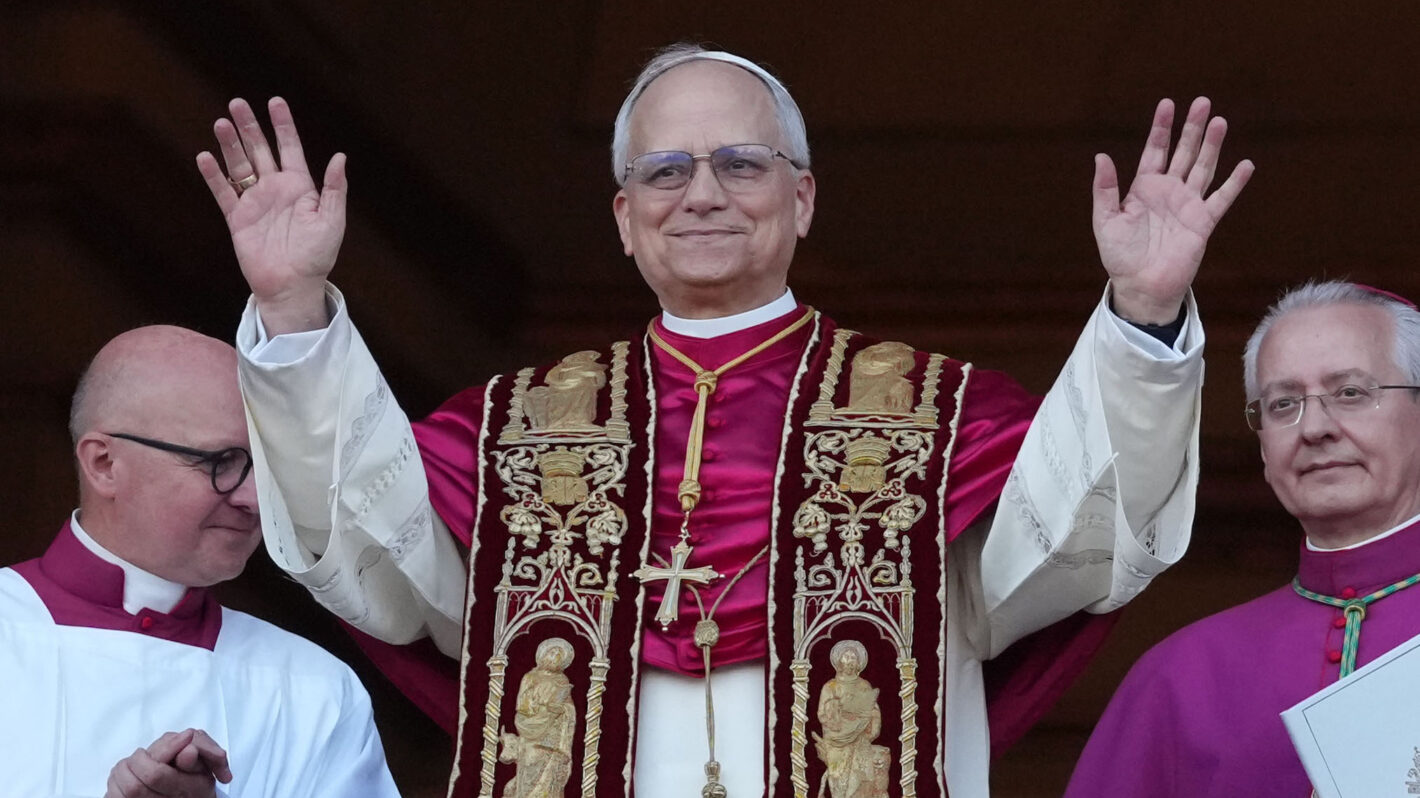
Pope Leo XIV has announced that he will undergo surgery in the coming days to remove a small, localized nodule found on his lung during a recent routine medical checkup.
The 71-year-old pontiff made the disclosure himself during his weekly Angelus prayer in St. Peter’s Square. “Doctors found a localized nodule in my lung,” he said. “It was detected at a very early stage and is well-contained.
The doctors believe it is advisable to intervene, so, following their advice, I have decided to undergo surgery to remove it.”
The Vatican confirmed the operation is scheduled for the first days of this week at Rome’s Gemelli Hospital, which has a dedicated papal suite. Holy See spokesman Matteo Bruni said the Pope is expected to need about a week to recover. On Monday, the Vatican added that Leo will be admitted Tuesday morning.
The nodule’s nature—whether benign or malignant—has not been specified. Medical experts note that most lung nodules are non-cancerous, and early detection generally carries a favorable outlook.
This marks the first significant health issue of Leo’s papacy since his election in May 2025. The American-born pope, known for remaining physically active, has continued his full schedule of audiences and is still expected to proceed with a planned trip to Latin America next month.


JUST IN: Mob Sets BRT Bus Ablaze After Motorcyclist’s Death in Lagos

BREAKING: DSS Arrests Fugitive Maina Son, Hands Him to EFCC

BREAKING: 5 Arrested Over Imo NYSC Abduction

BREAKING: Lagos Govt Declares Today, Thursday Work-Free to Mark 2026 Ìṣẹ̀ṣe Day

Tech Expert, Zuckerberg trains with UFC champions, Adesanya, Alexander

Organ Trafficking: Ekweremadu bags 10 years in UK prison
-
 Business2 days ago
Naira Exchange Rates For Thursday, October 15
-
 Sports2 days ago
CAF Increases Annual Funding for Member Federations to $700,000
-
 News2 days ago
ASCON To Be Rebranded “National School Of Government”
-

 Business2 days ago
Germany plans tax on sugary drinks
-

 News3 days ago
Sanwo-Olu Appoints Olatunbosun Ogunbanwo, 5 Others as Perm Secs
-
 Business2 days ago
WEF could appoint Lagarde as its next chair, sources say
-
 International2 days ago
“Mother of all bombs,” Trump Plans To Hit Iran
-
 Business1 day ago
Naira Exchange Rates Friday, October 16