
News
NELFUND releases N161.97bn student loans to more than 864,000 students

The Nigerian Education Loan Fund (NELFUND) has disbursed a total of N161.97 billion in student loans, benefiting 864,798 students across the country since the scheme’s launch in May 2024.
This milestone was announced by NELFUND Managing Director Akintunde Sawyerr during a media briefing in Abuja on Tuesday. The initiative, a key component of President Bola Tinubu’s Renewed Hope Agenda, aims to eliminate financial barriers to higher education and ensure no qualified Nigerian student is denied access to tertiary institutions due to lack of funds.
According to Sawyerr, NELFUND has received 1,361,011 loan applications to date. Of the total disbursed amount:
– N89.94 billion was paid directly to 263 tertiary institutions to cover tuition and other institutional charges.
– N72.03 billion was released directly to students as upkeep allowances to support their living expenses during studies.
The scheme provides interest-free loans to eligible students in public universities, polytechnics, colleges of education, and vocational institutions. Sawyerr emphasized that the growing numbers demonstrate the program’s tangible impact, gradually dismantling financial obstacles and creating new opportunities for young Nigerians.
The agency has conducted widespread sensitization campaigns across tertiary institutions over the past year to boost awareness and participation.
NELFUND is also pursuing partnerships with philanthropists, corporate organizations, and government bodies, including a N20 billion collaboration with the Ministry of Education focused on Technical and Vocational Education and Training (TVET).
Applications for the 2025/2026 academic session began in November 2025, with more than 200 institutions submitting updated data. So far, around 280,000 applications have been received for the new session, and loans have already been disbursed to over 150,000 students.
Sawyerr urged financially challenged students to apply, describing the scheme as a vital lifeline for completing their education. He reiterated NELFUND’s commitment to transparency, accountability, and expanding access to quality higher education nationwide.




News
South African kills Nigerian bar worker
Olaleye was allegedly shot by a South African national following an argument over whether a drinking glass should be taken outside the bar.

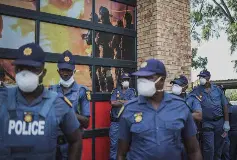
• South African police
The Nigerian Union in South Africa (NUSA) says Olatunde Olaleye, a 40-year-old father of two, has been shot dead in the country.
According to NAN, NUSA said Olaleye, an indigene of Ikere-Ekiti, was killed on September 21 while working at Spanata Bar and Grills in Mamelodi, Pretoria.
Smart Nwobi, NUSA president-general, in a statement on Thursday, said Olaleye was a husband and father of two children, adding that his death has left his family devastated.
He said the union is concerned by reports that Olaleye was allegedly shot by a South African national following an argument over whether a drinking glass should be taken outside the bar.
According to him, there were also reports that the suspect returned to the premises to threaten the bar’s management, with a promise that members of his crew would return.
Nwobi called for a thorough, transparent and impartial investigation into the circumstances surrounding the incident.
“We cannot continue to lose Nigerians under circumstances that leave families devastated and communities traumatised,” he said.
News
Nigerian Editors Brace for Democracy Protection Ahead of 2027 Elections
“As editors, we must remain above board in an increasingly polarised environment. We must not become agents of disorder. Neither should we display contradictory tendencies that cause the citizenry to question our credibility,” Anaba said.
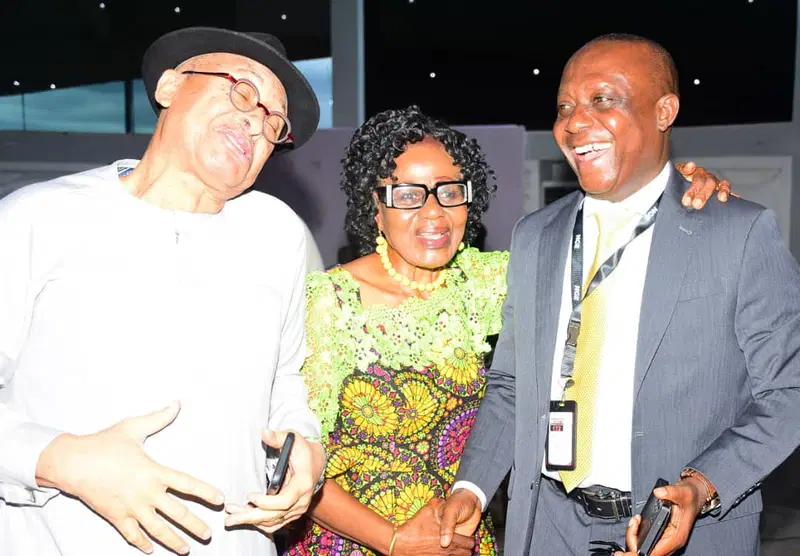
Enugu|•L-R Prof Pat Utomi; Prof Chinyere Okunna and Eze Anaba President Nigerian Guild of Editors at the 22nd All Nigerian Editors Conference in Enugu. Photo. Nwankpa Chijioke
Nigerian editors have been urged to protect the credibility of the ballot and help safeguard democracy as the country prepares for the 2027 general elections.
The call was made by Eze Anaba, President of the Nigerian Guild of Editors (NGE) and Editor of Vanguard Newspaper, in his welcome address at the 22nd Annual All Nigerian Editors Conference, which opened today in Enugu.
The conference is themed, “The Ballot, the Media and the Task of Keeping Democracy Alive.”
Anaba said the media, alongside other critical institutions, had a responsibility to nurture democracy by ensuring that voters were adequately informed and that electoral outcomes reflected the choices of the people.
According to him, the ballot can only fulfil its democratic purpose when voters have access to credible information and are able to make their choices freely, without intimidation or undue influence.
He urged editors and journalists to uphold verification, independence, accuracy, fairness, accountability and courage, particularly in an era of social media, artificial intelligence, deepfakes and the rapid spread of misinformation.
“As editors, we must remain above board in an increasingly polarised environment. We must not become agents of disorder. Neither should we display contradictory tendencies that cause the citizenry to question our credibility,” Anaba said.
He stressed that the media’s overarching responsibility was to serve the public good and help ensure that government derived its legitimacy from the consent of the people.
News
Works Minister Orders Tinubu’s Pictures On First Niger Bridge
“The President has worked so hard and we need to reward his hard work by decorating this bridge with his pictures.”

Minister of Works, David Umahi, has ordered the removal of illegal advertisements from the rehabilitated First Niger Bridge and their replacement with pictures of President Bola Tinubu, saying the display would recognise the President’s work on infrastructure.
Umahi gave the directive during an inspection of ongoing rehabilitation works on the bridge linking Anambra and Delta states.
He said the bridge was expected to reopen to motorists next week, subject to the completion of critical structural work.
“Once we are done with work on this bridge, I want all the illegal adverts on this bridge removed. Anyone who wants to advertise should apply to the Ministry of Works. For now, the bridge will be decorated with the pictures of President Tinubu,” Umahi said.
“The President has worked so hard and we need to reward his hard work by decorating this bridge with his pictures.”


South African kills Nigerian bar worker

Djibouti, Ethiopia and Dangote to build $660 million petroleum pipeline

At UN, 80 countries demand reopening of Hormuz, condemn Iran, Houthi attacks

Tech Expert, Zuckerberg trains with UFC champions, Adesanya, Alexander

Organ Trafficking: Ekweremadu bags 10 years in UK prison

SAINT OBI: Between his marriage and his death
-
 News3 days ago
Independent Panel Begins Probe into 37 Deaths in Civil Defence Custody
-

 Business3 days ago
Gambia Orders Nigerian Banks To Replace Foreign Staff by December 2026
-
 International3 days ago
Trump launches ‘Trump TV’ as US networks halt White House coverage
-
 Business3 days ago
Fans shown 65,000 junk food ads at World Cup
-
 Business3 days ago
Dangote Whets Investors Appetite Ahead 2028 Fertiliser IPO
-
 Business3 days ago
Naira To Dollar, Pound, Euro…Rate Today, September 22
-
 Sports3 days ago
Mbappé Leaves Nike To Promote Swiss Sportswear Brand On
-
 Health3 days ago
Nigerian hospital successfully performs kidney cancer surgery via tele-robotic