
Health
NACA, National Assembly Partner on Sustainability of HIV Response


The National Agency for the Control of AIDS (NACA), has partnered with the USAIDS, UNAIDS and Jhpiego for a 2-day retreat alongside the National Assembly House Committee on AIDS, Tuberculosis and Malaria (ATM) under the theme “Leadership for sustainability of the HIV response: The role of the Legislative”.
In her opening speech, the Director General of the National Agency for the Control of AIDS, Dr Temitope Ilori assured of the agency’s determination in providing leadership to driving an accelerated decline in new HIV infections in the country.
She advocated for an integrated approach at tackling these diseases, one that will foster synergy and yield maximum health benefit.
“We are here today to continue in our efforts at targeting the eradication of HIV/AIDS by year 2030.
We are re-energised at fostering a commitment to the issues of HIV/AIDS with the legislators here present and help facilitate an efficient and sustainable response in Nigeria”, she stated.
The Country Director of UNAIDS, Dr Leopoid Zeken urged the leadership of the house to scale up efforts and help in terms of legislation for resource allocation.
He called for an increased awareness and improved accountability of resources in better management of the resources available to solving the major issues plaguing us.
He believes that the success achieved in the fight against HIV/AIDS in Nigeria will have an overbearing effect on the African continents’ success.
While also addressing the participants at the retreat, a seasoned Public Health Specialist and Country Director, Jhpiego, Oniyire Adetiloye spoke on the critical nature of the committee and believes if these three diseases are tackled heads on, it will portend a great success for the country.
He called for an integrated approach that will ensure the patients receive the best solutions to these health issues.
According to him, Jhpiego has been in the forefront of tackling HIV/AIDS and have reached millions of Nigerian women, men and children since 1978.
He noted that HIV testing services have been provided to more than 2.6 million people while more than 74,000 have been newly identified as HIV-positive and over 72,000, linked to care and treatment.
In his submission, Chairmman House Committee on AIDS, Tuberculosis and Malaria (ATM), Honourable Godwin Ameobi insisted that Nigeria must address gender and human rights barriers as well as domestic financing to make progress in the fight against HIV/AIDS.
He stated that there is still much work to be done but believes that the summit is a right step in the right direction.
He encouraged the engagement between NACA and the legislature as a progress in knowing the right responses in eliminating HIV/AIDS.
He suggested that 1% of the consolidated National funds be dedicated to manage HIV/AIDS.”Government must take the lead by providing the needed funds.
NACA must also be improved upon to become a multi-sectoral agency to fight HIV/AIDS better”, he stated.
He stated that the committee will insist that all funds must be accounted for, to ensure transparency and accountability in attaining the renewed hope agenda of President Tinubu’s administration.
Ameobi called for more retreats on capacity building to help the legislators attend more events so as to keep them abreast of best global practices, while urging strict efforts against stigma and discrimination, especially in workplaces.
Participants at the retreat attended various sessions where speakers discussed National HIV response, statistics and the goals of the sustainability agenda.
Globally, about 39 million people are presently living with HIV while about 3 million are living with HIV in Nigeria , according to 2023 estimates.
4.9% of PLHIV globally and 41.6% of PLHIV in West and Central Africa are in Nigeria.
16 states in Nigeria have HIV prevalence above the national prevalence of 1.3%.







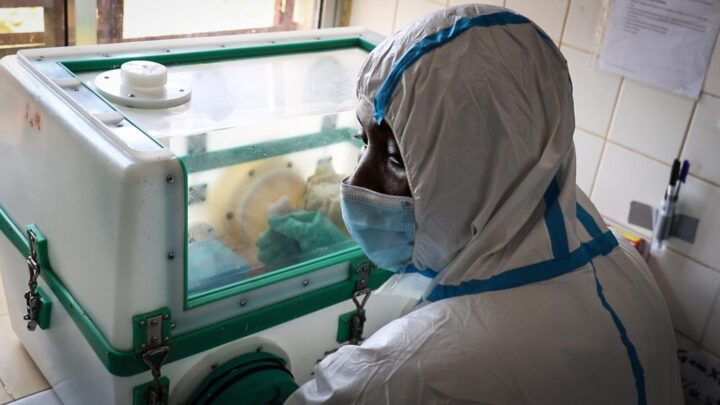
The Federal Government has said the confirmed Ebola patient in Abuja is responding well to treatment and showing signs of recovery, with laboratory results indicating significant improvement.
Coordinating Minister of Health and Social Welfare, Professor Muhammad Ali Pate, disclosed this while briefing journalists on the national response. He said he had spoken with the clinicians managing the case and that there is a possibility the patient could recover fully, though authorities would not take anything for granted.
The patient is a woman who recently arrived in Nigeria from Uganda (via Addis Ababa). She was asymptomatic on arrival but developed symptoms days later and was admitted to a private hospital in the Federal Capital Territory, where she received care for several days before laboratory confirmation of Ebola virus disease on 20 October 2026. The infection has been identified as the Bundibugyo strain.
Authorities have identified 44 contacts, including healthcare workers, patients, caregivers and travel contacts. High-risk contacts have been placed in quarantine, while others remain under monitoring. The government has intensified contact tracing, surveillance and infection-prevention measures, and has stated there is currently no evidence of community transmission.
Pate emphasised that the priority remains containing the single confirmed case and preventing any wider outbreak. The Nigeria Centre for Disease Control and Prevention (NCDC) has activated its incident management system in collaboration with the FCT Health Services Secretariat and international partners, including the World Health Organization.
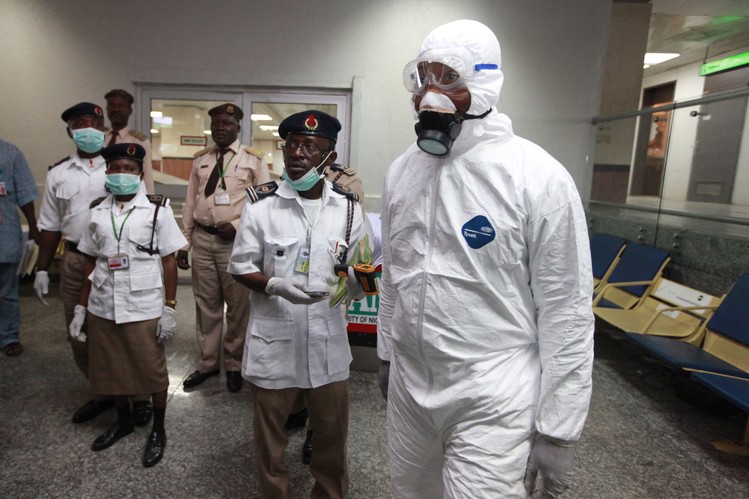
Country of birth, date she arrived in Abuja and other key details emerge as health authorities contain Nigeria’s first case in over a decade
Nigeria’s first confirmed Ebola case since the 2014 West African outbreak involves a 42-year-old woman originally from Uganda who is resident in Abuja and is the wife of a diplomat. She arrived in the Nigerian capital on 3 October 2026 after spending about two and a half weeks in Kampala on holiday, according to Africa Centres for Disease Control and Prevention (Africa CDC) Director-General Dr Jean Kaseya and Nigeria’s Coordinating Minister of Health and Social Welfare, Professor Muhammad Ali Pate.
Her return journey included a two-hour stopover in Addis Ababa, Ethiopia, before landing in Abuja. She had not travelled outside the Federal Capital Territory since her arrival. Symptoms began on 6 October (or 7 October in some accounts). She initially sought care at a private hospital in Abuja around 11 October, believing she had malaria. When her condition did not improve, public health authorities were alerted on 19 October. Laboratory confirmation of Ebola (Bundibugyo strain) came on 20 October after three molecular tests.
The patient is currently in isolation and receiving medical care. Minister Pate has described her condition as stable and improving, though some reports have noted multi-organ failure. Authorities have identified 44 contacts, including healthcare workers, patients, caregivers and her husband (reported in some accounts as a Swiss national living with her in Abuja). None of the contacts had developed symptoms as of the latest updates, and they remain under monitoring.
There are differing accounts of her exact nationality and travel purpose. Africa CDC and Nigerian officials describe her as Ugandan-born and resident in Abuja who holidayed in Uganda. Uganda’s Ministry of Health has stated she is a Nigerian national who travelled to eastern Democratic Republic of Congo for business and only transited through Uganda, emphasising that Uganda has no active Ebola cases and that transit does not mean infection occurred there. The location of exposure remains under investigation.
Nigerian authorities have activated emergency response measures, intensified surveillance at entry points, and are working with the Africa CDC and other partners to prevent further spread. They have urged passengers who may have travelled on the same flights to cooperate with contact tracing. The Bundibugyo strain currently circulating has no approved vaccine or specific treatment.
This is Nigeria’s first imported Ebola case in more than a decade and the first linked to the ongoing East and Central African outbreak that began earlier in 2026. Health officials stress that the case is considered contained at this stage, drawing on lessons from the successful 2014 response.
Further updates will be provided as contact tracing and investigations continue.
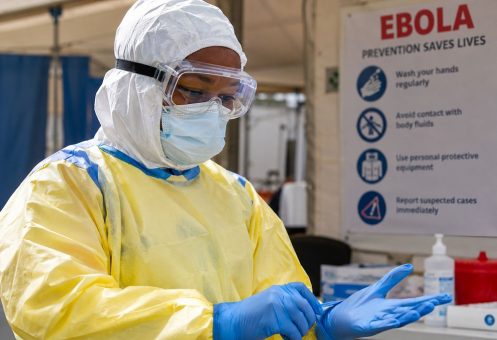
The Federal Government has urged Nigerians not to panic over the country’s first confirmed Ebola case in more than a decade, stressing that authorities have the capacity to contain the imported infection.
Coordinating Minister of Health and Social Welfare Muhammad Ali Pate made the call on Wednesday after meeting Chief of Staff to the President Femi Gbajabiamila at the Presidential Villa in Abuja.
Pate confirmed that a woman who arrived in Nigeria on an international flight from Uganda tested positive for Ebola after seeking treatment at a private hospital in the Federal Capital Territory. The patient is in isolation and receiving care. Health officials have identified 44 contacts and are conducting intensive contact tracing.
“We have found this one case. We are doing contact tracing, and we are putting containment measures to ensure that it doesn’t go into our population,” Pate said. “Federal government has competent authorities to be able to deal with this. We have done it in 2014, and we have good public health institutions. Nigerians should be reassured.”
He urged the public to remain vigilant but avoid hysteria or panic, respect information from trusted sources, and refrain from spreading misinformation. “It’s one case. It’s an imported case, and we are containing it,” he added. “If the situation changes, we’ll come out and inform Nigerians.”
The Presidential Task Force on Ebola Preparedness, chaired by Gbajabiamila, also met in an emergency session and assured citizens that response systems, including those of the Nigeria Centre for Disease Control and Prevention (NCDC), are fully activated. Officials credited early detection protocols and noted collaboration with the World Health Organization and Africa CDC.
The case involves Bundibugyo Ebola virus and marks Nigeria’s first detection since the 2014 West African outbreak. Authorities continue to monitor contacts, strengthen infection prevention at the treating facility, and call on healthcare workers nationwide to maintain a high index of suspicion.


JUST IN: Four Pilots Die After Mid-Air Collision of Military Planes in Philippine

JUST IN: Another Nollywood Actor, Dies After Brief Illness

Ebola patient in Abuja showing signs of recovery – FG

BREAKING: Lagos Govt Declares Today, Thursday Work-Free to Mark 2026 Ìṣẹ̀ṣe Day

Tech Expert, Zuckerberg trains with UFC champions, Adesanya, Alexander

Organ Trafficking: Ekweremadu bags 10 years in UK prison
-

 Business2 days ago
Naira To Dollar, Pound, Euro… Today October 23
-

 Health3 days ago
UPDATE: Identity of Woman Who Flew into Nigeria with Ebola Virus Revealed
-

 Business2 days ago
Obasanjo Accuses Tinubu : “You Made Every Nigerian Poor By 300% Naira Devaluation”
-

 Entertainment2 days ago
JUST IN: Nollywood Veteran Francis Duru Dies at 57 After Brief Illness
-
 News2 days ago
JUST IN: 1 Dead, 3 Rescued in Fadeyi Building Collapse, Lagos
-
 Business2 days ago
History of Naira Revaluation and Devaluation (1973–2026) (Part 1)
-

 Business2 days ago
CBN Licences Abbey Bank to Start Full Commercial Banking in November 2026
-

 Politics1 day ago
2027 presidential election: Tinubu’s Northern test begins today