
Health
JUST IN: NAFDAC shutdowns cemetery market Aba Home of fake Milo, Cadbury, Miksi others

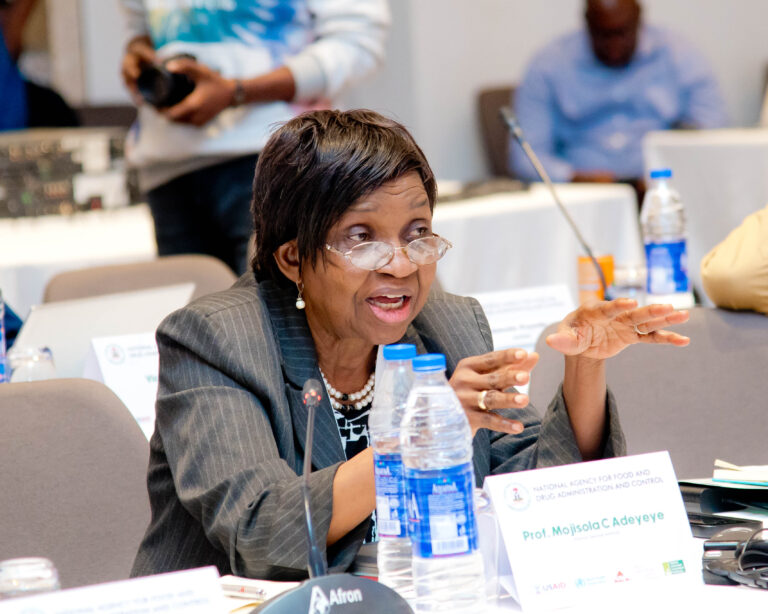
NAFDAC says it has cleaned up and shutdown the Cemetery market Aba regarded as the most dreaded and hitherto safe haven for the largest cartel ring for the manufacture of fake wines and beverages in Africa.
NAFDAC also confiscated adulterated wines, fake food and beverages valued at over N5 billion.
Prof Mojisola Adeyeye, the NAFDAC Director-General , said in a press release today .
The statement reads: ” The current action of NAFDAC is the most audacious since the history of the market with specific zones barricaded with iron welding and access gates locked till date.
The operation carried out in conjunction with a large contingency of the military, DSS and Nigeria Police, in a rare display of inter-agency cooperation, was a follow up to a similar raid that was carried out in December 2023.
Some of the nefarious activities of the counterfeiters included the manufacturing of all kinds of adulterated products especially different kinds of wine from a wide variety of brands ranging from the following: · Seaman Schnapps,
Henessy,
Four Cousins ·
Carlo Rossi,
Jenney,
Chelsea London Dry Gin ·
Schnapp Dry Gin,
McDowells, Black Labels ·
Gordons,
Martell, Campari, Smirnoff ice ·
Eva Non-Alcoholic Drink,
Evra Non-Alcoholic Drink, Cartel and others.
As a consequence of the extensive operation, the agency raided over 240 shops turned factories where the harmful products were being produced and marketed.
The shops turned factories are very filthy, using water from very unhygienic sources, harmful chemicals, saccharin, colouring, dirty recycled bottles and cloned packaging materials of other brands.
The adulteration of alcoholic beverages by criminal elements in the country is done by mixing of cheaper sources of sugar and starch besides grapes or fruit, among other harmful chemicals unsuitable for human consumption.
Over 1500 cartons of the fake and substandard products were destroyed during the operation.
The street value of the confiscated and destroyed fake products in 2023 is estimated at over seven hundred and fifty million naira only. (N750,000,000).
The estimated value of products mopped up during the December 15, 2024, operation is five billion naira.
The products being revalidated and mopped up include: ·
Soft and carbonated drinks such as Fanta, Coca Cola ·
Schweppes, Lacasera, Sprite, Hollandia Yoghurt ·
Super Commando Energy Drink, Feyrouz and Amstel Malta. Aside from drinks, notable fake home use beverages such as: ·
Peak Sachet Milk, Cowbell Sachet Milk, Peak Chocolate Drink ·
Miksi Sachet Milk, Cadbury Chocolate Drink and Ovaltine adulterated versions.
Prior to the evacuation of the products by NAFDAC, they were being produced in the market and neatly packaged and sold to unsuspecting consumers.
NAFDAC management appreciates the support from the Government of Abia State led by His Excellency Governor Alex Otti for his unwavering support for this project OPERATION CLEAN UP ABA.
The Mayor of Aba south and the interim management committee of the market and other stakeholders have been working assiduously with NAFDAC on the project leading to another discovery of three major warehouses stockpiling expired HOLLANDIA YOGHURT for revalidation on the 22nd of January 2025.
Health
Millions of bedbugs crawl out of mattresses and walls in huge outbreak
Bedbugs can enter homes on clothes, luggage, or second hand furniture – and “hide” in mattresses or walls, according to the NHS.


Millions of bedbugs were crawling out of mattresses in what a pest controller said was the worst outbreak he had seen in 38 years.
They were even in the walls and under the wallpaper, with the mattresses and bed frames needing to be incinerated.
Cardiff pest controller Gareth Davies had to wear full protection as his team tackled the problem in the Canton area of the city, using a specialist vacuum cleaner to collect millions of the bugs.
It came after they had tackled a large cockroach outbreak last month in a scene he likened to a horror movie.
“This house was just horrific,” he told BBC Radio Wales Breakfast.
“Hundreds of thousands of them when you lifted the mattresses up.
“They were coming out of the wallpaper, it was horrendous.”
Bedbugs can enter homes on clothes, luggage, or second hand furniture – and “hide” in mattresses or walls, according to the NHS.
Credit: BBC
The Nigeria Centre for Disease Control and Prevention (NCDC) has confirmed that Lassa fever has claimed 259 lives and infected 1,086 people across 24 states and 118 local government areas so far in 2026.
In its latest Lassa Fever Situation Report for epidemiological week 36 (August 31 to September 6), the agency said the figures represent a case fatality rate of 23.9 percent — significantly higher than the 18.6 percent recorded during the same period in 2025.
Twelve new confirmed cases were recorded in week 36, a decline from the 18 cases reported the previous week. The fresh infections were detected in Ondo, Edo and Kogi states.
Five states continue to bear the heaviest burden, accounting for 87 percent of all confirmed cases this year: Bauchi, Ondo, Taraba, Benue and Edo. People aged 21 to 30 remain the most affected age group.
The NCDC noted that no new infections among healthcare workers were recorded during the latest reporting week. The agency continues to urge the public to maintain hygiene, avoid contact with rodents and their droppings, and seek early medical care if symptoms appear.
Health
Nigerian hospital successfully performs kidney cancer surgery via tele-robotic
The development could reduce the need for Nigerians to travel abroad for specialised medical treatment, thereby reducing expenditure on international travel, accommodation and medical services.
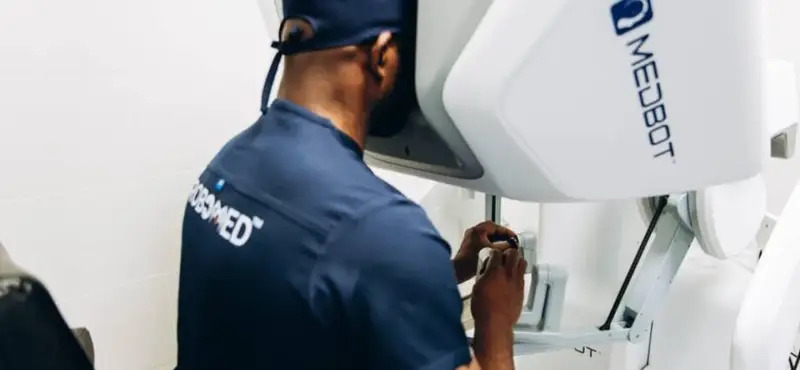
• A surgeon performing tele-robotic surgery.
Nisa Premier Hospital, Abuja, has partnered with RoboMed Global and The Redeemer’s Health Village (RHV) to successfully perform what the hospital described as the first tele-robotic surgery in Nigeria and West Africa.
The landmark kidney cancer surgery was performed on a patient at Nisa Premier Hospital, Abuja, while the surgeon, Professor Obi Ekwenna-Davis, remotely controlled the robotic surgical platform from Redeemer’s Health Village in Lagos.
The procedure, which lasted approximately three hours, was performed to remove a kidney affected by a cancerous tumour.
The hospital said the patient had been discharged following the successful procedure, although details about the patient’s identity and condition were withheld for privacy reasons.
Speaking during an event to mark the milestone, the Chief Executive Officer of Nisa Premier Hospital, Dr Ibrahim Wada, said the development demonstrated the potential of tele-robotic surgery to connect specialist surgical expertise with patients across Nigeria.
Wada said the procedure was carried out using the MicroPort robotic surgical platform installed at Nisa Premier Hospital, with the remote surgeon controlling the system from Lagos.
He said the development could reduce the need for Nigerians to travel abroad for specialised medical treatment, thereby reducing expenditure on international travel, accommodation and medical services.
According to him, the technology also creates an opportunity for Nigerians to access specialised expertise from doctors located in other parts of the world without requiring the doctors to travel physically to Nigeria.
Source: Daily Trust


JUST IN: Mob Sets BRT Bus Ablaze After Motorcyclist’s Death in Lagos

BREAKING: DSS Arrests Fugitive Maina Son, Hands Him to EFCC

BREAKING: 5 Arrested Over Imo NYSC Abduction

BREAKING: Lagos Govt Declares Today, Thursday Work-Free to Mark 2026 Ìṣẹ̀ṣe Day

Tech Expert, Zuckerberg trains with UFC champions, Adesanya, Alexander

Organ Trafficking: Ekweremadu bags 10 years in UK prison
-
 Business3 days ago
Germany plans tax on sugary drinks
-

 Business3 days ago
WEF could appoint Lagarde as its next chair, sources say
-

 International3 days ago
“Mother of all bombs,” Trump Plans To Hit Iran
-

 Business2 days ago
Naira Exchange Rates Friday, October 16
-
 Crime2 days ago
BREAKING: 5 Arrested Over Imo NYSC Abduction
-

 News2 days ago
Meta removes 3.7 million accounts in West Africa scam crackdown
-

 News2 days ago
ARISE News Wins Seven Honours At Nigerian Broadcasters Merit Awards
-
 News3 days ago
BREAKING: Explosion Rocks Rivers, Many Rushed to Hospital