
News
JUST IN: Mixed reactions as House of Reps propose 5-year jail term for exams malpractice

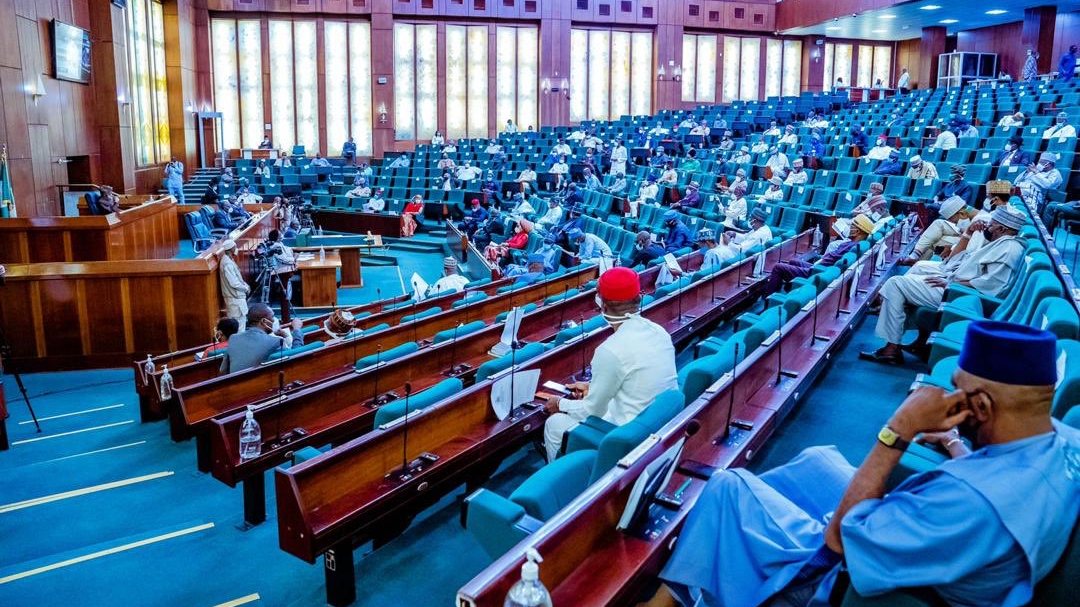
The recent move by the House of Representatives to slam a five-year jail term or N500,000 fine or both on any person convicted for leaking examination questions, and a three-year jail term for persons under 18 years convicted for engaging in various forms of examination malpractices has been generating mixed reactions from Nigerians.
The proposed legislation, entitled, “Examination Malpractices Act (Repeal and Enactment) Bill, 2025(HB2097) and sponsored by the member representing Oredo Federal Constituency, Esosa Iyawe, was introduced on March 6, 2025, and is currently awaiting second reading.
The bill, according to its explanatory memorandum, sought to repeal, “The Examination Malpractice Act Cap. E15, Laws of the Federation of Nigeria, 2004 and enact the Examination Malpractices Act, 2025, to provide for non-custodial penalties, expand offences relating to the examination malpractices and prescribe adequate punishment for such offences.”
It further stated that minors convicted under the proposed law shall be treated in accordance with the Child Rights Act.
The bill stated that any person, who procures any question paper intended for use in any examination in the country, whether or not the question is genuine and any person who uses a technological device at any examination, is guilty of an offence and shall, on conviction, be liable to a fine of N500,000 or imprisonment for a term not exceeding three years or both for a person under the age of eighteen years.
However, in the case of a principal, teacher, an invigilator, a supervisor, an examiner, agent or employee of the examination body concerned with the conduct of an examination, the offence shall attract a four-year jail term without an option of fine.
Also, the parliament is proposing N400,000 or four years imprisonment or both for any person engaged to mark examination papers, who, without lawful excuse, alters or otherwise tampers or attempts to alter or tamper with the scores of a candidate as recorded by another person; or (b) employed by an examination body, who before, during or after an examination, fraudulently or without lawful authority, alters or otherwise tampers with the scores of a candidate or aids or abets any candidate to cheat at an examination.
Similarly, Section 4 of the proposed legislation stipulates that, “A candidate, who at any examination, by any fraudulent trick or device or with intent to cheat or secure an unfair advantage for himself or any other person, steals or otherwise appropriates or takes a question paper, an answer sheet or a script of any other candidate, commits an offence and is liable on conviction to a fine of N500,000 or imprisonment for a term not exceeding three years or both.”
The bill also stated that any person, who impersonates a candidate in an examination shall on conviction be liable to a fine of N500,000 or imprisonment for a term not more than three years or both, in the case of a person under 18 years old, while in the case of a principal, teacher, an invigilator, a supervisor, an examiner, an agent or employee of the examination body concerned with the conduct of an examination, the imprisonment shall be for a term of four years without the option of a fine.
According to Section 6(1) of the proposed law, “A candidate at an examination, who leaves the venue of the examination and mixes up with any other person with intent to cheat or secure any unfair advantage for himself or any other person in the examination, commits an offence and is liable on conviction to a fine of at least N300,000 or imprisonment for a term not exceeding three years or both, and in addition, the candidate shall not be allowed to re-enter the examination hall or any other place to continue with that examination.”
Section 6(2) and (3) provides that “A person who (a) without lawful excuse, with intent to aid a candidate to cheat or secure any unfair advantage for himself or any other person at the examination, communicates or attempts to communicate to the candidate any information relating to any question paper in the examination; or (b) not being involved in the conduct of the examination, is found in or near the examination hall or any other place appointed for the examination with intent to aid a candidate to cheat or secure an unfair advantage for a candidate at the examination, commits an offence.
“A person guilty of an offence under sub-clause (2) of this section is liable on conviction (a) in the case of a person under the age of 18 years, to a fine of N500,000 or imprisonment for a term of not more than three years or to both; (b) in the case of a principal, teacher, an invigilator, a supervisor, an examiner, or an agent or employee of the examination body concerned with the conduct of an examination, to imprisonment for a term of four years without the option of a fine.”
Since the proposal became public knowledge, Nigerians have reacted variously.While some have dismissed the lawmakers as idle people who have abandoned important issues affecting Nigerians to chase shadows, there are those who believe that it is not bad in its entirety.
One of those who believe that it is idleness that has forced the lawmakers to abandon critical problems bedeviling Nigerians to chase an infinitesimal issue as examination malpractice is the former national chairman of the All Progressives Grand Alliance, APGA, and lawyer, Chief Maxi Okwu.
“I think those lawmakers are idle. There are more important issues to tackle,” he said.
Although he clearly stated that he would not encourage examination malpractice in any form, he argued that in order of priority of the issue bogging the nation, it shouldn’t catch the attention of the lawmakers, when terrorists and bandits are running riots, riding roughshod over the country and spilling the blood of the innocent without let or hindrance.
He said: “It is not as if I am encouraging exams malpractice, but to me, it is not a priority matter. It is not a priority at all; look at kidnappers, bandits and terrorists that go away with mayhem; they don’t want to do anything about that, it is to go after school children who engage in what I may call some malfeasance.
“Yes, there should be punishment, and by the way there is punishment already for examination malpractice in Nigeria, but like I said, if you want to improve the law, fine. But there are more important things facing the nation that they should give their attention to.
“There is already a punishment for exam malpractice. Increasing it may be useful later but for now, that is not a priority to me.
”Also contributing, a lawyer and public affairs analyst, Adekunle James, questioned the moral standing of the lawmakers who are pushing the bill.
He noted that most of them are in the national assembly with forged secondary school certificates, and should not be talking about examination malpractice.
He added that the law against examination malpractice in Nigeria is strong enough to deal with the problem.
“So, for anybody to abandon all the problems that Nigerians are facing and be talking about a non-issue like exam malpractice is most unfortunate.
“Are the lawmakers not aware of what Nigerians are going through? Nigerians are being killed like chickens in their homes by bandits and terrorists; nowhere is safe; People can’t feed; they can’t afford ordinary medication for malaria; house rent is rising every year; transportation cost of out of reach of so many Nigerians due to the removal of subsidy on petroleum products and some lawmakers are talking about examinations malpractice.
Are they supposed to be debating about examination malpractice in a country where people are not sure when death will come calling or where their next meal will come from?
Are they not supposed to be making laws that will alleviate the sufferings of Nigerians and secure their lives from the criminal gangs in the name of bandits, terrorists and killer herdsmen?“
Certain things are better left not discussed.
These lawmakers will never cease to amuse us. So, of all the problems bedeviling us as a people, it is examination malpractice that they chose to single out and discuss?
“This is a shame. My advice to them is to sit up and face their constitutional duty of ensuring that they make laws that will protect the lives and property of Nigerians, put food on their table and improve their general well-being,” he said.







Airlines operating in Nigeria have issued a stern warning of an indefinite shutdown of flights if ongoing disruptions by aviation unions are not urgently resolved.
Industry operators cited repeated industrial actions, including strikes and work-to-rule tactics by union members, as severely impacting flight schedules, passenger movements, and operational costs. The threatened action could ground both domestic and international flights across major airports, including Lagos and Abuja.
Airline representatives stated that prolonged union-related interruptions have already caused significant financial losses and eroded passenger confidence. They called on the federal government and relevant labour authorities to intervene immediately to prevent a total collapse of commercial air travel.
No specific deadline for the proposed shutdown has been publicly announced, but stakeholders described the situation as “critical.” Passengers have been advised to monitor airline communications closely for any developments.
Authorities and union leaders have yet to issue detailed responses. Further updates are expected as talks continue.

A fire has broken out at the Lagos Customs Command office, officials confirmed early Monday.
Emergency services were dispatched to the scene as thick smoke rose from the building.
The cause of the blaze and the extent of the damage remain under investigation.
No immediate reports of casualties have been released. Authorities have urged the public to avoid the area while firefighters work to contain the flames.
Further updates are expected as the situation develops.
News
Nigeria is 66, Thursday October 1
The citizens are expecting the details of the anniversary events by the Federal Government, through the Minister of Interior, Olubunmi Tunji-Ojo.


Since Nigeria gained independence on October 1, 1960, the country will mark its 66th Independence Anniversary on Thursday, October 1, 2026.
The citizens are expecting the details of the anniversary events by the Federal Government, through the Minister of Interior, Olubunmi Tunji-Ojo.


BREAKING: Tragic One-Way Crash Claims Tricycle Driver’s Life in Meiran Lagos

BREAKING: AAC sues Tinubu, NASS over Europe vacation

2027: Atiku, ADC Move to Amend Suit Challenging Tinubu’s Eligibility

Tech Expert, Zuckerberg trains with UFC champions, Adesanya, Alexander

Organ Trafficking: Ekweremadu bags 10 years in UK prison

SAINT OBI: Between his marriage and his death
-

 Business18 hours ago
SEC Highlights Focus of National Capital Market Conference 2026
-

 Business18 hours ago
NGX Debuts Invest WhatsApp Channel
-

 Sports17 hours ago
Flamingos win WAFU B U-17 women’s tournament
-

 Business19 hours ago
Naira To Dollar, Pound, Euro …Today, September 28
-

 News17 hours ago
Nigeria is 66, Thursday October 1
-

 Business18 hours ago
Ghana Moves to Cut Domestic Airfares as Ticket Prices Stay High
-

 Entertainment17 hours ago
Madonna and Taylor Swift win big at the MTV VMAs
-

 News10 hours ago
JUST IN: Fire Engulfs Lagos Customs Command Office