
Business
JUST IN: CBN hits Niger Republic junta with sanctions

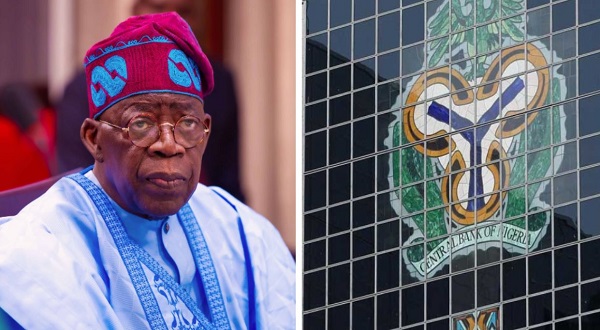
President Bola Ahmed Tinubu has directed the Central Bank of Nigeria (CBN) to implement a set of new financial sanctions against the Niger Republic’s junta as well as their associates.
Special Adviser to the President on Media and Publicity, Chief Ajuri Ngelale, said this during a briefing at the Presidential Villa in Abuja.
He said: “Following the expiration of the deadline of the ultimatum and standing on the pre-existing consensus position of financial sanctions meted out on the military junta in Niger Republic by the bloc of ECOWAS Heads of State, President Bola Ahmed Tinubu has ordered an additional slew of financial sanctions, through the CBN, on entities and individuals related to or involved with the military junta in Niger Republic.”
The President’s spokesman maintained that they are being instituted under the authority of the ECOWAS.
Nigeria has already cut off electricity transmission to its northern neighbours to pressurise the military to reinstate ousted President Mohamed Bazoum.
Ngelale added: “Concerning the ultimatum given to the military Junta in the Niger Republic, it is not a Nigerian mandate.
“The Office of President Tinubu, who is the chairman of ECOWAS, seeks to emphasise this point due to certain domestic and international media coverage tending toward personalisation of the ECOWAS sub-regional position to his person and to our nation individually.
“It is because of this that Mr. President has deemed it necessary to state unequivocally that the mandate and ultimatum were issued by ECOWAS.
“President Tinubu wishes to emphasise that the response of ECOWAS to the military coup in Niger has been and will remain devoid of ethnic and religious sentiments and considerations.
“The regional bloc is made up of all sub-regional ethnic groups, religious groups, and all other forms of human diversity.
“The response of ECOWAS, therefore, represents all of these groups, and not any of these groups individually.”
Ngelale stressed that tomorrow’s extraordinary summit of ECOWAS will come up with far-reaching decisions on the developments in the Niger Republic.
Junta rejects visit by ECOWAS, UN, AU, U.S. delegations
The Niger coup leaders vowed to resist external pressure to reinstate ousted President Mohamed Bazoum after ECOWAS imposed sanctions and Western allies suspended aid.
The junta informed ECOWAS that it cannot host a delegation from the West African regional bloc.
“The current context of anger and revolt among the population following the sanctions imposed by ECOWAS makes it impossible to welcome this delegation in the required serenity and security,” Niger’s Foreign Affairs Ministry wrote in a letter addressed to the ECOWAS representation in Niamey.
On Monday, acting U.S. Deputy Secretary of State Victoria Nuland met with the coup leaders and said they refused to allow her to meet with ousted President Bazoum, whom she described as under “virtual house arrest.”
She described the mutinous officers as unreceptive to her appeals to start negotiations and restore constitutional rule.
Police at alert to avert internal security crisis, says IGP
The Acting Inspector-General of Police (IGP) Olukayode Egbetokun yesterday directed Assistants Inspector General (AIGs) of Police and Commissioners of Police (CPs) in charge of the border to be alert to avert internal security crisis following the Niger coup saga.
Egbetokun disclosed this during a meeting with top police officers in Abuja.
He said the deployment of police officers would be done if need be alongside other security operatives.
The police boss said: “I have directed that CP of commands and AIGs, who are in charge of those border states with neighbouring countries, are to work in collaboration with our sister agencies, especially Customs to ensure that there are no internal security issues with respect to what is happening with our neighbours.”
ACF asks FG to lift economic sanctions against Niger
The mouthpiece of Northern Nigeria, the Arewa Consultative Forum (ACF), called on President Tinubu and ECOWAS to lift sanctions against the Niger Republic and adopt more dialogue with the military junta to prevent a further breakdown of talks.
ACF, in a statement by its National Publicity Secretary, Prof. Tukur Muhammad-Baba, said though the group condemns the coup and demands that the personal safety of President Bazoum and members of his government be guaranteed by the coup leaders, it feels dialogue, not military action is the way out.
This, he said, is to avoid a catastrophic occurrence of events between the two nations and the West African sub-region.
Coup plotters name economist as new prime minister
Nearly two weeks after the military took over power in the country, the coup plotters have named former economy minister Ali Mahaman Lamine Zeine as the country’s new prime minister.
A spokesman for the military junta made the announcement on television late on Monday night.
Lamine Zeine was formerly the minister of economy and finance for several years in the cabinet of then-president Mamadou Tandja, who was ousted in 2010, and most recently worked as an economist for the African Development Bank in Chad, according to a Nigerien media report.






Business
Obi advocates policy support for manufacturers
Obi made the call following his attendance at the inauguration ceremony of the newly installed President of the Manufacturers Association of Nigeria (MAN), Dr. Eric Okoye, in Lagos, where he interacted with current and former leadership of the association.


Nigeria Democratic Congress (NDC) presidential candidate Peter Obi has called for stronger collaboration between government and private sector stakeholders to unlock the potential of Nigeria’s manufacturing industry.
He stressed that the country must transition from a consumption-oriented economy to a productive powerhouse.
Obi made the call following his attendance at the inauguration ceremony of the newly installed President of the Manufacturers Association of Nigeria (MAN), Dr. Eric Okoye, in Lagos, where he interacted with current and former leadership of the association.
According to him, targeted policies and a more favourable business environment are vital to increasing the manufacturing sector’s contribution to the nation’s gross domestic product (GDP).
“With the right government policies, an enabling business environment, and stronger collaboration between the public and private sectors, Nigeria can significantly increase the contribution of manufacturing to our GDP,” Obi stated.
Highlighting current economic figures, Obi noted that manufacturing accounts for approximately 7.5 per cent of Nigeria’s GDP, a figure he argued lags behind several other developing and emerging economies.
“Manufacturing currently contributes about 7.5 per cent of Nigeria’s GDP, compared with about 14 per cent in Egypt, 15 per cent in Morocco, 25 per cent in Vietnam, 19 per cent in Indonesia, and 20 per cent in Bangladesh,” he observed.
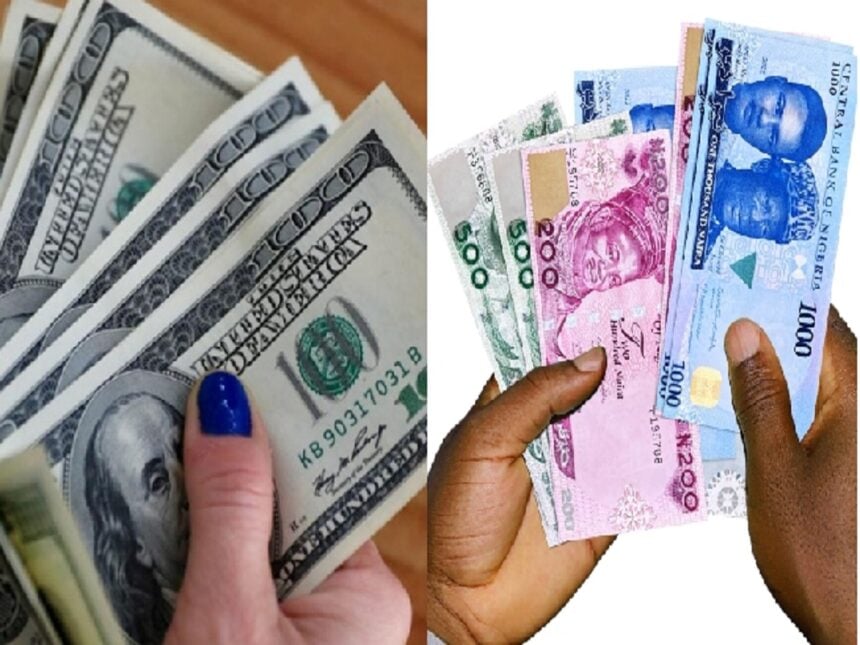
Black Market Rates
₦1370DOLLAR (USD)
₦1840POUND (GBP)
₦1533EURO (EUR)
₦970 CANADIAN DOLLAR (CAD)
₦65 SOUTH AFRICAN RAND (ZAR)
₦350DIRHAM (AED)
₦190YUAN (CNY)
₦100 GHANA CEDI (GHS)
₦2300 CFA F.(XOF)
₦2200 CFA F.(XAF)
₦850AUSSIE (AUD)
Official CBN Exchange Rates
DOLLAR (USD)₦1331.77
POUND (GBP)₦1757.93
EURO (EUR)₦1489.05
SWISS FRANC (CHF)₦1597.99
JAPANESE YEN (JPN)₦8.41
CFA FRANC (XOF)₦2.29
WEST AFRICAN UNIT OF ACCOUNT (WAUA)₦1802.10
CHINESE YUAN (CNY)₦198.64
SAUDI RIYAL (SAR)₦354.73
SOUTH AFRICAN RAND (ZAR) ₦79.68
Business
African Union launch continent’s first credit rating agency
African leaders have long accused Western ratings agencies including S&P, Moody’s and Fitch of failing to fairly assess the risk of lending to African countries and of moving too quickly to downgrade them during crises such as conflicts and pandemics.
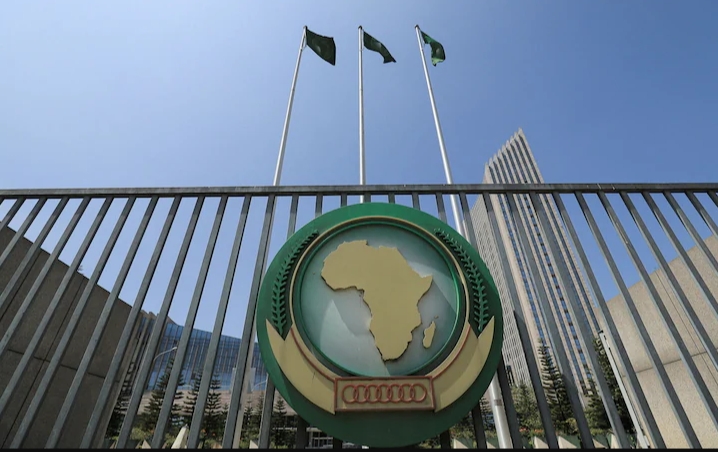
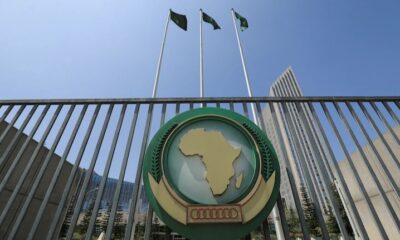
The African Union on Wednesday launched the continent’s first credit rating agency—Africa Credit Rating Agency (AfCRA).
AfCRA, launched in Port Louis, the capital of Mauritius, where it will be based. is seeking to provide an alternative to the “big three” global ratings agencies as debt burdens weigh on many African economies.
“AfCRA complements existing global credit rating agencies by offering a perspective rooted in African data, expertise and realities,” the AU said in a statement.
African leaders have long accused Western ratings agencies including S&P, Moody’s and Fitch of failing to fairly assess the risk of lending to African countries and of moving too quickly to downgrade them during crises such as conflicts and pandemics.
The agencies reject that criticism, saying they apply the same methodologies globally.
Rating experts said the success of the initiative will hinge on the perceived credibility of the new agency, especially in times of crisis.
“A new rating agency begins with a promise while investors ultimately require a track record,” said Dennis Shen, a lecturer in finance at the International School of Management in Berlin and former sovereign analyst at Scope Ratings.
“The hardest test, however, will come when markets are under stress, because a rating agency’s credibility is tested most severely when its conclusions are uncomfortable rather than when it is highly convenient.”
AfCRA may provide a counterweight to established rating agencies, but it must meet global standards, former Nigerian Vice President Yemi Osinbajo said.”It can’t just be a chauvinistic or nationalistic agency,” he said.
AfCRA, which will rate sovereign borrowers, financial institutions and private companies, will operate independently and be funded through shareholder capital and its operations, the AU said.


FG Plans National Strategic Fuel Reserve As Oil Price Bites

VON now broadcast in nine languages — DG

Obi advocates policy support for manufacturers

Tech Expert, Zuckerberg trains with UFC champions, Adesanya, Alexander

Organ Trafficking: Ekweremadu bags 10 years in UK prison

SAINT OBI: Between his marriage and his death
-

 Politics2 days ago
BREAKING: APC Chairmen Accused of Leading Armed Attacks on ADC Members in Igueben
-

 News1 day ago
Military Chiefs Visit Ondo Crash Site As Underwater Search Intensifies
-
 News17 hours ago
NAF Helicopter Makes Precautionary Landing In Makurdi
-
 News2 days ago
UPDATE: NAF Release Identities of Ondo Crash Victims
-
 Politics3 days ago
I sleep And Eat Thinking About Tinubu’s Re-Election – Wike
-
 Business1 day ago
African Union launch continent’s first credit rating agency
-
 Business17 hours ago
Naira Today Exchange Rates, Thursday October 8
-

 News1 day ago
Breaking: Military rescue 20 corps members, civilian in Imo